


Hair loss due to PCOS is a common symptom caused by hormonal imbalances.
Losing a few strands of hair every day is completely normal.
However, if you notice your hair becoming thinner, your part widening, or excessive hair collecting on your pillow, hairbrush, or shower drain, it may be more than routine hair shedding.
For many women, these changes can be an early sign of Polycystic Ovary Syndrome (PCOS).
Quick Answer
PCOS can cause hair loss due to increased androgen (male hormone) levels that gradually shrink hair follicles, leading to thinning hair and reduced hair growth. Early diagnosis, lifestyle changes, medical treatment, and proper hair care can help slow hair loss and improve hair health in many women.
Hair loss due to PCOS is one of the most distressing symptoms of the condition because it directly affects appearance and self-confidence.
Unlike temporary hair shedding after illness or stress, PCOS-related hair loss is driven by hormonal imbalance.
Excess male hormones, known as androgens, gradually shrink hair follicles, causing hair to become thinner, weaker, and slower to grow.
Research suggests that up to 40-70% of women with PCOS experience some degree of female pattern hair loss or hair thinning, although the severity varies widely from person to person.
Women may also notice other symptoms such as irregular periods, acne, excess facial hair, and weight gain occurring alongside hair loss. (Teede et al. 2023)
The good news is that hair loss associated with PCOS can often be managed.
Early diagnosis, lifestyle modifications, appropriate medical treatment, and good scalp care can slow hair thinning and, in many cases, encourage healthier hair growth over time.
In this article, we’ll explain why PCOS causes hair loss, how it is diagnosed, available treatment options, and practical ways to protect your hair while managing the underlying hormonal condition.
Key Takeaways
- PCOS is one of the leading hormonal causes of female hair loss.
- Elevated androgen levels gradually shrink hair follicles, causing thinner and weaker hair.
- Insulin resistance and chronic inflammation may contribute to worsening hair loss.
- Early diagnosis improves the chances of preserving existing hair and encouraging regrowth.
- Healthy eating, regular exercise, weight management, and stress reduction support healthier hair growth.
- Medical treatment should focus on addressing the underlying hormonal imbalance rather than treating hair loss alone.
- Hair regrowth takes time, and consistent treatment is usually required for several months before noticeable improvement occurs.
What Is PCOS?
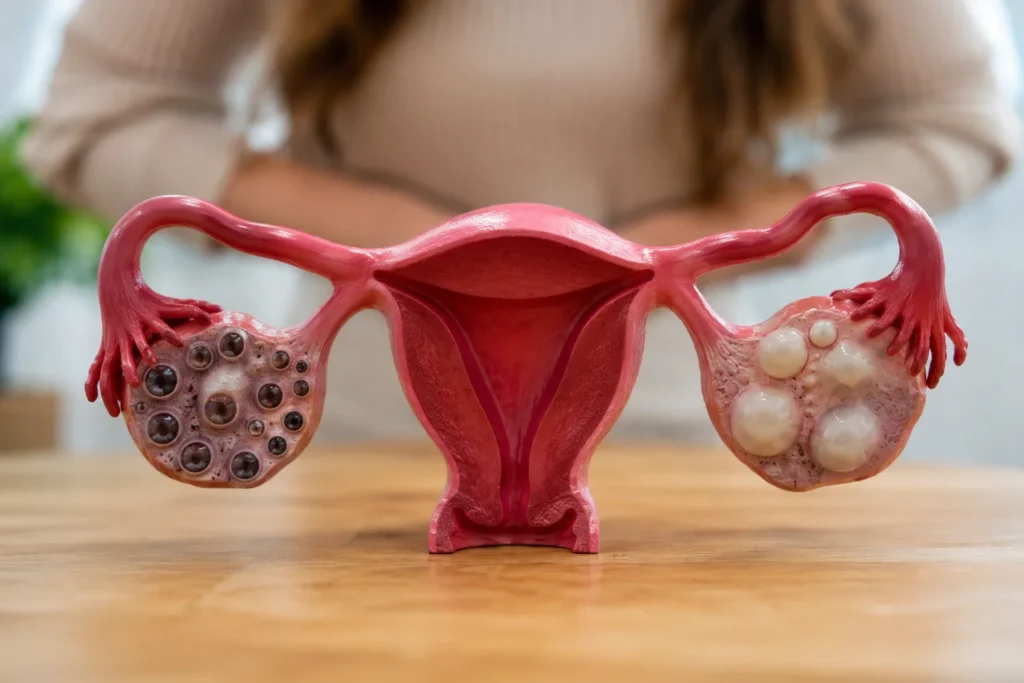
Polycystic Ovary Syndrome (PCOS) is one of the most common hormonal disorders affecting women of reproductive age.
It influences the normal functioning of the ovaries and affects not only reproductive health but also metabolism, skin, hair, and overall well-being.
Although the name suggests that ovarian cysts are the defining feature, not every woman with PCOS has ovarian cysts.
Instead, the condition is primarily characterized by hormonal imbalance, irregular ovulation, and increased androgen production.
According to the World Health Organization (WHO),
PCOS affects approximately 8% to 13% of women of reproductive age worldwide, making it one of the leading endocrine disorders in women. (World Health Organization, 2025)
Common symptoms of PCOS include:
- Irregular or missed periods
- Difficulty conceiving
- Acne
- Excess facial or body hair
- Hair thinning on the scalp
- Weight gain
- Insulin resistance
- Darkened skin folds (acanthosis nigricans)
Since PCOS affects several hormone-regulated systems in the body, its symptoms can vary significantly between individuals.
Some women may experience only mild hair thinning, while others notice more pronounced hair loss over time.
Can PCOS Cause Hair Loss?
Yes. PCOS is one of the most common hormonal causes of hair loss in women.
The type of hair loss associated with PCOS is called female pattern hair loss (FPHL) or female androgenetic alopecia.
Unlike sudden hair loss that occurs after illness or nutritional deficiencies, PCOS-related hair loss usually develops gradually over several months or years.
Instead of creating completely bald patches, the condition typically causes:
- Progressive thinning on the top of the scalp
- A wider hair part
- Reduced hair volume
- Finer, weaker hair strands
One important point to remember is that not every woman with PCOS develops hair loss.
Genetics, hormone levels, age, insulin resistance, and overall health all influence whether scalp hair becomes thinner.
If there is a family history of female pattern hair loss, women with PCOS may have a greater likelihood of experiencing noticeable hair thinning.
Why Does PCOS Cause Hair Loss?
Hair growth occurs in repeated cycles of growth, rest, and shedding.
In women with PCOS, hormonal imbalance disrupts this natural cycle, causing hair follicles to shrink gradually and produce thinner hairs over time.
Several factors contribute to this process.
Excess Androgens
The primary reason for hair loss in PCOS is an increase in androgens, particularly testosterone and its more potent form, dihydrotestosterone (DHT).
DHT binds to hair follicles on the scalp and gradually causes them to shrink, a process known as follicular miniaturization.
As follicles become smaller:
- Hair strands grow thinner.
- Hair grows more slowly.
- The growth phase shortens.
- Hair sheds more easily.
Over time, this leads to visible thinning, especially over the crown and central part of the scalp.
Hormonal Imbalance
Healthy hair growth depends on a balance between estrogen, progesterone, and androgens.
In women with PCOS:
- Androgen levels increase.
- Ovulation becomes irregular.
- Estrogen and progesterone fluctuate.
These hormonal changes shorten the hair growth cycle and increase the proportion of hairs entering the resting and shedding phases.
Unlike temporary hair shedding, this imbalance continues unless the underlying hormonal condition is addressed.
Insulin Resistance
Many women with PCOS also have insulin resistance, a condition in which the body’s cells become less responsive to insulin.
To compensate, the pancreas produces more insulin.
Higher insulin levels stimulate the ovaries to produce additional androgens, which further worsen hair thinning.
This creates a cycle where:
- Insulin resistance increases androgen production.
- Higher androgen levels damage hair follicles.
- Hair thinning gradually progresses.
Improving insulin sensitivity through healthy eating, regular physical activity, and weight management may help reduce androgen levels and improve overall PCOS symptoms. (Moran et al. 2023)
Chronic Low-Grade Inflammation
Emerging research suggests that many women with PCOS experience chronic low-grade inflammation.
Persistent inflammation increases oxidative stress within the body, which may negatively affect hair follicle function and interfere with healthy hair growth.
Although inflammation alone is rarely the primary cause of hair loss, it may contribute to worsening hair thinning when combined with hormonal imbalance and insulin resistance.
Symptoms of PCOS Hair Loss
PCOS-related hair loss usually develops slowly, making it easy to overlook during the early stages.
Unlike sudden hair shedding, women often notice gradual changes in hair thickness and density over time.
Common signs include:
Hair Thinning on the Top of the Scalp
One of the earliest signs is thinning around the crown or the center of the scalp.
Hair near the front hairline is often preserved, while the middle part gradually becomes wider.
A Wider Hair Part
Many women first notice that their natural hair part appears broader than before.
This widening occurs because fewer healthy hairs are growing from affected follicles.
Increased Hair Shedding
Finding larger amounts of hair while brushing, washing, or styling your hair can be an early indication of excessive shedding.
Although some daily hair loss is normal, persistent shedding accompanied by visible thinning should be evaluated.
Finer Hair Strands
Hair that was previously thick may gradually become softer, finer, and more fragile.
This happens because miniaturized follicles produce thinner hair with each growth cycle.
Slow Hair Growth
Women with PCOS often find that their hair takes much longer to grow after a haircut.
Hair may also appear less dense because fewer follicles remain in the active growth phase.
Hair Breakage
Hormonal changes can make hair weaker and more susceptible to breakage, particularly when combined with frequent heat styling or harsh chemical treatments.
Excess Facial or Body Hair Alongside Scalp Hair Loss
A distinctive feature of PCOS is that women may experience hair loss on the scalp while simultaneously developing increased hair growth on the face, chin, chest, or abdomen.
This seemingly contradictory pattern occurs because excess androgens shrink scalp hair follicles while stimulating hair growth in other parts of the body.
How Is PCOS Hair Loss Diagnosed?
Hair loss can occur for many reasons, so diagnosing PCOS-related hair loss involves identifying the underlying hormonal imbalance while ruling out other medical conditions that may cause excessive hair shedding.
Healthcare providers typically use a combination of medical history, physical examination, laboratory tests, and scalp assessment to determine whether PCOS is contributing to hair loss.
Medical History
Your doctor will begin by asking detailed questions about your symptoms, including:
- When hair loss first started
- Whether the hair loss developed gradually or suddenly
- Changes in your menstrual cycle
- Family history of hair loss or PCOS
- Recent weight changes
- Pregnancy history
- Current medications
- Diet and lifestyle habits
Understanding these factors helps identify possible hormonal, genetic, or nutritional causes.
Physical Examination
A physical examination evaluates both scalp changes and other signs commonly associated with PCOS.
Your healthcare provider may assess:
- Hair density and thinning pattern
- Scalp condition
- Acne
- Excess facial or body hair
- Body weight and BMI
- Signs of insulin resistance, such as darkened skin folds
The pattern of hair loss often provides important clues about its underlying cause.
Hair Pull Test
A simple hair pull test may be performed during the examination.
The doctor gently pulls a small section of hair to determine whether excessive strands are shedding.
Although this test cannot diagnose PCOS, it helps assess the severity of active hair loss.
Blood Tests
Blood tests help evaluate hormone levels and exclude other medical conditions that can contribute to hair thinning.
Common investigations include:
- Total and free testosterone
- DHEAS (Dehydroepiandrosterone sulfate)
- Thyroid function tests
- Ferritin (iron stores)
- Vitamin D levels
- Vitamin B12
- Fasting blood glucose
- HbA1c
- Lipid profile
These tests also help identify nutritional deficiencies and metabolic abnormalities that may worsen hair loss.
Dermoscopy
A dermatologist may use a handheld device called a dermo scope to closely examine the scalp and hair follicles.
Dermoscopy helps identify features of female pattern hair loss, including:
- Variation in hair shaft thickness
- Miniaturized hair follicles
- Reduced hair density
- Increased number of fine hairs
This non-invasive examination provides valuable information without requiring a biopsy.
Scalp Examination
The scalp is also examined for conditions that may contribute to hair loss, including:
- Redness
- Scaling
- Infection
- Scarring
- Inflammation
Identifying these problems ensures that other scalp disorders are not overlooked.
Other Causes of Hair Loss That Should Be Ruled Out
Although PCOS is a common cause of female hair thinning, it is not the only one.
Several other conditions can produce similar symptoms, making accurate diagnosis essential.
Thyroid Disorders
Both an underactive thyroid (hypothyroidism) and an overactive thyroid (hyperthyroidism) can interfere with the normal hair growth cycle.
Hair may become dry, brittle, and thin throughout the scalp.
Iron Deficiency
Iron plays an important role in healthy hair follicle function.
Low iron stores, even without anemia, have been associated with increased hair shedding in women.
Vitamin D Deficiency
Vitamin D contributes to normal hair follicle cycling.
Although research is still evolving, vitamin D deficiency is frequently observed in women with PCOS and may contribute to poor hair health.
Stress-Related Hair Loss
Significant physical or emotional stress can trigger telogen effluvium, a temporary condition in which a larger number of hairs enter the shedding phase.
Unlike PCOS-related hair loss, stress-induced shedding usually improves once the underlying trigger is resolved.
Postpartum Hair Loss
Women often experience increased hair shedding several months after childbirth because of hormonal changes.
This condition is temporary and differs from the gradual thinning seen in PCOS.
Alopecia Areata
Alopecia areata is an autoimmune disorder that causes sudden, well-defined patches of hair loss.
This pattern is distinctly different from the diffuse thinning associated with PCOS.
Nutritional Deficiencies
Insufficient intake of nutrients such as:
- Protein
- Zinc
- Vitamin B12
- Folate
may negatively affect hair growth and should be corrected when identified.
Certain Medications
Some medications can contribute to hair loss, including:
- Blood thinners
- Certain antidepressants
- Some blood pressure medications
- Chemotherapy drugs
- High doses of vitamin A supplements
Your healthcare provider will review your medications during the evaluation.
Treatment Options for PCOS Hair Loss
Treating PCOS hair loss focuses on managing the underlying hormonal imbalance while supporting healthy hair growth.
Since hair grows slowly, noticeable improvement often takes three to six months, and optimal results may require longer.
Lifestyle Modification
Lifestyle changes are considered one of the foundations of PCOS management.
Improving overall metabolic health can help reduce androgen levels and slow the progression of hair thinning.
Helpful lifestyle habits include:
- Maintaining a healthy body weight
- Exercising regularly
- Managing stress
- Getting adequate sleep
- Avoiding smoking
- Limiting alcohol intake
These changes also improve other PCOS symptoms such as irregular periods and insulin resistance.
Healthy Diet
A balanced diet supports healthy hair by providing essential nutrients required for normal follicle function.
Include foods rich in:
- Lean protein
- Iron
- Zinc
- Omega-3 fatty acids
- Vitamin D
- Eggs
- Nuts and seeds
- Leafy green vegetables
- Beans and legumes
- Fatty fish
Rather than relying on supplements alone, obtaining nutrients from a varied diet is generally recommended unless a deficiency has been diagnosed.
Exercise and Physiotherapy
Regular physical activity improves insulin sensitivity and may help reduce circulating androgen levels over time.
Exercise also offers several additional benefits:
- Supports healthy weight management
- Improves blood circulation
- Reduces chronic inflammation
- Enhances mood
- Lowers stress levels
From a physiotherapy perspective, combining aerobic exercise with resistance training provides the greatest long-term benefits for women with PCOS.
A physiotherapist can design a personalized exercise program that matches your fitness level, health condition, and treatment goals, making it easier to remain active safely and consistently.
Weight Management
For women who are overweight or obese, even a 5-10% reduction in body weight may improve insulin sensitivity, lower androgen levels, and reduce the progression of hair thinning.
However, it’s important to remember that women with a healthy BMI can also develop PCOS-related hair loss.
The focus should always be on improving overall metabolic health rather than pursuing rapid or extreme weight loss.
Medications
When lifestyle changes alone do not adequately control symptoms, healthcare providers may recommend medications based on individual needs.
Treatment options may include:
- Combined oral contraceptive pills to reduce androgen production
- Anti-androgen medications to help slow hair thinning
- Metformin to improve insulin sensitivity
- Topical minoxidil to stimulate scalp hair growth
Because these treatments are not suitable for everyone, they should only be used under the guidance of a qualified healthcare professional.
Hair Care Tips
Daily hair care habits can help minimize breakage and protect existing hair while treatment addresses the underlying hormonal imbalance.
Simple recommendations include:
- Avoid excessive heat styling
- Limit chemical treatments such as frequent bleaching or perming
- Avoid tight hairstyles that pull on the hair
- Use a mild shampoo suitable for your scalp type
- Condition hair regularly
- Use a wide-tooth comb to reduce breakage
- Pat hair dry gently instead of rubbing vigorously with a towel
Although these measures cannot cure PCOS hair loss, they help preserve hair quality and reduce unnecessary damage.
Can Hair Grow Back After PCOS?
One of the most common concerns among women with PCOS is whether hair loss is permanent.
The encouraging news is that hair can often regrow or become thicker when the underlying hormonal imbalance is effectively managed, especially if treatment begins early.
Hair follicles affected by PCOS usually become miniaturized, meaning they produce progressively thinner and shorter hair strands rather than stopping hair growth completely.
If these follicles remain active, reducing androgen levels and improving metabolic health may allow healthier hair to grow over time.
However, hair growth is a slow biological process.
Most treatments require three to six months before noticeable improvement, while maximum results may take six to twelve months depending on the individual.
It’s also important to have realistic expectations.
Some women regain significant hair density, while others experience slower progression of hair loss rather than complete regrowth.
Early diagnosis and consistent treatment generally produce the best outcomes.
Natural Ways to Improve Hair Health with PCOS
Although there is no single natural remedy that can reverse PCOS hair loss, several healthy lifestyle habits support hormonal balance and create a healthier environment for hair growth.
Eat a Nutrient-Rich Diet
Hair follicles require a steady supply of nutrients to remain healthy.
A balanced diet should include:
- Lean protein
- Green leafy vegetables
- Whole grains
- Nuts and seeds
- Fresh fruits
- Healthy fats
- Iron-rich foods
- Zinc-containing foods
- Omega-3 fatty acids
If nutritional deficiencies are suspected, consult your healthcare provider before taking supplements.
Exercise Regularly
Regular physical activity improves insulin sensitivity, reduces chronic inflammation, and supports hormonal balance.
Aim for at least 150 minutes of moderate-intensity exercise each week, combined with strength training exercises on two or more days.
Consistency is more important than intensity.
Activities such as brisk walking, cycling, swimming, resistance training, yoga, and Pilates can all be beneficial.
Manage Stress
Long-term stress may increase cortisol levels and worsen hormonal imbalance, indirectly affecting hair health.
Healthy stress-management techniques include:
- Meditation
- Yoga
- Deep breathing exercises
- Mindfulness
- Reading
- Spending time in nature
- Relaxation techniques
Reducing stress also supports better sleep and overall well-being.
Prioritize Quality Sleep
Sleep plays an important role in hormone regulation and tissue repair.
Aim for 7-9 hours of quality sleep each night and try to maintain a regular sleep schedule.
Poor sleep may worsen insulin resistance and contribute to increased inflammation, both of which can affect PCOS symptoms.
Calculate your ideal sleep timings here: “Sleep Calculator“
Stay Hydrated
Adequate hydration supports overall scalp and skin health.
While drinking more water alone will not stop hair loss, staying well hydrated contributes to healthier hair and normal body function.
Avoid Crash Diets
Rapid weight loss and extremely restrictive diets may worsen hair shedding by depriving the body of essential nutrients.
Instead, focus on gradual, sustainable lifestyle changes that support both hormonal health and healthy hair growth.
When Should You See a Doctor?
Hair loss should not be ignored, particularly when it is persistent or accompanied by other symptoms of PCOS.
Seek medical advice if you notice:
- Rapid or excessive hair thinning
- A widening hair part
- Bald patches on the scalp
- Sudden increase in daily hair shedding
- Hair loss associated with irregular periods
- Excess facial or body hair
- Severe acne
- Difficulty conceiving
- Hair loss that continues despite lifestyle changes
Early evaluation helps identify the cause of hair loss and allows treatment to begin before significant follicle damage occurs.
Physiotherapist’s Role in Managing PCOS
Although physiotherapists do not directly treat hair loss, they play an important role in managing the metabolic and lifestyle factors that contribute to PCOS.
A structured exercise program can improve insulin sensitivity, reduce inflammation, and support healthy weight management, all of which may help lower androgen levels over time.
A physiotherapist can assist by providing:
Individualized Exercise Prescription
Exercise plans are designed according to age, fitness level, body weight, medical history, and personal goals, making physical activity safer and more sustainable.
Support for Weight Management
For women who need to lose weight, physiotherapists develop exercise programs that improve calorie expenditure while preserving muscle strength and joint health.
Improved Metabolic Health
Regular exercise enhances insulin sensitivity and reduces several metabolic risk factors commonly associated with PCOS.
Improved metabolic health may indirectly help reduce hormonal imbalance and slow hair thinning.
Stress Reduction Through Physical Activity
Exercise stimulates the release of endorphins, improves mood, and helps reduce stress, which may indirectly benefit overall hormonal health.
Long-Term Lifestyle Guidance
One of the greatest advantages of physiotherapy is helping women build long-term exercise habits rather than relying on short-term fitness programs.
Sustainable lifestyle changes benefit not only hair health but also cardiovascular health, bone strength, and overall quality of life.
Myth vs Fact
| Myth | Fact |
|---|---|
| Hair loss caused by PCOS is always permanent. | Many women notice improved hair thickness or slower hair loss after treating hormonal imbalance and following a healthy lifestyle. |
| Cutting hair makes it grow back thicker. | Haircuts improve appearance but do not affect the hair follicles responsible for hair growth. |
| Hair oils alone can cure PCOS hair loss. | Hair oils may improve hair texture but cannot treat the hormonal imbalance that causes PCOS-related hair loss. |
| Only older women develop hair thinning. | Hair loss related to PCOS can begin during the late teens or twenties, especially when androgen levels are elevated. |
| Hair supplements alone can reverse PCOS hair loss. | Supplements only help when a deficiency exists. Managing hormones and insulin resistance remains the key to treatment. |
Common Myths About PCOS Hair Loss
Many misconceptions about PCOS-related hair loss can delay treatment or lead to unrealistic expectations.
Myth: Hair Loss from PCOS Is Always Permanent
Fact: Many women experience improved hair thickness or slower hair loss after managing hormonal imbalance through lifestyle changes and appropriate medical treatment.
Myth: Cutting Your Hair Makes It Grow Back Thicker
Fact: Haircuts improve appearance by removing split ends but do not affect the hair follicles beneath the scalp or stimulate new hair growth.
Myth: Hair Oils Alone Can Cure PCOS Hair Loss
Fact: Hair oils may improve hair texture and reduce dryness, but they cannot correct the hormonal imbalance responsible for PCOS-related hair loss.
Myth: Only Older Women Experience Hair Loss
Fact: Women with PCOS may begin noticing hair thinning in their late teens or twenties, particularly when androgen levels are elevated.
Myth: Hair Supplements Alone Can Reverse PCOS Hair Loss
Fact: Supplements may help only when a nutritional deficiency exists. Treating the underlying hormonal imbalance remains the most important step in managing PCOS hair loss.
Final Thoughts
Hair loss caused by PCOS can be emotionally challenging, but it doesn’t have to be permanent. Understanding the hormonal changes behind hair thinning is the first step toward choosing effective treatment and protecting long-term hair health.
By combining healthy lifestyle habits, balanced nutrition, regular physical activity, proper medical care, and gentle hair care practices, many women can slow hair loss and support healthier hair growth. Seeking professional advice early offers the best opportunity to preserve existing hair and improve overall well-being.
Conclusion
Hair loss is a common but often emotionally challenging symptom of PCOS.
Elevated androgen levels, insulin resistance, and hormonal imbalance gradually affect the normal hair growth cycle, leading to thinning hair and reduced hair density over time.
Fortunately, early diagnosis and a comprehensive treatment plan can make a significant difference.
Lifestyle modifications, balanced nutrition, regular exercise, weight management, appropriate medical therapy, and healthy hair care practices all contribute to slowing hair loss and supporting healthier hair growth.
If you notice persistent hair thinning along with other symptoms such as;
irregular periods, acne, or excess facial hair, consult a healthcare professional for a proper evaluation. Addressing PCOS early not only benefits your hair but also supports your long-term reproductive, metabolic, and overall health.
Frequently Asked Questions
1. Can PCOS cause permanent hair loss?
Not always. Many women experience reduced hair loss or improved hair growth after managing hormonal imbalance and following appropriate treatment.
2. Why does PCOS cause hair thinning?
High androgen levels, especially DHT, gradually shrink hair follicles, resulting in thinner, weaker hair and slower hair growth.
3. Can hair grow back after treating PCOS?
Yes. If hair follicles remain active, treating the underlying hormonal imbalance may improve hair density over time.
4. Does losing weight help with PCOS hair loss?
For women who are overweight, weight loss may improve insulin sensitivity, reduce androgen levels, and help slow hair thinning.
5. Which foods support healthy hair in PCOS?
Protein-rich foods, leafy vegetables, nuts, seeds, iron-rich foods, omega-3 fatty acids, and zinc-containing foods help support healthy hair growth.
6. When should I see a doctor for hair loss?
You should seek medical advice if you experience sudden hair thinning, bald patches, excessive shedding, or hair loss accompanied by irregular periods or other PCOS symptoms.
Stay tuned with us for more health related topics.
Follow us on LinkedIn and Instagram for more.
More Read


Medical Disclaimer!
This article has been reviewed and written under the guidance of our Head Physiotherapist, Dr. Kruti Raj (PT, MUHS,CPT,CMPT). The information shared is intended for educational purposes only and should not be considered a substitute for personalized medical advice, diagnosis, or treatment.
Please consult us or any other qualified healthcare professional before beginning any exercise program, especially if you are experiencing pain, recovering from injury, or managing a medical condition.


