


Hip pain when crossing your legs can make sitting at work, relaxing on the sofa, or getting dressed uncomfortable.
The pain may occur in the groin, on the outside of the hip, or deep in the buttock.
Quick Answer: Why Does Your Hip Hurt When Crossing Your Legs?
Hip pain when crossing your legs can be associated with greater trochanteric pain syndrome (GTPS), gluteal tendinopathy, hip osteoarthritis, femoroacetabular impingement, or muscle problems. Pain may also originate from the lower back.
Temporarily avoid positions that reproduce your pain, change your sitting posture regularly, and maintain comfortable movement. Physiotherapy can help identify contributing factors and guide suitable strengthening and movement exercises.
The cause depends on the structures involved, your hip mobility, and the movements that reproduce your symptoms.
Common possibilities include greater trochanteric pain syndrome (GTPS), hip osteoarthritis, femoroacetabular impingement, and muscle or tendon problems.
Physiotherapy can help identify contributing factors and guide appropriate treatment.
Key Takeaways
- Hip pain when crossing your legs is a symptom, not a diagnosis.
- Possible causes include GTPS, gluteal tendinopathy, hip osteoarthritis, and femoroacetabular impingement.
- The location of the pain and the movements that trigger it can help guide clinical assessment.
- Changing painful sitting positions and taking regular movement breaks may help reduce discomfort.
- Physiotherapy can include individualized strengthening, movement retraining, and activity modification.
- Exercises should be selected according to the likely cause and your tolerance, rather than followed as a one-size-fits-all routine.
- Persistent or worsening pain deserves professional assessment.
Why Does Crossing Your Legs Cause Hip Pain?
Crossing your legs changes the position of your hip joint, usually involving some combination of hip flexion, adduction, and rotation.
These movements place different demands on the joint, muscles, and surrounding tendons.
If a particular structure is sensitive or hip movement is restricted, the position may reproduce discomfort.
Holding the position for a long time may also aggravate symptoms in some people.
However, crossing your legs does not automatically damage your hips.
The important factors are your symptoms, individual movement tolerance, underlying condition, and duration of the position.
Common Causes of Hip Pain When Crossing Your Legs
1. Greater Trochanteric Pain Syndrome
Greater trochanteric pain syndrome (GTPS) causes pain around the outside of the hip.
It commonly involves the gluteus medius or minimus tendons and may also involve irritation of nearby bursal tissue.
Crossing your legs brings the thigh towards the body’s midline.
This can increase compression around sensitive gluteal tendons in some people.
Possible symptoms include outer-hip tenderness, pain when climbing stairs, discomfort when lying on the affected side, and pain during prolonged sitting with the legs crossed.
GTPS is not simply another name for bursitis.
Gluteal tendinopathy is an important contributor and may require progressive strengthening alongside changes to aggravating positions. (Pianka et al., 2021)
2. Hip Osteoarthritis
Hip osteoarthritis involves changes in the joint and surrounding tissues that can lead to pain, stiffness, and reduced movement.
Crossing your legs may become uncomfortable if hip rotation or flexion is restricted.
Pain is often felt in the groin or front of the hip, although it can also occur around the thigh or buttock.
Other clues include stiffness after rest, difficulty putting on socks and shoes, and discomfort when getting in or out of a car.
A clinical assessment helps determine whether osteoarthritis is a likely explanation. Hip pain alone does not confirm arthritis.
3. Femoroacetabular Impingement
Femoroacetabular impingement (FAI) syndrome occurs when the shape of the hip bones contributes to abnormal contact during movement, producing symptoms in some people.
Deep hip flexion combined with adduction and rotation may provoke groin or deep hip pain.
Some people also report stiffness, clicking, catching, or restricted movement.
Bone shape alone does not establish FAI syndrome.
Symptoms, clinical examination findings, and relevant imaging must be considered together. (Griffin et al., 2016)
4. Gluteal Muscle or Tendon Irritation
The gluteal muscles help control pelvic movement and stabilize the hip during walking and other daily activities.
Irritation or reduced load tolerance of these muscles and tendons may contribute to pain around the outer hip or buttock.
Symptoms may worsen after increased activity, climbing stairs, or prolonged positions that compress the affected area.
A physiotherapist can assess strength, movement, and symptom response to distinguish possible tendon problems from other causes.
5. Hip Flexor or Deep Hip Muscle Problems
The hip flexors help lift the thigh, while deeper muscles contribute to hip rotation and stability.
Muscle or tendon irritation can cause pain around the front of the hip, groin, or buttock.
Symptoms may develop after unfamiliar exercise, a sudden increase in training, or repeated movements that exceed the tissues’ current capacity.
6. Referred Pain From the Lower Back
Pain around the hip does not always originate in the hip joint. The lumbar spine and nearby nerves can refer pain into the buttock or thigh.
Back-related symptoms may include tingling, numbness, burning sensations, or pain that travels down the leg.
A physiotherapy assessment may therefore include the lower back and a neurological examination when indicated.
Where Does Your Hip Hurt?
Pain location can help guide an assessment, but it cannot confirm a diagnosis by itself.
| Pain location | Possible explanation | Other clues |
|---|---|---|
| Outside of the hip | GTPS or gluteal tendinopathy | Tenderness or pain lying on that side |
| Groin or front of hip | Osteoarthritis, FAI or hip flexor problems | Stiffness or painful hip movement |
| Buttock or back of hip | Referred spinal pain or deep gluteal problems | Back pain or radiating symptoms |
| Sudden severe pain after injury | Fracture or another acute injury | Difficulty standing or bearing weight |
Several conditions can coexist. Persistent or worsening symptoms deserve assessment rather than self-diagnosis.
How Is Hip Pain Assessed by a Physiotherapist?
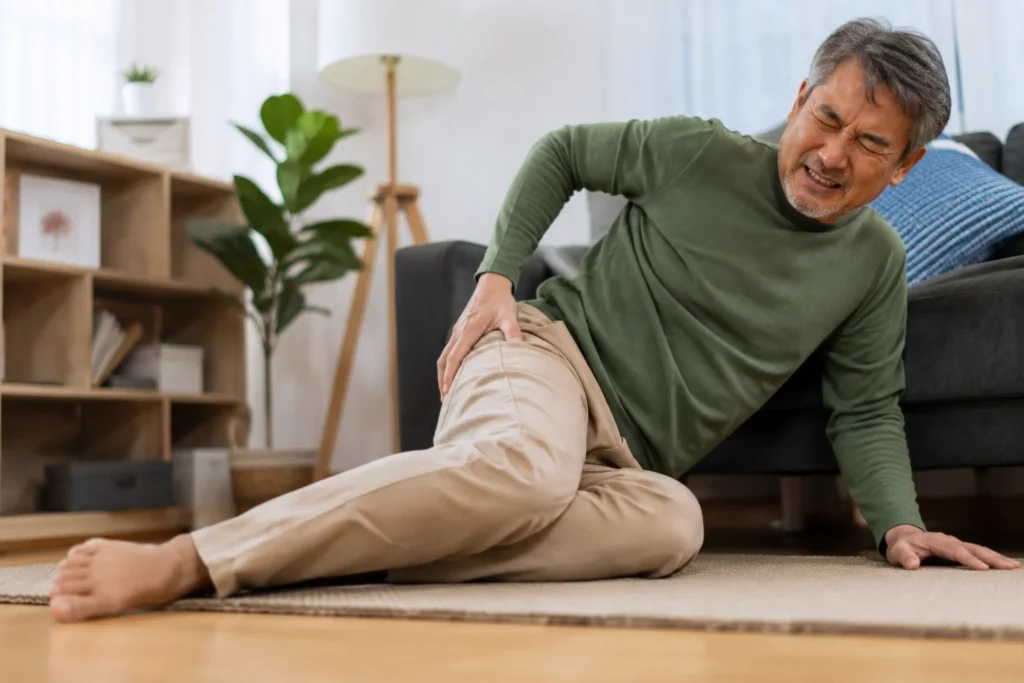
A physiotherapist will usually ask when the pain started, where it occurs, which movements aggravate it, and whether an injury or change in activity preceded it.
The examination may include:
- Hip range of motion, including flexion and rotation.
- Strength and control of the hip and surrounding muscles.
- Walking, standing, and functional movements.
- Palpation of relevant muscles, tendons, and other structures.
- Lower-back and neurological screening when symptoms suggest referred pain.
The findings help determine whether rehabilitation should prioritize tendon load management, joint mobility, strength, movement modification, or further medical investigation.
Imaging is not required for every case.
A clinician may recommend it when the history and examination suggest a fracture, significant joint disease, or another condition requiring further investigation.
How to Relieve Hip Pain When Crossing Your Legs
Modify Your Sitting Position
Temporarily avoid crossing your legs if it reproduces pain. Try sitting with both feet supported and your hips in a comfortable position.
Change positions regularly instead of remaining seated for long periods.
A slightly higher chair may help if low seating causes groin discomfort or forces the hip into deep flexion.
Reduce Outer-Hip Compression
If the pain is on the outside of your hip, avoid prolonged positions that press the thighs together or pull the affected leg across the body.
When dressing, sit down and bring your foot towards you rather than forcing the hip into a painful position.
Maintain Comfortable Movement
Gentle walking and regular movement may help you maintain function, provided they do not significantly aggravate symptoms.
Avoid repeatedly testing the painful position or pushing through sharp pain.
Heat or a wrapped cold pack may provide temporary comfort. Neither replaces assessment and rehabilitation when symptoms persist.
Physiotherapy Treatment for Hip Pain
Treatment depends on the underlying cause.
A program suitable for gluteal tendinopathy may differ from one designed for hip osteoarthritis or FAI.
1. Progressive Strengthening
Depending on your assessment, exercises may target the gluteal muscles, hip extensors, hip rotators, and trunk muscles.
Examples may include:
- Gluteal isometric contractions: Gently tighten the buttock muscles without moving the hip into a painful position.
- Bridging: Lift the pelvis in a controlled manner if comfortable.
- Sit-to-stand: Practice standing from a suitable chair while maintaining controlled movement.
- Standing hip abduction: Move the leg out to the side with support if needed and if the movement is comfortable.
These are examples rather than a universal exercise prescription. Your physiotherapist should adapt the starting position, resistance, repetitions, and progression to your diagnosis and tolerance.
2. Mobility and Movement Retraining
If restricted movement contributes to symptoms, a physiotherapist may introduce gentle mobility exercises and functional movement practice.
Aggressive stretching or forcing deep hip flexion is not appropriate for everyone, particularly when it reproduces groin pain.
The goal is to improve useful movement without repeatedly provoking symptoms.
3. Education and Load Management
Physiotherapy may involve adjusting activities, gradually rebuilding strength, and improving confidence with everyday movement.
For GTPS, the International Society of Hip Preservation physiotherapy consensus highlights education about tendon loading and reducing excessive compression around the outer hip, alongside progressive strengthening. (ISHA Physiotherapy Consensus Group, 2023)
4. Rehabilitation for Hip Osteoarthritis
For hip osteoarthritis, physiotherapy may include tailored strengthening, aerobic activity, mobility work, education, and self-management strategies.
Exercise selection and progression depend on pain, function, and individual needs. (Koc et al., 2025)
Exercises and Positions to Modify
If they reproduce your symptoms, temporarily modify:
- Prolonged cross-legged sitting.
- Deep squats or low seats that trigger groin pain.
- Aggressive hip stretches that increase discomfort.
- Heavy lower-body exercise that causes symptoms to worsen afterwards.
- Repeatedly forcing the hip into its painful range.
These are not permanent restrictions.
A physiotherapist can help you reintroduce appropriate movements gradually as your symptoms and capacity improve.
How Long Does Hip Pain Take to Improve?
Recovery depends on the cause, symptom severity, general health, and consistency with an appropriate rehabilitation plan.
Mild irritation may settle after changing aggravating activities.
Persistent tendon problems or symptomatic joint conditions may need a longer period of structured management.
If pain is not improving, keeps returning, or interferes with walking and everyday activities, seek a professional assessment rather than continuing the same exercises without review.
When Should You Seek Medical Help?
Arrange an appointment with a healthcare professional if hip pain persists, restricts movement, disrupts sleep, or makes routine activities difficult.
Seek urgent medical care if you experience:
- Sudden severe pain following a fall or injury.
- Inability to walk or bear weight after an injury.
- A hot, swollen hip accompanied by fever or feeling seriously unwell.
- New or progressive leg weakness or significant numbness.
- New loss of bladder or bowel control or numbness around the groin or saddle area.
These symptoms may indicate a problem that requires urgent investigation.
Hip Pain When Crossing Your Legs: Myth vs Fact
MYTH: Crossing your legs always damages your hips.
FACT: Crossing your legs is not automatically harmful. It may cause discomfort in people with particular joint, tendon, or muscle problems.
MYTH: All outer hip pain is bursitis.
FACT: Greater trochanteric pain syndrome often involves gluteal tendons. A nearby bursa may also contribute, but bursitis is not the only explanation.
MYTH: Everyone with hip pain needs the same exercises.
FACT: Exercise selection depends on the cause of pain, movement tolerance, strength, and functional goals.
MYTH: Pain during a stretch means the stretch is working.
FACT: Sharp or escalating pain is a reason to stop and reassess the movement rather than push through it.
Lesser-Known Fact: Pain Does Not Always Mean Damage
A painful position does not automatically mean that you are damaging your hip.
Pain can reflect sensitivity, reduced load tolerance, restricted movement, or an underlying joint or tendon condition.
However, persistent pain should not be dismissed as harmless.
The most useful approach is to identify the likely cause, modify movements that aggravate it, and restore activity progressively.
Final Thoughts: Move Comfortably, Not Through Pain
Hip pain when crossing your legs can have several causes, so the most effective approach starts with understanding what is triggering your symptoms. Changing uncomfortable sitting positions and staying gently active may help, but persistent pain deserves proper assessment.
Physiotherapy can help you work towards better hip strength, movement, and confidence with everyday activities through an individually tailored rehabilitation plan.
Conclusion
Hip pain when crossing your legs can be associated with gluteal tendon problems, greater trochanteric pain syndrome, hip osteoarthritis, femoroacetabular impingement, or referred pain from the lower back.
Start by modifying positions that reproduce your symptoms while maintaining comfortable movement.
If the pain persists or limits daily activities, a physiotherapist can assess the likely cause and develop an individualized treatment plan.
The aim is to restore comfortable function rather than force the hip into a position that hurts.
Frequently Asked Questions
1. Why does my hip hurt only when I cross my legs?
Crossing your legs changes hip flexion, adduction, and rotation. Depending on the underlying cause, this position may aggravate sensitive tendons, restricted joints, or surrounding muscles.
2. Should I stop sitting cross-legged completely?
Avoid the position temporarily if it causes pain. Permanent avoidance is not necessary for everyone, and returning to it may be reasonable once symptoms are controlled and movement is comfortable.
3. Is hip pain when crossing my legs a sign of arthritis?
Not necessarily. Osteoarthritis is one possible cause, but tendon problems, femoroacetabular impingement, muscle irritation, and referred spinal pain can cause similar symptoms.
4. Can physiotherapy help?
Yes. Depending on the diagnosis, physiotherapy may improve strength, movement, load tolerance, and everyday function. Persistent symptoms may also require medical assessment.
5. Which exercises should I do first?
There is no single best exercise for everyone. The starting program should match your symptoms and assessment findings. Stop exercises that cause sharp or escalating pain and seek advice if symptoms worsen.
Stay tuned with us for more health related topics.
Follow us on LinkedIn and Instagram for more.
More Read


Medical Disclaimer
The information in this article is intended for general educational purposes only and does not replace professional medical advice, diagnosis, or treatment. Hip pain can have several causes, and suitable exercises and treatment vary between individuals. Consult a qualified healthcare professional for persistent, severe, or worsening symptoms. Seek urgent medical care for sudden severe hip pain, inability to bear weight after an injury, or a hot, swollen hip accompanied by fever.


