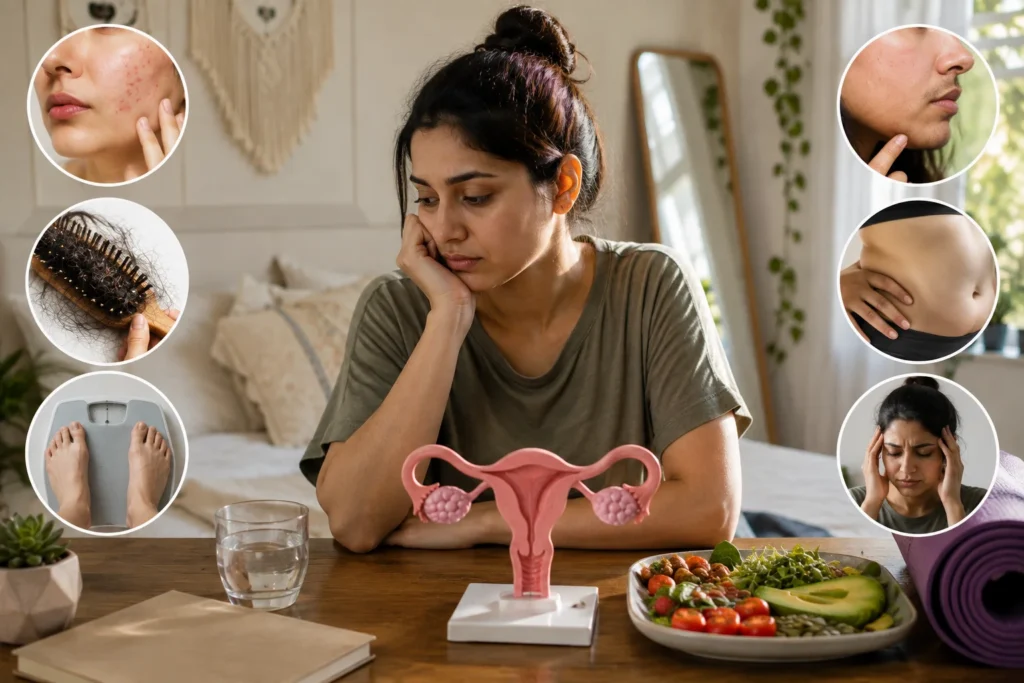
Excess facial hair, medically known as hirsutism, is one of the most noticeable and emotionally challenging symptoms of Polycystic Ovary Syndrome (PCOS).
Many women with PCOS experience coarse, dark hair growing on areas such as the chin, upper lip, jawline, or neck, where men typically develop facial hair.
Quick Answer
Excess facial hair (hirsutism) is a common symptom of Polycystic Ovary Syndrome (PCOS), affecting many women due to increased androgen (male hormone) activity or heightened sensitivity of hair follicles to these hormones. Facial hair commonly appears on the chin, upper lip, jawline, and neck. Although hirsutism can impact self-confidence, it can be effectively managed with lifestyle changes, medications, and cosmetic treatments such as laser hair reduction or electrolysis.
This occurs because PCOS often increases the production of androgens, commonly referred to as male hormones, which stimulate hair follicles in androgen-sensitive areas.
Although hirsutism is not harmful by itself, it can significantly affect self-confidence, body image, emotional well-being, and quality of life.
Women may spend considerable time and money managing unwanted hair through shaving, waxing, threading, or laser treatments, while also dealing with the underlying hormonal imbalance.
Understanding why hirsutism develops in PCOS is the first step toward effective management.
Early diagnosis, appropriate medical treatment, healthy lifestyle habits, and evidence-based hair removal options can help reduce symptoms and improve overall well-being.
Key Takeaways
- Hirsutism is one of the most common signs of hyperandrogenism in women with PCOS.
- Excess facial hair develops because increased androgen activity stimulates hair follicles in androgen-sensitive areas.
- The chin, upper lip, jawline, neck, chest, abdomen, and back are commonly affected.
- The Modified Ferriman-Gallwey Score helps healthcare providers assess the severity of hirsutism.
- Treatment may include lifestyle modifications, hormonal medications, anti-androgens, and long-term hair removal methods.
- Laser hair reduction and electrolysis can effectively reduce unwanted facial hair but do not cure PCOS.
- Early diagnosis and individualized treatment improve both physical symptoms and emotional well-being.
What Is Hirsutism?
Hirsutism refers to excessive growth of coarse, dark hair in women in areas where terminal hair is typically seen in men.
These areas include the face, chest, abdomen, back, and inner thighs.
Hair growth in women is generally classified into two types:
- Vellus hair: Fine, soft, light-colored hair covering most of the body.
- Terminal hair: Thick, coarse, dark hair that develops under the influence of androgens.
In women with PCOS, elevated androgen levels can cause vellus hairs to transform into terminal hairs in androgen-sensitive areas, resulting in unwanted facial and body hair growth.
It is important to note that hirsutism is different from hypertrichosis, which refers to excessive hair growth anywhere on the body that is not related to androgen activity.
How Common Is Hirsutism in Women with PCOS?
Hirsutism is one of the most common clinical signs of hyperandrogenism in women with PCOS.
Research suggests that approximately 60-80% of women with PCOS experience some degree of excess facial or body hair, although the severity varies widely among individuals.
Some women develop only a few coarse hairs on the chin or upper lip, while others experience more extensive hair growth involving multiple body areas.
The severity of hirsutism may also vary based on:
- Genetics
- Ethnicity
- Hormone levels
- Individual sensitivity of hair follicles to androgens
- Age
For example,
women from Mediterranean, Middle Eastern, and South Asian backgrounds may naturally have more terminal hair than women from East Asian populations, even with similar hormone levels. (Azziz et al. 2016)
Why Does PCOS Cause Excess Facial Hair?
The primary reason women with PCOS develop excess facial hair is hyperandrogenism, a condition characterized by elevated androgen levels or increased sensitivity of hair follicles to these hormones.
Normally, women produce small amounts of androgens in the ovaries and adrenal glands.
These hormones play important roles in maintaining bone health, muscle mass, and libido.
However, in PCOS:
- The ovaries produce higher-than-normal amounts of androgens.
- Insulin resistance may further stimulate androgen production.
- Hormonal imbalance disrupts normal ovarian function.
- Hair follicles become more responsive to androgen stimulation.
As androgen levels rise, fine facial hairs gradually become thicker, darker, and coarser.
Hair growth usually develops gradually over several months or years rather than appearing suddenly.
How Testosterone and Androgens Affect Hair Growth
Hair follicles respond differently depending on where they are located in the body.
Under the influence of testosterone and its more potent form, dihydrotestosterone (DHT):
- Facial hair follicles become more active.
- Hair growth cycles become longer.
- Hair shafts become thicker.
- Hair becomes darker and more visible.
At the same time, these hormones may have the opposite effect on scalp hair, contributing to female pattern hair thinning, another common symptom of PCOS.
Not every woman with PCOS develops severe hirsutism.
This is because the sensitivity of hair follicles to androgens is influenced by genetics, meaning two women with similar hormone levels may experience very different patterns of hair growth. (Legro et al. 2013)
Common Areas of Excess Hair Growth
Women with PCOS may notice increased hair growth in several androgen-sensitive areas.
Chin
The chin is one of the most commonly affected areas.
Hair may initially appear as a few coarse strands before gradually becoming denser over time.
Upper Lip
Dark hair on the upper lip is often one of the earliest signs of hirsutism and may require frequent removal.
Jawline
Many women experience thicker hair growth along the jawline, which may gradually extend toward the cheeks.
Neck
Coarse hair may develop beneath the chin and along the upper neck, sometimes becoming more noticeable with age.
Chest
Some women develop coarse hair around the nipples or on the upper chest due to increased androgen activity.
Abdomen
Hair growth may occur along the midline of the abdomen, extending from the navel toward the pubic region.
This pattern is commonly referred to as the “happy trail.”
Back
In more severe cases, coarse terminal hair may appear on the upper or lower back.
Symptoms Associated with Hirsutism
Women with PCOS who experience hirsutism may also notice other symptoms related to elevated androgen levels.
These may include:
- Excess facial hair
- Increased body hair
- Acne
- Oily skin
- Scalp hair thinning
- Irregular menstrual periods
- Difficulty becoming pregnant
- Weight gain
- Insulin resistance
- Darkened skin folds (acanthosis nigricans)
The severity of hirsutism does not always reflect the severity of PCOS.
Some women with mild hormonal changes develop significant facial hair, while others with higher androgen levels experience relatively little hair growth.
Recognizing these symptoms early allows healthcare providers to investigate the underlying cause and recommend appropriate treatment. (Spritzer et al. 2022)
How Is Hirsutism Diagnosed?
Diagnosing hirsutism involves identifying both the severity of unwanted hair growth and the underlying cause.
Since Polycystic Ovary Syndrome (PCOS) is responsible for approximately 70-80% of hirsutism cases in women of reproductive age,
healthcare providers also evaluate for other hormonal disorders that can cause excessive hair growth.
Diagnosis typically includes a detailed medical history, physical examination, assessment of hair growth patterns, hormone testing, and, when appropriate, imaging studies.
Medical History
Your healthcare provider may ask about:
- When the excess hair growth first appeared
- Whether hair growth has become progressively worse
- Menstrual cycle regularity
- Fertility concerns
- Acne or oily skin
- Scalp hair thinning
- Weight changes
- Family history of excessive hair growth
- Family history of PCOS
- Current medications
- Previous hormone treatments
A gradual onset of hirsutism beginning around puberty is more suggestive of PCOS, whereas sudden or rapidly progressing hair growth may require evaluation for other underlying conditions.
Physical Examination
During the examination, the healthcare provider evaluates:
- Distribution of excess hair
- Hair thickness and density
- Acne
- Oily skin
- Scalp hair thinning
- Body Mass Index (BMI)
- Waist circumference
- Blood pressure
- Signs of insulin resistance such as acanthosis nigricans
- Signs of virilization (deepening voice, increased muscle mass, or clitoral enlargement), which may indicate more serious androgen excess
The examination helps determine whether the hair growth pattern is consistent with PCOS or another endocrine disorder.
Ferriman-Gallwey Score
One of the most widely used methods for assessing hirsutism is the Modified Ferriman-Gallwey (mFG) Score.
This scoring system evaluates terminal hair growth in nine androgen-sensitive body areas:
- Upper lip
- Chin
- Chest
- Upper abdomen
- Lower abdomen
- Upper back
- Lower back
- Upper arms
- Thighs
Each area is scored from 0 to 4:
- 0 = No terminal hair
- 1 = Minimal hair growth
- 2 = Mild hair growth
- 3 = Moderate hair growth
- 4 = Extensive terminal hair growth
The individual scores are added together to obtain the total score.
Because hair growth varies among different ethnic groups, the cutoff value for diagnosing hirsutism may differ slightly between populations.
Healthcare providers interpret the score alongside clinical symptoms rather than relying on it alone.
Blood Tests
Hormone testing helps confirm hyperandrogenism and rule out other medical conditions that may cause excess facial hair.
Common laboratory tests include:
- Total Testosterone
- Free Testosterone
- Dehydroepiandrosterone Sulfate (DHEAS)
- Sex Hormone-Binding Globulin (SHBG)
- Luteinizing Hormone (LH)
- Follicle-Stimulating Hormone (FSH)
- Prolactin
- Thyroid-Stimulating Hormone (TSH)
- 17-Hydroxyprogesterone (to exclude non-classic congenital adrenal hyperplasia)
Depending on individual symptoms, healthcare providers may also recommend:
- Fasting blood glucose
- HbA1c
- Lipid profile
- Fasting insulin (when appropriate)
These investigations help identify metabolic abnormalities that commonly accompany PCOS.
Pelvic Ultrasound
Pelvic ultrasound is commonly performed when PCOS is suspected.
Ultrasound may reveal:
- Multiple small ovarian follicles
- Enlarged ovaries
- Increased ovarian volume
Ultrasound findings are combined with clinical symptoms and laboratory results because some women with PCOS may not have polycystic-appearing ovaries,
while others without PCOS may have similar ultrasound findings.
Other Causes of Excess Facial Hair
Although PCOS is the most common cause of hirsutism, healthcare providers also evaluate for other conditions when symptoms are unusual or rapidly progressive.
Other possible causes include:
- Non-classic congenital adrenal hyperplasia (CAH)
- Cushing’s syndrome
- Androgen-secreting ovarian tumors
- Adrenal tumors
- Certain medications (such as anabolic steroids or some hormonal therapies)
- Hyperprolactinemia
- Thyroid disorders
- Idiopathic hirsutism (normal hormone levels with increased hair follicle sensitivity)
Sudden onset of severe hirsutism, particularly when accompanied by rapid virilization, requires prompt medical evaluation.
Can Hirsutism Affect Fertility?
Hirsutism itself does not directly cause infertility.
However, because hirsutism is often a sign of elevated androgen levels associated with PCOS, it commonly occurs alongside irregular ovulation, which can make conception more difficult.
Women with PCOS may experience:
- Infrequent ovulation
- Absent ovulation (anovulation)
- Irregular menstrual cycles
- Difficulty becoming pregnant
The degree of facial hair growth does not necessarily predict fertility.
Some women with significant hirsutism conceive naturally, while others with mild hair growth may require fertility treatment.
With appropriate medical care, lifestyle modifications, and fertility treatments when necessary, many women with PCOS achieve successful pregnancies. (Spritzer et al. 2022)
Psychological and Emotional Impact
Hirsutism can have a profound effect on emotional well-being and quality of life.
Many women report feeling self-conscious about unwanted facial hair, particularly when it affects visible areas such as the chin, upper lip, or jawline.
Emotional challenges may include:
- Reduced self-esteem
- Poor body image
- Anxiety
- Depression
- Social withdrawal
- Relationship concerns
- Increased time spent on hair removal
The emotional impact varies from person to person and is not always related to the severity of hair growth.
Healthcare providers recognize the importance of addressing both the physical and psychological aspects of hirsutism when developing treatment plans.
Role of Physiotherapy and Lifestyle Management
Physiotherapy does not directly remove facial hair or lower androgen levels, but it plays an important role in addressing several underlying factors that contribute to PCOS.
Improving Insulin Sensitivity
Regular exercise improves insulin sensitivity, helping reduce one of the key drivers of excess androgen production.
Improved insulin regulation may contribute to better hormonal balance over time.
Supporting Healthy Weight Management
Weight reduction in overweight women with PCOS may decrease androgen levels and improve ovulation.
Even modest weight loss can help improve overall metabolic health and reduce the severity of PCOS symptoms.
Developing Sustainable Exercise Programs
A physiotherapist can design individualized exercise programs based on age, fitness level, and existing health conditions.
Programs often include:
- Aerobic exercise
- Resistance training
- Flexibility exercises
- Functional movement training
Improving Mental Well-being
Regular physical activity has been shown to:
- Reduce stress
- Improve mood
- Decrease symptoms of anxiety and depression
- Improve sleep quality
- Enhance self-confidence
These benefits are particularly valuable for women experiencing emotional distress related to hirsutism.
Reducing Long-Term Health Risks
Exercise also helps reduce the risk of:
- Obesity
- Type 2 diabetes
- Cardiovascular disease
- Metabolic syndrome
By addressing the underlying metabolic disturbances associated with PCOS, physiotherapy supports long-term health beyond cosmetic concerns. (Gautam et al. 2025)
How Is Hirsutism Treated?
The treatment of hirsutism in women with Polycystic Ovary Syndrome (PCOS) focuses on addressing the underlying hormonal imbalance, slowing new hair growth, and improving cosmetic appearance.
Since facial hair grows in cycles, it is important to understand that treatment takes time.
Most women notice meaningful improvement only after 6 to 12 months of consistent therapy.
The most effective treatment plan is individualized and may include lifestyle changes, medications, and hair removal techniques based on symptom severity, fertility goals, and personal preferences.
Weight Management
For women with overweight or obesity, achieving and maintaining a healthy weight can significantly improve PCOS symptoms.
Weight loss helps:
- Improve insulin sensitivity
- Lower androgen production
- Restore ovulation in some women
- Improve menstrual regularity
- Reduce the progression of excessive hair growth
- Enhance the effectiveness of medical treatments
Even a modest 5-10% reduction in body weight may provide meaningful improvements in hormonal balance and overall health.
Medications
Healthcare providers may recommend medications to reduce androgen levels or block their effects on hair follicles.
Treatment options may include:
- Combined oral contraceptive pills (COCPs): Often considered first-line therapy for women who are not trying to conceive. They reduce androgen production and improve menstrual regularity.
- Anti-androgen medications: Such as spironolactone, which block the action of androgens at the hair follicle. These medications are usually prescribed alongside effective contraception because they may affect a developing fetus.
- Insulin-sensitizing medications: Such as metformin, which may improve insulin resistance and indirectly reduce androgen levels in some women.
Because hair follicles have long growth cycles, medications primarily slow new hair growth rather than remove existing hair.
Temporary Hair Removal Methods
Many women combine medical treatment with cosmetic hair removal methods to achieve quicker improvements.
Common temporary methods include:
- Shaving
- Waxing
- Threading
- Tweezing
- Depilatory creams
These methods do not make hair grow back thicker or darker.
This common belief is a myth. Hair may appear coarser after shaving because the blunt edge of the cut hair becomes more noticeable as it grows.
Laser Hair Reduction
Laser hair reduction is one of the most effective long-term cosmetic treatments for hirsutism.
Laser treatment works by targeting melanin within the hair follicle, damaging it and slowing future hair growth.
Benefits include:
- Long-lasting hair reduction
- Slower regrowth
- Finer hair over time
- Improved cosmetic appearance
Several treatment sessions are usually required because hair follicles are active at different stages of the growth cycle.
Laser treatment is generally most effective for individuals with dark hair and lighter skin, although newer technologies have improved outcomes for a wider range of skin tones.
Electrolysis
Electrolysis is another long-term hair removal option.
During the procedure, a tiny probe is inserted into each hair follicle, and an electrical current destroys the follicle.
Electrolysis:
- Can permanently destroy individual hair follicles
- Works on all hair colors
- Is suitable for small treatment areas
- Usually requires multiple sessions
Although effective, electrolysis is more time-consuming than laser treatment because each follicle is treated individually. (Cleveland Clinic)
Lifestyle Changes That May Help
Lifestyle changes cannot immediately remove facial hair, but they play an important role in improving hormonal balance and preventing worsening symptoms.
Helpful lifestyle measures include:
Maintain a Healthy Weight
Maintaining a healthy body weight can reduce insulin resistance and improve androgen levels.
Follow a Balanced Diet
A nutritious diet emphasizing:
- Whole grains
- Lean protein
- Fruits
- Vegetables
- Healthy fats
- High-fiber foods
may support better metabolic and hormonal health.
Exercise Regularly
Aim for at least 150 minutes of moderate-intensity physical activity each week, along with muscle-strengthening exercises on two or more days per week.
Regular exercise improves:
- Insulin sensitivity
- Weight management
- Cardiovascular health
- Mood
- Energy levels
Manage Stress
Chronic stress may worsen hormonal imbalance in some women.
Helpful stress-management techniques include:
- Yoga
- Meditation
- Deep breathing exercises
- Walking
- Mindfulness practices
Get Adequate Sleep
Poor sleep may negatively affect insulin sensitivity, appetite regulation, and hormone balance.
Adults should generally aim for 7-9 hours of quality sleep each night.
Calculate your ideal sleep timings here: “Sleep Calculator“
Common Mistakes to Avoid
Managing hirsutism requires patience and a long-term approach.
Avoiding common mistakes can improve treatment outcomes.
Some common mistakes include:
- Expecting medications to work within a few weeks
- Stopping treatment too early because results seem slow
- Ignoring underlying PCOS while focusing only on hair removal
- Using unverified home remedies without medical advice
- Delaying evaluation when facial hair appears suddenly or worsens rapidly
- Neglecting weight management and regular exercise
- Missing follow-up appointments with healthcare providers
Myth vs Fact
| Myth | Fact |
|---|---|
| Shaving makes facial hair grow back thicker. | Shaving does not change the thickness, color, or growth rate of hair. The blunt edge simply makes hair appear coarser as it grows. |
| Every woman with PCOS develops facial hair. | Not all women with PCOS experience hirsutism. Symptoms vary depending on genetics, hormone levels, and hair follicle sensitivity. |
| Laser treatment cures PCOS. | Laser hair reduction removes unwanted hair but does not treat the hormonal imbalance responsible for PCOS. |
| Facial hair always means testosterone is very high. | Some women develop significant facial hair despite normal androgen levels because their hair follicles are more sensitive to these hormones. |
| There is no treatment for PCOS-related facial hair. | Several evidence-based treatments, including medications, laser therapy, electrolysis, and lifestyle changes, can significantly reduce unwanted hair growth. |
Myths About Facial Hair and PCOS
Myth 1: Shaving makes facial hair grow thicker.
Fact: Shaving does not change the thickness, color, or growth rate of hair. It only creates a blunt edge that may temporarily appear coarser.
Myth 2: Every woman with PCOS develops facial hair.
Fact: Hirsutism is common but not universal. Many women with PCOS never develop noticeable excess facial hair.
Myth 3: Laser treatment cures PCOS.
Fact: Laser hair reduction treats unwanted hair but does not correct the hormonal imbalance responsible for PCOS.
Myth 4: Losing weight immediately removes facial hair.
Fact: Weight loss may improve hormone levels and reduce new hair growth over time, but existing terminal hairs often require cosmetic treatment.
Myth 5: Facial hair always indicates high testosterone.
Fact: Some women develop hirsutism despite normal blood androgen levels because their hair follicles are more sensitive to these hormones.
Final Thoughts
Excess facial hair caused by Polycystic Ovary Syndrome (PCOS) can be physically and emotionally challenging, but it is a manageable condition. Understanding the hormonal changes behind hirsutism allows women to seek timely diagnosis and choose treatments that address both the underlying cause and unwanted hair growth. Combining healthy lifestyle habits, appropriate medical therapy, and effective cosmetic treatments can improve symptoms, boost confidence, and enhance overall quality of life. Regular follow-up with a healthcare provider ensures that treatment remains safe, effective, and tailored to individual needs.
Conclusion
Excess facial hair, or hirsutism, is one of the most common manifestations of PCOS and often results from increased androgen activity or heightened sensitivity of hair follicles to these hormones.
Although it can affect self-esteem and emotional well-being, effective treatments are available.
A combination of lifestyle modifications, appropriate medical therapy, and evidence-based hair removal methods can significantly reduce symptoms and improve quality of life.
Early diagnosis and individualized care not only help manage unwanted hair growth but also address the broader hormonal and metabolic challenges associated with PCOS.
Women experiencing persistent or rapidly worsening facial hair growth should seek medical evaluation to determine the underlying cause and receive appropriate treatment. (Spritzer et al. 2016)
Frequently Asked Questions (FAQs)
1. Why does PCOS cause facial hair?
PCOS increases androgen activity, which stimulates hair follicles in androgen-sensitive areas such as the chin, upper lip, and jawline, leading to coarse facial hair growth.
2. Can facial hair caused by PCOS be permanently removed?
Laser hair reduction and electrolysis provide long-term hair reduction, but ongoing hormonal management is important because PCOS can continue to stimulate new hair growth.
3. Does losing weight reduce facial hair in PCOS?
Weight loss may improve insulin resistance and lower androgen levels, helping slow new hair growth. Existing coarse hairs often require cosmetic treatment.
4. Is shaving safe for women with PCOS?
Yes. Shaving is a safe and effective temporary hair removal method and does not cause hair to grow back thicker or darker.
5. Which doctor should I consult for PCOS-related facial hair?
A gynecologist, endocrinologist, or dermatologist can evaluate hirsutism, identify the underlying cause, and recommend appropriate treatment.
6. Can hirsutism return after treatment?
Yes. Because PCOS is a long-term hormonal condition, new hair growth may occur if hormone levels remain uncontrolled, making ongoing management important.
Stay tuned with us for more health related topics.
Follow us on LinkedIn and Instagram for more.
More Read


Medical Disclaimer!
This article has been reviewed and written under the guidance of our Head Physiotherapist, Dr. Kruti Raj (PT, MUHS,CPT,CMPT). The information shared is intended for educational purposes only and should not be considered a substitute for personalized medical advice, diagnosis, or treatment.
Please consult us or any other qualified healthcare professional before beginning any exercise program, especially if you are experiencing pain, recovering from injury, or managing a medical condition.