High testosterone is one of the hallmark features of Polycystic Ovary Syndrome (PCOS)
It is responsible for many of its most noticeable symptoms, including excessive facial hair, persistent acne, scalp hair thinning, and irregular menstrual periods.
Although testosterone is commonly considered a male hormone, women naturally produce small amounts that play important roles in maintaining bone health, muscle strength, libido, and overall well-being.
Quick Answer
High testosterone in women with PCOS is caused by increased androgen production, often linked to insulin resistance and hormonal imbalance. It can lead to symptoms such as excessive facial hair, acne, scalp hair thinning, irregular periods, and fertility problems. Treatment usually includes healthy lifestyle changes, medications when appropriate, and regular medical follow-up to improve hormone balance and overall health.
In women with PCOS, the ovaries and, to a lesser extent, the adrenal glands may produce higher-than-normal levels of testosterone and other androgens.
This hormonal imbalance can interfere with ovulation, disrupt menstrual cycles, and contribute to metabolic complications such as insulin resistance.
Fortunately, high testosterone associated with PCOS can often be managed effectively through lifestyle changes, medical treatment, and ongoing monitoring.
Early diagnosis and appropriate care can help reduce symptoms, improve fertility, and lower the risk of long-term health complications. (Bushell et al. 2024)
Key Takeaways
- High testosterone is one of the defining hormonal features of PCOS.
- Common symptoms include hirsutism, acne, oily skin, scalp hair thinning, and irregular menstrual cycles.
- Insulin resistance plays a major role in increasing androgen production.
- High testosterone can affect fertility by interfering with normal ovulation.
- Diagnosis involves symptom assessment, blood tests, and sometimes pelvic ultrasound.
- Lifestyle modifications remain the first-line approach for managing PCOS-related hormonal imbalance.
- Medications may help regulate menstrual cycles, improve acne, and reduce excessive hair growth when prescribed by a healthcare professional.
- Regular exercise and physiotherapy support long-term hormonal and metabolic health.
What Is Testosterone?
Testosterone is an androgen hormone naturally produced in both men and women.
While men produce much larger amounts, women also require small quantities for normal body functions.
In women, testosterone is primarily produced by:
- The ovaries
- The adrenal glands
- Peripheral conversion of other hormones in body tissues
Normal testosterone levels help support:
- Bone strength
- Muscle mass
- Energy levels
- Libido (sexual desire)
- Mood
- Overall reproductive health
Problems arise when testosterone levels become higher than the normal female range,
leading to hormonal imbalances that affect the skin, hair, menstrual cycle, and fertility.
Is Testosterone Normal in Women?
Yes.
Every woman naturally produces testosterone, but in much smaller amounts than men.
Testosterone is an essential hormone for women and contributes to several important physiological functions.
It only becomes problematic when production increases significantly or when the body becomes more sensitive to androgen activity.
Women with PCOS often have:
- Elevated total testosterone
- Elevated free testosterone
- Increased androgen activity
- Reduced levels of sex hormone-binding globulin (SHBG), allowing more active testosterone to circulate in the bloodstream
Not every woman with PCOS has high testosterone levels on blood tests.
Some women may have normal laboratory values but still experience symptoms of androgen excess because their hair follicles and skin are more sensitive to these hormones.
Why Does PCOS Cause High Testosterone?
PCOS affects the normal balance of reproductive hormones, causing the ovaries to produce excessive amounts of androgens, including testosterone.
Several factors contribute to this hormonal imbalance.
Insulin Resistance
Many women with PCOS have insulin resistance, meaning their body’s cells do not respond effectively to insulin.
To compensate, the pancreas produces more insulin.
Elevated insulin levels stimulate the ovaries to produce additional testosterone while also reducing the production of sex hormone-binding globulin (SHBG) in the liver.
Lower SHBG means more free, biologically active testosterone circulates in the bloodstream, increasing symptoms of androgen excess.
Hormonal Imbalance
Women with PCOS often have an increased luteinizing hormone (LH) to follicle-stimulating hormone (FSH) ratio.
Higher LH levels stimulate ovarian theca cells to produce more androgens, contributing to elevated testosterone levels and impaired ovulation.
Genetic Factors
Research suggests that genetics plays an important role in PCOS. (Khan et al. 2019)
Women with a family history of PCOS, insulin resistance, or type 2 diabetes may be more likely to develop hormonal imbalances that increase androgen production.
Although no single gene causes PCOS, multiple genetic and environmental factors appear to contribute.
Chronic Low-Grade Inflammation
Some women with PCOS experience persistent low-grade inflammation.
Inflammatory processes may worsen insulin resistance and stimulate additional androgen production, creating a cycle that contributes to ongoing hormonal imbalance. (Azziz et al. 2016)
How High Testosterone Affects the Body
Excess testosterone influences multiple organs and body systems.
Common effects include:
- Increased facial and body hair growth
- Persistent acne
- Oily skin
- Scalp hair thinning
- Irregular ovulation
- Irregular menstrual periods
- Reduced fertility
- Weight gain in some women
- Increased insulin resistance
- Higher risk of metabolic syndrome
These symptoms vary considerably between individuals.
Some women have only mild signs of androgen excess, while others experience multiple symptoms that affect their physical and emotional well-being.
Common Symptoms of High Testosterone in Women with PCOS
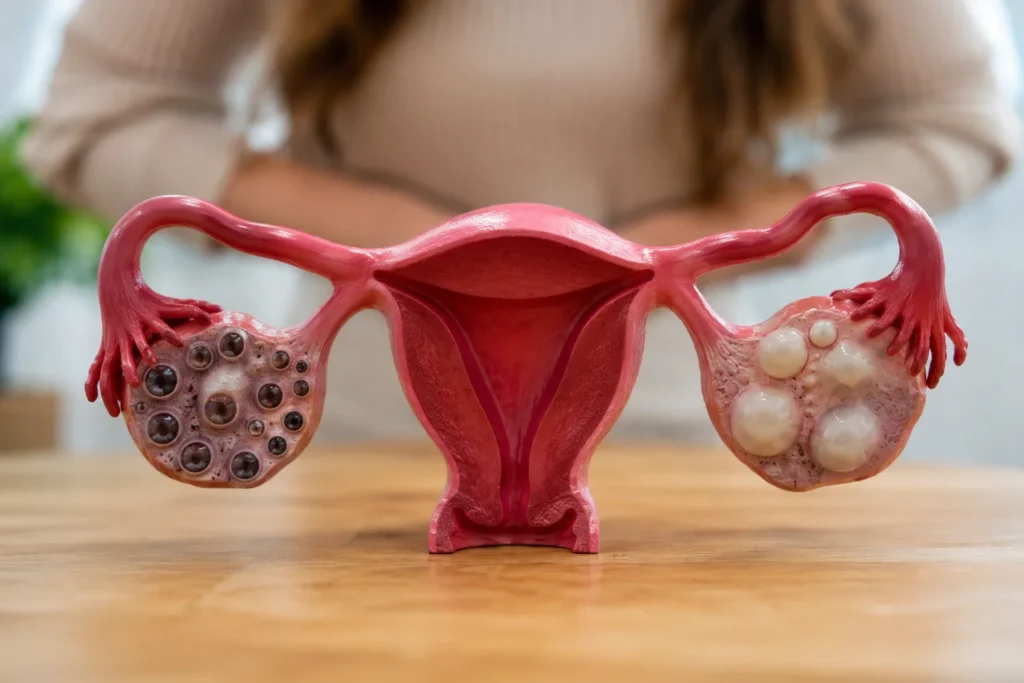
High testosterone can produce a wide range of symptoms.
Not every woman experiences all of them, and the severity can differ from person to person.
Excess Facial and Body Hair (Hirsutism)
Hirsutism refers to excessive growth of coarse, dark hair in areas where women typically have minimal hair.
Common sites include:
- Upper lip
- Chin
- Jawline
- Neck
- Chest
- Abdomen
- Lower back
- Inner thighs
This occurs because testosterone stimulates hair follicles, causing fine hairs to become thicker and darker over time.
Hirsutism affects approximately 60-80% of women with PCOS, making it one of the most common signs of androgen excess.
Acne and Oily Skin
Higher testosterone levels stimulate sebaceous (oil) glands in the skin.
As oil production increases, pores become more likely to clog, leading to:
- Persistent acne
- Blackheads
- Whiteheads
- Painful cystic acne
- Oily skin
Unlike teenage acne, PCOS-related acne often continues into adulthood and commonly affects the:
- Chin
- Jawline
- Neck
- Lower face
Hair Thinning (Female Pattern Hair Loss)
Although testosterone promotes hair growth in some parts of the body, it can contribute to hair thinning on the scalp.
Women may notice:
- Widening of the hair part
- Reduced hair density
- Thinning over the crown
- Increased hair shedding
Hair loss usually develops gradually and can significantly affect self-confidence and emotional well-being.
Irregular or Absent Menstrual Periods
High testosterone interferes with the normal growth and release of eggs from the ovaries.
As a result, ovulation may occur infrequently or not at all, leading to:
- Irregular periods
- Missed periods
- Long menstrual cycles
- Difficulty predicting ovulation
Persistent irregular menstrual cycles should be evaluated by a healthcare professional because prolonged absence of ovulation can increase the risk of endometrial abnormalities. (Legro et al. 2013)
Can High Testosterone Affect Fertility?
Yes.
High testosterone can interfere with normal ovulation, making it more difficult for women with PCOS to conceive naturally.
During a normal menstrual cycle, an egg matures and is released from the ovary.
Elevated testosterone disrupts this process by preventing the proper development and release of eggs.
As a result, women with high testosterone may experience:
- Infrequent ovulation
- No ovulation (anovulation)
- Irregular menstrual cycles
- Difficulty predicting fertile days
- Reduced chances of natural conception
Although fertility may be affected, high testosterone does not mean pregnancy is impossible.
Many women with PCOS successfully conceive through lifestyle modifications, ovulation-inducing medications, or assisted reproductive techniques when needed.
Maintaining a healthy weight, improving insulin sensitivity, and managing androgen levels may improve ovulation and reproductive outcomes.
Can High Testosterone Cause Weight Gain?
High testosterone itself is not considered the direct cause of weight gain, but it is closely linked with hormonal and metabolic changes that make weight management more challenging.
Many women with PCOS also have insulin resistance, which can:
- Increase fat storage
- Trigger stronger food cravings
- Make weight loss more difficult
- Promote abdominal fat accumulation
Weight gain, particularly around the abdomen, can further worsen insulin resistance and stimulate additional testosterone production, creating a cycle that reinforces hormonal imbalance.
However, not every woman with PCOS is overweight.
Women with Lean PCOS may also have elevated testosterone and experience symptoms despite having a normal body weight.
Can High Testosterone Affect Mental Health?
The physical symptoms of high testosterone, such as acne, unwanted facial hair, scalp hair thinning, and weight changes, can have a significant emotional impact.
Women with PCOS are more likely to experience:
- Anxiety
- Depression
- Low self-esteem
- Body image concerns
- Social embarrassment
- Reduced quality of life
Hormonal changes, combined with the emotional challenges of living with a chronic condition, may contribute to psychological distress.
Seeking support through counseling, support groups, stress-management techniques, and regular physical activity can improve emotional well-being.
Healthcare providers should consider both physical and mental health when managing women with PCOS.
How Is High Testosterone Diagnosed?
Diagnosing high testosterone involves evaluating symptoms, performing a physical examination, and conducting laboratory investigations.
No single test alone confirms the diagnosis, so healthcare providers consider multiple factors.
Medical History
The doctor will ask about:
- Menstrual cycle regularity
- Acne
- Excess facial or body hair
- Hair thinning
- Weight changes
- Fertility concerns
- Family history of PCOS or diabetes
- Current medications
- Previous pregnancies
This information helps identify patterns that may suggest androgen excess.
Physical Examination
A physical examination may include assessment of:
- Body mass index (BMI)
- Waist circumference
- Blood pressure
- Acne severity
- Distribution of excess body hair
- Pattern of scalp hair loss
- Skin changes such as acanthosis nigricans, which may indicate insulin resistance
Doctors may also use the Modified Ferriman-Gallwey (mFG) score to assess the severity of hirsutism.
Blood Tests
Blood tests help measure androgen levels and exclude other hormonal conditions.
Tests may include:
- Total testosterone
- Free testosterone
- Sex hormone-binding globulin (SHBG)
- Dehydroepiandrosterone sulfate (DHEAS)
- Luteinizing hormone (LH)
- Follicle-stimulating hormone (FSH)
- Prolactin
- Thyroid function tests
- Blood glucose and HbA1c
- Lipid profile
Because hormone levels fluctuate, results should always be interpreted alongside symptoms and other clinical findings.
Imaging Studies
If PCOS is suspected, a pelvic ultrasound may be recommended to evaluate the ovaries.
Ultrasound can identify:
- Multiple small ovarian follicles
- Increased ovarian volume
- Features consistent with polycystic ovarian morphology
Imaging also helps exclude ovarian tumors or other structural abnormalities when testosterone levels are unusually high. (Lujan et al. 2009)
What Other Conditions Can Cause High Testosterone?
Although PCOS is the most common cause of high testosterone in women of reproductive age, other medical conditions can also increase androgen levels.
These include:
Congenital Adrenal Hyperplasia (CAH)
An inherited disorder affecting the adrenal glands that can increase androgen production.
Cushing Syndrome
A condition caused by excessive cortisol production, which may also lead to elevated androgen levels and symptoms such as weight gain, high blood pressure, and menstrual irregularities.
Androgen-Secreting Tumors
Rare tumors of the ovaries or adrenal glands can produce large amounts of testosterone.
Healthcare providers may suspect this condition when:
- Symptoms develop suddenly
- Testosterone levels are extremely high
- Rapid virilization occurs
Signs of virilization include:
- Deepening of the voice
- Enlargement of the clitoris
- Rapid muscle development
- Significant male-pattern hair growth
These symptoms require urgent medical evaluation.
Certain Medications
Some medications and anabolic steroids may increase androgen levels or produce symptoms similar to high testosterone.
Healthcare providers review medication history carefully during assessment.
How Can Physiotherapy Help Women with High Testosterone?
Physiotherapy does not directly lower testosterone levels, but it plays an important role in addressing the metabolic effects of PCOS that contribute to androgen excess.
An individualized physiotherapy program can help improve:
Insulin Sensitivity
Structured aerobic and resistance exercise improves the body’s response to insulin, helping reduce one of the major drivers of excessive androgen production.
Weight Management
Regular physical activity supports:
- Healthy body composition
- Fat loss
- Muscle strength
- Increased calorie expenditure
Weight reduction in women with overweight or obesity may help lower circulating androgen levels and improve ovulation.
Cardiovascular Health
Women with PCOS have a higher risk of metabolic syndrome and cardiovascular disease.
Exercise prescribed by physiotherapists helps:
- Improve blood pressure
- Improve cholesterol levels
- Increase endurance
- Support heart health
Mental Well-being
Exercise has been shown to reduce stress, anxiety, and depressive symptoms while improving confidence and body image in women living with PCOS.
Long-Term Lifestyle Success
Physiotherapists develop personalized exercise programs that match a woman’s age, fitness level, symptoms, and medical conditions.
These individualized plans improve long-term adherence to physical activity, making it easier to manage PCOS and reduce the effects of high testosterone over time.
How Is High Testosterone Treated?
The treatment of high testosterone in women with Polycystic Ovary Syndrome (PCOS) depends on several factors, including age, symptoms, pregnancy plans, and overall health.
There is no single treatment that works for everyone, so management is usually personalized.
The main goals of treatment are to:
- Reduce androgen (testosterone) levels
- Restore regular ovulation and menstrual cycles
- Improve acne and excessive hair growth
- Prevent long-term metabolic complications
- Improve fertility when pregnancy is desired
- Enhance overall quality of life
Treatment often combines lifestyle modifications, medications, and regular follow-up.
Lifestyle Changes
Healthy lifestyle habits are considered the foundation of PCOS management.
These include:
- Maintaining a healthy body weight
- Eating a balanced, nutrient-rich diet
- Exercising regularly
- Managing stress
- Getting adequate sleep
- Avoiding smoking
Even modest weight loss in women with overweight or obesity may reduce insulin resistance, lower circulating androgen levels, and improve ovulation.
Medications
Healthcare providers may prescribe medications depending on individual symptoms.
Examples include:
- Combined oral contraceptive pills to regulate menstrual cycles and reduce androgen production.
- Anti-androgen medications (such as spironolactone) to help reduce excessive hair growth and acne. These medications are usually prescribed alongside reliable contraception because they may affect a developing male fetus.
- Metformin to improve insulin sensitivity, particularly in women with insulin resistance or type 2 diabetes.
- Ovulation-inducing medications for women trying to conceive.
Medication choices should always be individualized and discussed with a healthcare professional. (Legro et al. 2013)
Lifestyle Changes That Help Lower Androgen Levels
Although lifestyle changes may not completely normalize testosterone levels in every woman, they can significantly improve hormonal balance and reduce symptoms over time.
Maintain a Healthy Weight
For women with overweight or obesity, losing approximately 5-10% of body weight may improve:
- Insulin sensitivity
- Ovulation
- Menstrual regularity
- Testosterone levels
- Fertility outcomes
Even small reductions in body weight can have meaningful health benefits.
Exercise Regularly
Regular physical activity improves insulin sensitivity and supports healthy hormone regulation.
A balanced exercise routine should include:
- Aerobic exercise
- Resistance training
- Flexibility exercises
Aim for at least 150 minutes of moderate-intensity physical activity each week, along with muscle-strengthening exercises on two or more days.
Follow a Balanced Diet
A nutrient-rich eating pattern can help improve metabolic health.
Choose foods such as:
- Whole grains
- Fruits
- Vegetables
- Lean proteins
- Healthy fats
- Legumes
- Nuts and seeds
Limit:
- Sugary drinks
- Highly processed foods
- Excess refined carbohydrates
- Trans fats
Improve Sleep
Poor sleep may worsen insulin resistance and hormonal imbalance.
Healthy sleep habits include:
- Sleeping 7 to 9 hours nightly
- Maintaining a regular sleep schedule
- Reducing screen time before bed
- Creating a comfortable sleep environment
Calculate your ideal sleep timings here : “Sleep Calculator“
Manage Stress
Chronic stress may contribute to hormonal imbalance through increased cortisol production.
Helpful stress-management strategies include:
- Meditation
- Deep breathing
- Yoga
- Mindfulness
- Walking outdoors
- Hobbies
- Counseling when needed
Common Mistakes to Avoid
Many women unknowingly adopt habits that make managing high testosterone more difficult.
Ignoring Irregular Periods
Irregular or absent menstrual periods should not be ignored.
Persistent lack of ovulation can increase the risk of endometrial hyperplasia and other reproductive health problems.
Expecting Symptoms to Improve Overnight
Hair growth, acne, and scalp hair thinning often improve gradually.
It may take several months before noticeable changes occur after starting treatment.
Stopping Medications Without Medical Advice
Some women discontinue treatment as soon as symptoms begin to improve.
Stopping medications without consulting a healthcare provider may allow androgen levels to rise again and symptoms to return.
Relying Only on Supplements
Although certain supplements may support overall health, they cannot replace lifestyle modifications or prescribed medical treatments for managing high testosterone.
Comparing Symptoms With Other
Every woman with PCOS experiences different symptoms and hormone levels.
Treatment plans should always be individualized rather than based on someone else’s experience.
Myth vs Fact
| Myth | Fact |
|---|---|
| High testosterone means a woman becomes masculine. | High testosterone may cause androgen-related symptoms but does not change a woman’s biological sex. |
| Every woman with PCOS has high testosterone. | Some women have normal testosterone levels but increased sensitivity to androgens. |
| High testosterone always causes infertility. | Many women with PCOS conceive naturally or with appropriate fertility treatment. |
| Removing facial hair treats the hormone problem. | Hair removal improves appearance but does not lower testosterone levels. |
| PCOS is cured once testosterone becomes normal. | PCOS is a long-term condition that requires ongoing management. |
Myths About High Testosterone in Women with PCOS
Myth 1: High testosterone means a woman is becoming masculine.
Fact: Elevated testosterone can cause symptoms such as acne, hirsutism, and scalp hair thinning, but it does not change a woman’s biological sex or identity.
Myth 2: Every woman with PCOS has high testosterone.
Fact: Some women have elevated testosterone on blood tests, while others have normal levels but increased sensitivity to androgens.
Myth 3: High testosterone always causes infertility.
Fact: High testosterone can interfere with ovulation, but many women with PCOS conceive naturally or with appropriate fertility treatment.
Myth 4: Removing facial hair solves the hormonal problem.
Fact: Hair removal methods improve appearance but do not reduce testosterone levels or treat the underlying hormonal imbalance.
Myth 5: Once testosterone levels improve, PCOS is cured.
Fact: PCOS is a lifelong condition. Managing testosterone helps control symptoms, but ongoing lifestyle habits and medical follow-up remain important.
Final Thoughts
High testosterone is a common feature of Polycystic Ovary Syndrome (PCOS) and can affect physical appearance, reproductive health, and overall well-being. While symptoms such as acne, excessive hair growth, and irregular periods can be frustrating, they are often manageable with early diagnosis, healthy lifestyle habits, appropriate medical treatment, and regular follow-up. Working closely with a healthcare team can help improve hormone balance, support fertility, reduce long-term health risks, and enhance quality of life.
Conclusion
High testosterone is one of the defining hormonal features of Polycystic Ovary Syndrome (PCOS) and contributes to symptoms such as:
excessive facial hair, acne, scalp hair thinning, irregular menstrual cycles, and fertility challenges.
Although these symptoms can be distressing, they can often be managed successfully with early diagnosis, personalized treatment, and healthy lifestyle changes.
A combination of balanced nutrition, regular physical activity, weight management, stress reduction, appropriate medications, and routine medical follow-up;
offers the best approach to controlling androgen levels and improving long-term reproductive and metabolic health.
Frequently Asked Questions (FAQs)
1. Does PCOS always cause high testosterone?
No. Some women with PCOS have elevated testosterone levels, while others have normal hormone levels but increased sensitivity to androgens.
2. Can high testosterone cause facial hair in women?
Yes. Elevated androgen levels can stimulate hair follicles, leading to excessive facial and body hair growth, known as hirsutism.
3. Can high testosterone affect pregnancy?
High testosterone may interfere with ovulation and reduce fertility, but many women with PCOS can still conceive with appropriate treatment.
4. Can exercise reduce testosterone levels in PCOS?
Regular exercise improves insulin sensitivity and metabolic health, which may help lower androgen levels over time.
5. Is high testosterone dangerous?
High testosterone itself is not usually life-threatening, but untreated hormonal imbalance may increase the risk of infertility, metabolic syndrome, and type 2 diabetes.
6. Can diet help lower testosterone naturally?
A balanced diet that supports healthy weight and insulin sensitivity may help improve hormone balance in women with PCOS.
Stay tuned with us for more health related topics.
Follow us on LinkedIn and Instagram for more.
More Read


Medical Disclaimer!
This article has been reviewed and written under the guidance of our Head Physiotherapist, Dr. Kruti Raj (PT, MUHS,CPT,CMPT). The information shared is intended for educational purposes only and should not be considered a substitute for personalized medical advice, diagnosis, or treatment.
Please consult us or any other qualified healthcare professional before beginning any exercise program, especially if you are experiencing pain, recovering from injury, or managing a medical condition.