


Does your buttock hurt when you sit for a long time, drive, cycle, or get up from a chair?
One possible cause is ischial bursitis, a condition affecting a small fluid-filled sac near the bones you sit on.
Quick Answer: Ischial Bursitis
Ischial bursitis is irritation of a small fluid-filled sac near the sitting bones at the bottom of the pelvis. It can cause localised buttock pain that becomes worse when sitting, particularly on hard surfaces or for long periods.
- Common triggers: Prolonged sitting, direct pressure, repetitive activity or a fall.
- What may help: Regular movement breaks, comfortable seating and individually tailored physiotherapy.
- Important: Proximal hamstring tendinopathy and nerve-related pain can cause similar symptoms.
When to seek help: Get assessed if pain persists, worsens, or is accompanied by swelling, fever, a new lump or neurological symptoms.
However, pain around the sitting bones does not always mean bursitis.
Proximal hamstring tendinopathy, nerve irritation, and lower-back problems can cause similar discomfort.
Understanding these differences is important because the right physiotherapy approach depends on the tissues involved.
Key Takeaways
Ischial bursitis can cause pain around the sitting bones, but hamstring tendinopathy and nerve irritation can feel similar.
Try movement breaks, comfortable seating and temporary adjustments to activities that reproduce symptoms.
Physiotherapy may include progressive hip and hamstring strengthening, depending on the diagnosis and symptom response.
Improvement depends on the affected tissues, symptom duration and how well aggravating loads are managed.
Fever, a new or enlarging lump, significant weakness or bladder and bowel changes require prompt medical attention.
What Is Ischial Bursitis?
Ischial bursitis, also known as ischiogluteal bursitis, occurs when the bursa near the ischial tuberosity becomes irritated.
The ischial tuberosities are the bony prominences at the bottom of the pelvis, commonly called the sitting bones.
The bursa helps reduce friction between the sitting bone and the overlying gluteus maximus muscle.
During sitting, body weight compresses this region, which may aggravate an already sensitive bursa.
Prolonged pressure, repeated friction, or a direct impact can contribute to symptoms.
The condition is sometimes called “weaver’s bottom” because of its historical association with prolonged sitting on firm surfaces. (Johnson & Varacallo, 2024)
Why Does Your Buttock Hurt When Sitting?
1. Direct pressure on the sitting bones
When you sit, body weight passes through the pelvis.
If the bursa or nearby tissues are sensitive, pressure against a chair can trigger localized pain.
Symptoms may be worse on hard seats or after long periods without a break.
Some people also experience discomfort when standing up after sitting.
2. Repeated friction around the hip
The gluteal muscles and hamstring tendons move around the sitting bones during everyday activities. Repetitive movement combined with pressure may irritate these tissues.
Cycling, running, rowing, and activities involving repeated hip movement can aggravate symptoms in some people.
3. Prolonged sitting without movement breaks
Remaining in one position for a long time can maintain pressure on the affected region.
This may make desk work, long-distance driving, and travel uncomfortable.
The problem is not necessarily poor posture.
Even a person with good sitting posture may develop symptoms when the duration or intensity of pressure exceeds the tissues’ tolerance.
4. A fall or sudden increase in activity
A direct fall onto the buttocks can injure the bursa or surrounding tissues. Similarly, suddenly increasing running distance, cycling duration, or hamstring training may overload the area.
If the pain started after a sudden injury, particularly with bruising, weakness, or difficulty walking, seek medical assessment rather than assuming it is bursitis.
What Are the Symptoms of Ischial Bursitis?
Symptoms vary according to the degree of irritation and whether nearby structures are also involved.
Common symptoms include:
- Localized buttock pain: Discomfort around one sitting bone.
- Pain during sitting: Symptoms may worsen on firm surfaces or during long journeys.
- Tenderness: The area around the sitting bone may hurt when pressed.
- Pain when standing up: Moving from sitting to standing may reproduce discomfort.
- Upper hamstring pain: Aching may extend into the back of the upper thigh.
- Reduced sitting tolerance: Working, driving, or socializing may become difficult.
- Occasional swelling: Some people notice a lump or fullness in the buttock region.
Pain extending down the leg can occur, but tingling, numbness, or weakness may suggest nerve involvement.
A new or enlarging lump needs medical assessment rather than being automatically attributed to bursitis.
What Causes Ischial Bursitis?
Several factors can contribute to irritation around the sitting bones.
Prolonged sitting
Sitting for extended periods, particularly on hard surfaces, can repeatedly compress the area.
Drivers and people who work at desks may notice symptoms when they cannot change position regularly.
Cycling and repetitive exercise
Cycling and other repetitive activities can expose the tissues around the sitting bones to repeated pressure or friction.
A sudden increase in training duration or intensity may make symptoms more likely.
Hamstring overload
The hamstring tendons attach close to the ischial tuberosity.
Sprinting, hill running, heavy resistance training, and sudden increases in training load can irritate these tendons and produce pain similar to bursitis.
Direct trauma
Falling onto the buttocks or sustaining a direct impact can irritate or injure the bursa and nearby tissues.
Inflammatory conditions
Less commonly, inflammatory disorders or infection can contribute to bursal inflammation.
These situations require medical assessment because their treatment differs from routine mechanical irritation.
Ischial Bursitis or Hamstring Tendinopathy?
One of the most important distinctions is between ischial bursitis and proximal hamstring tendinopathy.
Both can cause deep buttock pain near the sitting bones because the bursa and hamstring tendon attachments are close together.
| Feature | Ischial bursitis | Proximal hamstring tendinopathy |
|---|---|---|
| Main tissue involved | Ischial bursa | Hamstring tendon attachment |
| Pain during sitting | Often prominent | Often prominent |
| Pain during running | Possible | Common, particularly with faster running |
| Pain with resisted hamstring activity | May occur | Often a useful assessment clue |
| Swelling | Sometimes present | Not usually the main feature |
| Rehabilitation focus | Reduce aggravating pressure and restore function | Manage tendon loading and progressively rebuild strength |
These patterns are clues, not diagnostic rules. The conditions can also occur together.
Sciatica, lower-back referred pain, deep gluteal nerve irritation, and tailbone pain are other possible causes of discomfort in this region. (Goom et al., 2016)
How Is Ischial Bursitis Diagnosed?
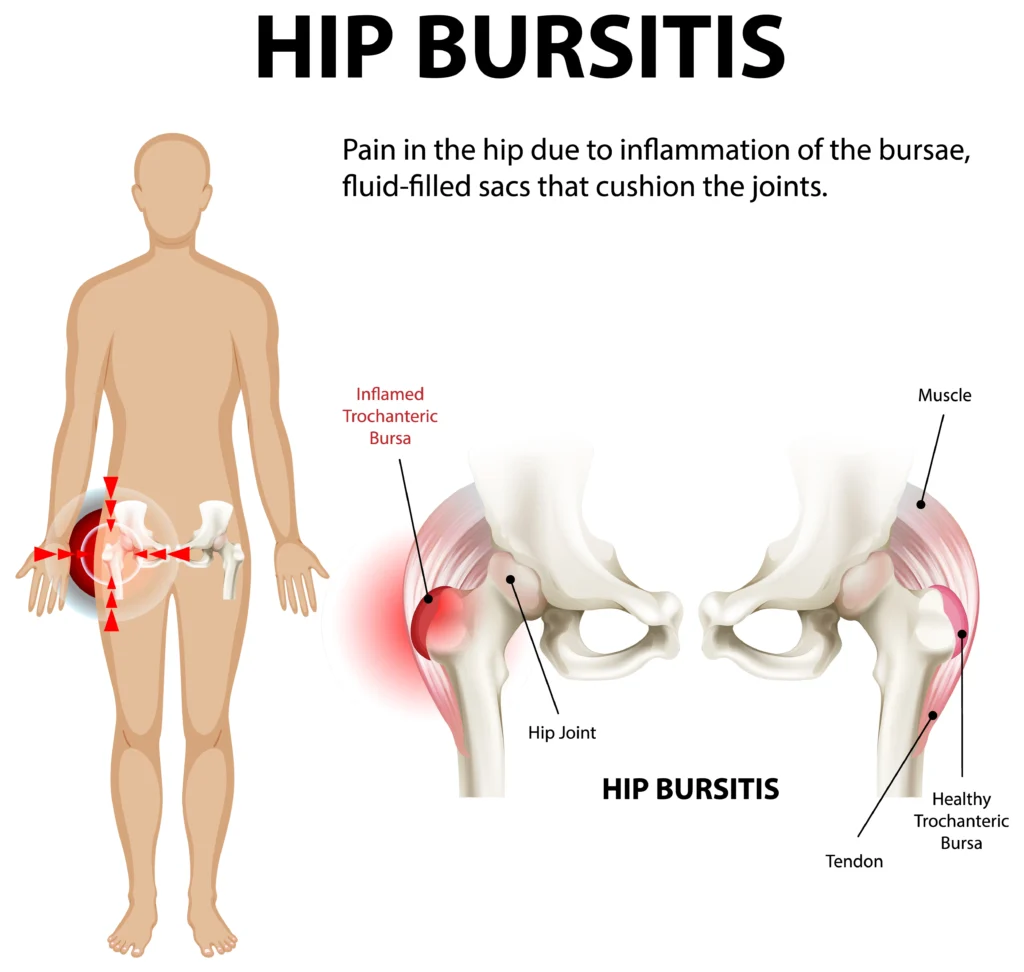
A physiotherapist or doctor will ask when the pain started, where it is located, which activities aggravate it, and whether there has been a recent injury or change in exercise.
The physical examination may include:
- Checking the location and pattern of tenderness.
- Assessing hip and lower-back movement.
- Testing hamstring strength and tolerance to loading.
- Examining nerve-related symptoms when indicated.
- Reviewing sitting tolerance, walking, and other functional activities.
No single symptom or physical test can confirm the diagnosis in every case.
Are X-rays, ultrasound, or MRI necessary?
Imaging is not always required.
When symptoms are atypical or the diagnosis remains uncertain, ultrasound may help identify bursal swelling.
MRI can provide further detail about the bursa, hamstring tendons, and surrounding tissues.
Imaging results must be interpreted alongside the clinical assessment. A scan finding alone does not prove that the bursa is responsible for the pain.
Physiotherapy Treatment for Ischial Bursitis
Physiotherapy aims to reduce aggravating pressure, improve comfortable movement, and restore strength and tolerance for daily activities.
Because research specifically evaluating physiotherapy for ischial bursitis is limited, treatment should be individualised rather than based on a single standard exercise programme.
1. Modify sitting habits
Reducing direct pressure on the painful area is an important first step.
- Break up long sitting periods with short standing or walking breaks.
- Try a supportive cushion that distributes pressure comfortably.
- Adjust your chair height so your feet are supported and your sitting position feels comfortable.
- During long drives, plan opportunities to stop and move.
- Temporarily reduce activities that consistently trigger a prolonged increase in pain.
A cut-out cushion may help some people, but there is no single cushion design that works for everyone.
Choose one based on comfort and pressure relief.
2. Maintain comfortable movement
Complete rest is not usually necessary for uncomplicated mechanical pain. Gentle walking and tolerable daily movement can help maintain activity while symptoms settle.
Temporarily reduce the duration or intensity of activities that aggravate the area. Gradually reintroduce them as sitting tolerance and movement improve.
3. Start gentle strengthening when appropriate
The initial exercise program should match the clinical findings and current irritability of the area.
A physiotherapist may begin with comfortable gluteal contractions or low-load hip exercises.
If hamstring tendinopathy is suspected, exercises may initially be selected to strengthen the hamstrings without excessive compression at their attachment.
4. Progress hip and hamstring loading
When symptoms are more manageable, strengthening may progress to exercises such as bridges, controlled hamstring resistance exercises, and hip or pelvic stability training.
The physiotherapist can adjust the range of movement, resistance, repetitions, and frequency according to the person’s response.
Do not force exercises through sharp or increasing pain. If symptoms remain significantly worse after a session, reduce the load or range and seek professional guidance.
Evidence for progressive strengthening is more established in proximal hamstring tendinopathy than in isolated ischial bursitis, so the program should reflect the actual diagnosis. (Nasser et al., 2021)
5. Be careful with hamstring stretching
Hamstring stretching is not automatically beneficial for buttock pain. Deep hip flexion combined with knee extension can increase compression around the proximal hamstring tendon.
If the tendon is involved, aggressive stretching may aggravate symptoms. A physiotherapist can determine whether stretching is appropriate and select a comfortable range.
6. Return to sport gradually
Runners and cyclists may need temporary adjustments to training volume, intensity, hills, sprinting, or time spent in the saddle.
Return to sport should be progressive. Increase one aspect of training at a time and monitor how the area responds rather than immediately returning to the previous workload.
Can You Treat Ischial Bursitis at Home?
Mild symptoms may improve with practical changes, especially when prolonged pressure is a major aggravating factor.
You can try:
- Taking regular breaks from sitting.
- Using a comfortable pressure-relieving cushion.
- Applying a wrapped cold pack briefly if it provides relief.
- Keeping up gentle, tolerable movement.
- Temporarily reducing activities that reproduce pain.
- Following a suitable strengthening program when appropriate.
Avoid forceful massage directly over the painful sitting bone or repeatedly stretching into pain.
If symptoms persist, recur frequently, or interfere with everyday activities, arrange a clinical assessment.
Medication or an image-guided injection may be considered by a clinician in selected cases, but neither is necessary for everyone. (McGill et al., 2022)
How Long Does Ischial Bursitis Take to Heal?
Recovery depends on the severity of irritation, how long symptoms have been present, and whether nearby structures are also involved.
Mild symptoms may settle over days to several weeks after aggravating pressure is reduced. Persistent or recurrent pain may take longer and require a structured rehabilitation program.
Useful signs of progress include being able to sit for longer, standing up more comfortably, and returning to normal activities without a prolonged symptom flare.
There is no single recovery timeline that applies to everyone. If pain is not improving, reassessment can help identify other contributing factors or an alternative diagnosis.
How Can You Prevent Recurring Sitting Bone Pain?
Although not every episode can be prevented, a few practical habits may reduce repeated irritation.
- Break up sitting time: Change position regularly instead of remaining seated for hours.
- Increase training gradually: Avoid sudden increases in running, cycling, or hamstring exercise volume.
- Build strength progressively: Improve hip and hamstring capacity with an appropriate exercise program.
- Respond to early symptoms: Adjust activities when pain repeatedly appears rather than pushing through escalating discomfort.
- Review your workspace: Use a comfortable chair and sitting arrangement that allows regular movement.
Prevention is not about maintaining one perfect posture. It is about managing prolonged pressure and gradually building tolerance for the activities you need to perform.
Ischial Bursitis: Myth vs Fact
MYTH: All pain when sitting is bursitis.
FACT: Proximal hamstring tendinopathy, referred lower-back pain and nerve irritation can cause similar symptoms.
MYTH: Complete rest is always best.
FACT: When appropriate, comfortable movement and gradual return to activity can help maintain function while aggravating loads are adjusted.
MYTH: Hamstring stretching always helps.
FACT: Deep hip flexion and forceful stretching may aggravate proximal hamstring tendinopathy. Exercise selection should match the clinical assessment.
MYTH: A scan alone confirms bursitis.
FACT: Imaging findings need to be interpreted alongside symptoms and a clinical examination.
When Should You Seek Medical Advice?
Seek urgent medical attention for buttock pain accompanied by:
- New loss of bladder or bowel control, difficulty passing urine, or numbness around the groin or saddle region.
- Significant or rapidly worsening leg weakness.
- Severe pain following a major fall or injury, especially if you cannot walk normally.
Arrange prompt medical assessment if you develop fever, redness or warmth around the painful area, rapidly increasing swelling, a new or enlarging lump, or persistent pain that is worsening or occurring at rest.
These symptoms are not typical of simple pressure-related bursitis and may require investigation for another condition.
A Lesser-Known Fact About Sitting Bone Pain
Pain directly over the sitting bone does not prove that the bursa is inflamed. The proximal hamstring tendons attach to the same bony region, and their symptoms can closely resemble bursitis.
In some cases, both structures may be involved.
This matters because a program focused only on reducing pressure may not fully address a tendon problem, while aggressive strengthening or stretching may aggravate a sensitive area if loading progresses too quickly.
A careful assessment helps identify which structures are likely involved and guides an appropriate rehabilitation plan.
Final Thoughts
Buttock pain while sitting can interfere with work, travel, exercise and everyday comfort. Ischial bursitis is one possible explanation, but similar symptoms can arise from the proximal hamstring tendons, nerves or lower back.
Small changes, such as taking regular movement breaks, adjusting sitting pressure and avoiding activities that repeatedly aggravate symptoms, may help. When needed, physiotherapy can guide a gradual return to movement and progressive strengthening based on the underlying cause.
Remember: Persistent pain deserves a proper assessment. Identifying the affected tissue is an important step towards choosing the right treatment and returning to comfortable sitting.
Conclusion
Ischial bursitis is one possible cause of buttock pain when sitting, particularly when discomfort is concentrated around a sitting bone and worsens with direct pressure.
Prolonged sitting, repetitive activity, and direct trauma can contribute to irritation.
However, proximal hamstring tendinopathy, nerve irritation, and lower-back problems can produce similar symptoms.
Physiotherapy can help through activity modification, comfortable movement, and carefully progressed strengthening based on the clinical assessment.
If pain persists, worsens, or is accompanied by a new lump, fever, significant weakness, or other warning signs, seek professional assessment rather than assuming the cause is bursitis.
Frequently Asked Questions
1. Can ischial bursitis cause pain down the leg?
It can cause pain that spreads into the upper back of the thigh. Pain extending further down the leg, especially with tingling, numbness or weakness, may indicate nerve involvement and should be assessed.
2. Is walking good for ischial bursitis?
Gentle walking is often reasonable if it does not significantly increase symptoms. Adjust the duration and intensity to your tolerance, and seek guidance if walking causes worsening pain.
3. Should I use a donut cushion?
A cushion may help reduce pressure, but comfort and pressure distribution vary. Choose a supportive cushion that makes sitting more comfortable and change position regularly.
4. Can physiotherapy cure ischial bursitis?
Physiotherapy can help manage symptoms, restore movement and improve strength and activity tolerance. Outcomes depend on the cause of the pain and whether other tissues are involved.
5. Is heat or ice better for ischial bursitis?
Either may provide temporary comfort. Use whichever feels helpful, protect your skin, and seek assessment if symptoms persist or worsen.
Stay tuned with us for more health related topics.
Follow us on LinkedIn and Instagram for more.
More Read


Medical Disclaimer
This article is intended for general educational purposes only and does not replace professional medical advice, diagnosis or treatment. Buttock pain when sitting can have several causes, and the information provided here cannot confirm that you have ischial bursitis.
Consult a qualified healthcare professional if your symptoms persist, worsen or interfere with daily activities. Seek urgent medical attention for new bladder or bowel control problems, numbness around the groin or saddle region, or significant or rapidly worsening leg weakness. Do not delay assessment because of information in this article.


