


A lot of women become nervous the moment running starts feeling different during pregnancy.
Not painful exactly.
Just unfamiliar.
You may suddenly feel breathless earlier than usual.
Your hips may feel tighter after a short run.
Some women describe a strange heaviness in the pelvis that never existed before pregnancy.
And honestly, this is where confusion starts.
One article says running during pregnancy is completely safe.
Another says impact exercise is risky.
Social media makes it worse because someone is always posting pregnancy workouts that look impossible for normal people.
Quick Answer
Running during pregnancy can be safe for many women with healthy pregnancies, especially if they were already runners before becoming pregnant. However, pregnancy changes breathing, recovery, pelvic floor pressure, and joint stability, which means training often needs modification. A physiotherapist usually recommends symptom-based running, proper hydration, pelvic floor awareness, shorter stride length, and avoiding exhaustion instead of focusing on pace or mileage.
If you experience pelvic heaviness, vaginal bleeding, dizziness, contractions, fluid leakage, or severe pain while running, stop exercising and consult your healthcare provider immediately.
As a physiotherapist, I think the conversation around pregnancy running needs to become more realistic.
Pregnancy is not a medical condition that automatically requires rest.
At the same time, your body is not functioning exactly like it did before pregnancy either.
There is a middle ground.
For many healthy women, running during pregnancy can be safe with proper modifications, body awareness, hydration, recovery, and medical clearance.
The goal is not chasing personal records.
The goal is staying healthy, active, mobile, mentally well, and physically supported throughout pregnancy.
Key Takeaways
- Running during pregnancy is often safe for healthy women with medical clearance.
- Pregnancy changes breathing mechanics, pelvic floor pressure, balance, and recovery.
- Pelvic heaviness, urine leakage, and pubic pain should never be ignored.
- The goal during pregnancy is maintaining health, not chasing fitness performance.
- Second trimester energy boosts can lead some runners to accidentally overtrain.
- Shorter strides, lower intensity, hydration, and strength training usually help.
- Low-impact exercise alternatives are excellent if running becomes uncomfortable.
- Postpartum return to running should be gradual and pelvic floor focused.
Is Running During Pregnancy Safe?
For women with uncomplicated pregnancies, research suggests that moderate exercise is generally safe and beneficial.
Current guidance from the American College of Obstetricians and Gynecologists encourages physical activity during pregnancy because it may help reduce the risk of :
gestational diabetes, excessive weight gain, back pain, and pregnancy-related hypertension (ACOG 2020)
What many people misunderstand is this:
Safe does not mean identical to pre-pregnancy training.
Your body adapts dramatically during pregnancy.
Hormones, breathing mechanics, pelvic stability, circulation, and recovery all change.
That means your running style may need to change too.
Why Running Feels Different During Pregnancy
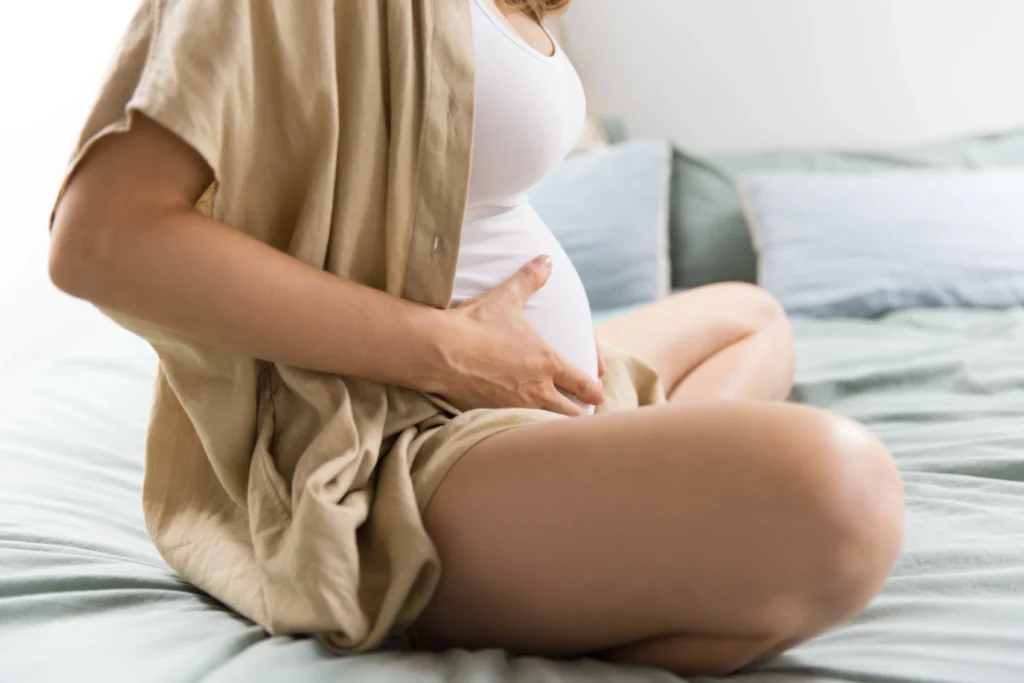
Your Breathing Changes Earlier Than You Expect
Many pregnant runners feel unusually winded during the first trimester.
That does not necessarily mean your fitness dropped overnight.
Pregnancy hormones increase breathing drive, and your cardiovascular system begins adapting almost immediately.
Some women experience what physiotherapists often hear described as “air hunger,” where it feels difficult to take a satisfying breath despite normal oxygen levels.
This feeling can make running mentally uncomfortable even when everything is medically fine.
Your Joints Become Less Stable
Hormones like relaxin increase ligament laxity during pregnancy.
This helps prepare the pelvis for childbirth, but it can also affect stability around:
- hips,
- knees,
- ankles,
- and the pelvis itself.
Some runners suddenly develop discomfort around the SI joint, pubic bone, or lower back despite years of pain-free running before pregnancy.
Your Recovery Capacity Changes
One thing many active women underestimate is how much energy pregnancy consumes internally.
You may recover slower.
You may need more hydration.
You may feel exhausted after workouts that once felt easy.
That is not weakness.
Your body is already performing an enormous physiological task in the background.
The Pelvic Floor Conversation More Women Need to Hear
This is probably the most overlooked topic in pregnancy fitness.
Your pelvic floor absorbs repeated impact forces during running.
During pregnancy, these muscles are already handling increasing pressure from:
- the growing baby,
- fluid changes,
- altered breathing mechanics,
- and hormonal shifts.
Some women notice:
- urine leakage,
- heaviness in the pelvis,
- pressure near the vaginal area,
- or discomfort around the pubic bone.
These symptoms should not simply be ignored as “normal pregnancy stuff.”
A pelvic health physiotherapist can assess whether the body is tolerating impact well or whether modifications are needed.
Research also suggests pelvic floor muscle training during pregnancy may help reduce postpartum urinary incontinence. (Woodley et al. 2020)
First Trimester Running Guidelines
Do Not Chase Performance
The first trimester is often unpredictable.
Some women feel normal.
Others feel exhausted, nauseous, dizzy, or overheated quickly.
This is not the phase to force performance goals.
Many physiotherapists encourage women to:
- reduce intensity,
- prioritize hydration,
- avoid overheating,
- and shorten runs if needed.
A run that feels “too easy” is often perfectly appropriate during pregnancy.
Fueling Matters More Than Before
Running on an empty stomach may suddenly feel terrible during pregnancy.
Low blood sugar combined with nausea and fatigue can make exercise unpleasant quickly.
Small pre-run snacks and adequate hydration usually help.
Second Trimester Running Guidelines
Many women feel strongest during the second trimester.
Energy improves.
Nausea settles.
Mood often becomes more stable.
Ironically, this is where some runners accidentally overdo things.
The Body Is Already Adapting Biomechanically
Even if you feel good, the body is changing underneath.
Stride mechanics shift gradually.
Core pressure management changes.
Hip control may become less efficient.
Physiotherapists often focus heavily on:
- glute strength,
- pelvic stability,
- breathing mechanics,
- and controlled impact loading during this phase.
Not because running is dangerous, but because prevention is easier than rehabilitation later.
Watch for Pressure Symptoms
Pelvic heaviness matters.
A dragging sensation during or after runs may indicate the pelvic floor is struggling with impact.
Many women ignore these symptoms because they are still technically able to continue running.
But symptoms are information.
Ignoring them repeatedly may contribute to postpartum issues later.
Third Trimester Running Guidelines
This stage becomes highly individual.
Some women continue jogging comfortably into late pregnancy.
Others stop much earlier.
Neither situation is “better.”
Pregnancy biomechanics vary enormously between individuals.
Running May Feel Mechanically Awkward
As the abdomen grows:
- balance changes,
- stride length shortens,
- trunk rotation changes,
- and breathing mechanics become more restricted.
Even experienced runners often describe feeling “off rhythm.”
That feeling is common.
Lower Impact Options Are Still Excellent Exercise
Some women naturally transition toward:
- incline walking,
- swimming,
- cycling,
- or elliptical training.
That does not mean fitness is being lost.
Maintaining movement safely is more important than preserving a specific running identity during pregnancy.
Warning Signs You Should Never Ignore
Stop exercising and seek medical advice if you experience:
- vaginal bleeding,
- chest pain,
- severe dizziness,
- painful contractions,
- fluid leakage,
- sudden swelling,
- or severe pelvic pain.
Lesser-Known Things Pregnant Runners Often Experience
Your Foot Size May Change Permanently
Pregnancy can flatten the arches of the feet in some women because of hormonal and loading changes.
This is one reason old running shoes sometimes suddenly feel uncomfortable during pregnancy.
Heat Tolerance Changes
Pregnant runners often overheat faster than expected.
Hydration and environmental temperature matter more than many women realize.
Emotional Frustration Is Common
A lot of runners struggle mentally when pace slows down during pregnancy.
This deserves acknowledgment.
The body is changing rapidly, and fitness identity can feel emotionally tied to performance for many women.
Adapting training does not mean you are becoming less athletic.
What Physiotherapists Usually Recommend
Most physiotherapists focus less on mileage and more on symptom response.
Helpful modifications often include:
- shorter stride length,
- reduced running intensity,
- more recovery days,
- strength training,
- pelvic floor assessment,
- and proper breathing mechanics.
Many women benefit from strength exercises targeting:
- glutes,
- deep core muscles,
- hips,
- and postural endurance.
The “Talk Test” Is More Useful Than Obsessing Over Pace
One practical guideline is the talk test.
You should generally be able to speak comfortably while running.
If you are gasping for breath or feeling completely exhausted afterward, intensity may be too high.
Running Postpartum Is a Different Conversation
Many women assume they can immediately return to running after birth.
In reality, postpartum recovery deserves careful progression.
Even athletic women need time for:
- pelvic floor recovery,
- abdominal healing,
- sleep regulation,
- and impact tolerance rebuilding.
This is especially important after difficult deliveries or pelvic floor symptoms during pregnancy.
Final Thoughts
Pregnancy running should never become a competition.
Not with social media.
Not with fitness apps.
Not with your pre-pregnancy self.
Some women comfortably continue modified running throughout pregnancy.
Others need to stop impact earlier because of symptoms, fatigue, or medical reasons.
Both experiences are valid.
The healthiest approach is flexible, symptom-aware, and realistic.
If your body feels supported, your symptoms remain controlled, and your healthcare provider has cleared you for exercise, running may continue to be part of your pregnancy safely.
But if your body is asking for modification, listening early is often the smartest thing you can do.
Frequently Asked Questions
Can I continue running during pregnancy if I was already a runner?
Yes, many women with healthy pregnancies can continue running safely with modifications, proper hydration, and regular medical guidance. The focus should shift toward comfort and symptom management rather than performance.
Is running during pregnancy harmful to the baby?
Current research suggests moderate exercise during uncomplicated pregnancies is generally safe and may even support maternal health, circulation, and emotional wellbeing.
Why do I feel pelvic pressure while running pregnant?
Pelvic pressure may happen because pregnancy increases load on the pelvic floor muscles. It can sometimes indicate the body is struggling to tolerate impact forces efficiently.
When should I stop running during pregnancy?
Stop exercising and seek medical advice if you experience bleeding, severe dizziness, painful contractions, chest pain, fluid leakage, or significant pelvic pain.
Can running during pregnancy cause miscarriage?
Research does not show that moderate exercise causes miscarriage in healthy pregnancies. However, high-risk pregnancies require individualized medical advice.
Is it okay to run during the third trimester?
Some women continue jogging comfortably during late pregnancy, while others switch to lower-impact activities. Both experiences are completely normal.
What are the best alternatives to running during pregnancy?
Walking, swimming, cycling, water aerobics, and elliptical workouts are excellent low-impact options that support cardiovascular fitness during pregnancy.
When can I start running after giving birth?
Return-to-running timelines vary. Most physiotherapists recommend waiting until pelvic floor strength, core recovery, and impact tolerance improve postpartum.
Stay tuned with us for more health related topics.
Follow us on LinkedIn and Instagram for more.
More Read


Medical Disclaimer!
This article has been reviewed and written under the guidance of our Head Physiotherapist, Dr. Kruti Raj (PT, MUHS,CPT,CMPT). The information shared is intended for educational purposes only and should not be considered a substitute for personalized medical advice, diagnosis, or treatment.
Please consult us or any other qualified healthcare professional before beginning any exercise program, especially if you are experiencing pain, recovering from injury, or managing a medical condition.


