


Can PCOS really cause infertility?
Hearing the words “You have PCOS” can raise many questions, and one of the biggest concerns for many women is whether it will affect their ability to have children.
The good news is that having Polycystic Ovary Syndrome (PCOS) does not automatically mean you are infertile.
While PCOS is one of the leading causes of ovulatory infertility, many women with the condition conceive naturally or with appropriate medical support.
Quick Answer
Yes, PCOS can cause infertility because it often disrupts ovulation, making it harder to release mature eggs regularly. However, PCOS does not mean you can never get pregnant. Many women conceive naturally or with treatments such as lifestyle changes, ovulation-inducing medications, or assisted reproductive technologies like IUI and IVF.
The challenge lies in understanding how PCOS affects ovulation and reproductive hormones, and what can be done to improve fertility.
PCOS affects approximately 8-13% of women of reproductive age worldwide, making it one of the most common endocrine disorders in women.
Many cases remain undiagnosed, delaying appropriate treatment and family planning. (Teede et al. 2023)
Infertility itself is defined as the inability to conceive after 12 months of regular, unprotected intercourse, or after 6 months if the woman is over 35 years of age.
However, infertility does not always mean pregnancy is impossible.
In many cases, identifying and treating the underlying cause significantly improves the chances of conception.
From a physiotherapy perspective, lifestyle plays a crucial role in reproductive health.
Regular physical activity, healthy body weight, stress management, and improved metabolic health can enhance fertility outcomes in women with PCOS alongside medical treatment.
In this article, you’ll learn how PCOS affects fertility, why some women experience difficulty conceiving, the available treatment options, and practical steps to improve your chances of achieving a healthy pregnancy.
Key Takeaways
- PCOS is one of the leading causes of ovulatory infertility but does not mean pregnancy is impossible.
- Irregular or absent ovulation is the primary reason fertility is affected in women with PCOS.
- Healthy lifestyle changes, exercise, and weight management can improve ovulation and fertility.
- Medications such as Letrozole or Clomiphene may help stimulate ovulation when needed.
- IUI and IVF are effective treatment options for some women with PCOS-related infertility.
- Early diagnosis and timely medical guidance improve pregnancy outcomes.
- A physiotherapist can support overall reproductive health through personalised exercise programs.
What Is PCOS?
Polycystic Ovary Syndrome (PCOS) is a hormonal disorder that affects the ovaries and the body’s endocrine system.
Normally, the ovaries release one mature egg during each menstrual cycle through a process called ovulation.
In women with PCOS, this process is often disrupted because of hormonal imbalances.
As a result, ovulation may occur irregularly or may not occur at all.
This disruption is one of the primary reasons why PCOS can affect fertility.
Although the name suggests that ovarian cysts are always present, not every woman with PCOS develops cysts.
The diagnosis is based on a combination of symptoms, hormone levels, and ultrasound findings rather than the presence of cysts alone.
Common symptoms of PCOS include:
- Absent or Irregular menstrual periods
- Difficulty conceiving
- Excess facial or body hair (hirsutism)
- Acne or oily skin
- Weight gain or difficulty losing weight
- Thinning hair on the scalp
- Darkened skin patches (acanthosis nigricans)
The Rotterdam Criteria, widely used for diagnosing PCOS, require at least two of the following three features after excluding other medical conditions:
- Irregular or absent ovulation
- Clinical or biochemical signs of excess androgens
- Polycystic ovaries on ultrasound
According to the 2023 International Evidence-Based Guideline for PCOS,
diagnosis should be individualized based on age, symptoms, and clinical assessment. (Teede et al. 2023)
How PCOS Affects Hormones
Hormones work together like a carefully balanced communication system.
In PCOS, this balance is disrupted.
One of the most significant hormonal changes is an increase in androgens, often referred to as male hormones.
Although women naturally produce small amounts of androgens, excessive levels interfere with normal egg development.
Many women with PCOS also have insulin resistance, meaning the body’s cells do not respond effectively to insulin.
To compensate, the pancreas produces more insulin.
High insulin levels stimulate the ovaries to produce even more androgens, creating a cycle that further disrupts ovulation.
Other hormonal changes may include:
- Increased luteinizing hormone (LH)
- Relatively lower follicle-stimulating hormone (FSH)
- Elevated anti-Müllerian hormone (AMH)
- Reduced progesterone due to irregular ovulation
These hormonal changes explain why women with PCOS often experience irregular menstrual cycles and difficulty becoming pregnant.
Why Ovulation Matters for Fertility
Ovulation is essential for natural conception.
Each month, a mature egg is released from one of the ovaries.
The egg travels through the fallopian tube, where it may be fertilized by sperm.
If ovulation does not occur, there is no egg available for fertilization.
Without regular ovulation, the chances of pregnancy decrease significantly.
Women with PCOS may experience:
- Delayed ovulation
- Infrequent ovulation
- Completely absent ovulation (anovulation)
Some women may ovulate only a few times each year.
Others may have menstrual bleeding without actually releasing an egg.
This is why tracking menstrual cycles alone cannot always confirm fertility.
Can PCOS Cause Infertility?
Yes, PCOS can cause infertility, but it is important to understand that it does not cause infertility in every woman.
PCOS is considered the most common cause of ovulatory infertility, accounting for a large proportion of women who experience difficulty conceiving due to irregular or absent ovulation.
The primary issue is not the quality of the uterus or the inability to carry a pregnancy.
Instead, the main challenge is that eggs are not released regularly, reducing the opportunities for fertilization.
The encouraging news is that many women with PCOS respond well to lifestyle modifications, ovulation-inducing medications, or fertility treatments when needed.
According to the World Health Organization (WHO),
infertility affects millions of people globally, and ovulatory disorders such as PCOS are among the leading female causes of infertility.
Does PCOS Always Lead to Infertility?
No.
Many women with PCOS conceive naturally without fertility treatment.
Some may simply take longer to become pregnant because ovulation occurs less frequently.
Others may need temporary medical support to stimulate ovulation.
The severity of PCOS varies widely.
Some women have only mild hormonal changes and continue to ovulate regularly.
Others experience significant hormonal imbalances that require treatment before pregnancy becomes possible.
For this reason, a diagnosis of PCOS should never be viewed as the end of your fertility journey.
How Common Is Infertility in Women with PCOS?
PCOS is responsible for approximately 70-80% of cases of ovulatory infertility, making it one of the leading reproductive disorders affecting fertility worldwide.
However, this statistic should not be confused with overall infertility.
Many women with PCOS eventually achieve successful pregnancies with lifestyle changes, medication, or assisted reproductive techniques.
Advances in fertility treatments have significantly improved pregnancy rates over the past two decades.
Can Women with PCOS Get Pregnant Naturally?
Yes.
Many women with PCOS become pregnant naturally, particularly if they continue to ovulate, even if their cycles are irregular.
Maintaining a healthy lifestyle can improve the likelihood of natural conception.
Helpful measures include:
- Maintaining a healthy body weight
- Engaging in regular physical activity
- Eating a balanced diet
- Managing stress
- Getting adequate sleep
- Seeking timely medical evaluation if pregnancy is delayed
Even a modest improvement in metabolic health can increase the chances of regular ovulation in some women.
Factors That Affect Fertility in PCOS
Every woman’s fertility journey is unique.
Several factors influence the likelihood of conception.
Irregular Ovulation
The less frequently ovulation occurs, the fewer opportunities there are for fertilization.
This remains the most important fertility challenge associated with PCOS.
Insulin Resistance
High insulin levels contribute to hormonal imbalance and reduced ovulation frequency.
Improving insulin sensitivity often improves reproductive function.
Hormonal Imbalance
Elevated androgen levels interfere with normal follicle development and egg maturation, reducing the chances of successful ovulation.
Age
Female fertility naturally declines with age.
Women over 35 with PCOS may experience the combined effects of age-related fertility decline and ovulatory dysfunction.
Weight and Lifestyle
Being overweight or obese may worsen insulin resistance and hormonal imbalance.
Conversely, maintaining a healthy weight, exercising regularly, and eating a nutritious diet can improve ovulation and fertility outcomes.
How PCOS Causes Fertility Problems
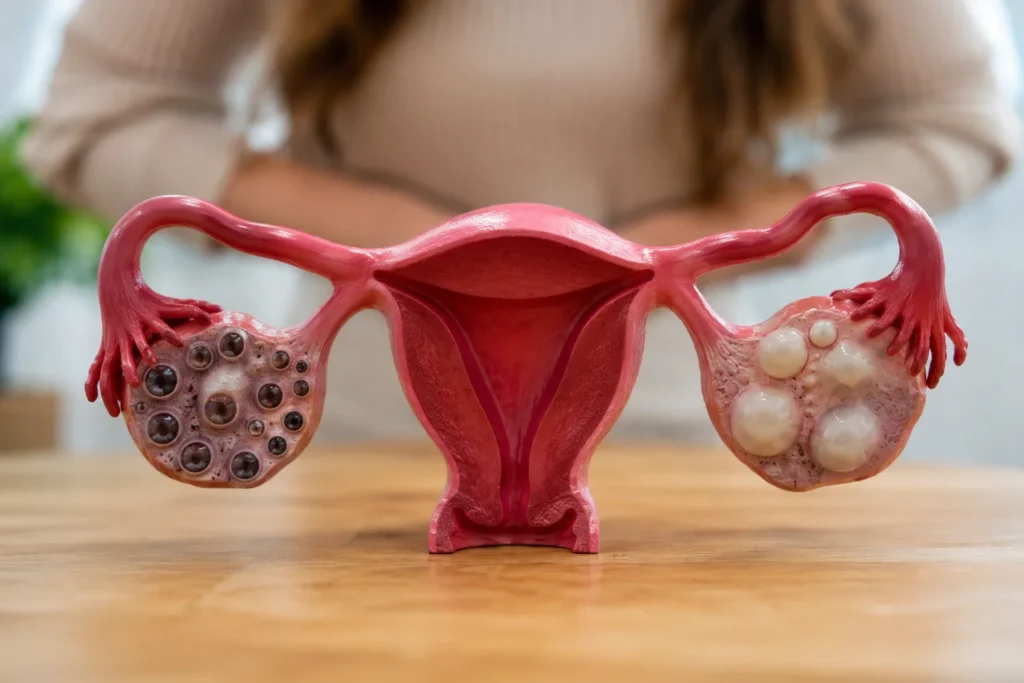
Although many women with PCOS can become pregnant, the condition can make conception more difficult because it affects several stages of the reproductive process.
The most significant challenge is irregular ovulation, but hormonal, metabolic, and inflammatory changes also contribute to reduced fertility.
Understanding these factors can help women seek the right treatment and improve their chances of pregnancy.
Irregular or Absent Ovulation
Ovulation is the release of a mature egg from the ovary.
For natural conception to occur, ovulation must happen regularly.
In women with PCOS, hormonal imbalances often prevent follicles from maturing properly.
Instead of releasing an egg, multiple immature follicles remain in the ovaries, giving the characteristic “polycystic” appearance on ultrasound.
Without ovulation, fertilization cannot occur.
Some women with PCOS may ovulate only a few times each year, while others may not ovulate at all.
This significantly reduces the number of opportunities for pregnancy.
Poor Egg Maturation
Every menstrual cycle begins with several immature follicles.
Normally, one follicle becomes dominant and releases a mature egg.
In PCOS, elevated androgen levels and altered hormone signaling interfere with this process.
As a result:
- Eggs may not mature completely.
- Follicles stop developing prematurely.
- Ovulation fails to occur.
This condition is known as anovulation, one of the leading causes of infertility in women with PCOS.
Hormonal Imbalances
Healthy ovulation depends on a delicate balance of reproductive hormones.
PCOS disrupts this balance in several ways.
Common hormonal changes include:
- Increased luteinizing hormone (LH)
- Elevated androgen levels
- Reduced progesterone due to lack of ovulation
- Increased anti-Müllerian hormone (AMH)
These hormonal disturbances interfere with follicle growth and make regular ovulation less likely.
Insulin Resistance and Fertility
Insulin resistance affects a large proportion of women with PCOS, regardless of body weight.
When the body’s cells become less responsive to insulin, the pancreas produces more insulin to compensate.
High insulin levels stimulate the ovaries to produce excess androgens.
This creates a cycle that further suppresses ovulation.
Insulin resistance may also contribute to:
- Weight gain
- Difficulty losing weight
- Chronic inflammation
- Increased risk of type 2 diabetes
Improving insulin sensitivity through healthy eating, regular exercise, and appropriate medical treatment often improves ovulation and fertility.
Research has shown that addressing insulin resistance can significantly improve reproductive outcomes in women with PCOS. (Legro et al. 2013)
Inflammation and Reproductive Health
Researchers have found that women with PCOS often have low-grade chronic inflammation.
Although inflammation is the body’s natural defense mechanism, persistent inflammation can interfere with normal ovarian function.
It may affect:
- Egg development
- Ovulation
- Hormone regulation
- Endometrial receptivity
Reducing inflammation through a healthy lifestyle may support better reproductive health.
Signs That PCOS May Be Affecting Fertility
Not every woman with PCOS experiences infertility.
However, certain signs may indicate that the condition is interfering with conception.
Common signs include:
- Irregular menstrual cycles
- Missed periods for several months
- Difficulty predicting ovulation
- Inability to conceive after 12 months of regular unprotected intercourse (or after 6 months if over 35 years)
- Positive ovulation tests only occasionally
- Symptoms of hormonal imbalance, such as acne or excessive facial hair
- Previous miscarriages in some women
If you experience several of these symptoms, consulting a gynecologist or fertility specialist is recommended.
How Is PCOS-Related Infertility Diagnosed?
There is no single test that confirms infertility caused by PCOS.
Instead, healthcare providers evaluate multiple factors before making a diagnosis.
Medical History
Your doctor will ask about:
- Menstrual cycle regularity
- Previous pregnancies
- Duration of trying to conceive
- Weight changes
- Family history of PCOS or diabetes
- Current medications
- Lifestyle habits
A detailed history often provides valuable clues about ovulatory function.
Blood Tests
Blood tests help assess hormone levels and rule out other medical conditions.
Common investigations include:
- LH and FSH
- Testosterone
- DHEAS
- Prolactin
- Thyroid hormones
- AMH
- Blood glucose
- HbA1c
- Insulin levels (when indicated)
These tests help determine whether hormonal imbalances are contributing to infertility.
Ultrasound Scan
A pelvic ultrasound evaluates the ovaries and uterus.
In women with PCOS, ultrasound may show:
- Multiple small follicles
- Enlarged ovaries
- Increased ovarian volume
It also helps exclude other gynecological conditions that may affect fertility.
Ovulation Tracking
Your healthcare provider may recommend monitoring ovulation using:
- Ovulation predictor kits
- Basal body temperature
- Blood progesterone testing
- Ultrasound follicular monitoring
Tracking ovulation helps determine whether eggs are being released regularly.
Partner Evaluation
Infertility is not always caused by female factors alone.
Male infertility contributes to approximately 40-50% of infertility cases worldwide.
For this reason, semen analysis is usually recommended when evaluating couples experiencing difficulty conceiving.
The World Health Organization (WHO);
recommends evaluating both partners simultaneously to avoid unnecessary delays in diagnosis and treatment.
Treatment Options for PCOS-Related Infertility
Treatment depends on the woman’s age, overall health, fertility goals, and severity of PCOS.
Many women conceive successfully after appropriate treatment.
Lifestyle Changes
Lifestyle modification is considered the first-line treatment for most women with PCOS.
Healthy habits improve metabolic health and may restore ovulation naturally.
Recommended lifestyle changes include:
- Eating a balanced diet
- Exercising regularly
- Managing stress
- Sleeping 7-9 hours each night
- Avoiding smoking
- Limiting alcohol consumption
Even small improvements in daily habits can positively affect fertility.
Weight Management
For women who are overweight or obese, even a modest reduction in body weight can improve reproductive function.
Studies suggest that losing 5-10% of body weight may help restore ovulation and increase the likelihood of pregnancy in some women with PCOS.
Weight management should focus on sustainable lifestyle changes rather than crash diets.
Exercise and Physiotherapy
Regular physical activity improves insulin sensitivity, cardiovascular health, and hormone regulation.
From a physiotherapy perspective, combining aerobic exercise with resistance training provides the greatest benefits.
A physiotherapist can:
- Assess posture and movement
- Design a personalised exercise program
- Reduce joint pain during exercise
- Improve core strength
- Encourage long-term adherence to physical activity
Exercise also helps reduce stress, which may indirectly support reproductive health.
Medications to Induce Ovulation
When lifestyle modifications alone are insufficient, medications may be prescribed to stimulate ovulation.
Depending on individual circumstances, healthcare providers may recommend medications such as:
- Letrozole
- Clomiphene citrate
- Metformin (particularly in women with insulin resistance)
- Gonadotropin injections in selected cases
The choice of treatment depends on factors including age, body weight, ovulatory status, and previous treatment response.
These medications should only be used under the supervision of a qualified fertility specialist.
Assisted Reproductive Technologies (IUI and IVF)
If pregnancy does not occur with lifestyle changes or ovulation-inducing medications, assisted reproductive technologies may be recommended.
These include:
- Intrauterine Insemination (IUI): Specially prepared sperm is placed directly into the uterus around the time of ovulation.
- In Vitro Fertilization (IVF): Eggs are retrieved from the ovaries, fertilized in a laboratory, and the resulting embryo is transferred into the uterus.
Many women with PCOS achieve successful pregnancies through these treatments when clinically indicated.
Can PCOS-Related Infertility Be Reversed?
One of the most common questions women ask after being diagnosed with PCOS is whether their infertility can be reversed.
The answer depends on the underlying cause of fertility problems.
In many cases, PCOS-related infertility is treatable, especially when the primary issue is irregular or absent ovulation.
Unlike conditions that permanently damage the reproductive organs, PCOS often affects fertility by disrupting hormone balance and ovulation.
When these factors are managed, many women regain regular ovulation and successfully conceive.
Treatment may include:
- Healthy lifestyle modifications
- Weight management
- Regular exercise
- Ovulation-inducing medications
- Fertility treatments when necessary
The chances of pregnancy vary depending on age, overall health, body weight, the severity of PCOS, and whether other fertility factors are present.
Seeking medical advice early improves the likelihood of successful treatment.
Tips to Improve Fertility Naturally with PCOS
Although not every woman will conceive naturally, adopting healthy lifestyle habits can improve reproductive health and increase the chances of ovulation.
Maintain a Healthy Weight
For women who are overweight, even a modest reduction of 5-10% of body weight may improve ovulation and menstrual regularity.
Healthy weight management should focus on long-term lifestyle changes rather than restrictive dieting.
Stay Physically Active
Regular exercise improves insulin sensitivity, reduces inflammation, and supports hormonal balance.
Aim for:
- At least 150 minutes of moderate exercise each week
- Strength training 2-3 times weekly
- Stretching and mobility exercises regularly
Activities such as walking, cycling, swimming, yoga, and resistance training are excellent options.
Eat a Balanced Diet
Choose foods that support stable blood sugar levels.
Include:
- Whole grains
- Lean proteins
- Fruits
- Vegetables
- Healthy fats
- High-fiber foods
Limiting highly processed foods and sugary beverages may also improve metabolic health.
Prioritize Quality Sleep
Poor sleep affects hormones that regulate appetite, metabolism, and reproduction.
Aim for 7-9 hours of quality sleep every night.
Maintain a consistent bedtime routine whenever possible.
Manage Stress
Chronic stress does not directly cause PCOS, but it may worsen hormonal imbalance and make healthy lifestyle habits more difficult to maintain.
Stress-management strategies include:
- Yoga
- Meditation
- Deep breathing exercises
- Walking outdoors
- Mindfulness practices
- Spending time with family and friends
Avoid Smoking and Excess Alcohol
Smoking negatively affects egg quality and reproductive health.
Excessive alcohol intake may also interfere with fertility.
Reducing or avoiding both supports overall reproductive wellness.
Follow Your Treatment Plan
If your healthcare provider prescribes medications or recommends fertility treatment, following the plan consistently improves your chances of success.
Regular follow-up appointments allow treatment to be adjusted when necessary.
When Should You See a Fertility Specialist?
While some couples conceive naturally despite PCOS, others may benefit from early evaluation.
You should consider consulting a fertility specialist if:
- You are under 35 and have been trying to conceive for 12 months without success.
- You are 35 years or older and have been trying for 6 months.
- Your menstrual cycles are absent or highly irregular.
- You rarely or never ovulate.
- You have experienced recurrent miscarriages.
- You have additional reproductive conditions such as endometriosis or blocked fallopian tubes.
- Your partner has known fertility concerns.
Early evaluation helps identify contributing factors and allows treatment to begin sooner.
Physiotherapist’s Role in Supporting Women with PCOS
Although physiotherapists do not directly treat infertility, they play an important role in improving overall health, which can positively influence fertility outcomes.
Exercise is considered one of the first-line lifestyle interventions for women with PCOS.
A physiotherapist can design a personalised exercise program based on your:
- Age
- Fitness level
- Body weight
- Joint health
- Medical history
- Personal goals
A tailored program may include:
Aerobic Exercise
Walking, cycling, or swimming helps improve cardiovascular fitness and insulin sensitivity.
Strength Training
Resistance exercises improve muscle mass, glucose metabolism, and overall metabolic health.
Flexibility and Mobility Training
Stretching improves movement quality and reduces the risk of exercise-related injuries.
Core Stability Exercises
A stronger core supports posture, balance, and efficient movement during daily activities and exercise.
Pain Management
Women with obesity, knee pain, back pain, or musculoskeletal limitations may find exercise challenging.
A physiotherapist can modify activities to reduce discomfort while helping maintain regular physical activity.
By improving movement confidence and reducing physical barriers, physiotherapy supports long-term adherence to exercise, an important component of PCOS management.
Myth vs Fact
| Myth | Fact |
|---|---|
| PCOS means you can never have children. | Many women with PCOS conceive naturally or with fertility treatment. |
| Irregular periods always mean infertility. | Irregular cycles reduce fertility but do not eliminate the possibility of pregnancy. |
| Only IVF can help women with PCOS become pregnant. | Many women conceive through lifestyle changes or ovulation-inducing medications before IVF is considered. |
| Only overweight women develop PCOS. | PCOS affects women of all body types, including those with a healthy BMI. |
| Weight loss guarantees pregnancy. | Weight management improves fertility, but age, ovulation, and overall reproductive health also influence pregnancy. |
Common Myths About PCOS and Infertility
Many misconceptions about PCOS can cause unnecessary anxiety.
Let’s separate the facts from the myths.
Myth: PCOS Means You’ll Never Get Pregnant
Fact: Many women with PCOS conceive naturally or with medical treatment.
Myth: Irregular Periods Mean Pregnancy Is Impossible
Fact: Irregular ovulation reduces fertility but does not eliminate the possibility of pregnancy.
Myth: IVF Is Always Necessary
Fact: Many women become pregnant through lifestyle changes or ovulation-inducing medications without needing IVF.
Myth: Losing Weight Guarantees Pregnancy
Fact: Maintaining a healthy weight improves fertility, but pregnancy depends on several factors, including age, ovulation, and overall reproductive health.
Myth: PCOS Only Affects Overweight Women
Fact: Women of all body weights can develop PCOS, including those with a normal Body Mass Index (BMI).
Final Thoughts
A diagnosis of PCOS does not mean your dream of becoming a parent is over. While PCOS can make conception more challenging by affecting ovulation, modern treatments and healthy lifestyle changes have helped countless women achieve successful pregnancies.
The key is early diagnosis, consistent medical follow-up, regular physical activity, balanced nutrition, and a personalised treatment plan. With the right support, many women with PCOS go on to have healthy pregnancies and families.
Conclusion
PCOS is one of the most common causes of ovulatory infertility, but it does not mean that pregnancy is impossible.
The primary fertility challenge in PCOS is irregular or absent ovulation rather than permanent infertility.
Fortunately, many women successfully conceive through healthy lifestyle changes, regular physical activity, medical treatment, or assisted reproductive technologies when needed.
Early diagnosis, appropriate treatment, and ongoing support from healthcare professionals can significantly improve fertility outcomes.
If you have PCOS and are planning a pregnancy, don’t lose hope.
Working closely with your healthcare provider and maintaining healthy lifestyle habits can greatly increase your chances of building the family you desire.
Frequently Asked Questions
1. Can PCOS cause permanent infertility?
No. PCOS often causes ovulation problems rather than permanent infertility. Many women conceive naturally or with appropriate treatment.
2. Can women with PCOS get pregnant naturally?
Yes. Many women with PCOS become pregnant naturally, especially if they ovulate occasionally and maintain a healthy lifestyle.
3. What is the biggest fertility problem in PCOS?
The most common cause is irregular or absent ovulation, which reduces the chances of releasing an egg for fertilization.
4. Does losing weight improve fertility in PCOS?
For overweight women, even a modest weight loss of 5–10% may improve ovulation and increase the likelihood of pregnancy.
5. Is IVF always required for women with PCOS?
No. Many women successfully conceive through lifestyle modifications or ovulation-inducing medications before IVF becomes necessary.
6. When should I see a fertility specialist?
You should seek medical advice if you have been trying to conceive for 12 months (or 6 months if over 35 years) without success, or if you have very irregular or absent periods.
Stay tuned with us for more health related topics.
Follow us on LinkedIn and Instagram for more.
More Read




Medical Disclaimer!
This article has been reviewed and written under the guidance of our Head Physiotherapist, Dr. Kruti Raj (PT, MUHS,CPT,CMPT). The information shared is intended for educational purposes only and should not be considered a substitute for personalized medical advice, diagnosis, or treatment.
Please consult us or any other qualified healthcare professional before beginning any exercise program, especially if you are experiencing pain, recovering from injury, or managing a medical condition.


