


Pain near the upper inner thigh can make walking, running, exercising and even changing direction uncomfortable.
One possible cause is adductor tendinopathy, a condition involving the tendons of the muscles that bring the legs towards the body’s midline.
Quick Answer: Why Does Your Inner Thigh Hurt Near the Hip?
Adductor tendinopathy affects the tendons of the inner-thigh muscles that help bring the legs together. It may cause pain near the groin or pubic bone, especially during running, kicking, squeezing the legs together or changing direction.
Physiotherapy may help through activity modification, progressive strengthening and a gradual return to exercise tailored to the individual’s symptoms and goals.
Important: Hip joint disorders, muscle strains, hernias and other conditions can cause similar pain. Persistent or worsening symptoms need appropriate assessment.
The discomfort may develop gradually or follow a sudden increase in physical activity.
Because hip joint problems, muscle strains and other groin conditions can cause similar symptoms, identifying the likely source of pain is an important first step towards effective physiotherapy.
Key Takeaways
- Adductor tendinopathy can cause pain near the upper inner thigh or groin, particularly around the pubic bone.
- Running, kicking, changing direction and squeezing the legs together may aggravate symptoms.
- Acute adductor strains, hip joint disorders and hernias can produce similar pain.
- A physiotherapist assesses tenderness, hip adduction strength, movement and possible alternative causes.
- Rehabilitation may include activity modification and progressive strengthening tailored to the individual.
- Persistent pain, significant weakness or worsening symptoms warrant medical assessment.
What Is Adductor Tendinopathy?
The adductor muscles are located along the inner thigh.
They help bring the legs together and contribute to pelvic stability during walking, running, kicking and changes of direction.
The adductor longus is particularly relevant to groin pain because its tendon attaches to the pubic bone at the front of the pelvis.
When this tendon becomes painful and less tolerant of loading, a person may experience discomfort near the upper inner thigh or groin.
The term adductor tendinopathy describes a tendon-related problem.
However, clinicians also use adductor-related groin pain to describe a clinical pattern in which tenderness of the adductor muscles and pain during resisted hip adduction help identify the likely source of symptoms.
These terms are related, but they are not interchangeable in every case.
An assessment is needed to determine whether the main problem involves the tendon, muscle or another structure around the hip and groin. (Weir et al., 2015)
Why Does Your Inner Thigh Hurt Near the Hip?
The adductor muscles and tendons help control the leg during movements that require strength and stability.
Repeated or sudden increases in these demands can aggravate the area around the upper inner thigh.
Pain may become noticeable when:
- Squeezing the legs together against resistance.
- Running, especially during acceleration or sprinting.
- Kicking a ball or changing direction quickly.
- Performing wide-stance squats or lunges.
- Moving the leg sideways against resistance.
- Stretching the inner thigh into a wide position.
Some people feel pain close to the pubic bone, while others experience discomfort farther down the inner thigh.
Pain during these movements does not automatically confirm tendinopathy.
The hip joint, pubic region, abdominal wall and other nearby structures can also cause groin pain.
What Causes Adductor Tendinopathy?
Sudden increases in training
Increasing sprinting, kicking, cutting or change-of-direction drills too quickly can place more demand on the adductor muscles and tendons than they are prepared to tolerate.
Repetitive loading
Repeated high-force movements may contribute to persistent symptoms, particularly when training demands increase without sufficient recovery or gradual conditioning.
Returning to exercise too quickly
After a break or previous injury, the adductors may not be ready for intense training.
A sudden return to full activity can aggravate symptoms.
Previous groin injury
A previous adductor strain can influence strength and movement tolerance.
However, new pain is not necessarily a recurrence of the original injury, and an acute strain should not be mistaken for chronic tendinopathy.
Multiple contributing conditions
Groin pain can involve more than one structure.
Adductor-related pain may coexist with hip joint disorders, iliopsoas-related pain or pubic-related conditions.
This is one reason persistent symptoms may require a broader assessment rather than treatment focused exclusively on the inner thigh.
A study of 100 athletes attending a specialist groin-pain clinic found that multiple clinical causes were identified in 44% of cases.
Although this population does not represent everyone with groin pain, it illustrates why clinicians should consider more than one possible source. (Taylor et al., 2018)
What Are the Symptoms of Adductor Tendinopathy?
Symptoms depend on the structures involved, the severity of the problem and the activities that place demand on the area.
Common features include:
- Inner-thigh pain: Discomfort near the upper inner thigh or groin, sometimes close to the pubic bone.
- Pain when squeezing the legs together: Resisted hip adduction may reproduce the familiar pain.
- Pain during running or kicking: Sprinting, acceleration and forceful changes of direction may become difficult.
- Local tenderness: The adductor attachment or surrounding muscles may feel sore when examined.
- Discomfort during wide movements: Side lunges, wide squats or stretching may aggravate symptoms.
- Reduced sporting performance: Running, jumping and kicking may become uncomfortable.
Symptoms may improve when activity is reduced and return when training intensity increases.
Repeated flare-ups are a reason to reassess the workload and consider whether the diagnosis is correct.
Adductor Tendinopathy vs Groin Strain
These conditions affect related structures but may develop differently.
| Feature | Adductor tendinopathy | Acute adductor strain |
|---|---|---|
| Onset | Often gradual | Often sudden during a forceful movement |
| Pain pattern | Persistent or recurring with loading | Pain following an identifiable injury |
| Bruising | Not typical | May occur with a more significant injury |
| Strength | Resisted movement may be painful | Pain or weakness may occur, depending on severity |
| Rehabilitation | Progressive loading based on tolerance | Initial protection when needed, followed by graded rehabilitation |
The distinction is not always clear from symptoms alone.
An acute injury may affect the muscle, tendon or their junction, and a previous strain may be followed by persistent symptoms.
Other Causes of Inner-Thigh Pain Near the Hip
Not all groin pain originates from the adductor tendons. Other possible causes include:
| Condition | Features that may help distinguish it |
|---|---|
| Hip joint disorder | Groin pain with restricted movement, stiffness, catching or locking |
| Iliopsoas-related pain | Pain at the front of the hip, sometimes aggravated by resisted hip flexion |
| Inguinal or femoral hernia | Groin discomfort or a lump that may worsen with coughing or straining |
| Pubic-related pain | Localized tenderness around the pubic symphysis |
| Nerve-related pain | Burning, tingling, numbness or altered sensation |
| Bone stress injury | Deep groin pain that may worsen with weight-bearing or exercise |
These conditions can overlap.
Persistent pain, pain that worsens with weight-bearing or symptoms that do not fit a typical muscle or tendon presentation warrant further medical assessment.
How Is Adductor Tendinopathy Diagnosed?
Physiotherapy assessment
A physiotherapist will ask about when the pain started, recent changes in activity, previous injuries and the movements that reproduce symptoms.
The examination may include:
- Palpating the adductor muscles and their attachment.
- Assessing hip adduction strength and pain response.
- Checking hip range of motion.
- Observing relevant functional movements.
- Screening the hip joint, pubic region and surrounding structures.
The Doha consensus uses adductor tenderness together with pain during resisted hip adduction to help classify adductor-related groin pain.
These findings guide clinical reasoning but do not rule out every alternative cause.
When are ultrasound or MRI needed?
Imaging is not required for every case.
Ultrasound or MRI may be considered when the diagnosis remains uncertain, symptoms persist despite appropriate treatment or a significant injury is suspected.
Scan findings need to be interpreted alongside symptoms and examination results.
Imaging alone cannot reliably establish which structure is responsible for all the pain.
Physiotherapy Treatment for Adductor Tendinopathy
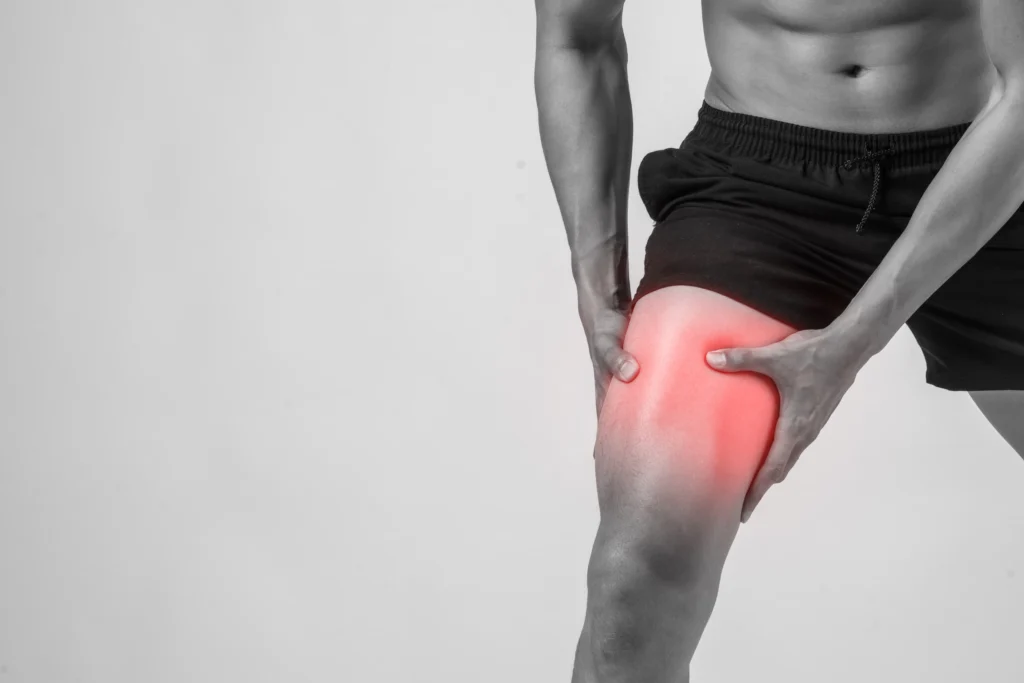
Physiotherapy aims to improve strength, increase tolerance to physical loading and support a gradual return to normal activities or sport.
The program should be adapted to symptom severity, current strength and the person’s goals.
1. Modify aggravating activities
Temporarily reduce activities that consistently worsen symptoms, such as sprinting, forceful kicking or wide-stance exercises.
Comfortable walking and other tolerable activities can often continue.
The aim is to reduce excessive irritation without unnecessarily avoiding all movement.
2. Start with manageable strengthening
A physiotherapist may introduce gentle adductor contractions or controlled strengthening exercises that do not significantly aggravate symptoms.
The initial level of resistance should reflect the assessment.
A person with highly irritable symptoms may need a different starting point from someone who can already perform everyday activities comfortably.
3. Progress resistance gradually
As strength and tolerance improve, exercises can progress to more demanding hip adduction movements and functional tasks.
Gluteal and trunk strengthening may also be included when relevant.
Resistance, repetitions and training volume should increase progressively.
If symptoms worsen substantially during exercise or remain aggravated afterwards, the program may need adjustment.
4. Reintroduce running and sport
Athletes may need to progress from comfortable running to acceleration, sprinting, kicking and changes of direction.
Progression depends on symptoms, strength and the demands of the sport.
Returning to full training too early can aggravate symptoms.
A physiotherapist can assess readiness and help modify the program when pain returns.
5. Address other contributing factors
If the hip joint, pubic region or another structure contributes to the pain, rehabilitation may need to address those problems alongside the adductors.
A clinical review of adductor injuries supports progressive strengthening and sport-specific loading as central components of rehabilitation, while emphasizing individual assessment and adjustment of exercise demands. (Thorborg, 2023)
Can Stretching Make Adductor Tendinopathy Worse?
It can aggravate symptoms in some people, especially when the inner thigh is stretched forcefully or into a wide position.
Stretching is not automatically harmful, but it should not be forced through familiar groin pain.
During a sensitive phase, a physiotherapist may prioritise controlled strengthening and temporarily reduce movements that place excessive strain on the affected area.
As tolerance improves, range of motion can be developed according to the person’s needs and response.
The goal is to restore useful movement without repeatedly provoking symptoms.
How Long Does Adductor Tendinopathy Take to Recover?
Recovery depends on symptom duration, severity, activity demands and response to rehabilitation.
Some acute adductor injuries improve within weeks, whereas persistent groin pain may require a longer rehabilitation period.
Progress is better judged by improvements in strength, walking tolerance, pain during resisted adduction and the ability to perform relevant activities than by a fixed deadline.
If symptoms do not improve, repeatedly return or become more severe, the diagnosis and treatment plan should be reviewed.
Common Mistakes That Can Delay Recovery
Several approaches can make symptoms harder to manage:
- Continuing sprinting or kicking despite worsening pain.
- Forcing deep inner-thigh stretches that reproduce symptoms.
- Increasing resistance or training volume too quickly.
- Avoiding all physical activity for a prolonged period without a rehabilitation plan.
- Assuming every case of groin pain is caused by the adductor tendons.
A more useful approach is to maintain tolerable activity and progressively rebuild strength and movement capacity.
Adductor Tendinopathy: Myth vs Fact
Myth: All inner-thigh pain comes from adductor tendinopathy.
Fact: Hip joint disorders, muscle strains, hernias and other groin conditions can produce similar symptoms.
Myth: Stretching the inner thigh harder speeds up recovery.
Fact: Forceful stretching may aggravate symptoms in some people. Movement and exercise should match current tolerance.
Myth: Complete rest is always the best treatment.
Fact: Reducing aggravating loads may help, but appropriately graded activity and strengthening can support recovery.
Myth: Pain-free walking means you are ready for full sport.
Fact: Sprinting, kicking and rapid changes of direction place different demands on the adductors. Return to sport should be progressive.
When Should You Seek Medical Attention?
Arrange a medical assessment if groin pain persists, interferes with daily activities or fails to improve with appropriate activity modification.
Seek prompt medical attention for sudden severe pain after an injury, significant bruising or weakness, or difficulty bearing weight.
These symptoms may indicate a substantial muscle or tendon injury or another condition requiring investigation.
Seek urgent care if groin pain is accompanied by fever, a painful lump with vomiting or abdominal pain, or severe testicular pain.
Deep groin pain that worsens with weight-bearing also warrants assessment for a possible bone stress injury.
A Lesser-Known Fact About Adductor Tendinopathy
The adductor muscles do more than pull the legs together.
They also help control the pelvis and lower limbs during running, landing and changes of direction.
This is why rehabilitation for an athlete often needs to progress beyond isolated strengthening.
Once basic strength and tolerance improve, the program may need to include faster movements and sport-specific demands before a full return to training.
The appropriate progression depends on the individual’s symptoms and functional capacity, not simply on whether the inner thigh feels better at rest.
Final Thoughts: Build Strength for Comfortable Movement
Pain near the upper inner thigh can interfere with walking, exercise and sport. Adductor tendinopathy is one possible cause, but other hip and groin conditions can produce similar symptoms.
An appropriate assessment and individualized physiotherapy program can help guide a gradual return to normal activity. The goal is to rebuild strength and load tolerance over time rather than repeatedly pushing through pain.
Conclusion
Adductor tendinopathy can cause pain near the upper inner thigh and groin, particularly during running, kicking, squeezing the legs together or other demanding movements.
However, similar symptoms can arise from hip joint problems, acute muscle injuries, hernias and other conditions.
A physiotherapy assessment helps identify the likely source of pain and guide a rehabilitation plan based on activity modification, progressive strengthening and a gradual return to normal function.
The goal is not just to reduce groin pain, but to rebuild the strength and load tolerance needed for everyday activities and sport.
Medical disclaimer: This article is for general educational purposes and does not replace an individual assessment by a qualified healthcare professional. Persistent groin pain, significant weakness or symptoms that worsen should be medically evaluated.
Frequently Asked Questions
1. What does adductor tendinopathy feel like?
It may cause pain near the upper inner thigh or groin, sometimes close to the pubic bone. Pain may increase during running, kicking, squeezing the legs together or other demanding movements.
2. Can adductor tendinopathy cause pain near the pubic bone?
Yes. The adductor longus tendon attaches near the pubic bone, so adductor-related problems can cause pain in that region. Other causes of pubic and groin pain should also be considered.
3. Can physiotherapy help adductor tendinopathy?
Physiotherapy may help through activity modification, progressive strengthening and a gradual return to demanding activities. Treatment should be tailored to the person’s symptoms and functional goals.
4. Should I stretch if my inner thigh hurts near the hip?
Not necessarily. Forceful stretching may aggravate some cases. If stretching reproduces the familiar groin pain, reduce the intensity and seek advice about suitable alternatives.
5. How long does adductor tendinopathy take to recover?
Recovery depends on symptom severity, duration, activity demands and response to rehabilitation. Persistent cases may take several months to improve, and there is no single timeline for everyone.
6. When should I see a doctor for groin pain?
Seek assessment for persistent or worsening pain, significant weakness or difficulty with daily activities. Sudden severe pain after an injury, fever, severe testicular pain or a painful groin lump with vomiting requires prompt or urgent medical care.
Stay tuned with us for more health related topics.
Follow us on LinkedIn and Instagram for more.
More Read


Medical Disclaimer
This article is for general educational purposes only and does not replace professional medical advice, diagnosis or treatment. Pain near the inner thigh or groin can have several causes, and not all cases are due to adductor tendinopathy. Consult a qualified healthcare professional for an appropriate assessment. Seek prompt medical attention for sudden severe pain, significant weakness or difficulty bearing weight after an injury. Severe testicular pain or a painful groin lump accompanied by vomiting requires urgent medical care. Do not delay medical care because of information read online.


