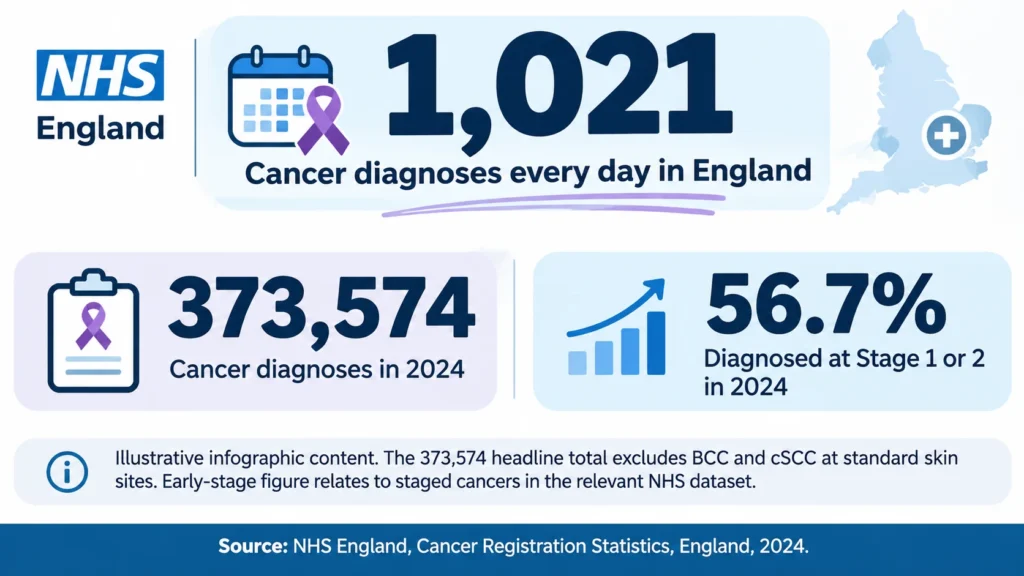
LONDON, ENGLAND: NHS England’s latest cancer statistics show that an average of 1,021 people received a cancer diagnosis every day in 2024. The annual total reached 373,574, marking the first time the daily average crossed 1,000.
The figures highlight the growing demand for cancer services. They also show why early detection, timely investigations and access to treatment remain important for patients.
A record number of cancer diagnoses
NHS England published its Cancer Registration Statistics, England, 2024 on 5 November 2026. The report recorded 373,574 new cancer diagnoses in England during 2024.
This was an increase of 11,833 cases compared with the revised 2023 figure of 361,741. It represents a 3.3% rise in annual diagnoses.
The daily average reached 1,021, compared with the previous year’s reported average of 972. The 2024 figure is based on the entire year, rather than a count of new diagnoses on a particular day.
According to a report published by Health Business UK on 10 November 2026, the NHS described this achievement as an important milestone in its efforts to identify cancer earlier.
Professor Peter Johnson, NHS National Clinical Director for Cancer, credited NHS staff for improving access to tests and checks. He also highlighted the importance of helping patients receive appropriate care as early as possible.
What the figures actually include
The figure of 373,574 needs some explanation.
NHS England excludes two common types of skin cancer from this headline total: basal cell carcinoma (BCC) and cutaneous squamous cell carcinoma (cSCC) at standard skin sites.
These cancers are often processed through automated registration methods because they occur frequently. Many patients may also develop more than one of these skin cancers.
When these two skin cancer groups are included, NHS England records 616,404 cancers diagnosed in England during 2024. This includes 242,830 cases of BCC and cSCC of the skin.
Therefore, the 1,021 daily average refers to the 373,574 figure that excludes these two skin cancer groups. It should not be interpreted as the average of every cancer registration included in the wider dataset. NHS England Digital
Which cancers are diagnosed most often?
The statistics also highlight the cancer types contributing most to the overall figures.
Prostate cancer was the most commonly diagnosed cancer after excluding BCC and cSCC of the skin. NHS England recorded 61,115 new prostate cancer diagnoses in 2024.
This was an increase of 2,394 cases, or 4.1%, compared with 2023.
Four major cancer groups accounted for approximately half of the diagnoses in the main cancer statistics:
- Prostate cancer: One of the largest contributors to new diagnoses, particularly among older men.
- Breast cancer: A major contributor to cancer diagnoses among women.
- Lung cancer: One of the most frequently diagnosed cancers in England.
- Bowel cancer: Another leading cancer type affecting both men and women.
Basal cell carcinoma of the skin remained the most frequently recorded individual cancer group overall, with 186,476 diagnoses.
These figures show that cancer affects different parts of the population and that screening and diagnostic services must address a wide range of cancer types.
Why are cancer diagnoses increasing?
The rise in cancer diagnoses does not have one single explanation.
An ageing population is one important factor. Cancer risk generally increases with age, so a growing older population can contribute to more diagnoses.
However, the latest statistics also show an increase in the age-gender-standardized cancer incidence rate. This rate rose from 652.6 per 100,000 people in 2023 to 663.2 in 2024, representing a 1.6% increase.
Age and gender standardization helps compare cancer rates while accounting for differences in population structure.
This means population ageing does not explain the entire increase. The statistics show a rise in the rate itself, although they do not establish all the reasons behind that change.
Improved testing and greater access to diagnostic services can also help identify cancers that might otherwise remain undetected for longer.
Why early cancer detection matters
Finding cancer at an earlier stage can improve the chances of successful treatment.
Cancer staging describes how far the disease has developed and whether it has spread. For many solid cancers, Stage 1 and Stage 2 indicate earlier disease, while Stage 3 and Stage 4 generally indicate more advanced disease.
According to NHS England, earlier diagnosis is associated with a better prognosis on average. It can also give doctors more treatment options.
The 2024 statistics provide some useful examples. Among staged cases, 85% of breast cancers in women were diagnosed at Stage 1 or Stage 2. The corresponding figures were 91% for melanoma in women and 90% for testicular cancer in men.
However, not every cancer has an established staging system. Some cancers also have incomplete stage information, so these percentages do not represent every cancer diagnosis.
Early detection therefore remains an important part of cancer care. Screening programs, timely investigations and prompt medical assessment can help identify cancer before it progresses further.
Cancer waiting times remain a challenge
Although the NHS is recording more cancer diagnoses, challenges remain in providing timely diagnosis and treatment.
Cancer Research UK’s August 2026 waiting-time data show that:
- 28-day diagnosis target: 78.6% of people referred urgently for suspected cancer received a diagnosis or had cancer ruled out within 28 days. The target is 80%.
- 62-day treatment target: 71.9% of patients started treatment within 62 days of an urgent referral. The target is 85%.
Both measures remained below their respective NHS England targets.
These figures highlight an important distinction between identifying more cancer cases and ensuring patients move through the healthcare system quickly enough.
A higher number of diagnoses does not automatically mean that every patient receives an early diagnosis or starts treatment on time. Timely access to scans, biopsies, specialist consultations and treatment continues to matter.
The importance of screening and medical checks
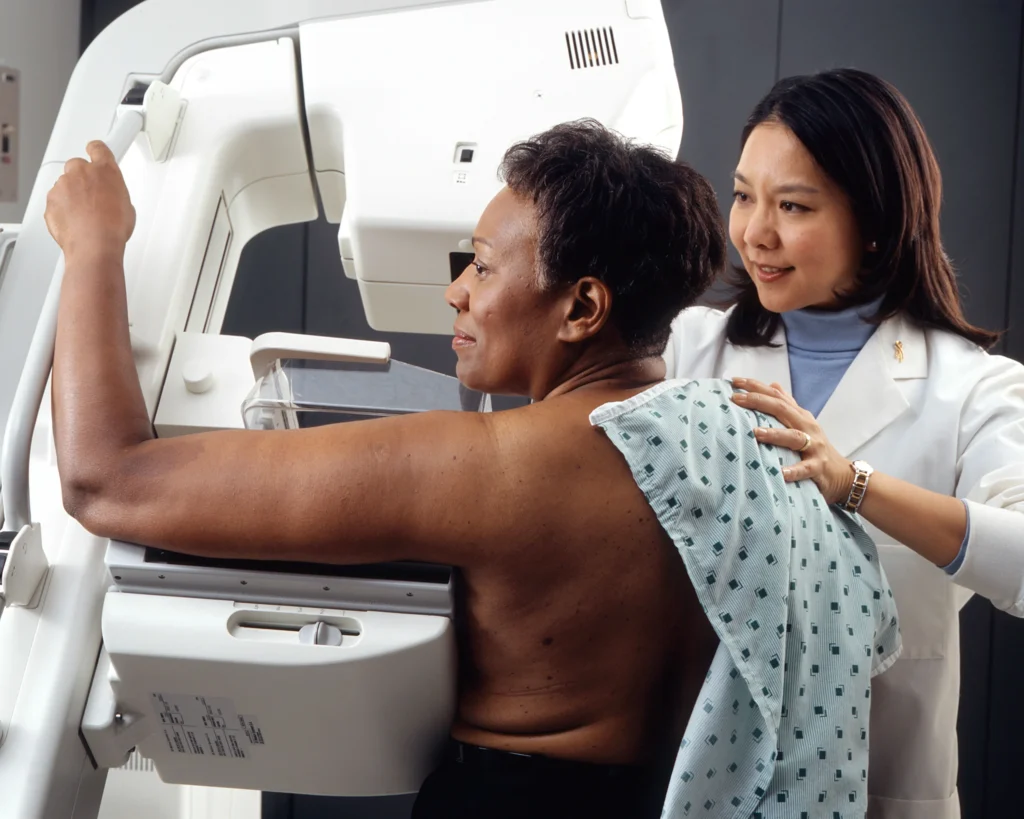
The NHS continues to encourage people to attend screening appointments when invited.
Screening can help identify certain cancers or changes that may need further investigation before symptoms develop. However, screening programs cover specific cancers and eligible population groups. They do not detect every type of cancer.
People should also seek medical advice when they notice symptoms that concern them. Contacting a GP promptly can help determine whether further examination or testing is needed.
Professor Peter Johnson has also encouraged people to take up NHS screening invitations and contact their GP surgery without delay if they are concerned about possible cancer symptoms.
Public awareness, access to screening and timely medical assessment all play an important role in improving cancer detection.
Conclusion
NHS England’s latest statistics mark an important milestone, with 373,574 new cancer diagnoses recorded in 2024 and an average of 1,021 diagnoses every day.
The increase reflects the growing demand for cancer services and highlights the importance of improving early detection.
However, diagnosis numbers alone do not measure the success of cancer care. Patients also need timely investigations, accurate diagnoses and access to appropriate treatment.
Continued investment in screening, diagnostic services and cancer treatment will remain essential to improving patient outcomes.