


Does your child experience recurring heel, knee, hip or elbow pain after running, jumping or sports practice, even without a sudden injury? One possible explanation is apophysitis in young athletes
Sports are an important part of childhood.
Running, jumping, swimming and playing team sports help children develop strength, coordination and confidence.
Quick Answer: What Is Apophysitis?
Apophysitis is an overuse condition that affects developing areas of bone where muscles and tendons attach. It commonly occurs in growing children and teenagers who participate in sports involving repeated running, jumping and kicking.
Common affected areas: Knees, heels, feet and pelvis.
Typical symptoms: Localized pain, tenderness and discomfort during or after physical activity.
Management: Activity modification, appropriate recovery and individualized physiotherapy can help reduce symptoms and support a gradual return to sports.
However, when a growing child repeatedly experiences pain around the knee, heel, hip or foot, it should not always be dismissed as ordinary growing pains.
One possible cause is apophysitis, an overuse condition that affects developing areas of bone where muscles and tendons attach.
It is particularly common in young athletes who participate in activities involving repeated running, jumping, kicking or sudden changes in direction.
Pain may initially appear only during sports but can gradually interfere with everyday movements.
The good news is that most cases can be managed without surgery.
Appropriate activity modification and a structured physiotherapy program can help reduce discomfort, improve movement and support a gradual return to sports.
Key Takeaways
Apophysitis is an overuse injury affecting developing muscle attachment sites in growing children.
Common forms include Osgood-Schlatter disease, Sever’s disease and Sinding-Larsen-Johansson syndrome.
Pain often increases during running, jumping, kicking or other repetitive sports activities.
Persistent pain, tenderness and limping should not automatically be dismissed as growing pains.
Physiotherapy can help improve strength, flexibility, balance and movement control.
A gradual, symptom-guided return to sports helps children resume activity safely.
What Is Apophysitis?
An apophysis is a developing area of bone where a muscle or tendon attaches.
These attachment sites are present in several parts of the body, including the knee, heel, foot and pelvis.
During childhood and adolescence, these areas are still developing.
Repeated pulling forces from attached muscles and tendons can irritate the apophysis, particularly when a young athlete performs high-impact activities frequently without enough recovery.
This irritation is known as apophysitis.
Unlike an acute injury caused by a single accident, apophysitis usually develops gradually through repetitive loading. It is considered a traction-related overuse injury.
An apophysis is different from the growth plate responsible for increasing the length of a long bone.
Both are developing skeletal structures, but they have different functions. (American Academy of Pediatrics, 2026)
Why Does Apophysitis Develop in Young Athletes?
Apophysitis is associated with the interaction between physical activity, muscle development and skeletal growth. Several factors may contribute.
1. Rapid growth during adolescence
During a growth spurt, bones can lengthen rapidly. Muscles and tendons may temporarily feel tight as the body adapts to these changes.
This can increase tension around certain muscle attachment sites during physical activity.
2. Repetitive sporting movements
Activities such as sprinting, jumping, kicking and repeated squatting place stress on developing attachment areas.
Sports including football, basketball, athletics, gymnastics and volleyball may involve these movements frequently.
3. Sudden increases in training intensity
Increasing training frequency, duration or intensity too quickly can leave insufficient time for recovery.
For example, a child who suddenly begins attending additional football practice sessions may experience more loading around the knee or hip.
4. Muscle tightness and strength limitations
Reduced flexibility or inadequate strength may influence how a child moves and distributes physical loads.
However, muscle tightness should not be assumed to be the cause in every child. An individual assessment is needed to identify relevant contributing factors.
5. Insufficient recovery
Repeated high-impact training without adequate recovery may contribute to persistent symptoms, particularly during periods of rapid growth.
Common Types of Apophysitis in Young Athletes
Apophysitis can affect different parts of the body depending on the developing attachment site and the physical demands of the sport.
1. Osgood-Schlatter Disease
Location: Front of the knee, just below the kneecap.
Osgood-Schlatter disease is one of the most recognized forms of apophysitis. It affects the tibial tubercle, the bony prominence below the kneecap where the patellar tendon attaches.
Repeated running, jumping and kicking can irritate this attachment site.
Common symptoms include:
- Pain and tenderness just below the kneecap.
- A noticeable bump over the tibial tubercle.
- Discomfort during running, jumping and squatting.
- Pain when kneeling or climbing stairs.
- Symptoms that increase during sports.
2. Sever’s Disease
Location: Back of the heel.
Sever’s disease, also called calcaneal apophysitis, affects the developing growth area at the back of the heel.
It commonly occurs in children involved in running and jumping sports. Repeated loading around the heel, including tension from the Achilles tendon, can contribute to irritation.
Common symptoms include:
- Pain at the back or sides of the heel.
- Tenderness when the heel is pressed.
- Discomfort during running and jumping.
- Limping or walking on the toes to avoid heel pressure.
- Pain that increases after physical activity.
3. Sinding-Larsen-Johansson Syndrome
Location: Lower edge of the kneecap.
Sinding-Larsen-Johansson syndrome affects the developing attachment area at the lower end of the kneecap.
It is associated with repetitive loading from activities such as sprinting and jumping.
Common symptoms include:
- Pain at the lower edge of the kneecap.
- Local tenderness.
- Discomfort during jumping, running and squatting.
- Pain when climbing stairs.
The main difference from Osgood-Schlatter disease is the location of the pain.
Osgood-Schlatter affects the tibial tubercle below the knee, while Sinding-Larsen-Johansson syndrome affects the lower part of the kneecap.
4. Iselin’s Disease
Location: Outer side of the foot, near the base of the little toe.
Iselin’s disease affects the developing attachment area at the base of the fifth metatarsal bone.
It may cause pain in young athletes who participate in running, jumping and sports involving frequent changes of direction.
Common symptoms include:
- Pain along the outer edge of the foot.
- Tenderness near the base of the little toe.
- Discomfort during running and jumping.
- Local swelling.
- Pain that increases with activity.
A fracture can cause similar symptoms, so persistent or sudden foot pain should be assessed rather than automatically attributed to apophysitis.
5. Pelvic Apophysitis
Location: Around the hip and pelvis.
Pelvic apophysitis affects developing muscle attachment sites around the pelvis, including the anterior superior iliac spine, anterior inferior iliac spine and ischial tuberosity.
It may occur in young athletes involved in sprinting, kicking, jumping and other activities requiring powerful hip movements.
Common symptoms include:
- Pain around the front of the hip or groin.
- Discomfort in the buttock or upper thigh.
- Pain during sprinting and kicking.
- Tenderness around the affected attachment site.
- Difficulty performing sports movements comfortably.
Sudden, severe pelvic pain during a forceful movement may indicate an avulsion fracture rather than gradual apophysitis.
Early Signs of Apophysitis Parents Should Recognize
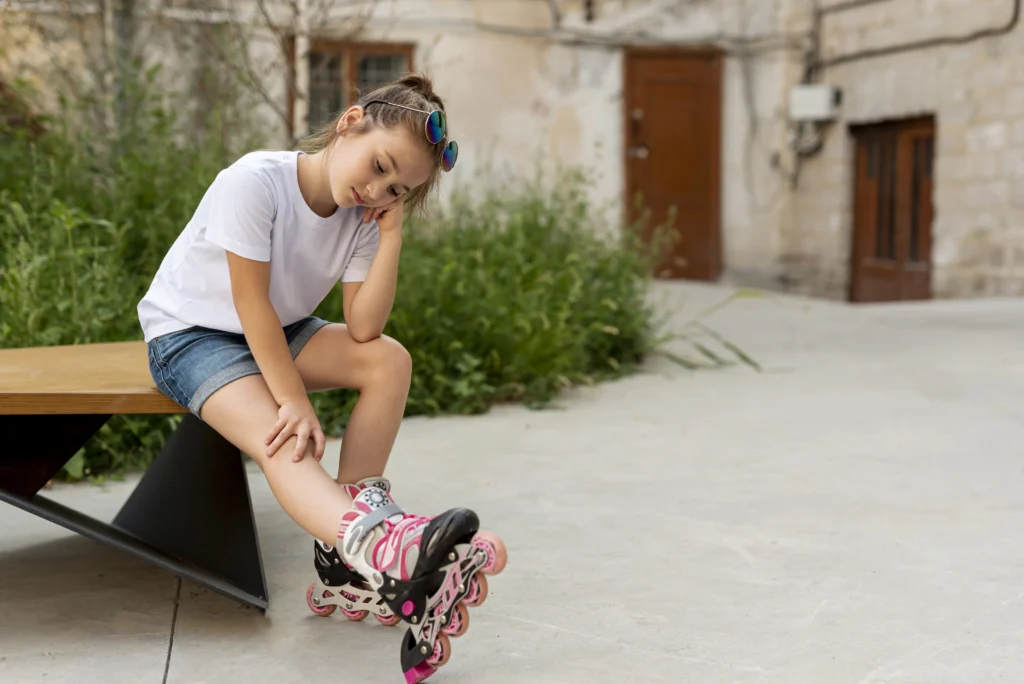
Symptoms can begin mildly and become more noticeable as physical activity continues.
Parents should watch for:
- Localized pain near a muscle attachment site.
- Tenderness when touching the affected area.
- Pain during running, jumping or kicking.
- Discomfort during squatting, kneeling or climbing stairs.
- Swelling or a noticeable bony prominence.
- Reduced performance during sports.
- Limping or changes in walking patterns.
- Pain that repeatedly returns after training.
A child who regularly complains of pain in the same area should not be encouraged to ignore it or simply push through training.
Apophysitis vs Growing Pains: What Is the Difference?
Growing pains and apophysitis can both occur during childhood, but their symptoms and patterns are different.
| Feature | Apophysitis | Growing pains |
|---|---|---|
| Pain location | Usually localized near an attachment site | Commonly affects both legs |
| Timing | During or after physical activity | Often in the evening or at night |
| Tenderness | Usually present | Usually absent |
| Relationship with sports | Often worsens with activity | Not consistently linked to activity |
| Limping | May occur | Not typical |
| Swelling | May be present | Not expected |
Growing pains do not usually cause persistent localized tenderness, swelling or limping. These symptoms deserve clinical assessment.
Apophysitis: Myth vs Fact
MYTH: Pain during sports is always normal during growth.
FACT: Repeated, localized pain and tenderness around a muscle attachment may indicate an overuse injury such as apophysitis.
MYTH: Children with apophysitis must stop all physical activity.
FACT: Painful activities may need modification, but suitable pain-free activities can sometimes continue under professional guidance.
MYTH: Apophysitis only affects the knees.
FACT: It can affect developing attachment sites around the knees, heels, feet and pelvis.
MYTH: Rest alone is always enough for recovery.
FACT: Activity modification is important, but some children also benefit from individualized strengthening, mobility and movement rehabilitation.
MYTH: A child can return to sports as soon as the pain reduces.
FACT: Return to sport should also consider strength, movement control and the ability to perform sport-specific activities comfortably.
How Does Apophysitis Affect Sports Performance?
Pain around a developing muscle attachment can change how a child performs everyday and sporting movements.
For example, a child with heel pain may avoid putting weight on the affected heel. A child with knee pain may reduce knee bending or avoid jumping.
These changes can affect:
- Running speed and endurance.
- Jumping and landing ability.
- Balance and coordination.
- Squatting and stair climbing.
- Kicking and changing direction.
- Confidence during sports participation.
When children repeatedly change their movement patterns to avoid pain, they may develop compensatory habits that affect their overall movement quality.
How Is Apophysitis Diagnosed?
Diagnosis usually begins with a medical history and physical examination. The clinician considers the child’s age, growth stage, sports participation, pain location and symptom pattern.
Medical and sports history
The clinician may ask:
- When did the pain begin?
- Did it develop gradually or suddenly?
- Which sports and activities does the child participate in?
- Has training intensity increased recently?
- Does pain improve with rest?
- Has the child experienced a previous injury?
Physical examination
The affected area may be examined for tenderness, swelling, movement restrictions and pain during specific activities.
The clinician may also assess muscle flexibility, joint movement, strength, walking patterns and functional movements.
Imaging tests
Imaging is not always necessary when the symptoms and examination findings are typical.
An X-ray may be recommended when the diagnosis is uncertain or a fracture needs to be excluded. Ultrasound or MRI may be considered in selected cases depending on the suspected injury.
Apophysitis vs Apophyseal Avulsion Fracture
One important distinction is between gradual apophysitis and an apophyseal avulsion fracture.
An avulsion fracture occurs when a sudden, powerful muscle contraction pulls the developing bony attachment away from the main bone. This can happen during sprinting, jumping or kicking.
| Feature | Apophysitis | Avulsion fracture |
|---|---|---|
| Onset | Usually gradual | Usually sudden |
| Cause | Repetitive loading | Sudden forceful contraction |
| Pain | Develops over time | Often sharp and immediate |
| Sports participation | May become increasingly uncomfortable | Athlete may be unable to continue |
| Swelling | Sometimes present | May be more noticeable |
A sudden popping sensation, severe pain or inability to continue activity requires prompt medical assessment. Pelvic avulsion injuries are particularly important to recognize in adolescent athletes. (Royal Children’s Hospital Melbourne, 2024)
Treatment and Management of Apophysitis
Treatment aims to reduce pain, manage physical loading and gradually restore the child’s ability to participate in sports.
The approach depends on the affected area, symptom severity and the child’s activity requirements.
1. Activity modification
Temporarily reducing activities that trigger pain is often an important first step.
This may involve reducing sprinting, jumping, kicking or repeated squatting rather than stopping all physical activity.
Low-impact activities such as swimming or cycling may be suitable alternatives if they do not aggravate symptoms.
2. Pain management
A cold pack wrapped in a towel may help relieve discomfort after activity.
Pain medication should only be used when appropriate for the child and following advice from a qualified healthcare professional.
3. Supportive footwear and equipment
Some children, particularly those with heel pain, may benefit from supportive footwear or heel cups.
These measures are not necessary for every child. Their suitability depends on the symptoms and individual assessment.
4. Physiotherapy and rehabilitation
Physiotherapy can help address muscle weakness, reduced flexibility, movement difficulties and limitations in sports participation.
The rehabilitation program should be tailored to the child’s condition rather than based on a standard exercise routine.
How Does Physiotherapy Help Children With Apophysitis?
Physiotherapy is an important part of managing apophysitis because recovery involves more than simply reducing pain.
The aim is to restore comfortable movement, improve physical capacity and prepare the child for a safe return to sports.
1. Individual physiotherapy assessment
A physiotherapist may assess:
- Pain location and severity.
- Joint mobility and movement control.
- Quadriceps, hamstring and calf flexibility.
- Lower-limb muscle strength.
- Balance and coordination.
- Walking, running and jumping patterns.
- Sport-specific movement difficulties.
This assessment helps identify which activities and movement patterns may be contributing to the child’s symptoms.
2. Strengthening exercises
Appropriate strengthening exercises help improve the muscles supporting the affected body region.
Depending on the child’s condition, rehabilitation may include:
- Quadriceps strengthening.
- Hamstring strengthening.
- Calf strengthening.
- Hip and gluteal strengthening.
- Core stability exercises.
Exercises should begin at a level the child can tolerate without significantly increasing symptoms.
3. Flexibility and mobility exercises
Gentle flexibility exercises may be recommended when muscle tightness contributes to movement difficulties.
For example, calf flexibility may be addressed in children with heel pain, while quadriceps and hamstring flexibility may be considered in children with knee symptoms.
Stretching should be comfortable and should not place excessive stress on the painful attachment site.
4. Balance and movement control
Balance and coordination exercises help children regain confidence and improve control during physical activity.
A physiotherapist may introduce:
- Single-leg balance exercises.
- Controlled squatting.
- Step-up exercises.
- Landing technique practice.
- Progressive movement drills.
5. Sport-specific rehabilitation
Before returning to full sports participation, children may need to practice movements relevant to their sport.
These may include controlled running, jumping, acceleration, deceleration and changes of direction.
The intensity and complexity of these activities should increase gradually according to symptoms and functional progress.
Evidence for individual treatment approaches varies between conditions. A systematic review of conservative treatments for Sever’s disease found that options such as exercises, orthoses and taping have been studied, but the available evidence does not establish one universally superior treatment. (Hernandez-Lucas et al., 2024)
How Long Does Apophysitis Take to Heal?
Recovery varies according to the affected apophysis, symptom severity, training demands and the child’s stage of growth.
Some children improve within several weeks after modifying painful activities. Others may require a longer period of rehabilitation, particularly when symptoms have been present for an extended time.
There is no single recovery timeline that applies to every type of apophysitis.
Returning to sport too quickly may cause symptoms to return. Progress should therefore be based on pain, movement quality, strength and the ability to complete sport-specific activities comfortably.
Can Children Continue Playing Sports With Apophysitis?
Not every child needs to stop all physical activity. However, continuing the same level of training despite significant pain is not advisable.
Modified participation may be possible when symptoms are mild and movement remains comfortable.
Activities that cause significant pain, limping or worsening symptoms should be reduced or temporarily avoided.
Before returning to full training, the child should ideally be able to:
- Walk and manage everyday activities comfortably.
- Perform relevant movements without significant pain.
- Demonstrate appropriate strength and movement control.
- Run, jump or change direction according to their sport without symptom aggravation.
A physiotherapist or treating clinician can help guide the progression.
How Can Apophysitis Be Prevented?
Apophysitis cannot always be prevented, particularly during periods of rapid growth.
However, sensible training habits may help reduce excessive stress on developing attachment sites.
Parents, coaches and young athletes can consider the following measures:
- Increase training gradually: Avoid sudden increases in training duration, frequency or intensity.
- Allow recovery time: Include rest and lighter activity days.
- Maintain general conditioning: Develop age-appropriate strength, flexibility and movement control.
- Encourage activity variety: Avoid excessive repetitive loading of the same body region.
- Warm up before exercise: Prepare the body with suitable dynamic movements.
- Use appropriate footwear: Choose footwear suitable for the sport and playing surface.
- Recognize early symptoms: Persistent pain should be assessed rather than ignored.
- Adjust training during growth spurts: Monitor changes in comfort and physical capacity as the child grows.
When Should Parents Seek Medical Advice?
Not every episode of sports-related pain indicates apophysitis. However, certain symptoms should not be ignored.
Parents should arrange medical assessment if a child experiences:
- Persistent or recurring pain around a bony attachment.
- Pain that interferes with walking or everyday activities.
- Increasing swelling or tenderness.
- Limping or difficulty bearing weight.
- Pain that does not improve with appropriate activity modification.
- Sudden, severe pain during running, jumping or kicking.
- A popping sensation followed by immediate pain.
- Significant bruising or visible deformity.
- Fever, redness or unusual warmth around the affected area.
- Pain at rest or during the night, particularly if it is worsening.
Sudden severe pain, inability to bear weight or suspected avulsion fracture requires prompt medical assessment.
Final Thoughts
Growing children should be able to enjoy sports without feeling pressured to play through persistent pain. Apophysitis is a reminder that developing bones and muscle attachment sites need appropriate loading and recovery.
Parents and coaches can make a difference by recognizing early symptoms, adjusting training demands and seeking professional advice when pain continues.
With the right assessment and physiotherapy support, young athletes can work towards comfortable movement, better physical confidence and a gradual return to the activities they enjoy.
Conclusion
Apophysitis is an overuse condition affecting developing muscle attachment sites in children and adolescents.
It commonly causes pain around the knees, heels, feet and pelvis, particularly in young athletes involved in running, jumping and kicking.
Recognizing symptoms early, adjusting training loads and allowing adequate recovery can help manage discomfort and prevent ongoing irritation.
Physiotherapy supports recovery through individual assessment, appropriate strengthening, flexibility exercises, movement training and gradual return-to-sport rehabilitation.
Most importantly, persistent pain in a growing athlete should not be dismissed as simply part of growing up.
Early assessment and appropriate management can help children remain active while protecting their developing musculoskeletal system.
Frequently Asked Questions About Apophysitis
1. What is the main cause of apophysitis in young athletes?
Apophysitis usually develops when repetitive pulling forces from muscles and tendons irritate a developing bone attachment site. High-impact sports, sudden increases in training and insufficient recovery may contribute.
2. At what age does apophysitis commonly occur?
It is commonly seen in growing children and adolescents, particularly during periods of rapid skeletal growth. The age varies depending on the affected attachment site and the child’s development.
3. Is apophysitis the same as growing pains?
No. Apophysitis usually causes localized tenderness around a muscle attachment and is often aggravated by sports. Growing pains commonly affect both legs in the evening or at night and do not usually cause localized tenderness or limping.
4. Can a child continue playing sports with apophysitis?
Some children can continue modified, comfortable activities. However, movements that cause significant pain, limping or worsening symptoms should be reduced or temporarily avoided following professional advice.
5. How long does apophysitis take to heal?
Recovery varies depending on the affected area, symptom severity and activity demands. Some children improve within several weeks, while others require a longer period of activity modification and rehabilitation.
6. Does physiotherapy help with apophysitis?
Yes. Individualised physiotherapy may include strengthening, flexibility exercises, balance training, movement correction and progressive sport-specific rehabilitation.
7. Can apophysitis cause a permanent problem?
Most cases improve with appropriate management. Some conditions, such as Osgood-Schlatter disease, can leave a persistent bony prominence even after pain settles. Persistent symptoms should be assessed by a healthcare professional.
8. When should parents take their child to a doctor?
Seek medical advice for persistent pain, swelling, recurring tenderness or limping. Sudden severe pain, a popping sensation or inability to bear weight requires prompt assessment.
Stay tuned with us for more health related topics.
Follow us on LinkedIn and Instagram for more.
More Read


Medical Disclaimer
The information provided in this article is intended for general educational purposes only. It should not be considered a substitute for professional medical advice, diagnosis or treatment. Every child’s symptoms, growth stage and physical requirements are different. Parents should consult a qualified healthcare professional for an appropriate assessment and individualized treatment plan. Do not delay seeking medical attention because of information read in this article.


