


AURORA, COLORADO, USA: New Phase 2 research explores how targeting immune system overactivity could improve inflammation, skin conditions and potentially support future brain health research in people with Down syndrome.
Researchers have reported encouraging findings from a Phase 2 clinical trial investigating tofacitinib, a medication that targets excessive immune system activity in people with Down syndrome.
The study found reduced inflammatory markers and improvements in certain inflammatory skin conditions.
Published in Cell Reports Medicine on November 17, 2026, the research also identified preliminary changes in selected cognitive and behavioral assessments.
However, further controlled clinical trials are needed to establish whether the medication can produce meaningful improvements in neurological function.
Understanding the Link Between Down Syndrome and Immune System Dysfunction
Down syndrome, also known as trisomy 21, is a genetic condition caused by the presence of an additional copy of chromosome 21. This extra genetic material affects physical development, learning, communication and several body systems.
One important area of research involves the immune system. Studies have found that people with Down syndrome can experience changes in immune activity, including excessive interferon signaling and increased inflammatory responses.
Interferons are proteins that help the immune system recognize infections and coordinate its response. They also regulate communication between different immune cells.
Chromosome 21 contains genes that encode several interferon receptors. The additional genetic material can increase the activity of these signaling pathways, contributing to persistent immune system changes.
This condition is known as immune dysregulation.
Research has linked immune dysregulation in Down syndrome with increased susceptibility to certain autoimmune and inflammatory conditions. These include alopecia areata, psoriasis, atopic dermatitis and other inflammatory skin disorders.
A study published in eLife in 2024 also documented widespread immune changes in people with Down syndrome. Researchers found that immune alterations could occur early in life, even before some individuals developed clinically recognized autoimmune conditions.
This research helped establish the scientific foundation for investigating treatments that target excessive immune activity. (Rachubinski et al., 2024)

Why Researchers Are Investigating Tofacitinib for Down Syndrome
Researchers at the Linda Crnic Institute for Down Syndrome at the University of Colorado Anschutz investigated whether controlling excessive immune signaling could improve certain health conditions associated with Down syndrome.
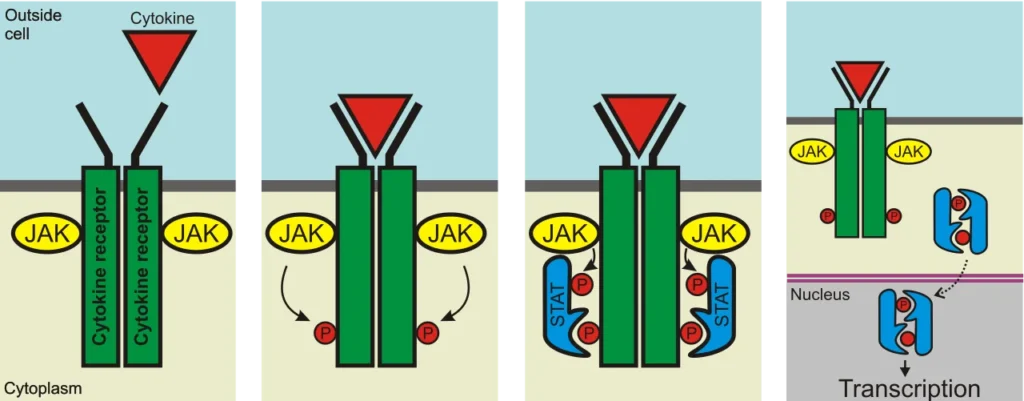
The team selected tofacitinib, a medication belonging to a group of drugs called Janus kinase (JAK) inhibitors.
JAK proteins help transmit signals from immune system molecules to cells. These signals regulate several biological processes, including inflammation, immune responses and cell activity.
Tofacitinib inhibits JAK1 and JAK3 signaling. By blocking specific signaling pathways, it can reduce the activity of inflammatory responses.
The research team wanted to determine whether this approach could reduce excessive interferon activity without causing widespread suppression of normal immune functions.
The treatment strategy focused on three important research questions:
- Can JAK inhibition reduce abnormal inflammatory activity in people with Down syndrome?
- Can controlling immune dysfunction improve associated inflammatory skin conditions?
- Can changes in immune activity provide useful information about neurological health and brain-related conditions?
The researchers investigated these questions through clinical assessments and detailed laboratory analyses.
What the Phase 2 Clinical Trial Involved
The clinical trial, titled A Phase 2, Open-Label, Single-Arm Clinical Trial of the Safety and Efficacy of the JAK1/3 Inhibitor Tofacitinib in Down Syndrome, evaluated the safety and potential benefits of the medication.
The study was conducted by researchers at the Linda Crnic Institute for Down Syndrome.
According to the clinical trial registry, 47 participants were enrolled. The study included adolescents and adults with Down syndrome who also had qualifying inflammatory skin conditions.
Key Clinical Trial Details
| Study detail | Information |
|---|---|
| Research institution | Linda Crnic Institute for Down Syndrome |
| University | University of Colorado Anschutz |
| Clinical trial phase | Phase 2 |
| Medication | Tofacitinib |
| Drug category | JAK1/3 inhibitor |
| Registered participants | 47 |
| Eligible age range | 12 to 50 years |
| Treatment dosage | 5 mg twice daily |
| Main treatment period | 16 weeks |
| Optional extension | Up to 40 weeks |
| Study design | Open-label, single-arm |
| Clinical trial ID | NCT04246372 |
| Research publication | Cell Reports Medicine |
Participants received tofacitinib orally twice daily during the main treatment period. Some could continue into an optional extension period lasting up to 40 weeks.
The research team monitored participants through regular medical evaluations, dermatological examinations, blood tests and neuropsychological assessments.
The study also examined molecular changes associated with inflammation, brain health and Alzheimer’s disease.
An important limitation is that the trial did not include a placebo comparison group. Participants and researchers knew that the medication was being administered. This makes it difficult to establish whether every observed improvement resulted directly from treatment.
The trial registry records 47 total enrolments. This number should not be interpreted as the number of participants included in every individual laboratory or cognitive analysis. (ClinicalTrials.gov, 2026)
Major Findings: Tofacitinib Reduced Inflammatory Activity
One of the most important findings involved changes in inflammatory markers.
Researchers collected blood samples and examined several biological indicators of immune system activity before and after treatment.
The results showed significant reductions in excessive interferon activity, inflammatory cytokine scores and certain metabolites associated with inflammation.
These findings suggest that targeting JAK signaling can influence several inflammatory pathways in people with Down syndrome.
1. Reduced Interferon Signaling
Interferon signaling plays an important role in the immune response. However, persistent overactivity can contribute to immune dysfunction and inflammation.
Researchers observed a reduction in excessive interferon activity following treatment.
This finding is important because increased interferon signaling has been linked to the additional genetic material found in chromosome 21.
The researchers also found that several abnormal inflammatory markers moved closer to levels observed in people without Down syndrome.
This suggests that tofacitinib may help regulate some of the immune system changes associated with trisomy 21.
2. Lower Inflammatory Cytokine Levels
Cytokines are signaling proteins that help immune cells communicate with one another.
They support normal immune responses, but excessive cytokine activity can contribute to persistent inflammation.
Blood analyses showed reductions in inflammatory cytokine scores following treatment.
Researchers also examined gene expression and circulating proteins to understand how the medication affected immune activity.
The findings suggested that tofacitinib modified specific inflammatory pathways rather than completely switching off immune responses.
This distinction is important because people with Down syndrome may already have changes in immune function that affect their response to infections.
3. Reduced Quinolinic Acid Levels
Another important observation involved quinolinic acid.
Quinolinic acid is a metabolite produced through the kynurenine pathway. It participates in several biological processes, but excessive levels can contribute to neurological damage through mechanisms involving excitotoxicity and inflammation.
The researchers observed a reduction in quinolinic acid levels during treatment.
This finding attracted interest because quinolinic acid has been associated with inflammatory and neurological processes.
However, a reduction in this metabolite does not establish that the medication improves brain function or prevents neurological disease.
These findings provide a direction for further investigation into the relationship between inflammation and brain health. (Rachubinski et al., 2026)
Improvements in Inflammatory Skin Conditions
The Phase 2 trial also reported improvements in certain inflammatory skin conditions.
People with Down syndrome can experience several skin disorders linked to autoimmune activity and inflammation. These conditions may cause physical discomfort and affect daily activities.
The researchers evaluated skin symptoms using standardised clinical assessments and measures of dermatology-related quality of life.
Two conditions received particular attention in the reported findings.
Hidradenitis Suppurativa
Hidradenitis suppurativa is a chronic inflammatory skin condition that affects areas where the skin rubs together.
It commonly develops around the armpits, groin, buttocks and other skin folds.
The condition can cause:
- Painful lumps beneath the skin.
- Repeated swelling and inflammation.
- Abscesses and drainage.
- Scarring and recurring skin lesions.
Researchers reported improvements in hidradenitis suppurativa among participants receiving tofacitinib.
These findings suggest that controlling excessive immune signaling may help manage certain inflammatory skin conditions in people with Down syndrome.
Alopecia Areata
Alopecia areata is an autoimmune condition in which the immune system attacks hair follicles.
It commonly causes hair loss in small, round patches. Some people may experience more extensive hair loss.
The trial also reported improvements in alopecia areata.
This finding is relevant because JAK signalling plays an important role in the inflammatory processes associated with this condition.
However, these results do not establish that tofacitinib is suitable for everyone with alopecia areata or Down syndrome.
The researchers used clinical skin assessments and quality-of-life measures to evaluate treatment responses.
The results offer encouraging evidence for further research into targeted treatments for inflammatory skin conditions.
Preliminary Cognitive and Behavioral Findings
An additional area of interest involved changes in cognitive and behavioral assessments.
People with Down syndrome can experience differences in learning, memory, attention, language and adaptive functioning. These characteristics vary widely between individuals.
The researchers investigated whether reducing excessive immune activity could be associated with changes in selected areas of cognitive performance.
Participants completed neuropsychological assessments during the study.
The researchers reported improvements in selected tests involving:
- Attention and concentration.
- Memory and learning.
- Vocabulary and language-related performance.
- Selected behavioral measures.
- Participant and caregiver-reported well-being.
These observations are interesting because they suggest a possible connection between immune activity and neurological functioning.
However, the cognitive findings require careful interpretation.
The trial did not include a placebo group. Participants may perform better on some assessments when they become familiar with the tests. This is known as a practice effect.
Other factors, including individual differences and changes in health, may also influence assessment results.
Lina Patel, PsyD, a co-author of the research, emphasized that the neuropsychological findings are not proof that tofacitinib improves cognition.
Larger randomized studies are needed to determine whether the changes represent genuine treatment-related improvements.
What the Study Reveals About Alzheimer’s Disease Research
The connection between Down syndrome and Alzheimer’s disease is another important area of investigation.
People with Down syndrome have a significantly increased risk of developing Alzheimer’s disease as they age. The additional chromosome 21 contains the APP gene, which plays a central role in the production of amyloid precursor protein.
Changes involving this gene contribute to the increased risk of Alzheimer’s-related brain changes in this population.
Researchers are also studying whether chronic inflammation and immune dysfunction influence neurological health.
The Phase 2 trial examined several biological markers associated with brain health and Alzheimer’s disease.
The researchers documented favourable changes in some of these biomarkers following treatment.
The findings may help scientists understand how immune signaling interacts with neurological processes.
However, the study did not establish that tofacitinib can prevent Alzheimer’s disease, delay its progression or treat dementia.
The observed biomarker changes are exploratory findings. They require dedicated research to determine their clinical significance.
How the Human Trisome Project Supported the Research
The Phase 2 trial builds on earlier work conducted through the Human Trisome Project at the Linda Crnic Institute.
The project studies biological and molecular changes associated with Down syndrome.
It has helped researchers investigate immune system activity, gene expression and other health-related differences in people with trisomy 21.
By comparing the clinical trial findings with earlier Human Trisome Project datasets, researchers identified biological changes that may respond to JAK inhibition.
This comparison also helped identify potential biomarkers that could be used to monitor treatment effects in future studies.
The project is important because it connects laboratory research with clinical investigations.
Rather than studying individual symptoms in isolation, researchers can examine how different biological processes interact in people with Down syndrome.
Is Tofacitinib Safe for People With Down Syndrome?
Safety was one of the main objectives of the Phase 2 trial.
The study met its predefined safety endpoint, and researchers reported a safety profile similar to that observed in the general population.
However, these findings should not be interpreted as proof that tofacitinib is completely safe for long-term use in people with Down syndrome.
Tofacitinib is an immune-modifying medication with important established risks.
Its FDA prescribing information includes a boxed warning covering:
- Serious bacterial, fungal and viral infections, including tuberculosis.
- Increased mortality observed in certain comparative studies.
- Malignancies, including lymphoma and lung cancer.
- Major adverse cardiovascular events, such as heart attack and stroke.
- Blood clots, including deep vein thrombosis and pulmonary embolism.
The comparative mortality and cardiovascular findings in the prescribing information were reported in studies involving rheumatoid arthritis patients with cardiovascular risk factors. They should not be treated as estimates of risk in people with Down syndrome.
Doctors also need to consider medical history, infection risk and other medications before prescribing tofacitinib.
Appropriate screening and monitoring may include tuberculosis testing, blood counts, viral hepatitis assessment and review of vaccination status.
The Phase 2 findings do not remove these established safety concerns.
Most importantly, tofacitinib is not approved specifically as a treatment for Down syndrome. The study does not establish a general treatment recommendation. (U.S. Food and Drug Administration, 2026)
What Researchers Are Investigating Next
The Phase 2 findings have encouraged researchers to investigate immune-targeted treatments in other conditions associated with Down syndrome.
One important area is Down Syndrome Regression Disorder (DSRD).
DSRD involves a relatively rapid loss of previously acquired abilities in a person with Down syndrome. It can affect speech, communication, movement, behavior and everyday functioning.
Researchers are investigating whether immune and inflammatory processes contribute to this condition.
A separate Phase 2 clinical trial, registered as NCT05662228, examined three treatment approaches:
- Lorazepam: A medication commonly used to manage anxiety and certain neurological symptoms.
- Intravenous immunoglobulin (IVIG): A treatment that uses antibodies collected from donated blood plasma to modify immune activity.
- Tofacitinib: A JAK inhibitor that targets specific immune signaling pathways.
The trial used a randomized treatment design and included 66 participants between 8 and 30 years of age.
Participants received one of the treatment approaches during a 12-week treatment period. Researchers evaluated safety and changes in neurological, behavioural and functional assessments.
This study is separate from the original immune skin conditions trial. It aims to investigate potential treatment options for people with Down syndrome who develop regression symptoms.
The University of Colorado research announcement indicated that findings from the second trial were expected in 2027. (ClinicalTrials.gov, 2026)
What These Findings Mean for People With Down Syndrome
The Phase 2 clinical trial represents an important development in research into immune dysfunction associated with Down syndrome.
It provides evidence that targeting excessive immune signaling can reduce certain inflammatory markers and improve some associated skin conditions.
The preliminary neurobehavioral findings also provide new questions for researchers studying the relationship between inflammation and brain health.
However, several questions remain unanswered.
Researchers still need to establish whether the observed improvements can be reproduced in larger clinical trials, whether they provide lasting benefits and which individuals are most likely to respond to treatment.
Long-term safety is another important consideration because tofacitinib affects immune system signaling.
The findings should therefore be viewed as an encouraging research development rather than an established treatment breakthrough.
For families and caregivers, the study highlights the importance of continued medical research into the different health conditions associated with Down syndrome.
Individualized healthcare, regular medical assessments and appropriate management of existing conditions remain important.
Future research will determine whether immune-targeted treatments can provide meaningful improvements in health, daily functioning and quality of life for people with Down syndrome.


