
vcure long logo vcure long logo
  • Physiotherapy
  • Health & Fitness
  • News
Reading: Your guide to manage an ankle sprain-
V CureV Cure
Font ResizerAa
Search
Follow US
© Vcure Healthcare 2025. All Rights Reserved.
Physiotherapy

Your guide to manage an ankle sprain-

VCure Healthcare
Last updated: May 23, 2022 9:51 PM
By VCure Healthcare
2 Min Read
Share
SHARE

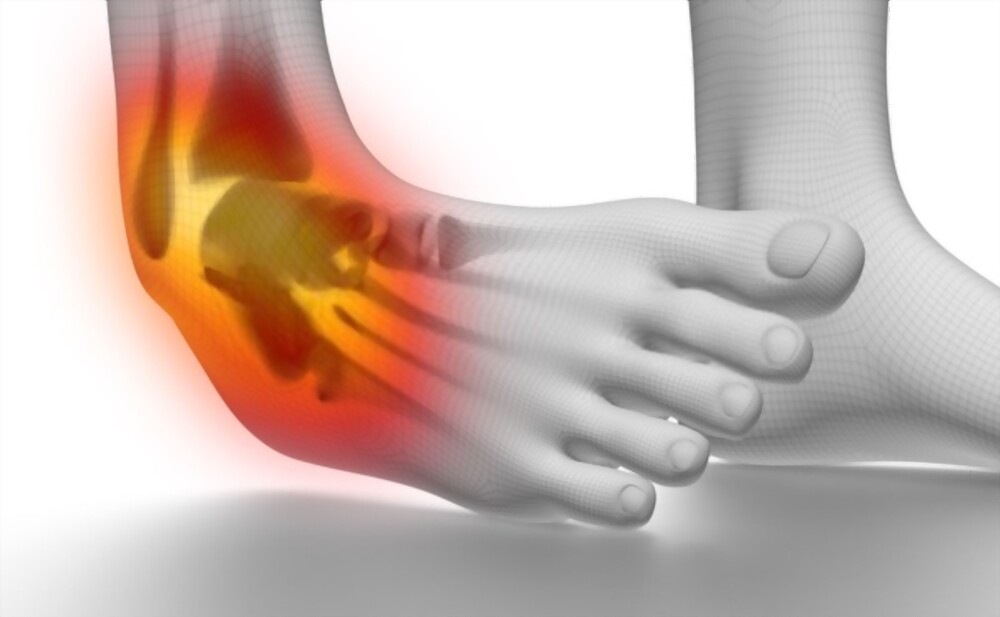
An ankle sprain refers to a condition in which a ligament on the ankle is  partially or completely torn.

Inversion-type,  injuries which involve the lateral ligament represent 85% of all ankle sprains. It is most likely injured in sports populations.

Clinical features-

  • May have previous history of ankle injury
  • Difficulty to bear weight on the affected side.
  • Tenderness, swelling and bruising
  • No bony tenderness, deformity or crepitus present.

Types based on severity-

  • Grade I represents a microscopic injury. It is Mild – Little swelling and tenderness.
  • Grade II involves tear at the macroscopic level, however the ligament remains intact. There is Moderate swelling, pain and impact on function along with Reduced proprioception, ROM and instability
  • Grade III is a complete rupture of the ligament.

Managing sprain-

The most common approach to manage ankle sprain is the PRICE  protocol: Protection, Rest, Ice, Compression, and Elevation

  • Protection: Protect the ankle from further injury. Avoid activities that may cause further injury.
  • Rest: Advise rest for the first 24 hours after injury
  • Ice: Apply a cold application
  • Compression: Apply compression bandage to control swelling
  • Elevation: Ideally elevate ankle above the level of the heart.

Managing sprains after acute phase is over-

Practice balance training along with muscle strength exercises. One should also begin with ankle/foot motion and mobility (walking, stairs, running). Gradually progress the loading, from static to dynamic exercise. Progression should be done from partially loaded to fully loaded exercises. One should continue practicing the functional activities at home with precise instructions regarding the expectations for each exercise. It is essential wearing tape or a brace during physical activities.

Late Remodelling –

Practise motor coordination skills. progress the load-bearing capacity and increase the complexity. The pre injury level should be achieved. It is also essential that one continues exercising.

Also read- https://vcurehealthcare.com/kinesio-taping-all-you-need-to-know/

You Might Also Like

Weather Change Headaches: Why Your Head Reacts Before the Rain

Why Heart Rate Increases During Pregnancy:When to Worry?

How to Regulate Irregular Periods Caused by PCOS

Trigger Point Injections for Neck Pain: Do They Really Work

How to Manage Excess Facial Hair (Hirsutism) in PCOS Naturally

TAGGED:vcurehealthcare
Share This Article
Facebook Email Copy Link Print

Latest

Influenza virus illustrations showing two respiratory infections.
Flu Activity Rises Early as COVID-19 Continues in 2026
healthcare news
Gross motor delay in children
Gross Motor Delay vs Fine Motor Delay: How Are They Different?
Child & Mother Care Physiotherapy
Pharmacist discussing prescription medication with a patient
Metformin and Painkillers: What Patients Need to Know
healthcare news
Human brain illustration showing brain anatomy
3 Factors Linked to Faster Brain Ageing, Oxford Study Finds
healthcare news

More Articles

Gross motor delay in children
Child & Mother CarePhysiotherapy

Gross Motor Delay vs Fine Motor Delay: How Are They Different?

By Dr. Kruti Raj (PT, MUHS, CPT, CMPT)
31 Min Read
Pharmacist discussing prescription medication with a patient

Metformin and Painkillers: What Patients Need to Know

By VCure Healthcare
Influenza virus illustrations showing two respiratory infections.
healthcare news

Flu Activity Rises Early as COVID-19 Continues in 2026

By VCure Healthcare
14 Min Read
healthcare news

3 Factors Linked to Faster Brain Ageing, Oxford Study Finds

OXFORD, UNITED KINGDOM: Diabetes, traffic-related air pollution and alcohol intake frequency have emerged as the three…

By VCure Healthcare
Child & Mother CarePhysiotherapy

Persistent Primitive Reflexes in Children: Could They Affect Development?

Primitive reflexes are automatic movements that babies develop before birth or shortly after delivery. They help…

By Dr. Kruti Raj (PT, MUHS, CPT, CMPT)
Child & Mother CarePhysiotherapy

Pectus Excavatum in Children: Is It Affecting Their Heart?

Have you noticed a hollow or dent-like appearance in your child's chest? It may seem like…

By Dr. Kruti Raj (PT, MUHS, CPT, CMPT)
Child & Mother CarePhysiotherapy

Difficulty Climbing Stairs in Children: Know What Might Be Wrong

Climbing stairs is an important movement skill that requires more than leg strength. Children need balance,…

By Dr. Kruti Raj (PT, MUHS, CPT, CMPT)
healthcare news

Cancer Treatment Cost in India: Why Care Is Still Costly

BENGALURU, INDIA: Cancer treatment in India has become more advanced, but its cost continues to place…

By VCure Healthcare
Child & Mother CarePhysiotherapy

One Shoulder Blade Sticks Out: What Causes Scapular Winging in Children?

Have you noticed that one of your child's shoulder blades looks more prominent than the other?…

By Dr. Kruti Raj (PT, MUHS, CPT, CMPT)
V Cure

Vcure Healthcare is All-in-One integrated Healthcare platform which helps to better manage chronic illnesses, prescription management & creates a continuum of care.

Categories

  • Physiotherapy
  • Health & Fitness
  • Child & Mother Care
  • Mental Health
  • Lifestyle
  • Diet & Nutrition
  • womens health
  • healthcare news

Quick Links

  • About Us
  • Contact

© Vcure Healthcare 2025. All Rights Reserved.

Welcome Back!

Sign in to your account

Username or Email Address
Password

Lost your password?

Not a member? Sign Up