


In clinical practice, there are certain signs that immediately change how you think. Opisthotonus is one of them.
It refers to a state where the body goes into a severe backward arch due to sustained muscle contraction, particularly involving the neck and spinal extensors.
The posture is not voluntary. It is driven by neurological dysfunction.
In extreme cases, the patient’s body may be supported only by the head and heels due to intense axial extension.
This pattern is often associated with serious central nervous system involvement and requires urgent attention.
According to clinical descriptions, opisthotonus is considered a form of abnormal posturing linked to brain or neurological injury rather than a standalone condition (Shahade & De Jesus, 2023)
Read about: Early Signs of Cervical Spine Damage You Should Never Ignore
Quick Answer
Opisthotonus is a severe abnormal posture where the body arches backward due to involuntary muscle spasms caused by neurological dysfunction. It is not a disease but a clinical sign often linked to serious conditions such as infections, brain injury, dystonia, or functional neurological disorders. Immediate medical evaluation is essential, and physiotherapy plays a key role in recovery after stabilization.
Read about our Complete Neck Pain Guide : Causes, Symptoms, Exercises and Treatment
Key Takeaways
- Opisthotonus is a neurological sign, not a standalone condition
- It presents as severe backward arching of the body due to muscle spasms
- Common causes include infections, dystonia, brain injury, and functional disorders
- Recent research shows functional neurological disorders are increasingly common causes
- Early recognition and referral are critical for patient safety
- Physiotherapy is essential after stabilization to improve recovery
- Proper handling and positioning help prevent complications
- Caregiver education plays a key role in long-term management
Read about: Cervical Ligament Injury or Neck Ligament Tear
Why Opisthotonus Should Not Be Misinterpreted
Traditionally, opisthotonus was strongly associated with tetanus or severe infections.
While that association still holds, recent clinical data suggests that the spectrum of causes is much broader than we were taught.
A 2026 neurological review analyzing a large cohort of patients reported that functional neurological disorders accounted for more than half of opisthotonus cases, which is a significant shift from older teaching (Baizabal-Carvallo & Jankovic, 2026)
This means that relying only on infection-based thinking can lead to delayed or incomplete diagnosis.
Read: What is Torticollis? How to treat neck tilt condition
What Happens Inside the Body
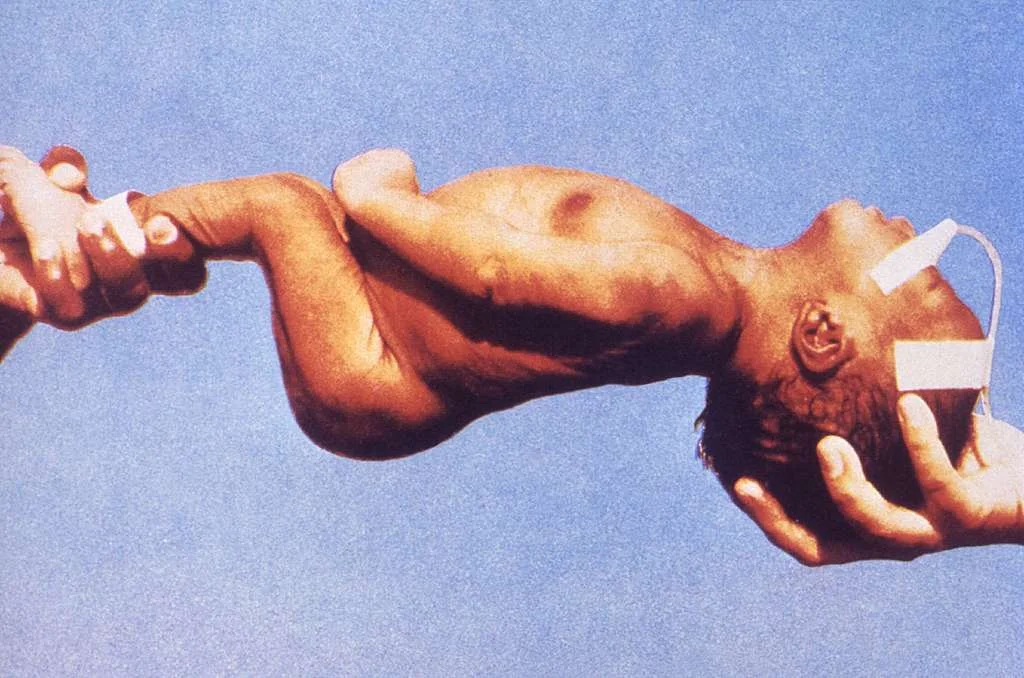
From a physiological perspective, movement depends on a balance between excitation and inhibition within the nervous system.
In opisthotonus, this balance is disrupted.
- Inhibitory neurotransmitters such as GABA and glycine fail to regulate motor activity
- Motor neurons become excessively active
- Extensor muscle groups overpower normal postural control
The result is a sustained, rigid backward arch that is difficult to reverse voluntarily. This explains why manual correction or simple positioning does not immediately resolve the posture.
The underlying mechanism reflects dysfunction in central motor pathways, particularly involving the brainstem and basal ganglia (Shahade & De Jesus, 2023)
Read about : 15 Common Causes of Neck Pain You Should Know
Causes of Opisthotonus
Classical Causes
These remain critical and should always be considered first in acute presentations:
- Tetanus
- Meningitis
- Encephalitis
- Traumatic brain injury
These conditions are often associated with additional systemic signs such as fever, altered consciousness, or seizures.
Neurological and Movement Disorders
Recent research highlights that many cases are now linked to movement disorders rather than infections.
Common causes include:
- Dystonia, especially drug-induced or tardive dystonia
- Functional neurological disorders
- Basal ganglia lesions
- Hypoxic brain injury
The increasing recognition of functional neurological disorders has changed the diagnostic approach significantly (Baizabal-Carvallo & Jankovic, 2026)
Pediatric and Genetic Causes
In infants and children, opisthotonus requires careful evaluation because early signs can be subtle.
Possible causes include:
- Epileptic encephalopathies
- Genetic mutations affecting neuronal excitability
- Metabolic disorders
- Kernicterus
There are documented cases where mutations such as KCNQ2 were associated with opisthotonus along with seizures and developmental delays (Kawano et al., 2023)
Read in detail: Whiplash Injury After An Accident? Here’s Treatment And Expert Rehab Guide
Rare but Clinically Important Causes
Some conditions are less common but should not be missed:
- Guillain Barré syndrome with atypical neurological involvement
- Brainstem or posterior fossa tumors
- Drug-induced acute dystonic reactions
- Severe psychiatric conditions such as catatonia
Case-based evidence has shown unusual presentations of opisthotonus in peripheral neuropathies, expanding the clinical spectrum (Thomas et al., 2025)
Read more: Cervical Disc Bulge: Causes, symptoms and treatment
Clinical Presentation
Opisthotonus is often dramatic, but early signs may still be overlooked.
In Adults
- Marked backward arching
- Neck hyperextension
- Muscle rigidity and spasms
- Sensitivity to stimuli such as sound or touch
In Infants
- Persistent arching during feeding
- Irritability and difficulty calming
- High-pitched cry
Clinical descriptions also note that even minimal stimulation can worsen the posture, which is a key diagnostic observation (Cleveland Clinic, 2023)
Read : How to Treat Neck Pain in Ankylosing Spondylitis
Differential Diagnosis: What Can Look Like Opisthotonus but Isn’t
In practice, not every backward arching posture is true opisthotonus.
This is where many clinicians, especially early in their careers, get confused.
A few conditions can closely mimic it, and distinguishing them early can change management completely.
Common Look-Alike Conditions
Severe low back muscle spasm
Patients may arch due to pain avoidance, but the posture is not sustained or reflex-driven
Sandifer syndrome (in infants)
Arching occurs during or after feeding due to gastroesophageal reflux, often mistaken for neurological issues
Dystonic reactions (drug-induced)
Sudden abnormal postures after medications like antiemetics or antipsychotics
Decorticate posturing
Unlike opisthotonus, this presents with flexion of upper limbs rather than full-body extension
Behavioral arching in infants
Sometimes seen in colic or irritability, but lacks neurological signs
Read more: Cervical Myelopathy: The Hidden Neck Condition Affecting Your Walking
Practical Tip
If the posture:
- Changes with distraction
- Is not sustained
- Lacks neurological signs
then it is less likely to be true opisthotonus.
This section helps your reader avoid overdiagnosis and panic, which is very real in clinical settings.
Read about: How to Relieve Morning Neck Stiffness Naturally
Red Flags for Immediate Referral
From a physiotherapy standpoint, these findings should prompt urgent medical referral:
- Sudden onset of abnormal posturing
- Fever with stiffness
- Altered consciousness
- Seizures
- Recent exposure to toxins or medications
Opisthotonus should always be treated as a neurological emergency until proven otherwise.
Also Read: Neck Pain with Fever: When To Worry And How To Treat
Assessment Approach for Physiotherapists
Before jumping into treatment, the most important role of a physiotherapist here is observation and clinical reasoning.
Opisthotonus is not something you “treat first.” It is something you recognize correctly.
What to Look For
Onset
Sudden onset suggests acute neurological or toxic causes. Gradual onset may point toward chronic or developmental conditions
Triggers
Does the posture worsen with sound, touch, or movement? This is often seen in neurological irritability
Associated Signs
- Fever
- Seizures
- Altered consciousness
- Feeding difficulty (in infants)
Medication History
Recent use of antiemetics or antipsychotics can indicate drug-induced dystonia
Simple Clinical Check
Ask yourself:
- Is the posture sustained or variable?
- Can it be voluntarily corrected?
- Are neurological signs present?
If the posture is rigid, sustained, and associated with systemic signs, treat it as a neurological emergency.
Clinical Insight
A careful 2-minute observation often tells you more than a full treatment session in such cases.
Read: Lhermitte’s sign- An Electic Shock Sensation Down The Neck
Physiotherapy Role: Realistic Expectations
It is important to be clear about the timing of physiotherapy.
In the acute phase, management is primarily medical. Physiotherapy begins after stabilization.
Read about: Effective Neck Pain Exercises At Home: A Complete Guide to Relief and Improved Mobility
Phase-Based Physiotherapy Approach
Phase 1: Protection
The initial focus is on preventing complications rather than correcting posture.
- Gentle positioning
- Maintaining joint mobility
- Preventing contractures
- Minimizing external stimulation
Overhandling can aggravate symptoms, especially in sensitive neurological conditions.
Phase 2: Tone Regulation
As the patient stabilizes:
- Slow, controlled movements are introduced
- Breathing exercises are incorporated
- Positioning strategies are used to reduce extensor dominance
Side-lying positions often help in reducing excessive extension.
Phase 3: Functional Rehabilitation
Rehabilitation depends on the underlying cause but typically includes:
- Neurodevelopmental therapy
- Postural control training
- Strengthening of opposing muscle groups
- Functional mobility training
Studies on neurological rehabilitation show improved motor outcomes when physiotherapy is integrated early into recovery (Kassaye et al., 2024)
Read about: Yoga for Neck Pain: Poses That Actually Work
Practical Handling Tips from Clinical Experience
In real practice, small adjustments make a big difference:
- Avoid forcing the body into flexion
- Always support the head and trunk together
- Keep the environment calm and low-stimulation
- Use slow and predictable movements
These approaches reduce the likelihood of triggering further spasms.
Read: Spasm In Neck: What Causes It & How to Fix It Fast
Caregiver Education and Home Advice
Once the patient is stable, caregivers play a major role in recovery, especially in pediatric and long-term neurological cases.
Clear guidance can reduce anxiety and prevent complications.
Read about: What Is Cervical Myofascial Pain Syndrome And How To Relieve Trigger Points
What Caregivers Should Do
Handle gently
Avoid sudden movements or forced positioning
Support the whole body
Always support head and trunk together during handling
Maintain a calm environment
Loud sounds and bright lights may trigger spasms
Follow positioning advice
Side-lying is often more comfortable than supine
What to Avoid
- Forcing the body into a straight or flexed position
- Excessive stimulation
- Ignoring repeated abnormal posturing
When to Seek Help Again
- Increase in frequency or severity of arching
- New symptoms like fever or seizures
- Difficulty in feeding or breathing
Clinical Insight
Educated caregivers often become your strongest allies in long-term management.
Read: How To Use Cervical Collar for Neck Support: Benefits & Hidden Risks
Potential Complications
If opisthotonus is not managed appropriately, complications can develop over time:
- Joint contractures
- Fixed deformities
- Respiratory compromise
- Pressure sores
- Severe cases of dystonia may progress into life-threatening conditions such as dystonic storm if not controlled early (Hull et al., 2021)
Read: Pain in the Back Side of the Neck: Causes and Treatment
Prognosis: What to Expect in Recovery
One of the most common questions from patients and caregivers is simple: “Will this get better?”
The answer depends almost entirely on the underlying cause, but some general patterns can guide expectations.
When Recovery is Good
- Drug-induced dystonia often resolves quickly once the offending drug is stopped
- Functional neurological cases may improve significantly with rehabilitation and reassurance
- Mild hypoxic or metabolic causes can recover with early intervention
When Recovery is Challenging
- Severe brain injury
- Genetic or metabolic disorders
- Long-standing neurological conditions
In these cases, the focus often shifts from full recovery to functional improvement and quality of life
Read: Understanding Swollen Lymph Nodes In The Neck
Role of Physiotherapy in Prognosis
- Prevents secondary complications like contractures
- Improves movement control over time
- Supports developmental progress in children
Insight
Early recognition and timely management often make a bigger difference than the severity of the posture itself.
Read: The Lemierre’s Syndrome: Rare Symptoms and Rehab Plan
Physiotherapy Clinical Insight
One of the most important lessons from practice is this:
Opisthotonus is often misinterpreted in its early stages. In infants, it may be mistaken for reflux or colic.
In adults, it may be dismissed as muscle spasm or back pain.
These assumptions delay diagnosis and can affect outcomes significantly.
Read: Understanding Dropped Head Syndrome in Simple Terms
Conclusion
Opisthotonus is not just an abnormal posture. It is a warning sign of underlying neurological dysfunction that should never be overlooked.
While causes can range from infections to functional and movement disorders, early recognition and timely referral are critical. From a physiotherapy perspective, the real impact begins after medical stabilization, where careful rehabilitation helps prevent complications and improve recovery.
In practice, understanding the cause behind the posture matters more than the posture itself.
Read: Branchial Cleft Cyst: A Complete Guide To Neck Lump
Frequently Asked Questions (FAQs)
1. What is opisthotonus in simple terms?
Opisthotonus is a condition where the body arches backward due to severe muscle spasms caused by neurological problems.
2. Is opisthotonus always caused by tetanus?
No, newer research shows that many cases are linked to functional neurological disorders and dystonia.
3. Can physiotherapy help in opisthotonus?
Yes, physiotherapy helps after medical stabilization by improving mobility and preventing complications.
4. Why do babies arch their back?
It may be due to neurological conditions, reflux, or developmental issues and should be evaluated carefully.
5. Is opisthotonus reversible?
It depends on the underlying cause. Some cases recover fully while others need long-term rehabilitation.
6. Is opisthotonus painful?
Yes, the muscle spasms can be intense and uncomfortable.
7. When should I seek medical help?
Immediately if there is sudden arching, fever, seizures, or altered consciousness.
Stay tuned with us for more health related topics.
Follow us on LinkedIn and Instagram for more.
More Read


Medical Disclaimer!
This article has been reviewed and written under the guidance of our Head Physiotherapist, Dr. Kruti Raj (PT, MUHS,CPT,CMPT). The information shared is intended for educational purposes only and should not be considered a substitute for personalized medical advice, diagnosis, or treatment.
Please consult us or any other qualified healthcare professional before beginning any exercise program, especially if you are experiencing pain, recovering from injury, or managing a medical condition.


