


If you’re starting shoulder separation treatment, the first few decisions you make can shape how well your shoulder heals
If you walk into a clinic and say “my shoulder is out,” many times it is not a dislocation.
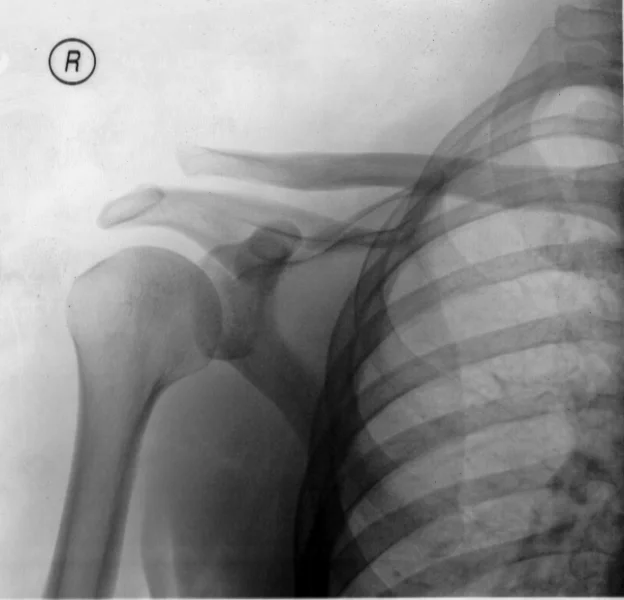
A separated shoulder is an injury to the acromioclavicular joint, also called the AC joint.
This is the small joint at the top of your shoulder where the collarbone meets the shoulder blade.
This injury mainly involves ligaments, not the main shoulder joint.
That is why people can still move their arm but feel pain, weakness or a strange instability.
From a physiotherapy point of view, this is not just a ligament injury.
It is a coordination problem that affects how your entire shoulder moves.
Quick Answer
A separated shoulder is an injury to the AC joint caused by ligament damage at the top of the shoulder. Most cases do not require surgery and recover well with structured physiotherapy.
Recovery time: 2 to 12 weeks depending on severity.
Best treatment: Early protection followed by progressive physiotherapy focused on mobility, strength, and shoulder control.
Key tip: Pain relief does not mean full recovery. Strength and stability training are essential.
Key Takeaways
- A separated shoulder is an AC joint ligament injury, not a dislocation
- Most cases recover without surgery when managed correctly
- Physiotherapy is the most important factor in recovery
- Early controlled movement is better than complete rest
- Strength and stability take longer to recover than pain
- The visible bump may remain but usually does not affect function
- Stopping rehab early is the most common mistake
What Actually Gets Injured Inside the Shoulder
Let me explain this the way I explain to patients.
First, the outer ligament of the AC joint gets stretched or torn.
Then, in more severe cases, the deeper coracoclavicular ligaments lose their support.
This leads to a shift in alignment.
The shoulder blade drops slightly and the collarbone appears raised.
That visible bump people notice is not something popping out.
It is a change in position. The important part is not the bump.
The important part is that your shoulder mechanics are disturbed (Beitzel et al., 2013)
How This Injury Usually Happens in Real Life
Most people imagine major accidents. In reality, I see very common patterns.
- Slipping in the bathroom and landing on the shoulder
- Falling off a bike or scooter
- Diving in sports like cricket or football
- Falling directly on the side of the shoulder
The key mechanism is direct impact on the top of the shoulder.
That force pushes the shoulder blade down while the collarbone stays in place.
Types of Shoulder Separation Without Confusing You
You may see six types online. In practice, we simplify it.
Mild Injury
- Ligaments stretched
- Pain but stable joint
- No major deformity
Moderate Injury
- Partial or complete ligament tear
- Small bump may appear
- Pain with movement
Severe Injury
- Complete ligament disruption
- Clear deformity
- Significant instability
Here is something important.
Most mild and moderate cases recover without surgery if rehabilitation is done properly. (Longo et al., 2017)
Symptoms That Actually Matter
Pain is obvious. But these are the signs I focus on.
- Pain on top of the shoulder
- Pain when bringing the arm across the body
- Weakness during lifting
- Feeling that the shoulder is not stable
- Visible bump in some cases
One subtle sign is avoidance.
Many patients stop using the arm without realizing it.
That leads to stiffness and delayed recovery.
First Few Days After Injury
This phase is often mishandled.
What helps
- Use a sling for comfort
- Apply ice several times a day
- Rest from heavy activities
What does not help
- Keeping the arm immobilized for too long
- Testing movement repeatedly
- Starting exercises too early
Early overload delays healing. Controlled rest helps recovery.
Physiotherapy : An Effective Shoulder Separation Treatment
Shoulder separation treatment isn’t complete without the right rehab and this is where most people go wrong
Healing of ligaments is only one part of the story.
What really decides your outcome is how well your shoulder relearns movement.
After an AC joint injury, your body automatically changes how it moves.
You start compensating without realizing it.
The shoulder becomes protective, stiff, and sometimes even weak in the wrong places.
Physiotherapy is not just about exercises.
It is about restoring timing, control, and confidence in movement.
Phase 1: Pain Control and Protection
Time frame: First 1 to 2 weeks
At this stage, your body is still reacting to the injury.
Pain, inflammation, and muscle guarding are all active.
The goal here is simple.
Calm things down without completely shutting movement.
What we focus on:
- Reducing pain and swelling
- Preventing stiffness
- Keeping surrounding joints active
What I usually recommend:
These are small, gravity-assisted movements.
They keep the joint from becoming stiff without stressing healing ligaments.
Gentle shoulder blade activation
Even when the arm is not moving much, the shoulder blade should not become inactive.
Light scapular setting helps maintain coordination.
Maintaining posture
Most patients start slouching because of the shoulder pain.
This tightens the front of the shoulder and delays recovery.
A simple posture correction like sitting upright and keeping the shoulder relaxed makes a noticeable difference.
What patients often do wrong:
They try to “check” their shoulder repeatedly.
Lifting the arm again and again to see if pain is gone.
This keeps irritating the tissue.
In this phase, less is more.
Controlled movement is better than frequent testing.
Phase 2: Restore Movement
Time frame: Around 2 to 6 weeks
Pain usually starts reducing here.
This is when people think they are healed. They are not.
Now the real work begins.
What we focus on:
- Regaining full range of motion
- Reducing muscle tightness
- Improving movement quality
Exercises we introduce:
Assisted arm lifting
Using the other hand or a stick to guide movement.
This avoids strain while restoring motion.
Wall-supported exercises
Wall slides and assisted elevation help retrain controlled movement.
Gradual range progression
We do not force full movement immediately. It is built step by step.
Important clinical insight:
Most stiffness at this stage is not from the joint itself.
It comes from:
- tight chest muscles
- guarded shoulder muscles
- reduced scapular movement
If you only push the arm without addressing these, progress becomes slow and painful.
What I tell patients here:
Do not chase range.
Chase smooth movement.
A smaller, controlled movement is better than a larger, painful one.
Phase 3: Strength and Stability
Time frame: Around 6 to 10 weeks
Now your shoulder starts to feel better.
This is also where many people stop rehab too early.
That is a mistake.
This phase builds the foundation that prevents future problems.
What we focus on:
- Muscle strength
- Joint stability
- Movement control
Key exercise groups:
These muscles stabilize the shoulder during movement. Without them, strength is meaningless.
Scapular stabilisation exercises
The shoulder blade must move correctly for the arm to function well.
We train:
- lower trapezius
- serratus anterior
- middle trapezius
Bands allow controlled strengthening without excessive load.
A mistake I see very often:
Patients train only visible muscles like the deltoid.
But the small stabilizers are what actually protect the joint.
If these are weak, the shoulder may feel fine initially but becomes painful later. (Mazzocca et al., 2007)
Phase 4: Return to Normal Activity
This phase is not defined by time alone.
It depends on how well you have progressed.
The goal here is not just strength.
It is confidence in real-life movement.
What we focus on:
Functional movements
Lifting, pushing, pulling. Movements that you actually do in daily life.
Overhead activities
Reaching, placing objects, controlled overhead loading.
Sport or work-specific training
Each person’s needs are different.
- A desk worker needs posture and endurance
- A gym user needs controlled loading
- An athlete needs dynamic stability
What I look for before clearing someone:
- Full pain-free range
- Good control of shoulder blade
- No hesitation during movement
- Equal strength compared to the other side
Final insight I always share:
Recovery is not when pain disappears.
Recovery is when you stop thinking about your shoulder while using it.
That is when it is truly functional again.
Do You Really Need Surgery
Many patients worry about this.
Surgery is usually considered when:
- Injury is severe
- There is major displacement
- Pain continues despite rehab
For most people, non-surgical treatment works well.
That is why physiotherapy plays such a big role in outcomes. (Beitzel et al., 2013)
Recovery Timeline You Should Expect
Wondering how long shoulder separation treatment takes?
The answer might surprise you.
- Mild injuries recover in 2 to 3 weeks
- Moderate injuries take 4 to 8 weeks
- More severe injuries can take 10 to 12 weeks or longer
Here is something important.
Pain improves earlier. Strength and coordination take more time.
Will the Shoulder Bump Go Away
This is one of the most common concerns.
In some cases, the bump remains.
But it usually does not affect function or strength.
Many athletes continue to perform normally with it.
Long-Term Problems If Rehab Is Ignored
This is where people run into trouble.
Without proper rehabilitation, you may develop:
- Chronic shoulder pain
- Weakness in overhead activities
- Poor posture
- Secondary shoulder impingement
The original injury is not always the problem.
Incomplete recovery is.
Lesser Known but Important Facts
These are things patients are often surprised by.
- Shoulder blade control is more important than the joint itself
- Sleeping position affects pain levels
- Fear of movement slows recovery
- Core strength supports shoulder function
- Early controlled movement is better than complete rest
Practical Advice I Give My Patients
- Do not rush the process
- Focus on correct movement, not just pain relief
- Be consistent with exercises
- Do not stop rehab once pain reduces
Recovery is not just about feeling better. It is about moving better.
Shoulder separation treatment works best when timed and progressed right.
Otherwise, recovery can take longer than it should.
Frequently Asked Questions
1. Can a separated shoulder heal without surgery?
Yes, most mild to moderate cases recover fully with proper physiotherapy.
2. How long does it take to recover?
Recovery typically takes between 2 to 12 weeks depending on the severity of the injury.
3. Is it safe to exercise during recovery?
Yes, but exercises should be guided and progressed gradually through physiotherapy.
4. Why does my shoulder still feel weak?
Because strength and coordination take longer to recover than pain relief.
5. Will the bump on my shoulder go away?
It may remain in some cases but usually does not affect shoulder function.
6. When can I return to gym or sports?
Only after full strength, stability, and pain-free movement are restored.
Stay tuned with us for more health related topics.
Follow us on LinkedIn and Instagram for more.
More Read


Medical Disclaimer!
This article has been reviewed and written under the guidance of our Head Physiotherapist, Dr. Kruti Raj (PT, MUHS,CPT,CMPT). The information shared is intended for educational purposes only and should not be considered a substitute for personalized medical advice, diagnosis, or treatment.
Please consult us or any other qualified healthcare professional before beginning any exercise program, especially if you are experiencing pain, recovering from injury, or managing a medical condition.


