


If you have ever stood up and suddenly felt dizzy, followed by a strange heaviness in your head, you are not imagining things, as this is often linked to a headache due to low blood pressure.
Many people come to me thinking they have migraine or “just stress headaches.” But when I listen closely, a pattern often appears.
The headache comes after dizziness. It improves when they lie down.
And it shows up more on days when they have not eaten or hydrated well.
That is where low blood pressure quietly enters the picture.
This is not something commonly discussed, but from a physiotherapy and clinical perspective, the connection is very real.
Low blood pressure can cause headaches, mainly due to reduced blood flow to the brain. These headaches are usually dull, feel heavy rather than throbbing, and often start after standing up. They typically improve when you lie down and are commonly linked with dehydration, long sitting hours, or poor circulation.
• Low BP headaches are linked to reduced blood flow to the brain
• Dizziness usually appears before the headache
• Symptoms often improve when lying down
• Dehydration and long sitting are common triggers
• Poor posture and neck stiffness can worsen symptoms
• Simple changes like movement and hydration can help significantly
Understanding Low Blood Pressure in a Practical Way
Low blood pressure, or hypotension, is usually defined as a reading below 90/60 mmHg.
But in real life, numbers alone do not matter as much as symptoms.
Some people function perfectly fine with low readings. Others feel:
- lightheaded
- tired
- mentally slow
- slightly nauseous
- and sometimes develop headaches
What matters is how well your body maintains consistent blood flow to the brain.
So, Can Low BP Cause Headaches?
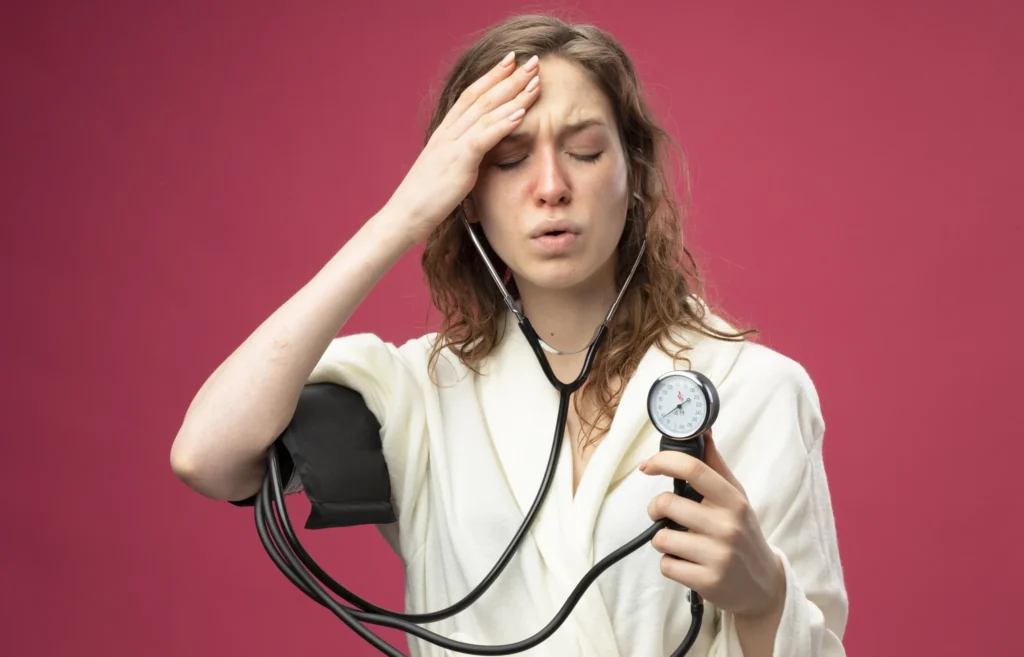
Yes, but not in a direct or obvious way.
Headache due to low blood pressure is mostly related to reduced cerebral perfusion, which simply means less blood reaching the brain at the right time.
When blood pressure drops:
- oxygen delivery can temporarily decrease
- the brain’s regulation system gets stressed
- blood vessels may dilate to compensate
This combination can create a dull, heavy type of headache. (Van Lieshout et al., 2003)
This study explains how reduced cerebral blood flow during hypotension can lead to neurological symptoms, including headache and dizziness.
What Does a Low BP Headache Feel Like?
Most patients describe it in a very specific way:
- not throbbing, more like pressure
- often at the back of the head or whole head
- starts after standing or walking
- improves when lying down
That last point is important. Relief in a lying position is a strong clue that circulation is involved.
Headache Due To Low Blood Pressure vs Migraine
Here is a simple way to tell the difference:
Low BP headache
- dull, heavy
- triggered by standing
- better when lying down
- comes with dizziness
- throbbing pain
- light sensitivity
- nausea common
- not posture dependent
This small distinction prevents a lot of confusion.
A Quick Real-Life Pattern I Often See
Many patients say something like this:
“I wake up fine. By late morning, I feel slightly tired. Then I stand up after sitting for long and suddenly feel dizzy. Within minutes, a heavy headache starts.”
By the time they reach the clinic, they think it’s migraine.
But when we check:
- low hydration
- long sitting hours
- poor meal timing
The pattern becomes very clear.
Why Standing Up Triggers It
This is called orthostatic hypotension.
When you stand:
- gravity pulls blood toward your legs
- your body should quickly push it back up
- if that response is slow, brain blood flow drops
You feel dizzy first, then the headache follows. (Winker et al., 2005)
This study found that orthostatic intolerance is linked with symptoms like fatigue, dizziness, and headache.
A Lesser Known Mechanism
There is another layer here that is rarely explained properly.
In some cases, low pressure can affect cerebrospinal fluid dynamics, which can slightly alter pressure inside the skull.
This creates a dragging or pulling sensation in pain-sensitive structures.
Recent discussions in neurology literature highlight that postural headaches can be linked with pressure changes inside the brain environment. (Kranz et al., 2020)
This helps explain why some people say, “my head feels heavy when I am upright but better when I lie down.”
The Physiotherapy Perspective
This is where things get interesting.
Low BP is often not just about the heart. It is strongly influenced by movement, muscles, and posture.
1. The Muscle Pump Problem
Your calf muscles act like a pump.
When you move:
- they push blood back toward the heart
- circulation improves
If you sit for long hours:
- blood pools in your legs
- less blood returns upward
- brain perfusion drops
This is one of the most common hidden causes I see in desk job professionals.
2. Autonomic Nervous System Sluggishness
Your body has an automatic system that regulates blood pressure instantly.
If this system is not responsive:
- BP drops last longer
- your brain takes more time to recover
- symptoms like headache become more frequent
3. The Neck Connection That People Ignore
This is very important.
Tight neck muscles and poor posture can:
- affect vertebral artery flow
- increase mechanical strain
- trigger cervicogenic headaches
So now you have a combined issue:
low BP plus neck dysfunction (Falla et al., 2018)
This study highlights how cervical dysfunction contributes to headache patterns and pain sensitivity.
Who Is More Likely to Experience This?
From what I see in practice, these patterns are common in:
- people who skip meals
- those who drink very little water
- individuals with long sitting hours
- people recovering from illness
- underweight individuals
- women with fluctuating hormonal cycles
Triggers You Might Not Notice
Sometimes the cause is very simple:
- dehydration
- long gaps between meals
- standing suddenly
- heat exposure
- poor sleep
Even mild dehydration can reduce blood volume enough to trigger symptoms.
A Simple Self-Check You Can Try
Try this at home:
- Sit quietly for 5 minutes
- Stand up quickly
- Notice what happens
If you feel:
- dizziness
- slight vision dimming
- followed by headache
Your symptoms may be linked to low BP regulation.
How I Approach This as a Physiotherapist
This is not about just treating the headache. It is about fixing the system behind it.
Improve Circulation First
Start with movement:
- walk every 30 to 45 minutes
- do calf raises
- avoid sitting for long periods
This improves blood return and brain perfusion.
Correct Your Posture
Poor posture affects both circulation and neck health.
Simple changes:
- sit upright
- keep screen at eye level
- avoid slouching
Work on the Neck
If headaches persist:
- chin tuck exercises
- gentle neck stretches
- upper back strengthening
This reduces both vascular and mechanical stress.
Hydration Strategy Matters
Instead of drinking a lot at once:
- sip water through the day
- include electrolytes if needed
Low BP is often linked to low circulating volume.
Change Positions Slowly
Do not rush from lying to standing.
Pause in between. Give your body time to adjust.
A Simple Daily Routine That Helps
You don’t need complicated plans.
Start with this:
Morning
- Drink water before tea or coffee
- Avoid skipping breakfast
During work
- Stand or walk every 30–40 minutes
- Do 10–15 calf raises
Evening
- Light walk
- Gentle neck stretches
Before bed
- Avoid sudden movements
- Stay hydrated
Small habits make the biggest difference here.
Common Mistakes That Make It Worse
I see these very often:
- ignoring hydration
- sitting for hours without movement
- assuming it’s always migraine
- overusing painkillers
- skipping meals
Fixing these alone can reduce symptoms significantly.
Myths vs Facts
Myth: Low BP is always harmless
Fact: It can affect brain function if symptomatic
Myth: All headaches are due to stress
Fact: Circulation plays a major role
Myth: Drinking coffee fixes low BP headaches
Fact: Temporary relief only, not a solution
When It Might Not Be Low BP
Not every headache with dizziness is due to low BP.
It could also be:
- migraine
- cervical spine issues
- inner ear problems
- anxiety-related symptoms
That’s why proper assessment matters.
When Should You Be Careful?
Do not ignore symptoms like:
- fainting
- confusion
- severe headache
- chest discomfort
These need medical evaluation.
What Most People Get Wrong
Low BP headaches are often misdiagnosed.
They get labeled as:
- tension headache
- migraine
But if the root cause is circulation, those treatments will not fully help.
A Final Note From a Physiotherapist
If your body feels off, there is usually a reason.
Headache due to low blood pressure are not random.
They are signals.
Signals that your body needs:
- better circulation
- better movement
- better balance
The good part is, once you understand the pattern, it becomes much easier to manage.
Frequently Asked Questions
1. Can low blood pressure cause headaches every day?
Yes, especially if your body is not maintaining proper blood flow to the brain due to dehydration, poor circulation, or long sitting hours.
2. Why do I feel dizzy and then get a headache?
This usually happens due to a sudden drop in blood pressure, especially when standing up, which briefly reduces blood flow to the brain.
3. How is a low BP headache different from a migraine?
Low BP headaches feel dull and heavy and improve when lying down, while migraines are usually throbbing and may involve light sensitivity or nausea.
4. Does drinking water help low BP headaches?
Yes, proper hydration improves blood volume and can reduce symptoms significantly.
5. Can posture affect low BP headaches?
Yes, poor posture and neck stiffness can reduce blood flow and worsen headache symptoms.
6. Are low BP headaches dangerous?
They are usually not serious, but frequent symptoms should be evaluated by a healthcare professional.
7. What is the fastest way to relieve a low BP headache?
Lying down, hydrating, and resting usually help quickly by improving blood flow to the brain.
8. When should I see a doctor?
If you experience fainting, severe headaches, confusion, or chest discomfort along with low BP symptoms.
Stay tuned with us for more health related topics.
Follow us on LinkedIn and Instagram for more.
More Read


Medical Disclaimer!
This article has been reviewed and written under the guidance of our Head Physiotherapist, Dr. Kruti Raj (PT, MUHS,CPT,CMPT). The information shared is intended for educational purposes only and should not be considered a substitute for personalized medical advice, diagnosis, or treatment.
Please consult us or any other qualified healthcare professional before beginning any exercise program, especially if you are experiencing pain, recovering from injury, or managing a medical condition.


