
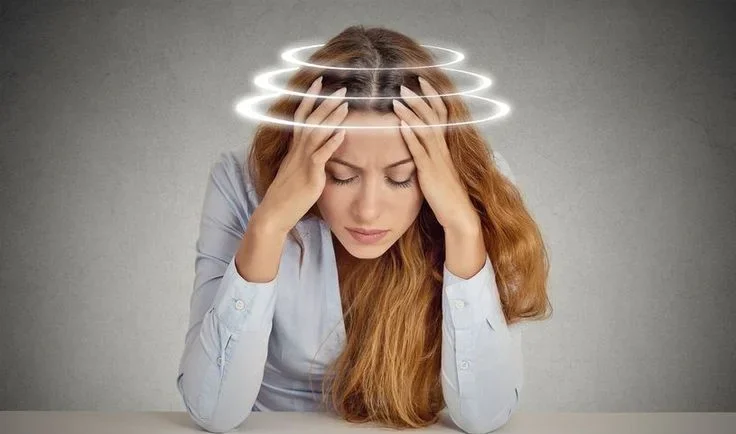

Many patients who come to physiotherapy clinics with chronic neck pain also report symptoms such as dizziness, light-headedness, imbalance, or a sensation that the surroundings are moving slightly. This condition is commonly referred to as cervicogenic dizziness, sometimes also described as cervical vertigo.
These symptoms can feel alarming because dizziness is commonly associated with inner ear problems.
However, in certain cases the source of dizziness may actually originate from the cervical spine, particularly when the joints, muscles, and sensory receptors of the neck are not functioning normally.
In physiotherapy practice, this condition is recognized when dizziness appears together with neck pain, restricted neck movement, and postural dysfunction. (PubMed)
However, it is important to understand that cervicogenic dizziness is considered a diagnosis of exclusion, meaning that other medical causes must first be ruled out. (Ncbi)
Recent research highlights that the cervical spine contains an extremely high concentration of sensory receptors that communicate with the brain about head position and movement. (JOSPT)
When these signals become abnormal due to injury or joint dysfunction, the brain may receive conflicting balance information.
Read our Complete Neck Pain Guide : Causes, Symptoms, Exercises and Treatment
What Is Cervicogenic Dizziness?
Cervicogenic dizziness refers to dizziness that arises from dysfunction within the cervical spine.
Typical symptoms include:
- Neck pain or stiffness
- Dizziness or imbalance
- Reduced neck mobility
- Headache originating from the neck
- Symptoms that worsen during neck movement
Unlike classic vertigo caused by inner ear disorders, cervicogenic dizziness rarely causes intense spinning sensations. Instead, patients usually describe:
- unsteadiness
- floating sensation
- lightheadedness
- balance difficulty while walking
Research published in neurological and physiotherapy journals suggests that cervicogenic dizziness may occur when abnormal signals from the cervical spine disrupt the brain’s balance processing systems. (Frontiersin)
The brain normally relies on three major systems to maintain balance:
- Visual input from the eyes
- Vestibular signals from the inner ear
- Proprioceptive feedback from muscles and joints
When cervical proprioception becomes impaired, the brain may struggle to integrate these signals correctly. (PubMed)
Read about : What is Cervical Facet Joint Pain, how it causes cervicogenic headaches and how to correct it naturally
The Important Role of Cervical Facet Joints
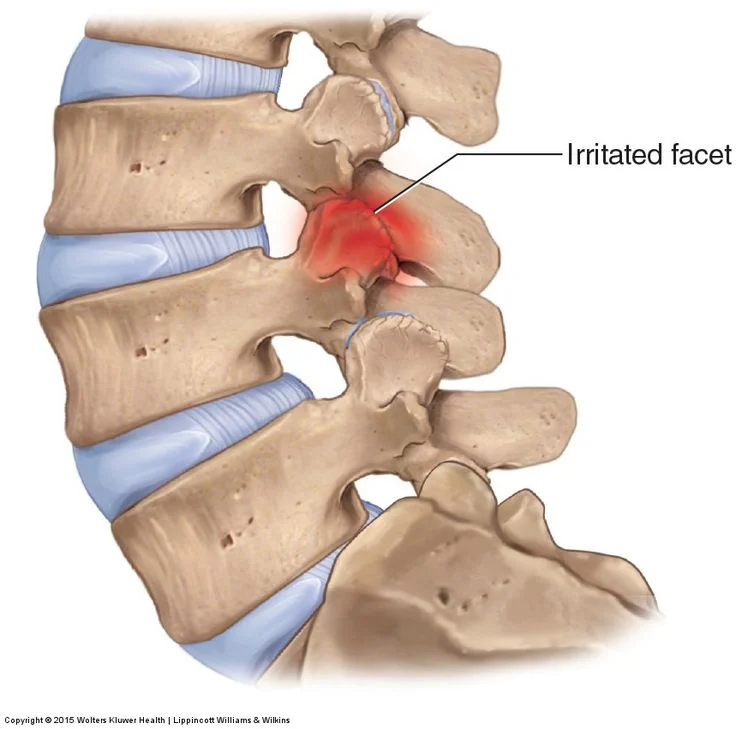
One of the most overlooked structures involved in neck pain and dizziness is the cervical facet joint.
What Are Cervical Facet Joints?
Facet joints are small paired joints located at the back of each vertebra. In the cervical spine, they serve several essential functions:
- guiding neck movement
- stabilizing the spine
- limiting excessive motion
- providing sensory feedback about head position
Each vertebra connects to the one above and below through these joints.
These joints are richly supplied with mechanoreceptors and nociceptors, meaning they are highly sensitive to both movement and pain. (Ncbi)
Because of this dense sensory network, the facet joints play an important role in proprioception, the body’s ability to detect joint position and movement.
Read about : 15 Common Causes of Neck Pain You Should Know
Cervical Facet Joint Pain: A Common but Underdiagnosed Condition
Cervical facet joint dysfunction is considered one of the most common sources of chronic neck pain, particularly among individuals who spend long hours sitting or using computers.
Research suggests that cervical facet joints may be responsible for approximately 50–60% of chronic neck pain cases following trauma such as whiplash injuries. (Barnsley L et al.)
Common causes include:
- poor posture
- prolonged smartphone use
- repetitive neck strain
- whiplash injuries
- cervical arthritis
- degenerative disc disease
When these joints become irritated or inflamed, they may produce symptoms such as:
- localized neck pain
- stiffness
- restricted neck movement
- headaches starting at the base of the skull
- shoulder or upper back pain
In some patients, irritation of these joints can also contribute to balance disturbances or dizziness.
How Cervical Spine Dysfunction Can Affect Balance
A lesser-known fact about the cervical spine is that it plays a critical role in postural control and spatial awareness.
The upper cervical spine contains an extremely high density of proprioceptors, particularly within the facet joints, ligaments, and deep neck muscles.
These receptors send continuous information to the brain about:
- head position
- neck movement
- body orientation in space (PubMed)
When inflammation, injury, or joint restriction disrupts these signals, the brain may receive conflicting information.
This mechanism is known as sensory mismatch theory.
In simple terms:
- The inner ear reports one position
- The eyes report another
- The neck sends inaccurate signals
This mismatch can produce dizziness or unsteadiness.
Research published in Frontiers in Neurology and other journals supports the role of abnormal cervical proprioception in cervicogenic dizziness.
Read about: Cervical Ligament Injury or Neck Ligament Tear
Cervical Reflexes That Influence Balance and Vision
Another fascinating but lesser-known aspect of cervical spine function involves several neurological reflex systems.
These include:
Cervico-Ocular Reflex
This reflex helps stabilize vision during head movements by coordinating signals between the neck and the eyes. (PMC)
Cervicocollic Reflex
This reflex stabilizes the head by activating neck muscles in response to movement.
Vestibulo-Ocular Reflex
This reflex connects the inner ear with eye movements to maintain stable vision.
When cervical dysfunction interferes with these reflex systems, patients may experience dizziness, blurred vision, or difficulty focusing while moving their head.
Read in detail: Whiplash Injury After An Accident? Here’s Treatment And Expert Rehab Guide
The Connection Between Whiplash Injury and Dizziness

Whiplash injuries frequently affect the cervical facet joints and surrounding soft tissues.
Following a whiplash trauma, patients may experience:
- persistent neck pain
- headaches
- dizziness
- balance disturbances
Research suggests that whiplash injuries can disrupt cervical proprioception and sensorimotor control, which may contribute to dizziness symptoms. (NCBI)
In physiotherapy practice, these patients often benefit from a combination of manual therapy and sensorimotor retraining.
Read in detail about: Cervical Radiculopathy: Why Neck Nerve Pain Travels to the Arm
What Research Says About Cervicogenic Dizziness
Scientific evidence supporting cervicogenic dizziness has grown over the past two decades.
Studies have shown that individuals with chronic neck pain may develop:
- impaired cervical proprioception
- altered head-neck coordination
- postural instability
- increased dizziness severity
A 2025 systematic review found that manual therapy and physiotherapy rehabilitation programs can improve both dizziness symptoms and neck mobility in some patients. (PubMed)
However, researchers emphasize that cervicogenic dizziness should only be diagnosed after other causes have been excluded.
Read in detail about: What is Cervical Spondylosis? The Truth Behind Chronic Neck Pain
Important Clinical Reality: Not All Dizziness Comes From the Neck
Although cervical dysfunction can contribute to dizziness, it is not the most common cause.
Other conditions that frequently cause dizziness include:
- benign paroxysmal positional vertigo (BPPV)
- vestibular neuritis
- migraine-associated vertigo
- cardiovascular conditions
- neurological disorders
Because of this, dizziness should always be evaluated carefully by a healthcare professional.
A multidisciplinary assessment may involve physiotherapists, ENT specialists, neurologists, or orthopedic doctors.
Read about: Effective Neck Pain Exercises At Home: A Complete Guide to Relief and Improved Mobility
Physiotherapy Assessment for Cervicogenic Dizziness
Physiotherapy evaluation usually focuses on identifying impairments in neck movement, posture, and sensorimotor control.
A typical assessment may include:
- cervical range of motion testing
- posture analysis
- joint mobility assessment
- balance testing
- cervical proprioception evaluation
- vestibular screening tests
This assessment helps determine whether the cervical spine may be contributing to dizziness symptoms.
Learn About: The Ultimate Neck Stretch Routine for Desk Workers in 2026
Physiotherapy Treatment Approaches
Treatment for cervical facet joint dysfunction and cervicogenic dizziness typically focuses on restoring normal neck function and improving sensorimotor control.
Manual Therapy
Manual therapy techniques can help improve joint mobility and reduce muscle tension.
These may include:
- cervical joint mobilization
- soft tissue therapy
- myofascial release
- trigger point therapy
Research suggests that manual therapy may reduce dizziness severity and improve cervical mobility.
Postural Rehabilitation
Posture correction is a critical part of treatment.
Common interventions include:
- ergonomic workstation adjustments
- strengthening upper back muscles
- chin tuck exercises
- scapular stabilization training
Improving posture helps reduce mechanical stress on cervical facet joints.
Learn how posture affects neck pain and correction exercises in our article on Simple Posture Correction Exercises for Forward Head Posture
Cervical Proprioception Training
Because impaired cervical proprioception is a key factor in cervicogenic dizziness, rehabilitation often includes sensorimotor exercises.
Examples include:
- laser pointer head-tracking exercises
- head repositioning training
- eye-head coordination drills
These exercises retrain the brain to interpret cervical signals more accurately.
Vestibular Rehabilitation
When dizziness is present, physiotherapists may combine cervical treatment with vestibular exercises.
These may include:
Gaze stabilization exercises
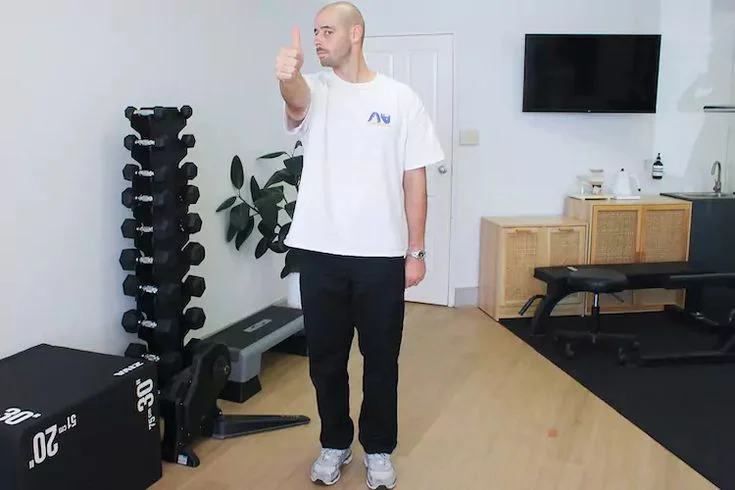
Balance training
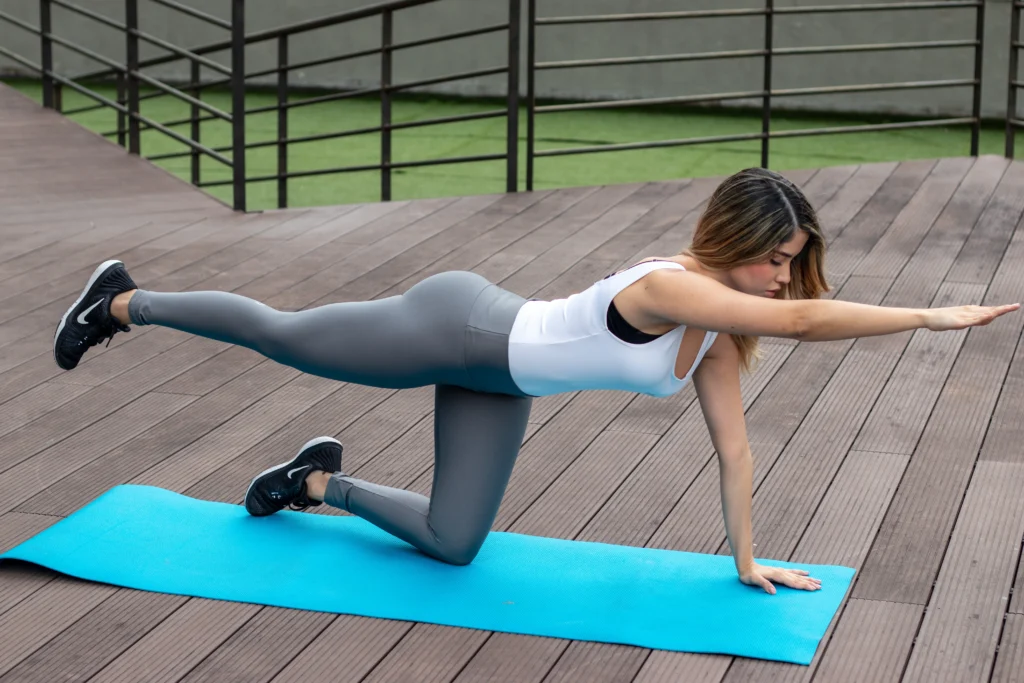
Head movement exercises
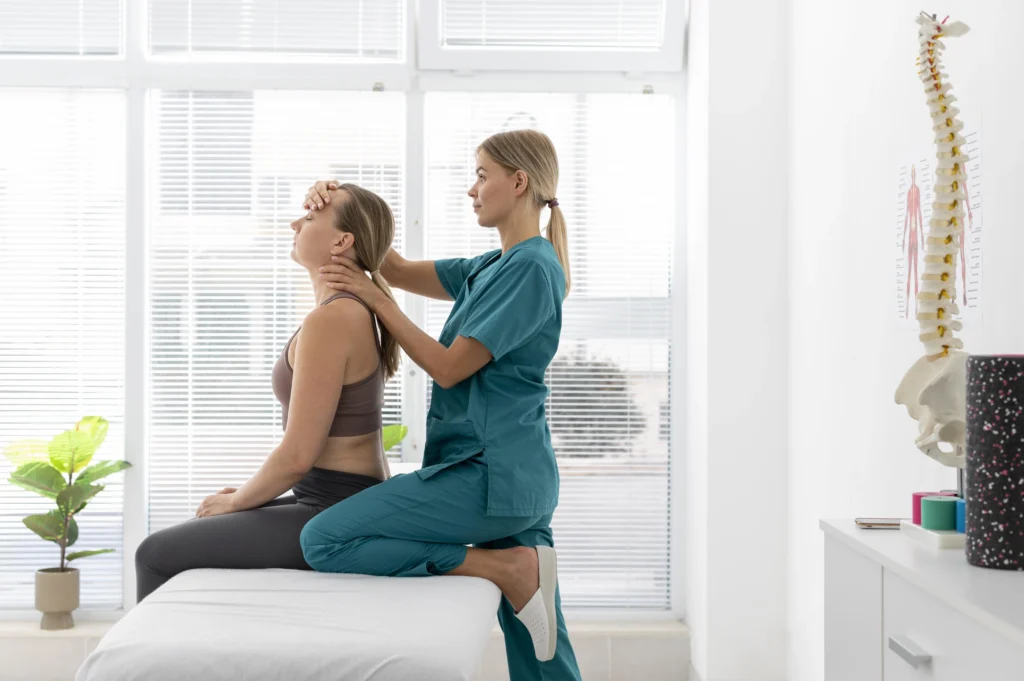
Combining vestibular and cervical rehabilitation can produce better clinical outcomes.
Read in detail: Best Desk Setup to Reduce Neck and Back Pain
Home Exercises That Support Cervical Health
For many individuals experiencing neck pain, stiffness, or cervicogenic dizziness, a structured home exercise routine can play a vital role in recovery. Physiotherapists often recommend gentle exercises that improve neck mobility, muscle strength, posture, and cervical proprioception.
These exercises help restore normal movement patterns, reduce stress on the cervical facet joints, and improve the coordination between the neck, eyes, and balance system.
It is important to perform these exercises slowly and in a controlled manner. If any exercise increases pain or dizziness significantly, it should be stopped and discussed with a healthcare professional.
Below are some commonly recommended exercises used in physiotherapy programs for cervical spine health.
Chin Tuck Exercise (Deep Neck Flexor Activation)
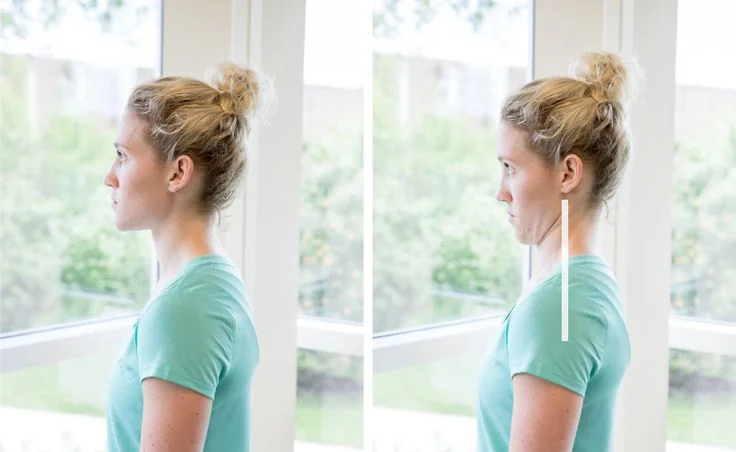
The chin tuck exercise is one of the most important exercises for correcting forward head posture, a common cause of cervical strain and facet joint stress.
When the head is positioned too far forward, often due to prolonged smartphone or computer use, the muscles at the back of the neck become overworked while the deep stabilizing muscles become weak.
The chin tuck exercise helps activate the deep cervical flexor muscles, which support proper head alignment.
How to perform the exercise
- Sit or stand upright with your shoulders relaxed.
- Keep your eyes looking straight ahead.
- Gently draw your chin backward, as if creating a “double chin.”
- Avoid tilting your head downward; the movement should be straight backward.
- Hold the position for 5 seconds.
- Relax and repeat.
Recommended repetitions
Perform 10 repetitions, 2–3 times per day.
Benefits
- Corrects forward head posture
- Strengthens deep neck stabilizers
- Reduces strain on cervical facet joints
- Improves cervical alignment
This exercise is often considered a foundation exercise in cervical rehabilitation programs.
Cervical Rotation Exercise (Neck Mobility Training)
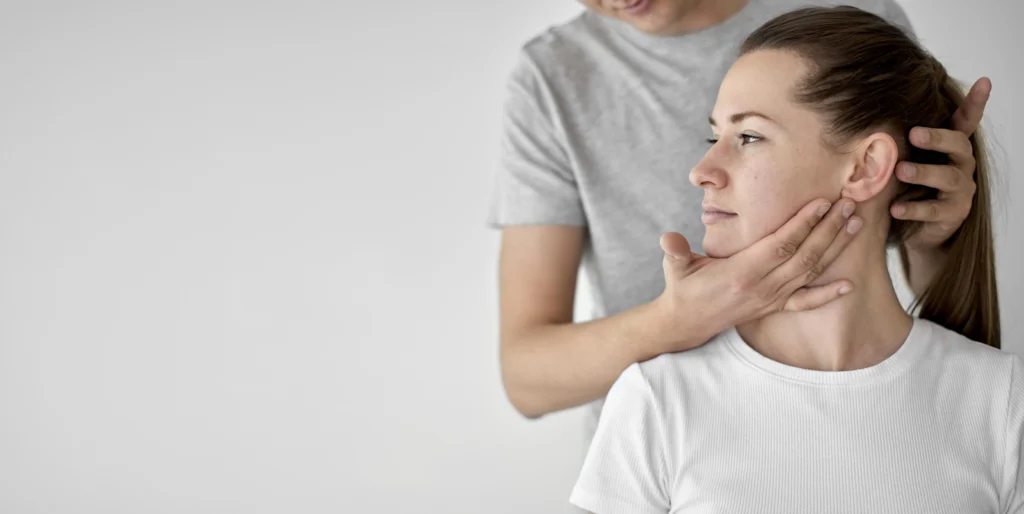
Restricted neck movement is common in individuals with cervical joint stiffness or prolonged sedentary posture. Gentle cervical rotation exercises help restore normal movement and improve joint lubrication.
Movement stimulates the production of synovial fluid, which nourishes the cervical facet joints and supports healthy joint function.
How to perform the exercise
- Sit upright with your shoulders relaxed.
- Slowly turn your head to the right as far as comfortable.
- Hold the position for 3–5 seconds.
- Slowly return to the center.
- Repeat the movement to the left side.
Recommended repetitions
Perform 10 repetitions on each side, 2 times daily.
Benefits
- Improves neck mobility
- Reduces joint stiffness
- Promotes healthy cervical joint movement
- Enhances functional range of motion
Movements should always be slow and controlled, avoiding sudden or jerky motions.
Scapular Retraction Exercise (Postural Stabilization)

Many neck problems are actually related to weakness in the muscles that stabilize the shoulder blades. When the upper back muscles become weak, the shoulders tend to round forward, which increases stress on the cervical spine.
Scapular retraction exercises strengthen the middle trapezius and rhomboid muscles, helping maintain proper posture.
How to perform the exercise
- Sit or stand upright.
- Relax your shoulders and keep your arms by your sides.
- Gently squeeze your shoulder blades together.
- Imagine trying to hold a small object between your shoulder blades.
- Hold the contraction for 5 seconds.
- Slowly relax.
Recommended repetitions
Perform 10–12 repetitions, 2–3 sets daily.
Benefits
- Improves upper back strength
- Supports proper posture
- Reduces load on the cervical spine
- Helps prevent forward head posture
This exercise is particularly beneficial for people who spend long hours sitting at a desk.
Levator Scapulae Stretch (Neck Muscle Relaxation)
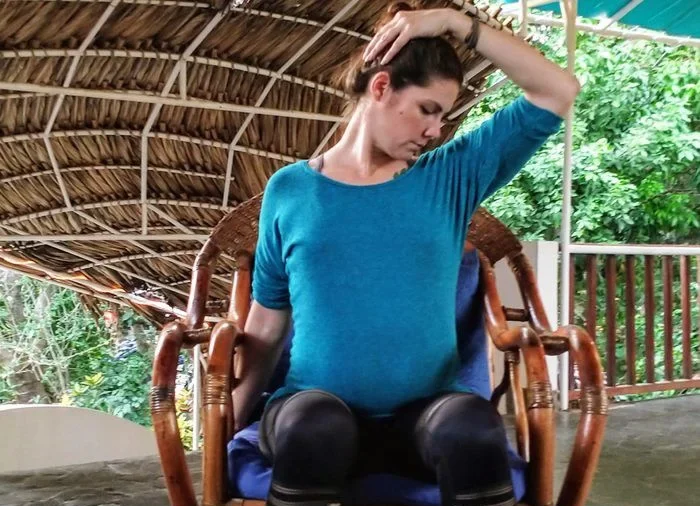
The levator scapulae muscle runs from the upper cervical spine to the shoulder blade. It commonly becomes tight in individuals who spend long hours working on computers or looking down at mobile phones.
Tightness in this muscle can contribute to neck stiffness, shoulder discomfort, and headaches.
Stretching the levator scapulae can help relieve muscle tension and improve neck mobility.
How to perform the stretch
- Sit upright in a comfortable position.
- Turn your head slightly to one side.
- Gently bring your chin toward your chest, as if looking into your pocket.
- Place your hand on the back of your head and apply gentle pressure to deepen the stretch.
- Hold the stretch for 20–30 seconds.
- Repeat on the opposite side.
Recommended repetitions
Perform 3 repetitions on each side.
Benefits
- Reduces neck muscle tension
- Improves cervical flexibility
- Helps relieve tension headaches
- Reduces shoulder and neck tightness
The stretch should be gentle and never forced.
Head Repositioning Exercise (Cervical Proprioception Training)

Because cervicogenic dizziness is often associated with impaired cervical proprioception, physiotherapists sometimes include exercises that improve the brain’s ability to detect head position.
These exercises retrain the communication between the neck joints, muscles, and central nervous system.
How to perform the exercise
- Sit comfortably facing a wall.
- Place a small target (such as a sticker) at eye level.
- Close your eyes and slowly turn your head to one side.
- Return your head to what you believe is the original neutral position.
- Open your eyes and check if you are still aligned with the target.
Recommended repetitions
Perform 8–10 repetitions.
Benefits
- Improves cervical proprioception
- Enhances head-neck coordination
- Supports balance control
- Reduces dizziness symptoms in some patients
This exercise is often used in sensorimotor rehabilitation programs.
Read in detail about: Cervical Disc Degeneration: The Hidden Cause of your Neck Pain
Tips for Performing Neck Exercises Safely
To get the most benefit from these exercises, consider the following guidelines:
- Perform exercises slowly and with control.
- Avoid sudden or jerky neck movements.
- Maintain proper posture during exercises.
- Stop if severe pain or dizziness occurs.
- Perform exercises consistently rather than aggressively.
Even small daily improvements in neck mobility and posture can significantly reduce strain on the cervical spine over time.
Read in detail about: How to Fix Upper Crossed Syndrome Naturally
Why Consistency Matters
One of the most important factors in recovering from cervical spine problems is consistency.
Exercises that strengthen the neck and upper back muscles gradually improve posture, joint stability, and proprioception.
Over time, these changes reduce mechanical stress on cervical facet joints and support better coordination between the neck and the body’s balance systems.
Patients who perform their exercises regularly often experience:
- reduced neck pain
- improved posture
- greater neck mobility
- fewer dizziness episodes
For best results, these exercises should ideally be performed alongside guidance from a qualified physiotherapist.
Read about: What Is Cervical Myofascial Pain Syndrome And How To Relieve Trigger Points
Red Flags That Require Immediate Medical Attention
Although cervicogenic dizziness is generally benign, certain symptoms may indicate more serious conditions.
Seek immediate medical care if dizziness occurs with:
- sudden severe headache
- double vision
- difficulty speaking
- weakness in arms or legs
- loss of consciousness
- difficulty walking
- numbness or tingling in the face or limbs
These symptoms may indicate neurological or vascular emergencies.
Also read: How to Relieve Neck Tightness Without Equipment
Preventing Cervical Facet Joint Pain
Maintaining cervical spine health requires daily lifestyle awareness.
Helpful preventive strategies include:
- maintaining neutral neck posture
- adjusting workstation ergonomics
- taking breaks during screen use
- strengthening neck and shoulder muscles
- avoiding prolonged forward head posture
Small posture corrections can significantly reduce stress on cervical joints.
A Physiotherapist’s Final Advice
Neck pain and dizziness can be frustrating symptoms that interfere with daily life.
While dizziness is often caused by inner ear disorders, cervical spine dysfunction, particularly involving facet joints, muscles, and proprioceptive receptors, may contribute in some individuals.
With proper evaluation and a structured physiotherapy program, many patients experience meaningful improvement.
The key to recovery lies in:
- accurate diagnosis
- targeted rehabilitation
- posture correction
- consistent exercise
If you experience persistent neck pain along with dizziness, consulting a qualified physiotherapist can help identify the underlying cause and guide you toward safe recovery.
Frequently Asked Questions
1. Can neck problems cause dizziness?
Yes. Certain cervical spine conditions such as cervical facet joint dysfunction, muscle tension, or cervical disc degeneration can affect proprioceptive signals from the neck. These altered signals may interfere with the brain’s balance system and contribute to dizziness, a condition often referred to as cervicogenic dizziness.
2. What is cervical vertigo?
Cervical vertigo, also called cervicogenic dizziness, refers to dizziness that originates from dysfunction in the cervical spine. It usually occurs together with neck pain, stiffness, reduced neck mobility, and symptoms that worsen during neck movement.
3. What are the symptoms of cervical facet joint pain?
Common symptoms include localized neck pain, stiffness, reduced range of motion, headaches starting from the base of the skull, shoulder discomfort, and sometimes dizziness or balance disturbances.
4. Can physiotherapy help cervicogenic dizziness?
Yes. Physiotherapy can be an effective treatment approach for cervicogenic dizziness. Techniques such as manual therapy, posture correction, cervical strengthening exercises, proprioception training, and vestibular rehabilitation may help reduce symptoms.
5. How is cervicogenic dizziness diagnosed?
Cervicogenic dizziness is usually diagnosed after ruling out other causes of dizziness such as inner ear disorders, neurological conditions, or cardiovascular problems. Healthcare professionals may assess neck mobility, posture, balance, and sensorimotor control during evaluation.
6. When should I see a doctor for neck pain and dizziness?
You should seek medical attention if dizziness occurs with severe headache, vision problems, difficulty speaking, weakness in the arms or legs, or sudden loss of balance. These symptoms may indicate more serious conditions that require immediate medical evaluation.
Stay tuned with us for more health related topics.
Follow us on LinkedIn and Instagram for more.
More Read


Medical Disclaimer!
This article has been reviewed and written under the guidance of our Head Physiotherapist, Dr. Kruti Raj (PT, MUHS,CPT,CMPT). The information shared is intended for educational purposes only and should not be considered a substitute for personalized medical advice, diagnosis, or treatment.
Please consult us or any other qualified healthcare professional before beginning any exercise program, especially if you are experiencing pain, recovering from injury, or managing a medical condition.


