


Does walking speed affect weight loss?
Two people walk for 30 minutes every morning.
One strolls comfortably while listening to a podcast.
The other walks briskly enough to slightly increase their breathing rate and heart rate.
Both complete the same amount of time.
Both cover some distance.
Both are physically active.
But will they achieve the same fat-loss results?
Quick Answer
Yes, walking speed can affect fat loss because faster walking generally burns more calories per minute than slower walking. However, pace is only one factor. Consistency, duration, nutrition, sleep, and overall activity levels also influence long-term fat-loss results.
It’s a question many walkers eventually ask.
Once people establish a regular walking habit, they often start wondering whether increasing their pace could help them lose more fat.
The short answer is yes, walking speed can affect weight loss.
However, it probably doesn’t work in the way many people think.
Walking speed affect exercise intensity, calorie expenditure, and the overall physical demand placed on the body, thus affecting weight loss.
But pace is only one piece of the puzzle.
Duration, consistency, nutrition, sleep, and overall activity levels also influence long-term fat-loss outcomes.
Understanding how walking speed fits into the bigger picture can help you make smarter decisions without becoming obsessed with walking faster.
Key Takeaways
- Walking speed influences exercise intensity and calorie expenditure.
- Brisk walking generally burns more calories per minute than slow walking.
- The fat-burning zone concept is often misunderstood.
- Fat loss depends on overall energy balance, not just what fuel is used during exercise.
- Longer walks can sometimes compensate for a slower pace.
- Walking uphill can increase intensity without increasing speed.
- Sweating is not a reliable indicator of fat loss.
- The best walking pace is one you can maintain consistently.
Does Walking Speed Affect Weight Loss?
Yes, walking speed can affect fat loss and thus the weight loss.
The primary reason is simple: walking faster generally requires more energy.
As intensity increases, your body typically burns more calories per minute.
Over time, this can contribute to a greater overall energy expenditure, which may support fat-loss efforts when combined with appropriate lifestyle habits.
Research examining walking cadence and exercise intensity shows that faster walking speeds are associated with higher-intensity physical activity. (Tudor-Locke et al. 2018)
However, it is important not to oversimplify the relationship.
Walking faster does not automatically guarantee greater fat loss.
For example:
- A brisk walker who significantly increases calorie intake may not lose more fat.
- A slower walker who remains consistent for months may achieve excellent results.
- A person who walks briskly twice a week may accumulate less total activity than someone who walks moderately every day.
This is why walking speed should be viewed as one variable rather than the entire equation.
Why Faster Walking Burns More Calories
To understand why pace matters, it helps to understand a basic principle of exercise physiology.
Your body requires energy to move.
When you increase your walking speed, your muscles must work harder to propel your body forward.
Your heart pumps more blood, your breathing rate increases, and your overall energy demand rises.
In practical terms, this means:
- A brisk walk generally burns more calories per minute than a slow walk.
- Walking uphill generally burns more calories than walking on flat ground.
- Carrying additional weight generally increases energy expenditure.
This does not mean every walk should be fast.
It simply explains why walking speed can influence calorie burn.
Imagine two individuals who each walk for 30 minutes:
- Person A walks slowly.
- Person B walks briskly.
Under similar conditions, Person B will typically expend more energy during that session.
That additional expenditure may seem small on a single day.
Over weeks and months, however, those differences can accumulate.
The key word is “may.”
Human bodies are complex, and fat loss is influenced by far more than calorie expenditure during a single walk.
The Fat-Burning Zone Myth
One of the most persistent fitness myths involves something called the fat-burning zone.
You may have heard it before.
The theory suggests that exercising at a lower intensity is better for fat loss because the body uses a higher percentage of fat as fuel.
Technically, there is some truth behind this idea.
At lower exercise intensities, a larger proportion of the energy used during activity often comes from fat.
At higher intensities, the body typically relies more heavily on carbohydrates.
This is where confusion begins.
Many people assume that because lower-intensity exercise uses a greater percentage of fat, it must automatically be the best choice for fat loss.
That conclusion does not necessarily follow.
Fat loss is influenced by overall energy balance and total energy expenditure, not simply by the percentage of fat used during a workout.
Consider a simplified example:
- A slower walk may burn fewer total calories while using a higher percentage of fat.
- A brisk walk may burn more total calories while using a lower percentage of fat.
The brisk walk could still contribute more to overall calorie expenditure despite relying proportionally less on fat during the activity itself.
This is one reason many exercise professionals caution against becoming overly focused on the fat-burning zone concept.
The goal is not to maximize fat usage during a single workout.
The goal is to create habits that support long-term fat loss.
Fat-Burning Zone: Myth vs Reality
Myth: Lower-intensity walking is always better for fat loss because it burns a higher percentage of fat.
Reality: Lower-intensity exercise may use a higher percentage of fat as fuel, but higher-intensity walking often burns more total calories. Long-term fat loss depends on overall energy balance, not just the fuel source used during a workout.
Brisk Walking vs Slow Walking
Rather than thinking of walking speeds as good or bad, it is more useful to think of them as tools.
Each pace has advantages.
| Walking Pace | Potential Advantages |
|---|---|
| Slow | Accessible, comfortable, easier to sustain |
| Moderate | Balanced intensity and sustainability |
| Brisk | Greater calorie expenditure per minute, time-efficient |
Slow walking may be particularly useful for:
- Beginners
- Older adults
- Individuals recovering from illness
- People with joint discomfort
Brisk walking may be particularly useful for:
- People with limited exercise time
- Individuals seeking higher-intensity activity
- Experienced walkers looking for progression
The best pace often depends on the person rather than a universal rule.
Walking Pace Comparison
| Pace | Intensity | Best For |
|---|---|---|
| Slow | Light | Beginners, recovery, older adults |
| Moderate | Moderate | Most adults |
| Brisk | Higher | Time-efficient calorie burning |
How Fast Should You Walk for Fat Loss?
Many people want a precise number.
Should you walk at 4 km/h?
5 km/h?
6 km/h?
In reality, most people do not need to monitor their pace that closely.
A more practical approach is the talk test.
Moderate-intensity walking is often described as a pace where:
- You can talk comfortably.
- You can answer questions.
- You can hold a conversation.
- Singing would be difficult.
This level of effort is commonly recommended because it is challenging enough to elevate physical activity levels while remaining sustainable for many adults.
The World Health Organization recommends regular moderate-intensity physical activity as part of a healthy lifestyle. (World Health Organization 2020)
For many walkers, a brisk but comfortable pace falls within this range.
The exact speed will vary from person to person.
A pace that feels easy for one individual may feel challenging for another.
That is perfectly normal.
A Note from Our Physiotherapist
Many people assume they need to walk as fast as possible to lose fat. In reality, the most effective walking pace is usually one that feels challenging but sustainable. If increasing your speed causes discomfort, pain, or makes you dread walking, focus on consistency first. A pace you can maintain regularly will almost always deliver more long-term benefits than a pace that leads to burnout.
What If You Can’t Walk Fast?
This is an important question because not everyone can or should walk briskly.
Some people have:
- Joint pain
- Mobility limitations
- Balance concerns
- Chronic health conditions
- Low fitness levels
Others simply prefer a slower pace.
The good news is that slower walking still counts.
Physical activity exists on a spectrum.
Moving more is generally better than remaining inactive.
The World Health Organization emphasizes that replacing sedentary time with physical activity of any intensity can provide health benefits. (World Health Organization 2020)
This means you do not need to earn your exercise through discomfort.
A comfortable walking pace that you maintain consistently is often more valuable than a faster pace that causes you to quit.
Should You Walk Faster or Longer?
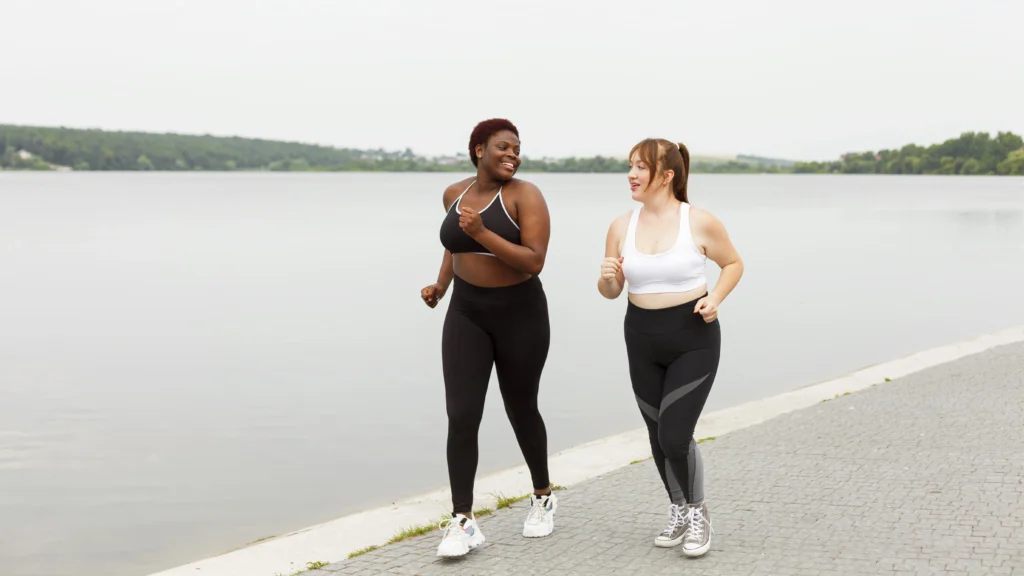
Once people understand that walking speed can influence calorie expenditure, another question often follows:
Is it better to walk faster or walk longer?
The answer depends on your goals, fitness level, and available time.
Walking speed is only one component of physical activity. Duration matters too.
Think about it this way:
- A brisk 20-minute walk may burn more calories per minute.
- A slower 45-minute walk may accumulate more total movement.
- Both approaches contribute to overall physical activity.
This is one reason public-health recommendations focus on total activity rather than a single pace or speed target. (World Health Organization 2020)
For someone with limited time, increasing walking speed may be a practical strategy.
If you only have 20 or 30 minutes available, a brisker pace may help you achieve a higher exercise intensity within that timeframe.
On the other hand, someone who enjoys longer, more relaxed walks may still accumulate substantial activity through duration alone.
The ideal solution is not always choosing one over the other.
Many people benefit from combining both approaches.
For example:
- A longer walk on weekends.
- Brisker walks during busy weekdays.
- Occasional hills or intervals when fitness improves.
This flexibility helps create a walking routine that fits real life rather than forcing life to fit a rigid exercise plan.
Does Walking Uphill Change the Equation?
Absolutely.
One of the simplest ways to increase walking intensity without necessarily increasing speed is to add an incline.
Walking uphill requires your muscles to work harder against gravity.
This increases the physical demand placed on the body and generally raises energy expenditure compared with walking the same distance on a flat surface.
This means a moderate-paced uphill walk may feel just as challenging as a faster walk on level ground.
For people who enjoy walking outdoors, natural inclines can be an effective way to add variety and progression to a routine.
Similarly, treadmill users may choose to increase incline rather than continually increasing speed.
The key principle remains the same:
As exercise intensity increases, the body’s energy demands generally increase as well.
However, intensity should still be balanced with comfort, safety, and long-term sustainability.
Is Sweating a Sign of Better Fat Loss?
Many people associate sweating with effectiveness.
The logic seems simple:
More sweat equals more fat burning.
Unfortunately, it does not work that way.
Sweat is primarily a cooling mechanism.
Your body produces sweat to help regulate temperature, not to measure fat loss.
Several factors can influence how much you sweat, including:
- Temperature
- Humidity
- Clothing
- Fitness level
- Genetics
- Individual physiology
As a result, two people can perform the same walk and produce very different amounts of sweat.
One person may finish drenched.
The other may barely sweat at all.
That difference does not necessarily reflect how many calories they burned or how much fat they may lose over time.
This is an important reminder that exercise effectiveness cannot always be judged by how hard it feels in the moment.
Consistency and long-term habits matter far more than temporary signs such as sweating.
Can Beginners Benefit From Increasing Their Pace?
Yes, but gradually.
Many beginners assume they must immediately start power walking to experience results.
In reality, trying to progress too quickly often backfires.
A more sustainable approach is to build a walking habit first.
Once consistency has been established, small increases in pace can be introduced over time.
For example:
- Start with a comfortable pace.
- Add a few minutes of brisk walking during the middle of the walk.
- Gradually increase the duration of those brisk segments.
- Progress only when the current routine feels manageable.
This approach allows fitness improvements to occur naturally without making exercise feel intimidating.
Research consistently shows that sustainable physical activity habits are more valuable than short bursts of motivation followed by inactivity. (World Health Organization 2024)
The goal should be progress, not perfection.
The Best Walking Pace Is the Pace You’ll Maintain
If there is one idea to remember from this article, it is this:
The best walking pace is the one you can maintain consistently.
Many people spend so much time searching for the perfect speed that they overlook the importance of regularity.
A walking pace that feels realistic today is often more beneficial than an ideal pace that feels impossible to sustain.
This principle helps explain why some people achieve excellent results with moderate walking routines.
They do not necessarily have the fastest pace.
They simply keep showing up.
Consistency creates opportunities for:
- Greater weekly activity
- Better fitness improvements
- More calories burned over time
- Long-term habit formation
Walking faster may improve efficiency.
Walking consistently improves sustainability.
The most successful approach usually combines both.
As your fitness improves, your pace may naturally increase.
At the same time, maintaining a routine ensures those improvements continue to accumulate.
Rather than chasing a perfect speed, focus on building a pace that fits comfortably into your lifestyle.
The Bottom Line
Walking speed can affect fat loss because it influences exercise intensity and calorie expenditure.
In general, faster walking burns more calories per minute than slower walking, which may support greater energy expenditure over time.
Research examining walking cadence and intensity suggests that brisker walking is associated with higher-intensity physical activity. (Tudor-Locke et al. 2018)
However, walking speed is only one piece of the fat-loss puzzle.
Duration, consistency, nutrition, sleep, and overall activity levels all play important roles.
The popular fat-burning zone concept is often misunderstood because fat loss depends on more than the fuel source used during a single workout.
For many people, a moderate pace that feels challenging but sustainable may strike the best balance between effectiveness and consistency.
If walking faster feels comfortable and realistic, it may help increase calorie expenditure.
If it doesn’t, that does not mean your walks are ineffective.
The most important step is continuing to move.
Because a walking routine that becomes a long-term habit will almost always deliver more benefits than a perfect pace that you cannot maintain.
Frequently Asked Questions
Is brisk walking better for fat loss?
Brisk walking generally burns more calories per minute than slower walking, which may support greater fat loss when other factors remain similar.
What is the fat-burning zone?
The fat-burning zone refers to lower-intensity exercise where a higher percentage of energy comes from fat. However, this does not automatically make it the best option for fat loss.
How fast should I walk for fat loss?
A moderate pace where you can talk comfortably but not sing is often a practical target for many adults.
Can I lose fat walking slowly?
Yes. Slow walking still burns calories and contributes to physical activity, especially when performed consistently.
Does walking uphill burn more calories?
Yes. Walking uphill generally increases exercise intensity and energy expenditure compared with walking on flat ground.
Is sweating a sign of fat burning?
No. Sweating is primarily a cooling mechanism and is not a reliable measure of fat loss.
Should I walk faster or longer?
Both approaches can be effective. The best choice depends on your goals, fitness level, and available time.
What is the best walking pace for beginners?
A comfortable pace that can be maintained consistently is often the best starting point for beginners.
Stay tuned with us for more health related topics.
Follow us on LinkedIn and Instagram for more.
More Read


Medical Disclaimer!
This article has been reviewed and written under the guidance of our Head Physiotherapist, Dr. Kruti Raj (PT, MUHS,CPT,CMPT). The information shared is intended for educational purposes only and should not be considered a substitute for personalized medical advice, diagnosis, or treatment.
Please consult us or any other qualified healthcare professional before beginning any exercise program, especially if you are experiencing pain, recovering from injury, or managing a medical condition.


