Oily skin is a common concern among women with Polycystic Ovary Syndrome (PCOS) and is often one of the earliest visible signs of hormonal imbalance.
Many women notice that their face becomes persistently shiny, greasy, or prone to clogged pores despite maintaining a regular skincare routine.
This excess oil production is primarily driven by elevated androgen (male hormone) levels, which stimulate the skin’s oil-producing glands.
Quick Answer
Yes. PCOS can cause oily skin because elevated androgen (male hormone) levels stimulate the sebaceous glands to produce excess sebum. This often leads to persistent facial shine, enlarged pores, clogged pores, and an increased risk of acne. Managing PCOS through healthy lifestyle changes, appropriate skincare, and medical treatment can help control excess oil production and improve overall skin health.
Although oily skin itself is not harmful, it can increase the likelihood of acne, blackheads, whiteheads, enlarged pores, and skin irritation, affecting both appearance and self-confidence.
In some cases, oily skin may appear years before PCOS is formally diagnosed, especially when accompanied by irregular menstrual cycles, excess facial hair, or weight gain.
The good news is that oily skin associated with PCOS can often be managed successfully through a combination of:
healthy lifestyle changes, appropriate skincare, hormonal treatment when indicated, and addressing the underlying hormonal imbalance.
Understanding why PCOS affects the skin can help women make informed decisions about treatment and long-term skin health.
Key Takeaways
- Oily skin is a common symptom of PCOS caused by increased androgen activity.
- Excess sebum production can lead to enlarged pores, blackheads, whiteheads, and acne.
- Hormonal imbalance and insulin resistance both contribute to excessive oil production.
- Gentle cleansing and non-comedogenic skincare products help manage oily skin.
- Healthy eating, regular exercise, and weight management improve hormonal balance and skin health.
- Hormonal treatments and medications may reduce excessive sebum production when recommended by a healthcare provider.
- Overwashing or using harsh products can worsen oily skin.
- Early diagnosis and comprehensive PCOS management improve both skin appearance and overall health.
What Is Oily Skin?
Oily skin occurs when the sebaceous glands in the skin produce excessive amounts of sebum, a natural oily substance that helps protect and moisturize the skin.
Sebum plays several important roles, including:
- Preventing excessive skin dryness
- Protecting the skin barrier
- Reducing water loss
- Keeping the skin soft and flexible
However, when too much sebum is produced, it mixes with dead skin cells and debris, increasing the risk of:
- Shiny or greasy skin
- Enlarged pores
- Blackheads
- Whiteheads
- Acne breakouts
- Skin congestion
Oily skin commonly affects the T-zone, which includes the forehead, nose, and chin, but it may also involve the cheeks, chest, shoulders, and upper back in women with PCOS.
Can PCOS Cause Oily Skin?
Yes.
PCOS is one of the most common hormonal causes of persistent oily skin in women of reproductive age.
Women with PCOS often produce higher-than-normal levels of androgens, such as testosterone.
These hormones directly stimulate the sebaceous glands, causing them to enlarge and produce excess sebum.
As a result, many women with PCOS experience:
- Constant facial shine
- Greasy skin shortly after washing
- Frequent clogged pores
- Increased acne breakouts
- Oily scalp
- Difficulty controlling skin oil despite using skincare products
Not every woman with PCOS develops oily skin. The severity depends on factors such as:
- Androgen levels
- Genetic predisposition
- Skin sensitivity to hormones
- Age
- Lifestyle habits
- Overall hormonal balance
Persistent oily skin, especially when accompanied by irregular periods or excess facial hair, should prompt evaluation for PCOS and other hormonal disorders. (Zeng et al. 2022)
Why Does PCOS Make the Skin Oily?
The primary reason PCOS causes oily skin is hyperandrogenism, a condition characterized by elevated levels of male hormones.
Androgens stimulate the sebaceous glands to:
- Grow larger
- Produce more sebum
- Increase oil secretion onto the skin surface
When excess sebum combines with dead skin cells and bacteria, pores become blocked, creating an environment where acne and inflammation can develop.
Insulin resistance, another common feature of PCOS, may further worsen oily skin by increasing androgen production in the ovaries.
This creates a cycle in which hormonal imbalance contributes to increased oil production and associated skin problems.
Although oily skin can be frustrating, it often improves when the underlying hormonal imbalance and insulin resistance are effectively managed.
The Role of Androgens and Sebaceous Glands
Sebaceous glands are tiny oil-producing glands attached to hair follicles throughout the skin.
Their activity is strongly influenced by androgens, particularly testosterone and its more active form, dihydrotestosterone (DHT).
In women with PCOS:
- Ovarian androgen production increases.
- Sebaceous glands become more active.
- More sebum is produced.
- Skin appears shiny and greasy.
- Pores become enlarged.
- Acne-causing bacteria thrive in the oil-rich environment.
Interestingly, some women have normal androgen levels but develop oily skin because their sebaceous glands are more sensitive to these hormones.
This explains why the severity of oily skin can vary significantly between women with PCOS. (Ghosh et al. 2014)
Common Signs and Symptoms of Oily Skin in PCOS
The appearance and severity of oily skin differ from person to person.
Some women experience mild facial shine, while others develop persistent oiliness that contributes to acne and skin congestion.
Common symptoms include:
- Shiny or greasy facial skin
- Oiliness within a few hours of washing the face
- Enlarged or visible pores
- Blackheads
- Whiteheads
- Frequent acne breakouts
- Oily scalp
- Hair becoming greasy quickly
- Makeup wearing off easily
- Recurrent clogged pores
Women with PCOS who have oily skin may also experience other signs of hormonal imbalance, including:
- Irregular menstrual periods
- Excess facial or body hair (hirsutism)
- Scalp hair thinning
- Difficulty losing weight
- Weight gain
- Acne
- Dark skin patches (acanthosis nigricans)
- Fertility challenges
Recognizing oily skin alongside these symptoms can help healthcare providers identify PCOS earlier and recommend appropriate investigations and treatment.
Can Oily Skin Lead to Acne?
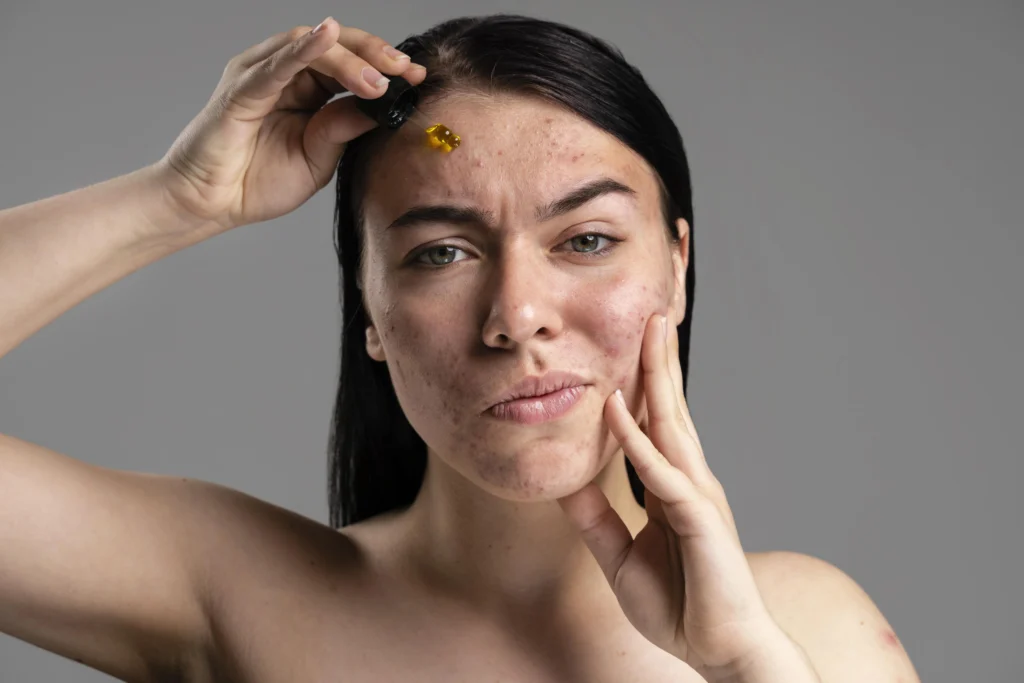
Yes.
Oily skin significantly increases the risk of acne, although not every woman with oily skin will develop acne.
Excess sebum creates an ideal environment for clogged pores.
When oil mixes with dead skin cells, pores become blocked, allowing Cut bacterium acnes (formerly Propionibacterium acnes) to multiply.
This can trigger inflammation and lead to acne lesions.
Women with PCOS are particularly susceptible because they often have both:
- Increased sebum production due to androgen excess
- Hormonal fluctuations that promote acne formation
Acne associated with PCOS commonly affects the:
- Face
- Jawline
- Chin
- Neck
- Chest
- Upper back
While oily skin is an important contributor, other factors such as genetics, stress, skincare habits, and inflammation also influence acne development.
Early management of excess oil production may help reduce the frequency and severity of breakouts.
How Is Oily Skin Related to PCOS Diagnosed?
There is no single test that confirms oily skin is caused by PCOS.
Instead, healthcare providers evaluate the skin symptoms alongside menstrual history, hormonal changes, and other signs of PCOS to determine whether the excess oil production is related to an underlying endocrine disorder.
The diagnosis typically involves a combination of medical history, physical examination, laboratory investigations, and, when necessary, imaging studies.
Medical History
A detailed medical history helps healthcare providers understand whether oily skin is part of a broader hormonal condition such as PCOS.
Your healthcare provider may ask about:
- When your skin first became oily
- Whether the oiliness developed gradually or suddenly
- Frequency of acne breakouts
- Menstrual cycle regularity
- Excess facial or body hair
- Scalp hair thinning
- Weight changes
- Difficulty conceiving
- Family history of PCOS or hormonal disorders
- Current skincare products and medications
- Lifestyle habits, including diet, sleep, and stress
This information helps distinguish PCOS-related oily skin from temporary changes caused by puberty, cosmetics, or medications.
Physical Examination
A physical examination focuses on identifying signs of hormonal imbalance and evaluating the severity of oily skin.
The healthcare provider may assess:
- Skin oiliness
- Enlarged pores
- Acne lesions
- Blackheads and whiteheads
- Facial and body hair distribution
- Scalp hair thinning
- Body Mass Index (BMI)
- Waist circumference
- Blood pressure
- Dark skin patches (acanthosis nigricans)
The examination also helps rule out other dermatological conditions that may mimic oily skin or contribute to excessive sebum production.
Hormonal Evaluation
Since androgen excess is one of the primary causes of oily skin in PCOS, hormonal evaluation is often recommended, particularly if oily skin is accompanied by irregular periods or hirsutism.
Healthcare providers assess for signs of:
- Hyperandrogenism
- Ovulatory dysfunction
- Other endocrine disorders that may cause similar symptoms
This evaluation helps determine whether hormonal imbalance is contributing to increased sebaceous gland activity.
Blood Tests
Blood tests are commonly performed to assess hormone levels and identify metabolic abnormalities associated with PCOS.
Investigations may include:
- Total testosterone
- Free testosterone
- Sex Hormone-Binding Globulin (SHBG)
- Dehydroepiandrosterone Sulfate (DHEAS)
- Luteinizing Hormone (LH)
- Follicle-Stimulating Hormone (FSH)
- Thyroid-Stimulating Hormone (TSH)
- Prolactin
- Fasting blood glucose
- HbA1c
- Lipid profile
These tests help confirm the diagnosis of PCOS while excluding other hormonal conditions that may contribute to oily skin.
Pelvic Ultrasound
If PCOS is suspected, a pelvic ultrasound may be recommended to examine the ovaries.
The ultrasound can help identify:
- Multiple small ovarian follicles
- Enlarged ovaries
- Increased ovarian volume
However, ovarian appearance alone is not sufficient to diagnose PCOS.
Ultrasound findings are interpreted together with clinical symptoms and laboratory results according to established diagnostic criteria.
Other Causes of Oily Skin
Although PCOS is a common hormonal cause of oily skin, several other factors can also increase sebum production.
These include:
- Puberty
- Genetic predisposition
- Pregnancy
- Certain medications, such as corticosteroids or androgen-containing drugs
- Hot and humid climates
- Stress
- Use of heavy or oil-based cosmetics
- Cushing’s syndrome
- Rare adrenal or ovarian tumors that produce excess androgens
Because treatment depends on the underlying cause, persistent or severe oily skin should be evaluated by a healthcare provider.
How Oily Skin Affects Confidence and Mental Well-being
While oily skin is not a serious medical condition by itself, its impact on emotional well-being should not be underestimated.
Many women with PCOS report feeling self-conscious about persistent facial shine, enlarged pores, or recurrent acne.
These visible skin changes may affect daily life, social interactions, and overall confidence.
Some women may experience:
- Reduced self-esteem
- Anxiety about appearance
- Frustration with recurring skin problems
- Social withdrawal
- Stress related to frequent acne breakouts
- Reduced confidence in professional or social settings
Managing oily skin effectively often improves not only skin health but also psychological well-being and quality of life.
Role of Physiotherapy and Lifestyle Management
Although physiotherapy does not directly reduce sebum production, it plays an important role in managing the metabolic and hormonal factors that contribute to oily skin in women with PCOS.
Improving Insulin Sensitivity
Regular exercise improves the body’s response to insulin, which may help reduce excessive androgen production associated with PCOS.
Lower androgen levels can gradually decrease sebaceous gland activity and improve oily skin over time.
Supporting Healthy Weight Management
For women who are overweight, supervised exercise programs can promote gradual weight loss and improve hormonal balance.
Weight management may help:
- Improve insulin resistance
- Reduce androgen levels
- Improve menstrual regularity
- Decrease acne severity
- Support healthier skin
Individualized Exercise Programs
A physiotherapist can recommend exercise plans tailored to an individual’s health status and fitness level.
Programs may include:
- Brisk walking
- Cycling
- Swimming
- Resistance training
- Yoga
- Pilates
- Functional strength exercises
Combining aerobic exercise with resistance training provides the greatest metabolic benefits for women with PCOS.
Supporting Overall Skin Health
Regular physical activity improves:
- Blood circulation
- Oxygen delivery to tissues
- Stress regulation
- Sleep quality
- Overall metabolic health
Although exercise itself does not directly “dry out” oily skin, it helps address the hormonal and metabolic abnormalities responsible for excessive sebum production.
Improving Emotional Well-being
Exercise also supports mental health by:
- Reducing stress
- Improving mood
- Decreasing anxiety
- Boosting confidence
- Enhancing overall quality of life
These benefits are particularly valuable for women who experience emotional distress related to oily skin or other visible symptoms of PCOS. (Gautam et al. 2025)
Treatment Options
Managing oily skin in women with Polycystic Ovary Syndrome (PCOS) involves more than simply removing excess oil from the skin.
The most effective approach is to address the underlying hormonal imbalance and androgen excess while following an appropriate skincare routine and maintaining a healthy lifestyle.
Most women notice gradual improvement in oily skin after treating the root cause rather than relying solely on cosmetic products.
Skincare Routine
A consistent skincare routine can help control excess oil, reduce clogged pores, and minimize the risk of acne.
Healthcare professionals generally recommend:
- Washing the face twice daily with a gentle cleanser
- Using lukewarm water instead of hot water
- Avoiding excessive scrubbing, which can irritate the skin
- Applying an oil-free moisturizer to maintain the skin barrier
- Using broad-spectrum sunscreen every day
- Removing makeup before bedtime
Overwashing the face is not recommended, as it may strip away natural oils and stimulate the sebaceous glands to produce even more sebum.
Choose Non-Comedogenic Products
Women with oily skin should select skincare and cosmetic products labeled “non-comedogenic,” “oil-free,” or “won’t clog pores.”
These products are less likely to block hair follicles and may help reduce the formation of:
- Blackheads
- Whiteheads
- Acne breakouts
Non-comedogenic moisturizers, sunscreens, and makeup products can provide hydration without making the skin excessively greasy.
Medications
If oily skin is persistent or associated with moderate to severe acne, healthcare providers may recommend medications.
Treatment options may include:
- Topical retinoids
- Benzoyl peroxide
- Salicylic acid preparations
- Azelaic acid
- Topical antibiotics (when indicated)
These medications help reduce clogged pores, decrease inflammation, and improve overall skin texture.
Treatment should always be individualized based on the severity of symptoms and should be used under medical supervision.
Hormonal Treatment
Since androgen excess is one of the primary causes of oily skin in PCOS, hormonal therapy may be appropriate for some women.
Healthcare providers may prescribe:
- Combined oral contraceptive pills (COCPs) to reduce androgen activity
- Anti-androgen medications such as spironolactone in selected patients
- Metformin to improve insulin sensitivity in women with insulin resistance
These treatments address the underlying hormonal imbalance rather than simply reducing surface oil.
Improvements in oily skin usually occur gradually over several months.
Healthy Diet
Although diet alone does not cure oily skin, healthy eating habits may help improve hormonal balance and insulin sensitivity.
Women with PCOS are encouraged to include:
- Whole grains
- Fresh fruits
- Vegetables
- Lean protein
- Nuts and seeds
- Healthy fats
- High-fiber foods
Limiting foods high in refined carbohydrates, sugary beverages, and highly processed snacks may help improve insulin resistance and indirectly reduce androgen-related skin changes.
Adequate hydration also supports overall skin health.
Regular Exercise
Regular physical activity is an important part of managing PCOS.
Exercise helps:
- Improve insulin sensitivity
- Support healthy weight management
- Reduce androgen levels
- Improve blood circulation
- Enhance overall metabolic health
Women should aim for at least 150 minutes of moderate-intensity exercise each week, along with muscle-strengthening activities on two or more days weekly.
Activities may include:
- Brisk walking
- Cycling
- Swimming
- Jogging
- Resistance training
- Yoga
Lifestyle Tips for Managing Oily Skin
Daily habits can make a significant difference in controlling excess oil production and maintaining healthier skin.
Helpful lifestyle measures include:
Cleanse Your Face Gently
Wash your face twice daily using a gentle cleanser suitable for oily skin. Avoid harsh soaps that may irritate the skin.
Avoid Touching Your Face Frequently
Touching your face transfers dirt, bacteria, and oil from your hands, increasing the risk of clogged pores and acne.
Keep Hair Clean
An oily scalp can transfer excess oil onto the forehead and face. Washing your hair regularly may help reduce this problem.
Stay Hydrated
Drinking enough water supports healthy skin function and overall well-being, although it does not directly reduce oil production.
Manage Stress
Stress can influence hormone levels and may worsen oily skin in some women.
Stress-management techniques include:
- Meditation
- Deep breathing exercises
- Yoga
- Regular physical activity
- Adequate sleep
Get Enough Sleep
Aim for 7-9 hours of quality sleep each night to support hormonal regulation and overall health.
Calculate your ideal sleep timings here: “Sleep Calculator“
Common Mistakes to Avoid
Many women unintentionally worsen oily skin through incorrect skincare practices.
Common mistakes include:
- Washing the face too frequently
- Using harsh alcohol-based cleansers
- Skipping moisturizer because the skin feels oily
- Sleeping with makeup on
- Frequently squeezing pimples
- Using heavy oil-based cosmetics
- Ignoring hormonal symptoms of PCOS
- Stopping prescribed medications without consulting a healthcare provider
⚠ Myth vs Fact
| Myth | Fact |
|---|---|
| Oily skin means poor hygiene. | PCOS-related oily skin is caused by hormonal imbalance and increased androgen activity, not poor hygiene. |
| Washing your face many times a day reduces oil production. | Overwashing may irritate the skin and stimulate even more sebum production. |
| People with oily skin should avoid moisturizer. | Oil-free, non-comedogenic moisturizers help protect the skin barrier without clogging pores. |
| Only teenagers have oily skin. | Adult women with PCOS commonly experience persistent oily skin due to hormonal changes. |
| Everyone with oily skin develops acne. | Oily skin increases the risk of acne, but genetics, inflammation, and skincare habits also influence acne development. |
Myths About Oily Skin and PCOS
Myth 1: Oily skin means you have poor hygiene.
Fact: Oily skin in PCOS is caused primarily by hormonal imbalance and increased androgen activity, not poor hygiene.
Myth 2: Washing your face many times a day reduces oil production.
Fact: Excessive washing can irritate the skin and may actually stimulate increased sebum production.
Myth 3: Moisturizer should be avoided if you have oily skin.
Fact: Oil-free, non-comedogenic moisturizers help maintain the skin barrier and are recommended even for oily skin.
Myth 4: Only teenagers develop oily skin.
Fact: Adult women with PCOS frequently experience persistent oily skin due to hormonal imbalance.
Myth 5: Oily skin always causes acne.
Fact: Although oily skin increases the risk of acne, not everyone with oily skin develops acne. Genetics, inflammation, skincare habits, and hormones also play important roles.
Final Thoughts
Oily skin is a common yet manageable symptom of Polycystic Ovary Syndrome (PCOS). Rather than being caused by poor hygiene, it is usually the result of increased androgen activity that stimulates the skin’s sebaceous glands. A combination of gentle skincare, healthy lifestyle habits, regular physical activity, and appropriate medical treatment can help reduce excess oil production and improve overall skin health. If oily skin is persistent or accompanied by acne, irregular periods, or excess facial hair, consult a healthcare provider for a comprehensive evaluation and personalized treatment plan.
Conclusion
Oily skin is a common skin manifestation of Polycystic Ovary Syndrome (PCOS) and is largely driven by elevated androgen levels that stimulate the sebaceous glands to produce excess sebum.
While persistent oiliness can be frustrating and may contribute to acne and enlarged pores, it is often manageable with the right combination of skincare, healthy lifestyle habits, and treatment for the underlying hormonal imbalance.
Early recognition of oily skin alongside other symptoms such as irregular periods, excess facial hair, or scalp hair thinning can support earlier diagnosis of PCOS.
Working with a healthcare provider to address hormonal and metabolic health can improve not only skin appearance but also overall long-term well-being.
Frequently Asked Questions (FAQs)
1. Can PCOS really cause oily skin?
Yes. Elevated androgen levels in PCOS stimulate the sebaceous glands, increasing oil production and causing persistent oily skin.
2. Why is my face so oily even after washing it?
Women with PCOS often continue producing excess sebum due to hormonal imbalance, even after cleansing their face.
3. Does oily skin always lead to acne?
No. Although oily skin increases the risk of acne, not everyone with oily skin develops breakouts.
4. Which skincare products are best for oily skin in PCOS?
Gentle cleansers, oil-free moisturizers, non-comedogenic sunscreen, and products containing salicylic acid or niacinamide are commonly recommended based on individual skin needs.
5. Can diet improve oily skin caused by PCOS?
A balanced diet that supports healthy insulin levels may indirectly improve hormonal balance and reduce excessive oil production.
6. Should I consult a dermatologist or a gynecologist?
Both may be involved. A dermatologist can manage skin symptoms, while a gynecologist or endocrinologist can evaluate and treat the underlying PCOS.
Stay tuned with us for more health related topics.
Follow us on LinkedIn and Instagram for more.
More Read


Medical Disclaimer!
This article has been reviewed and written under the guidance of our Head Physiotherapist, Dr. Kruti Raj (PT, MUHS,CPT,CMPT). The information shared is intended for educational purposes only and should not be considered a substitute for personalized medical advice, diagnosis, or treatment.
Please consult us or any other qualified healthcare professional before beginning any exercise program, especially if you are experiencing pain, recovering from injury, or managing a medical condition.