


International Yoga Day 2026 celebrates the power of yoga as a practice that supports physical health, flexibility, mindfulness, and overall well-being.
Every year on June 21, millions of people across the world roll out their yoga mats to celebrate International Yoga Day.
For some, yoga is a way to stay active.
For others, it is a tool for managing stress, improving flexibility, or finding a few moments of calm in a busy day.
As a physiotherapist,
I often meet people who assume yoga is only for flexible individuals who can effortlessly twist themselves into complex poses.
The reality is very different.
Quick Answer
Yoga is much more than stretching. It combines movement, breathing, balance, and mindfulness to improve flexibility, mobility, posture, strength, stress management, and overall well-being. From a physiotherapy perspective, yoga can help improve movement quality and support long-term musculoskeletal health.
Yoga is not about touching your toes.
It is about understanding your body, improving how it moves, and creating a healthier connection between the mind and physical well-being.
Whether you are an office worker dealing with neck pain, a senior looking to improve balance, or someone recovering from an injury, yoga can offer meaningful benefits when practiced correctly.
What makes yoga particularly fascinating is that it has survived for thousands of years while continuing to gain support from modern healthcare professionals.
Today, physiotherapists, sports medicine specialists, and rehabilitation experts increasingly recognize yoga as a valuable complement to traditional exercise programs.
This International Yoga Day, it is worth exploring why yoga continues to remain relevant in a world filled with fitness trends that seem to appear and disappear overnight.
Key Takeaways
- Yoga improves flexibility, balance, posture, and mobility.
- Yoga develops strength while remaining gentle on the joints.
- Breathing exercises improve relaxation and body awareness.
- Regular yoga practice may help reduce stress and improve sleep quality.
- Yoga can support the management of neck pain, back pain, and postural issues.
- Yoga complements physiotherapy by enhancing movement quality.
- Yoga can be adapted safely for people of all ages.
- Better balance and coordination may help reduce injury risk.
- Consistency is more important than mastering advanced poses.
- International Yoga Day promotes lifelong health through mindful movement.
Why Yoga Is More Relevant Today Than Ever
Modern life has created challenges that our bodies were never designed to handle.
Many people spend eight to ten hours sitting in front of screens.
Physical activity levels have declined.
Stress levels have increased.
Sleep quality has worsened.
Chronic pain has become surprisingly common, even among young adults.
From a physiotherapy perspective, these lifestyle changes have contributed to a growing number of musculoskeletal problems, including:
- Neck pain
- Poor posture
- Shoulder stiffness
- Joint discomfort
- Back pain
- Reduced flexibility
- Balance problems
Yoga addresses many of these concerns simultaneously.
Unlike traditional workouts that often focus on a single aspect of fitness, yoga combines movement, breathing, balance, flexibility, body awareness, and relaxation into one practice.
One of the reasons yoga remains effective is that it encourages mindful movement.
Instead of rushing through exercises, individuals learn to move with awareness and control.
This can improve movement quality, reduce unnecessary muscle tension, and enhance overall physical function.
What Happens Inside Your Body When You Practice Yoga?
Many people think yoga is simply stretching.
In reality, several physiological systems are working together during a yoga session.
Your Muscles Learn to Work More Efficiently
Certain muscles become overactive due to prolonged sitting and poor posture.
At the same time, other muscles become weak and underutilized.
Yoga helps restore balance by strengthening some muscle groups while gently lengthening others.
For example, office workers often develop tight chest muscles and weak upper back muscles.
Yoga poses that encourage spinal extension and shoulder opening can help counteract these imbalances.
Your Joints Move Through Their Full Range
Healthy joints require movement.
When joints remain in limited positions for extended periods, stiffness develops.
Regular yoga practice encourages controlled movement through various ranges, helping maintain joint mobility.
This is particularly important for individuals who spend most of their day seated.
Your Nervous System Begins to Calm Down
One of yoga’s most underrated benefits is its influence on the nervous system.
When people experience stress, the body’s “fight-or-flight” response becomes activated. Heart rate increases. Muscles tighten. Breathing becomes shallow.
Yoga breathing techniques and mindful movement help activate the parasympathetic nervous system, often referred to as the “rest-and-digest” system.
This shift can help reduce tension, promote relaxation, and improve recovery.
Your Balance and Coordination Improve
Balance is not just important for older adults.
Good balance requires communication between the eyes, inner ear, nervous system, and muscles.
Many yoga poses challenge these systems simultaneously, helping improve coordination and stability over time.
The Physical Benefits of Yoga Beyond Flexibility
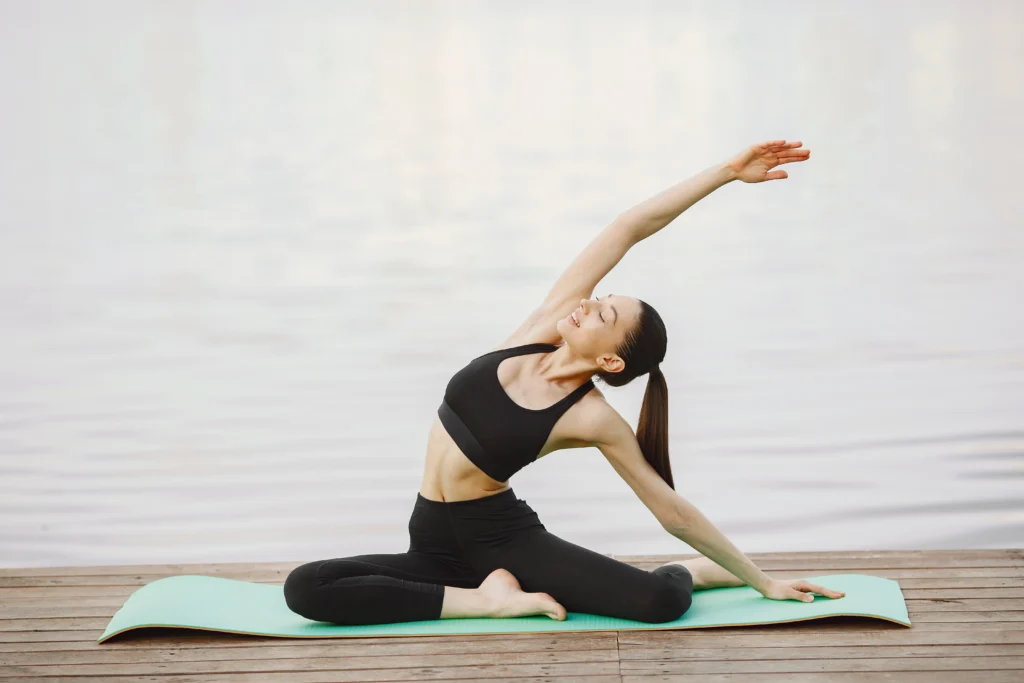
When people think of yoga, flexibility is usually the first benefit that comes to mind.
However, flexibility is only one piece of the puzzle.
Improved Posture
Poor posture has become increasingly common due to prolonged screen use.
Forward head posture, rounded shoulders, and reduced spinal mobility are issues physiotherapists frequently encounter.
Yoga encourages body awareness. As individuals become more aware of how they sit, stand, and move, posture often improves naturally.
Several yoga positions also strengthen postural muscles that support proper spinal alignment.
Better Functional Strength
Many yoga poses require the body to support its own weight.
Holding positions such as plank variations, warrior poses, and chair pose can improve muscular endurance and stability.
Unlike isolated gym exercises, yoga often trains multiple muscle groups simultaneously, making strength gains more functional and applicable to everyday activities.
Enhanced Balance and Stability
Falls remain a major health concern, especially among older adults.
Yoga helps develop balance by challenging individuals to maintain stability in different positions.
Over time, this can improve confidence during walking, stair climbing, and daily activities.
Improved Breathing Efficiency
Most people rarely pay attention to how they breathe.
Stress, poor posture, and sedentary habits often lead to shallow breathing patterns.
Many yoga practices emphasize diaphragmatic breathing, which encourages more efficient oxygen exchange and improved respiratory function.
Learning how to breathe properly can also reduce feelings of anxiety and improve exercise tolerance.
Greater Mobility for Daily Activities
Mobility is different from flexibility.
Flexibility refers to muscle length, while mobility involves the ability to move joints actively and comfortably through their available range.
Good mobility makes everyday activities easier, including:
- Reaching overhead
- Squatting
- Bending down
- Walking comfortably
- Carrying groceries
- Climbing stairs
Yoga supports these functional movement patterns in a controlled and accessible way.
The Mental Health Benefits Most People Don’t Talk About
While yoga is often discussed in terms of physical health, many practitioners report that the mental benefits are equally valuable.
Reduced Stress Levels
Stress has a direct impact on physical health.
It can contribute to muscle tension, headaches, sleep disturbances, and even chronic pain.
Yoga provides a structured opportunity to slow down, focus attention, and disconnect from constant mental stimulation.
Many people notice that even a short session leaves them feeling calmer and more centered.
Better Sleep Quality
Sleep and physical recovery are closely connected.
Poor sleep can increase pain sensitivity, reduce energy levels, and impair healing.
Yoga’s emphasis on relaxation and controlled breathing may help prepare the body and mind for more restful sleep.
Improved Mind-Body Awareness
One lesser-known benefit of yoga is increased body awareness.
Many individuals live with chronic tension without realizing it.
Yoga encourages people to notice how they move, where they hold stress, and how their body responds to different positions.
This awareness often becomes the first step toward healthier movement habits.
Yoga and Pain Relief: A Physiotherapist’s Perspective
One of the most common questions patients ask is:
“Can yoga help my pain?”
The answer depends on the condition, but in many cases, yoga can be a useful part of a broader treatment strategy.
Lower Back Pain
Lower back pain remains one of the leading causes of disability worldwide.
Many episodes of non-specific back pain are influenced by factors such as stiffness, weakness, reduced physical activity, and stress.
Appropriately modified yoga programs can help improve flexibility, core stability, movement confidence, and overall physical activity levels.
However, not every yoga pose is suitable for every individual.
People experiencing significant pain should seek professional guidance before starting a new routine.
Neck Pain
Long hours spent looking at screens place considerable stress on the neck and upper back.
Yoga movements that improve thoracic mobility, shoulder positioning, and postural awareness may help reduce strain on the cervical spine.
In clinical practice, combining physiotherapy with gentle yoga-based exercises often produces encouraging results for many individuals experiencing postural neck pain.
Lesser-Known Benefits of Yoga That May Surprise You
Most people associate yoga with flexibility, stress relief, and relaxation. However, some of its most interesting benefits receive far less attention.
Improved Body Awareness Can Prevent Injuries
One of the biggest reasons people develop movement-related injuries is poor body awareness.
Many individuals do not realize they are lifting incorrectly, maintaining awkward postures, or compensating for weakness until pain develops.
Yoga teaches people to become more aware of alignment, balance, and movement quality.
This heightened awareness often carries over into daily activities, reducing the likelihood of unnecessary strain.
Better Recovery From Sedentary Lifestyles
Modern life has created a generation of “active inactive” individuals.
Some people exercise for an hour but spend the remaining day sitting.
Long periods of sitting can contribute to hip tightness, reduced spinal mobility, muscle imbalances, and poor circulation.
Yoga introduces frequent changes in body position and encourages gentle movement throughout multiple joints, helping counteract some of the effects of prolonged sitting.
Enhanced Balance Between Strength and Flexibility
Many fitness programs focus heavily on either strength or flexibility.
Yoga is unique because it develops both simultaneously.
A pose such as Warrior II requires strength, endurance, balance, mobility, and concentration at the same time.
This integrated approach often translates well into real-world movement demands.
Increased Confidence in Movement
As physiotherapists, we often see individuals who avoid movement because they fear pain or injury.
Over time, this avoidance can actually worsen physical limitations.
Yoga encourages gradual exposure to movement in a controlled environment.
As confidence grows, people often become more willing to participate in physical activities they previously avoided.
Yoga for Different Age Groups
One of yoga’s greatest strengths is its adaptability.
Unlike some exercise programs that cater primarily to a specific age group, yoga can be modified for almost anyone.
Yoga for Children and Teenagers
Young people today spend increasing amounts of time on digital devices.
This can contribute to poor posture, reduced physical activity, and increased stress.
Age-appropriate yoga can help improve:
- Coordination
- Flexibility
- Concentration
- Body awareness
- Emotional regulation
Many schools have even started incorporating yoga-based activities into wellness programs.
Yoga for Working Professionals
Office workers frequently experience:
- Neck stiffness
- Back discomfort
- Shoulder tension
- Mental fatigue
Short yoga sessions performed before or after work can help offset the physical demands of prolonged desk-based activities.
Even ten to fifteen minutes of movement and breathing exercises can make a noticeable difference.
Yoga for Older Adults
Aging naturally affects balance, mobility, muscle strength, and joint flexibility.
Yoga provides a low-impact way to maintain movement and independence.
Many older adults benefit from chair yoga or modified standing poses that focus on balance and functional mobility.
The goal is not to perform advanced postures but to continue moving safely and confidently.
Common Yoga Myths That Need to Be Retired
Despite its popularity, several misconceptions still prevent people from trying yoga.
Myth 1: You Must Be Flexible to Start Yoga
This is perhaps the most common misconception.
Flexibility is not a requirement for yoga. In fact, many people begin yoga specifically because they lack flexibility.
Yoga helps improve flexibility gradually over time.
Waiting until you become flexible before starting yoga is like waiting until you become strong before going to the gym.
Myth 2: Yoga Is Only for Women
Yoga is for everyone.
Athletes, military personnel, fitness enthusiasts, older adults, and rehabilitation patients all use yoga as part of their wellness routines.
Physical function does not depend on gender, and neither does the ability to benefit from yoga.
Myth 3: Yoga Is Just Stretching
Stretching is only one component of yoga.
A well-designed yoga session can improve:
- Strength
- Balance
- Mobility
- Coordination
- Breathing efficiency
- Mental focus
Yoga is far more comprehensive than a simple stretching routine.
Myth 4: More Difficult Poses Mean Better Results
Social media often showcases advanced yoga poses that require exceptional flexibility and balance.
However, health benefits are not determined by how impressive a pose looks.
Consistent practice of basic movements often provides greater long-term benefits than attempting advanced positions prematurely.
Simple Yoga Poses Beginners Can Start With
If you are new to yoga, there is no need to begin with complicated postures.
These beginner-friendly poses offer a safe starting point for many healthy individuals.
Mountain Pose (Tadasana)
This simple standing posture helps improve:
- Postural awareness
- Balance
- Alignment
- Body control
Although it appears easy, it teaches important foundations for many other yoga movements.
Cat-Cow Stretch
Cat-Cow Stretch is a gentle movement sequence that promotes spinal mobility.
It is particularly useful for individuals who spend long periods sitting and often feel stiffness in the back.
Child’s Pose
Child’s Pose encourages relaxation while gently stretching the back, hips, and shoulders.
Many people find this position calming during stressful days.
Cobra Pose
Cobra Pose encourages gentle spinal extension.
It may help counteract the rounded posture commonly associated with prolonged computer use.
However, individuals with certain spinal conditions should consult a healthcare professional before performing back-bending exercises.
Tree Pose
Tree Pose challenges balance and concentration.
It is an excellent introduction to single-leg stability training and helps improve neuromuscular control.
When Yoga Is Not Enough and You Should See a Physiotherapist
Although yoga offers numerous benefits, it is not a substitute for professional assessment when significant pain or functional limitations are present.
You should consider consulting a physiotherapist if you experience:
- Persistent back pain
- Ongoing neck pain
- Joint swelling
- Numbness or tingling
- Balance problems
- Recent injuries
- Difficulty performing daily activities
A physiotherapist can identify the underlying cause of symptoms and develop an individualized treatment plan.
In many cases, yoga can be incorporated into rehabilitation, but it should be selected and modified according to the person’s condition.
The goal is not simply to move more but to move appropriately.
Why International Yoga Day Matters
International Yoga Day is more than a global celebration of an ancient practice.
It serves as a reminder that health is built through consistent daily habits rather than occasional bursts of motivation.
In a world increasingly dominated by screens, stress, and sedentary lifestyles, yoga offers a practical and accessible way to reconnect with movement.
You do not need expensive equipment, a gym membership, or advanced athletic ability.
All you need is a willingness to start.
From a physiotherapy perspective, one of yoga’s greatest strengths is its emphasis on movement quality rather than movement quantity.
It teaches people to listen to their bodies, move with awareness, and develop healthier physical habits that can support long-term well-being.
Whether your goal is reducing pain, improving flexibility, managing stress, or simply staying active as you age, yoga can be a valuable addition to your health journey.
Conclusion
As healthcare professionals, we often encourage people to think of exercise as medicine.
Yoga is one of the few forms of physical activity that simultaneously benefits the body and the mind.
It strengthens muscles while improving flexibility.
It challenges balance while promoting relaxation. It encourages movement while teaching stillness.
Perhaps that is why yoga has remained relevant for thousands of years.
This International Yoga Day, instead of focusing on perfect poses or social media trends, consider yoga for what it truly is:
a lifelong practice that supports healthier movement, greater resilience, and improved quality of life.
The best yoga practice is not the most advanced one.
It is the one you can continue consistently for years to come.
Frequently Asked Questions About Yoga
Is yoga suitable for beginners?
Yes. Yoga can be modified for all fitness levels. Beginners should focus on proper technique and gradual progression.
Can yoga help build strength?
Yes. Many yoga poses use body-weight resistance to improve muscular strength, endurance, and stability.
Does yoga help reduce stress?
Yoga combines breathing exercises, mindfulness, and movement that may help calm the nervous system and reduce stress.
Can yoga help with back pain?
Yoga may improve flexibility, posture, and core stability, which can contribute to reduced back discomfort.
How often should I practice yoga?
Practicing yoga 3–5 times per week can provide meaningful health benefits.
Is yoga safe for older adults?
Yes. Modified yoga programs can improve mobility, balance, flexibility, and confidence in movement.
Do I need to be flexible before starting yoga?
No. Flexibility develops through practice and is not a prerequisite for yoga.
Why is breathing important in yoga?
Breathing techniques improve concentration, relaxation, oxygen delivery, and body awareness.
Can yoga replace other forms of exercise?
Yoga provides numerous health benefits but works best when combined with strength training and cardiovascular exercise.
When should I consult a physiotherapist?
If you experience persistent pain, weakness, numbness, balance issues, or difficulty performing daily activities, seek professional guidance.
Stay tuned with us for more health related topics.
Follow us on LinkedIn and Instagram for more.


