
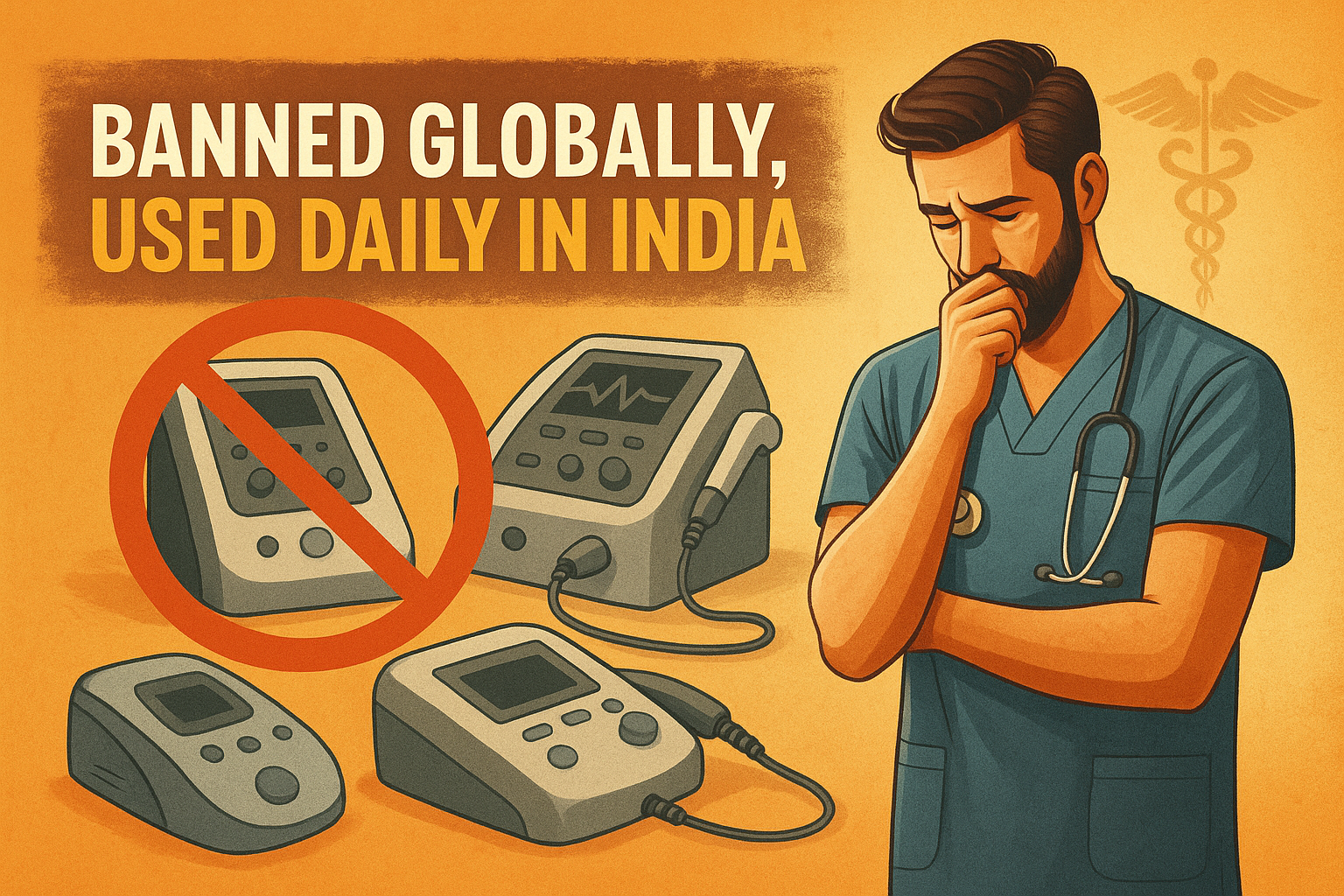

If you’ve walked into a physiotherapy clinic in India, you’ve probably seen machines that hum, buzz, or heat up—equipment that feels like treatment but may be doing more harm than good.
The catch? Many of these machines have been banned, phased out, or heavily restricted in advanced healthcare systems.
Let’s break down which are banned or outdated physiotherapy machines, why, and what’s replacing them around the world.
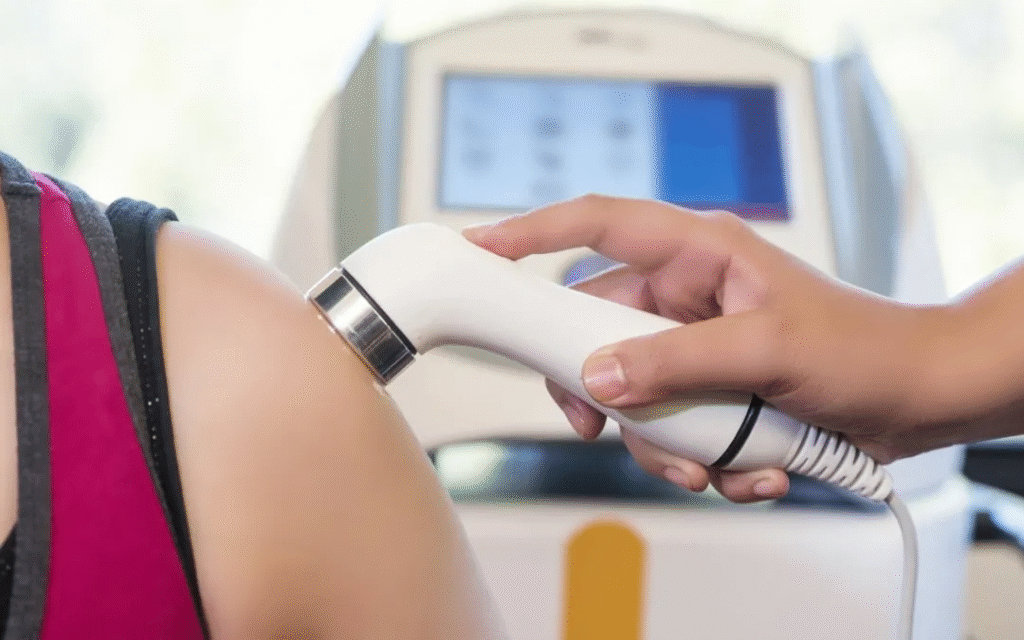
1. Shortwave Diathermy (SWD)
Status: Banned/Restricted in the UK, phased out in the USA
Why: Risk of deep tissue burns, interference with pacemakers, poor evidence for long-term benefit.
Still used in India because: Low cost, familiarity, and often used as a “warm-up” tool despite poor evidence.
What They Use Instead Globally:
- Therapeutic Ultrasound (for specific deep tissue injuries—not chronic pain)
- Moist Heat Therapy (with controlled temperature)
- Manual therapy combined with guided exercise for pain modulation
In countries like Australia, heat-based modalities are being replaced by targeted strengthening and manual therapy guided by EMG feedback.
NHS UK and FDA USA have warned against its unsupervised use.
2. Ultrasound Therapy for Chronic Pain
Status: Limited or banned for chronic conditions in Canada, UK, and parts of Europe
Why: Studies show ultrasound has little to no effect on conditions like low back pain, arthritis, or chronic tendinopathy.
Issue: Prolonged use may actually cause tissue heating or delays in healing.
Still used in India: Due to patient demand and outdated syllabi in physio programs.
What They Use Instead Globally:
- Progressive loading exercises for tendon and joint issues
- Cognitive functional therapy (CFT) for chronic pain
- Pain neuroscience education and graded motor imagery
In Canadian rehab centers, patients are now coached to understand their pain instead of relying on passive heat/sound treatments.
3. Interferential Therapy (IFT)
Status: Considered obsolete in UK/USA guidelines for musculoskeletal pain
Why: Minimal to no measurable benefit in clinical trials for long-term pain relief. Often equated to placebo.
Still popular in India: Patients “feel” something working, and clinics use it to justify visit length and value.
What They Use Instead Globally:
- Neuromuscular re-education using task-specific activities
- Functional electrical stimulation (FES) in neurological rehab
- Digital biofeedback tools for real-time muscle activation
In top-tier UK sports clinics, IFT has been replaced with wearable EMG sensors and app-based guided rehab.
Studies have labeled IFT as a placebo in multiple randomized control trials.
4. EMS (Electrical Muscle Stimulators) for Muscle Toning or Fat Loss
Status: Misuse is illegal in many countries; banned in fitness centres
Why: False claims around weight loss, misuse without medical supervision, risk of nerve damage
Still used in India: EMS machines are marketed for toning muscles and often used without proper protocols or supervision.
What They Use Instead Globally:
- Blood Flow Restriction (BFR) training for muscle hypertrophy
- Isometric and eccentric strengthening with load progression
- Sports-specific resistance training under physio guidance
In Olympic training centres, BFR with minimal weights is used to rebuild muscle in post-op athletes, not EMS gimmicks.
5. Lumbar and Cervical Traction Machines
Status: Discouraged or obsolete in UK, USA, Australia for nonspecific back pain
Why: Cochrane reviews show poor outcomes and even worsening of symptoms in some cases. Doesn’t address root cause.
Still used in India: Many clinics continue to use lumbar and cervical traction based on outdated training models.
What They Use Instead Globally:
- Mackenzie therapy (repeated movement-based evaluation & correction)
- Spinal stabilization exercises (core training, segmental control)
- Education and graded exposure to movement
Leading spinal rehab centers in Europe use Mackenzie and cognitive movement therapies, never passive traction.
6. Infrared Lamps
Status: Largely obsolete across Europe and the USA
Why: No significant therapeutic benefit vs modern moist heat; surface-level heating without tissue penetration
Still common in India: Low cost and patients find warmth comforting, regardless of effectiveness.
What They Use Instead Globally:
- Hot/cold contrast therapy with accurate thermal feedback
- Self-myofascial release tools like foam rollers
- Pain-modulating movement patterns
Patients in Canada are taught self-management tools like home-based heat/ice contrast and mobility drills — not passive lamp therapy.
Why Are These Outdated physiotherapy Machines Still Used in India?
- Lack of Updated Curriculum in Physiotherapy Colleges
- Many colleges still teach modalities that are 10–20 years outdated.
- Practical exams often emphasize machine usage, not patient-centered rehab.
- Low Cost, High Patient Turnover
- These machines help clinics manage time with passive therapies, allowing multiple patients per hour.
- They are cheap to maintain and often last for decades.
- Patient Expectations
- Patients often “expect” some form of machine therapy and equate it with treatment value.
- A session without machines is perceived as incomplete.
- Lack of Awareness About Global Best Practices
- Limited access to journals, global research, and updates keeps many professionals stuck in older paradigms.
- No Clear Regulatory Ban in India
- Unlike the FDA (USA) or MHRA (UK), India’s CDSCO has not created a physiotherapy-specific ban list.
What Should Modern Indian Physiotherapists Do?
- Shift to active rehabilitation: Exercises, movement therapy, and patient education have more long-term benefit than passive modalities.
- Use evidence-backed tools: Like therapeutic laser (LILT), dry needling (with proper training), or digital posture assessment tools.
- Educate patients: Gently guide them away from overdependence on machines and toward self-management techniques.
- Stay updated: Follow global physio journals like JOSPT, Physiotherapy Journal, or BMJ Sports & Exercise Medicine.
Final Thoughts
Using outdated physiotherapy machines or even banned ones isn’t just about poor results — it’s a safety risk and reflects poorly on the credibility of physiotherapy as a modern, science-backed profession.
As Indian physios, it’s time to evolve — not just to match international standards but to offer our patients the best, safest, and most ethical care possible.
Let’s shift from outdated physiotherapy machines that buzz to therapies that truly heal.
Also Read About : How to Get Your First 100 Online Physio Clients Without Ads
For more such physiotherapy jobs, visit : https://vcurehealthcare.com/category/jobs
Visit Our Doctors At : https://g.co/kgs/rTqAjgt


