
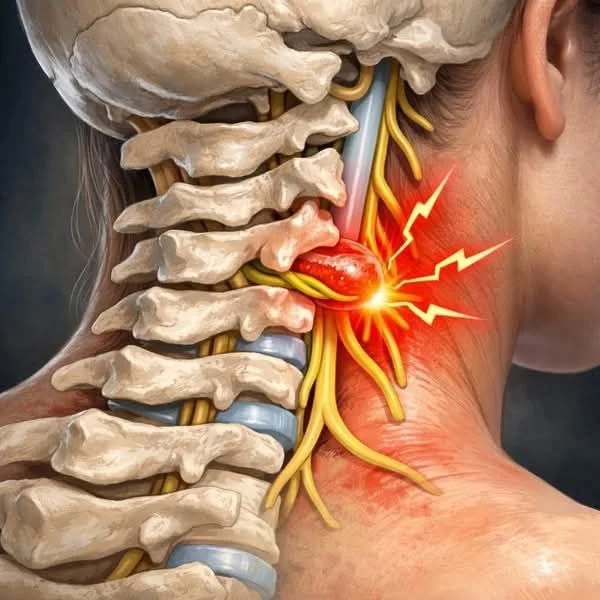

If you’ve been diagnosed with a cervical disc bulge, or even suspect one due to persistent neck pain, stiffness, or radiating arm symptoms, this guide is for you.
As a physiotherapist, I often see patients who are confused between disc bulge, slip disc, and herniation.
The reality is: a cervical disc bulge is extremely common, often reversible, and highly responsive to the right physiotherapy approach, when managed early and correctly.
This is not a generic article. This is a targeted, cervical spine-specific, research-backed guide that goes deep into:
- Why cervical discs bulge
- What actually happens inside your spine
- Advanced physiotherapy strategies (beyond basic exercises)
- Lesser-known facts that most people and even some clinicians miss
Read about our Complete Neck Pain Guide : Causes, Symptoms, Exercises and Treatment
Quick Answer
A cervical disc bulge occurs when a neck disc protrudes outward due to degeneration or poor posture. It can cause neck pain, stiffness, and sometimes arm symptoms. Physiotherapy, posture correction, and targeted exercises are the most effective treatments, and most cases improve without surgery.
Read in detail about: What is Cervical Spondylosis? The Truth Behind Chronic Neck Pain
Understanding Cervical Disc Bulge
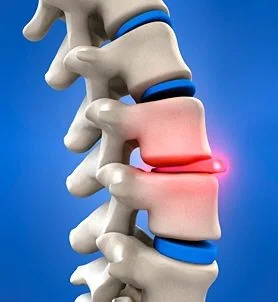
What exactly is a cervical disc bulge?
Your cervical spine (neck) has 7 vertebrae (C1-C7) separated by discs that act like shock absorbers. Each disc has:
- Nucleus pulposus (gel-like center)
- Annulus fibrosus (strong outer ring)
A disc bulge occurs when:
- The annulus weakens
- The disc extends outward uniformly (not a tear like herniation)
Unlike a herniation, a bulge:
- Is often broad-based
- May not initially compress nerves
- Can still cause significant pain due to inflammation
Also read: How to Relieve Neck Tightness Without Equipment
Lesser-known fact
Recent imaging studies show that over 50% of asymptomatic adults have cervical disc bulges, meaning the bulge itself is not always the main problem.
Pain often comes from inflammation, muscle guarding, and altered movement patterns, not just the disc. Brinjikji et al., AJNR (2015)
Read about : 15 Common Causes of Neck Pain You Should Know
Why Does a Cervical Disc Bulge Occur?
1. Repeated Micro-Stress
Most cervical disc bulges are not caused by a single incident but by:
- Prolonged forward head posture
- Laptop/mobile overuse
- Poor sleeping posture
This leads to:
- Gradual dehydration of discs
- Weakening of annular fibers
Read About: Best Sleeping Position for Neck Pain: A Physiotherapist’s Complete Guide
2. Forward Head Posture
For every 2.5 cm forward shift of your head, the load on your cervical spine increases by ~4-5 kg. Hansraj KK, (2014)
Learn how posture affects neck pain and correction exercises in our article on Simple Posture Correction Exercises for Forward Head Posture
3. Disc Degeneration & Reduced Hydration
With age or poor mechanics:
- Disc water content reduces
- Shock absorption decreases
- Bulging becomes more likely (Urban & Roberts)
Read in detail about: Cervical Disc Degeneration: The Hidden Cause of your Neck Pain
4. Muscle Imbalance (Deep Neck Flexor Weakness)
A key but overlooked cause:
- Weak deep stabilizers (longus colli)
- Overactive superficial muscles (SCM, upper trapezius)
This imbalance:
- Alters spinal loading
- Promotes disc stress Jull et al., Spine (2008)
Read about: What Is Military Neck Or Cervical Kyphosis And How To Treat It
Mechanism: What Happens Inside Your Neck?
Step-by-step progression
- Prolonged flexion (phone/laptop)
- Increased anterior disc pressure
- Posterior annulus weakens
- Disc material shifts backward
- Bulge forms
- Inflammation + possible nerve irritation
Important clinical insight
Pain in cervical disc bulge is often due to:
- Chemical inflammation (cytokines)
- Not just mechanical compression Spine Journal (2011)
Read more: Cervical Myelopathy: The Hidden Neck Condition Affecting Your Walking
Symptoms Specific to Cervical Disc Bulge
Neck-related symptoms
- Deep, aching neck pain
- Morning stiffness
- Reduced rotation or side bending
Nerve-related symptoms
- Radiating pain to shoulder/arm
- Tingling or numbness
- Burning sensation
- Weak grip
Also Read : Neck Cracking: Benefits, Risks, and the Truth About Stroke
Red flags
- Progressive arm weakness
- Loss of coordination
- Bladder/bowel issues
Read in detail about: Cervical Radiculopathy: Why Neck Nerve Pain Travels to the Arm
Diagnosis: What Actually Matters
MRI findings vs clinical symptoms
A crucial point:
- MRI may show a bulge, but symptoms depend on functional impairment, not just imaging. NEJM (1994)
Read about : What is Cervical Facet Joint Pain, how it causes cervicogenic headaches and how to correct it naturally
Physiotherapy Management
This is where recovery truly happens.
Phase 1: Pain Reduction & Inflammation Control
What works best:
- Cervical unloading (postural correction)
- Manual therapy
- Controlled movement (not complete rest) Cochrane Review (2015)
Phase 2: Deep Stabilization Training
Key focus:
- Activate deep neck flexors
Example:
- Chin tucks (properly guided)
Why it works:
- Reduces disc pressure
- Improves alignment (Falla et al.)
Phase 3: Movement Re-education
Patients often move incorrectly even after pain reduces.
Focus on:
- Scapular control
- Thoracic mobility
- Neck coordination
Phase 4: Functional Strengthening
- Resistance-based neck exercises
- Postural endurance training
- Workstation-specific corrections
Read about: What Is Cervical Myofascial Pain Syndrome And How To Relieve Trigger Points
10 Advanced Home Exercises
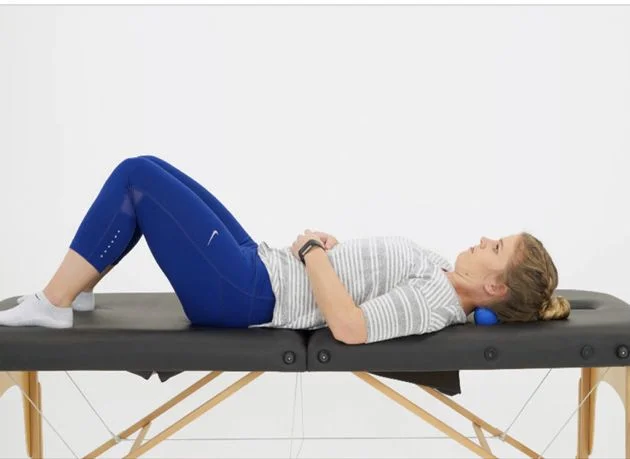
1. Craniocervical Flexion with Pressure Feedback
Why this is powerful
Deep cervical flexors are neurologically inhibited in neck pain, not just weak. (PubMed)
This exercise restores motor control, not just strength.
How to do
- Lie on your back
- Place a small towel under neck
- Gently nod (like saying “yes”)
- Hold 5-10 seconds
- No neck lifting
Innovation
Add:
- Slow breathing + hold
- Eye focus (stabilizes cervical proprioception)
2. Cervical Disc Unloading Glide
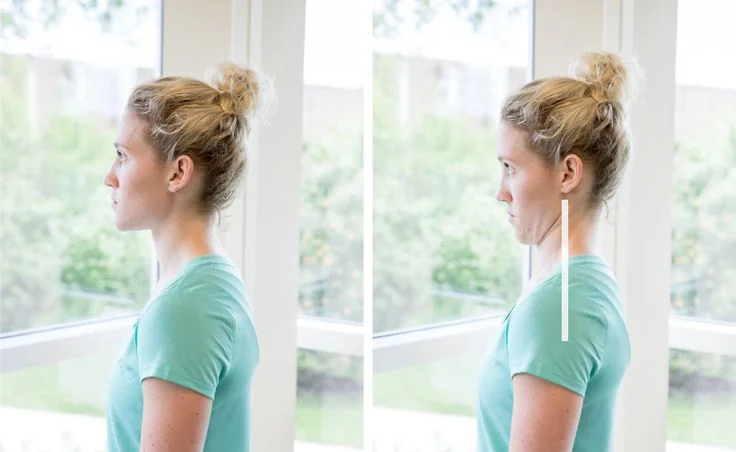
Why it works
Disc bulges respond best to low-load oscillatory movement, improving fluid exchange.
How to do
- Sit upright
- Slight chin tuck
- Slowly glide head forward 1–2 cm, return
- No pain
Hidden benefit
Promotes disc rehydration mechanics (rarely taught clinically)
3. Neural Slider
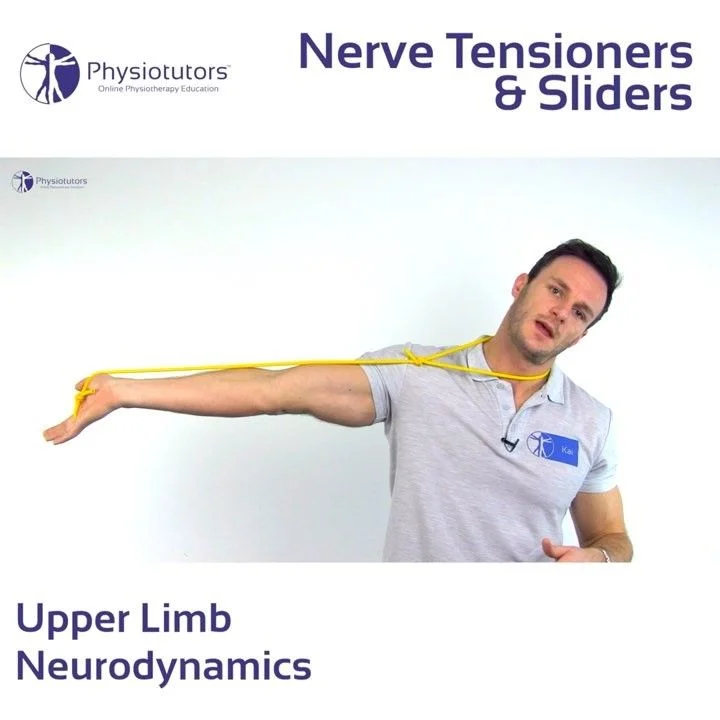
Median Nerve Slide
Evidence
Neural mobilization improves pain, ROM, and function when combined with exercise. (PMC)
How to do
- Arm out to side
- Extend wrist
- Tilt head away, return
Innovation
This is NOT stretching
It’s nerve sliding, reducing inflammation
4. Cervical Decompression with Active Muscle Engagement
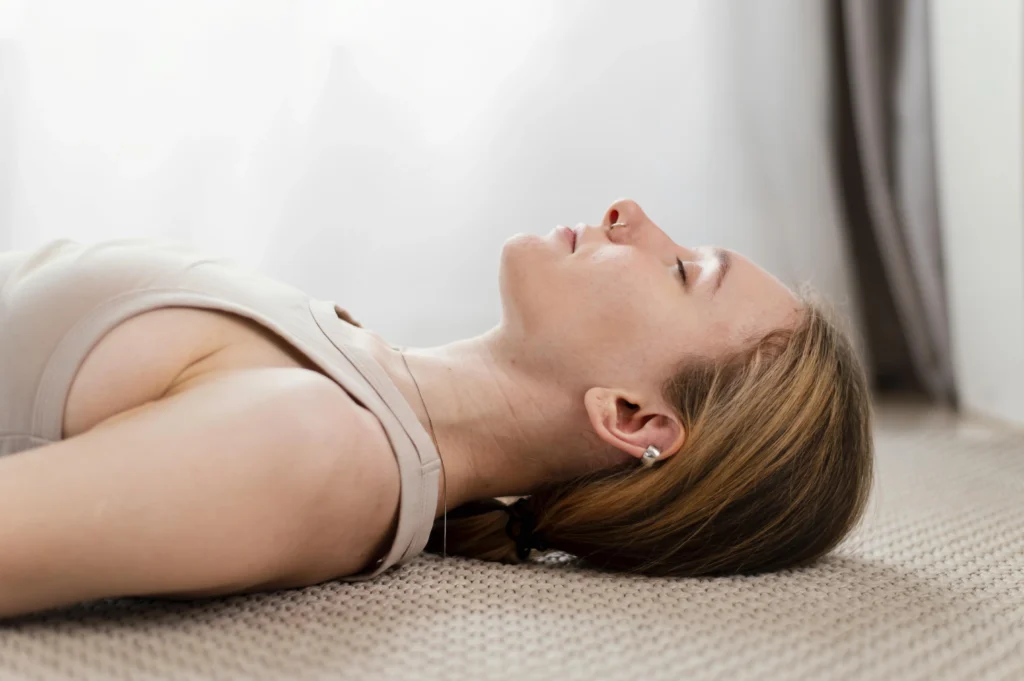
Why this is next-level
Combines:
- Traction effect
- Muscle activation
Emerging research shows traction + movement improves nerve function. (Clinical Trials)
How to do
- Lie down
- Slight chin tuck
- Gently press head into surface
- Hold 5 sec
Benefit
Creates internal decompression without devices
5. Quadruped Neck Stabilization
Why it matters
Your neck fails in functional positions, not lying down.
How to do
- On hands and knees
- Neutral spine
- Slight chin tuck
- Hold while breathing
Progression
Add:
- Opposite arm lifts
Innovation
Trains real-life cervical stability
6. Cervical Proprioception Reset
Why it’s critical
Disc bulge alters joint position sense (brain loses neck awareness)
How to do
- Stick a dot on wall
- Close eyes → move head → return to dot
- Open eyes and check
Hidden benefit
Improves:
- Dizziness
- Movement accuracy
7. Thoracic Extension Mobilization

Why this is underrated
Stiff upper back = overload on cervical discs
How to do
- Sit on chair
- Hands behind head
- Extend over backrest
Evidence insight
Multimodal training (not just neck exercises) is more effective. (SpringerLink)
8. Isometric Cervical Anti-Rotation
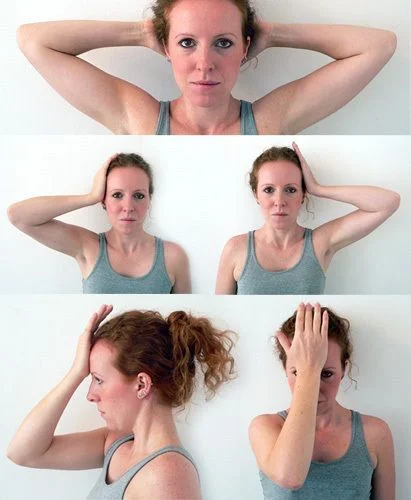
Why it works
Bulging discs are sensitive to rotation + load
How to do
- Place hand on side of head
- Resist rotation (don’t move)
- Hold 5-10 sec
Innovation
Builds safe rotational stability without strain
9. Scapular + Cervical Integration Drill

Why this is essential
Your neck doesn’t work alone.
Poor scapular control = neck overload
How to do
- Sit tall
- Pull shoulder blades back & down
- Add chin tuck
- Hold
Benefit
Reduces:
- Upper trap overactivity
- Disc compression
10. Eye-Head Coordination Drill
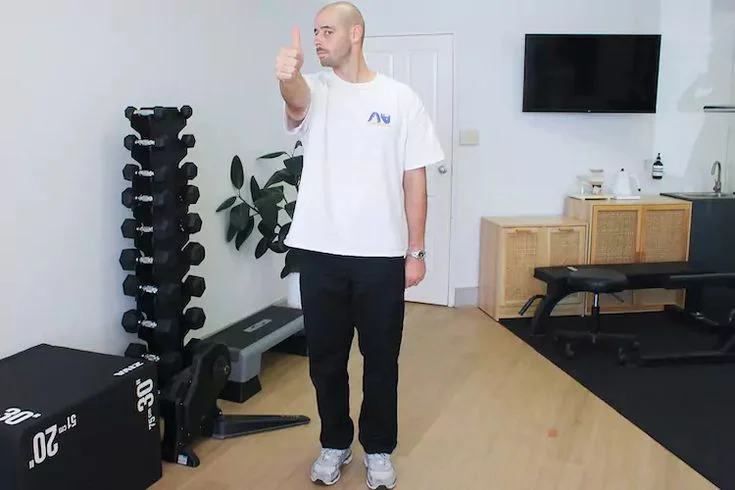
Why this is cutting-edge
Neck stability depends on:
- Vision
- Vestibular system
How to do
- Focus on thumb
- Move head slowly side to side
- Keep eyes fixed
Innovation
Improves:
- Neural control
- Cervical reflex stability
Read more: Cervical Vertigo Explained: Why Neck Pain Make You Feel Dizzy
How to Structure These Exercises
Phase 1 (Pain phase)
- Exercise 1, 2, 4
- 5–10 mins daily
Phase 2 (Control phase)
- Add 3, 6, 8
Phase 3 (Functional phase)
- Add 5, 7, 9, 10
Read About: How to Choose the Right and Best Pillow for Neck Pain
Critical Precautions
DO NOT:
- Force neck stretches
- Do fast rotations
- Hang neck traction devices without guidance
STOP if:
- Pain shoots to arm
- Numbness increases
Read about: Effective Neck Pain Exercises At Home: A Complete Guide to Relief and Improved Mobility
Lesser-Known Clinical Insight
Most people fail recovery because they:
- Only stretch
- Ignore motor control + nerves + thoracic spine
But research clearly shows:
Best results = stabilization + neural mobilization + movement retraining (PMC)
Read about: Yoga for Neck Pain: Poses That Actually Work
My Expert Advice
If you have a cervical disc bulge:
- You don’t need aggressive treatment
- You need precision rehab
Focus on:
- Small movements
- Consistency
- Control over force
Read more on : Manual Therapy for Neck Pain: A Physiotherapist’s Evidence Based Guide
Advanced Physiotherapy Techniques
1. McKenzie Method
Helps centralize symptoms. Manual Therapy (2012)
Read about: The Most Effective McKenzie Exercises For Neck Pain
2. Neural Mobilization
Helps reduce nerve sensitivity (JOSPT)
3. Cervical Traction
Effective for selected patients. Clinical Rehabilitation (2018)
Read more: Is Cervical Traction For Neck Pain Really Effective
Lesser-Known Facts About Cervical Disc Bulge
1. Your disc can rehydrate
With:
- Proper loading
- Movement
- Hydration
Discs are dynamic tissues, not “dead structures.”
2. Bed rest worsens recovery
Prolonged rest:
- Weakens muscles
- Increases stiffness
3. Your thoracic spine affects your neck
Stiff upper back = increased cervical stress
4. Stress can worsen symptoms
Neck muscles respond to emotional stress, increased pain. Pain (2005)
Also Read: Ultimate 6 Weeks Neck Rehabilitation Exercises For Pain Relief
Precautionary Measures for Cervical Disc Bulge
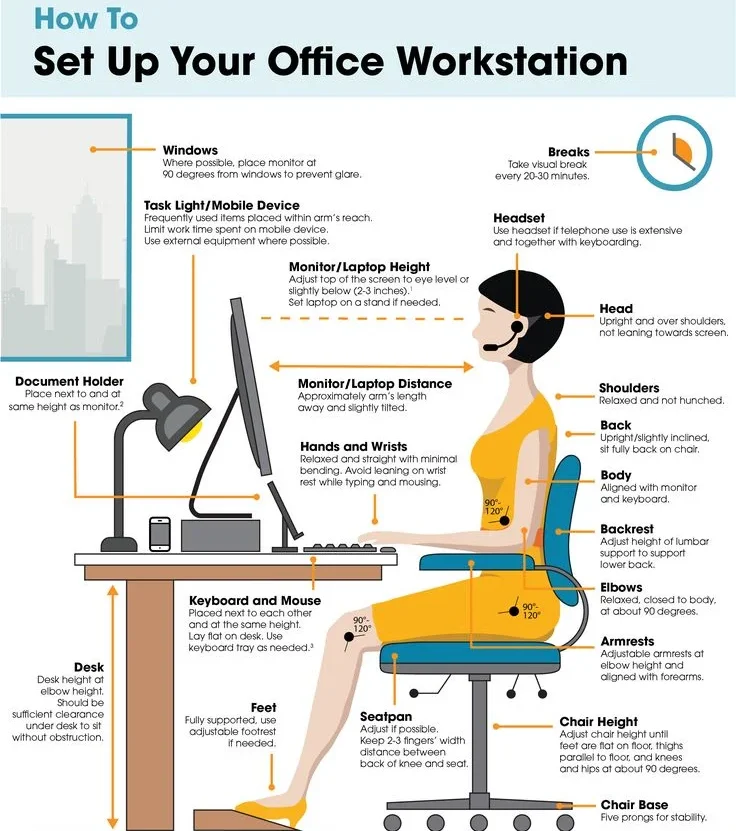
Daily posture corrections
- Keep screen at eye level
- Avoid prolonged neck flexion (>20 min)
- Use lumbar support
Sleeping precautions
- Use a cervical support pillow
- Avoid very high pillows
- Side or supine sleeping preferred
Workstation ergonomics
- Monitor at eye level
- Elbows at 90°
- Feet flat
Activity modifications
Avoid:
- Sudden jerks
- Heavy overhead lifting
- Long phone usage
Movement habits
- Take breaks every 30 minutes
- Perform gentle neck mobility exercises
Read in detail: Best Desk Setup to Reduce Neck and Back Pain
When Do You Need Medical Intervention?
Consider referral if:
- Severe nerve compression
- No improvement after 6–8 weeks
- Progressive neurological deficit
Learn About: The Ultimate Neck Stretch Routine for Desk Workers in 2026
Long-Term Recovery Strategy
Recovery is not just pain relief, it’s movement correction + strength + habit change.
Best outcomes occur when:
- Exercise is consistent
- Posture is corrected
- Lifestyle is modified
Read in detail: Neck Pain from Phone Use? Here’s How to Treat Text Neck Syndrome
Frequently Asked Questions
1. Is cervical disc bulge serious?
Most cases are not serious and improve with physiotherapy and lifestyle changes.
2. Can cervical disc bulge heal naturally?
Yes, many cases improve as inflammation reduces and strength improves.
3. Which exercise is best?
Chin tucks and deep neck flexor exercises are highly effective.
4. How long does recovery take?
Typically 4–8 weeks with proper treatment.
5. Should I avoid gym?
Heavy lifting should be avoided initially, but guided exercise is beneficial.
Read about: How to Relieve Morning Neck Stiffness Naturally
Key Takeaways
- Cervical disc bulge is common and often reversible with physiotherapy.
- Poor posture and prolonged screen use are major contributors.
- Pain is often due to inflammation, not just compression.
- Deep neck flexor strengthening is essential for recovery.
- Movement and exercise are more effective than rest.
- Ergonomic corrections play a crucial role in prevention.
- Early physiotherapy leads to faster and more complete recovery.
Stay tuned with us for more health related topics.
Follow us on LinkedIn and Instagram for more.
More Read


Medical Disclaimer!
This article has been reviewed and written under the guidance of our Head Physiotherapist, Dr. Kruti Raj (PT, MUHS,CPT,CMPT). The information shared is intended for educational purposes only and should not be considered a substitute for personalized medical advice, diagnosis, or treatment.
Please consult us or any other qualified healthcare professional before beginning any exercise program, especially if you are experiencing pain, recovering from injury, or managing a medical condition.


