


When a child’s muscles feel unusually tight, resist stretching or make everyday movements difficult, one possible explanation is spasticity.
It is a neurological movement problem commonly associated with cerebral palsy, although it can also occur following brain or spinal cord injuries and other conditions affecting the central nervous system.
Quick Answer: What Is Spasticity in Children?
Spasticity in children is a neurological condition in which muscles show increased resistance when stretched, particularly during faster movements. It happens because the nervous system has difficulty regulating normal muscle reflexes.
It is commonly associated with spastic cerebral palsy, but can also occur after brain or spinal cord injuries and other neurological conditions.
How can physiotherapy help? Pediatric physiotherapy focuses on improving functional movement, strength, balance, joint mobility, posture and independence. Treatment is individualized according to each child’s needs.
Parents may notice that their child’s legs feel stiff during dressing, their arms remain bent, their feet point downwards while standing or their movements appear less flexible than expected.
These signs deserve attention, particularly when they affect walking, sitting, playing or everyday activities.
Understanding why spasticity develops, how it affects movement and how pediatric physiotherapy can help is important for choosing appropriate treatment and supporting a child’s functional independence.
Key Takeaways: Spasticity in Children
Spasticity is neurological: It occurs when the nervous system has difficulty regulating muscle stretch reflexes.
It affects movement: Muscle stiffness can interfere with walking, sitting, dressing, playing and everyday activities.
Assessment matters: Physiotherapists evaluate muscle tone, joint movement, strength, posture and functional abilities.
Physiotherapy supports function: Strengthening, balance training, gait practice and functional activities can help improve movement.
Treatment is individualized: Some children may also benefit from medication, botulinum toxin injections, orthoses or orthopedic management.
Early assessment is important: Identifying movement difficulties early can help families access appropriate support.
What Is Spasticity in Children?
Spasticity is a type of increased muscle tone characterized by an abnormal increase in resistance to passive movement, particularly when a muscle is stretched quickly.
It occurs when the nervous system has difficulty regulating the stretch reflexes that normally help control muscle activity.
Under typical conditions, the brain and spinal cord regulate how muscles contract and relax.
When the pathways responsible for controlling these responses are disrupted, stretch reflexes can become overactive.
As a result, muscles may resist movement more strongly than expected.
Spasticity can affect different parts of the body, including:
- Arms: Making it difficult to straighten the elbows, open the hands or reach for objects.
- Legs: Causing stiffness around the hips, knees and ankles.
- Trunk: Affecting posture, balance and the ability to maintain an upright sitting position.
Spasticity is commonly associated with cerebral palsy, but it can also occur after acquired brain injuries, spinal cord injuries and other neurological conditions.
Importantly, spasticity is not simply another term for tight muscles.
A child may have restricted movement because of shortened muscles, joint stiffness or other musculoskeletal problems without having neurological spasticity.
Why Do Children’s Muscles Become Spastic?
Spasticity develops when the normal communication between the brain, spinal cord and muscles is disrupted.
Normally, the nervous system regulates muscle activity and controls how strongly muscles respond when stretched.
When certain upper motor neuron pathways are damaged, this regulation becomes less effective.
Stretch reflexes may become overactive, causing muscles to contract more strongly than expected during movement or passive stretching.
The underlying neurological disturbance may occur before birth, around delivery or later in childhood.
1. Cerebral Palsy
Cerebral palsy is one of the most common conditions associated with spasticity in children.
Children with spastic cerebral palsy may experience stiffness in their legs, arms or both. The distribution depends on which parts of the body are affected.
Some children have stiffness mainly in their legs, while others experience increased muscle tone in all four limbs.
2. Acquired Brain Injury
A traumatic brain injury, stroke or other acquired brain injury can damage pathways responsible for regulating muscle activity.
Depending on the location and extent of the injury, children may develop stiffness, weakness, exaggerated reflexes and difficulties coordinating movement.
3. Spinal Cord Injury
Damage affecting the spinal cord can interrupt communication between the brain and muscles.
Some children develop increased muscle tone, exaggerated reflexes and involuntary muscle contractions below the affected area.
4. Other Neurological Conditions
Certain neurological conditions affecting the brain and spinal cord may also cause spasticity.
The underlying cause needs to be investigated because treatment depends on the child’s neurological condition, functional abilities and specific movement difficulties.
What Are the Early Signs of Spasticity in Children?
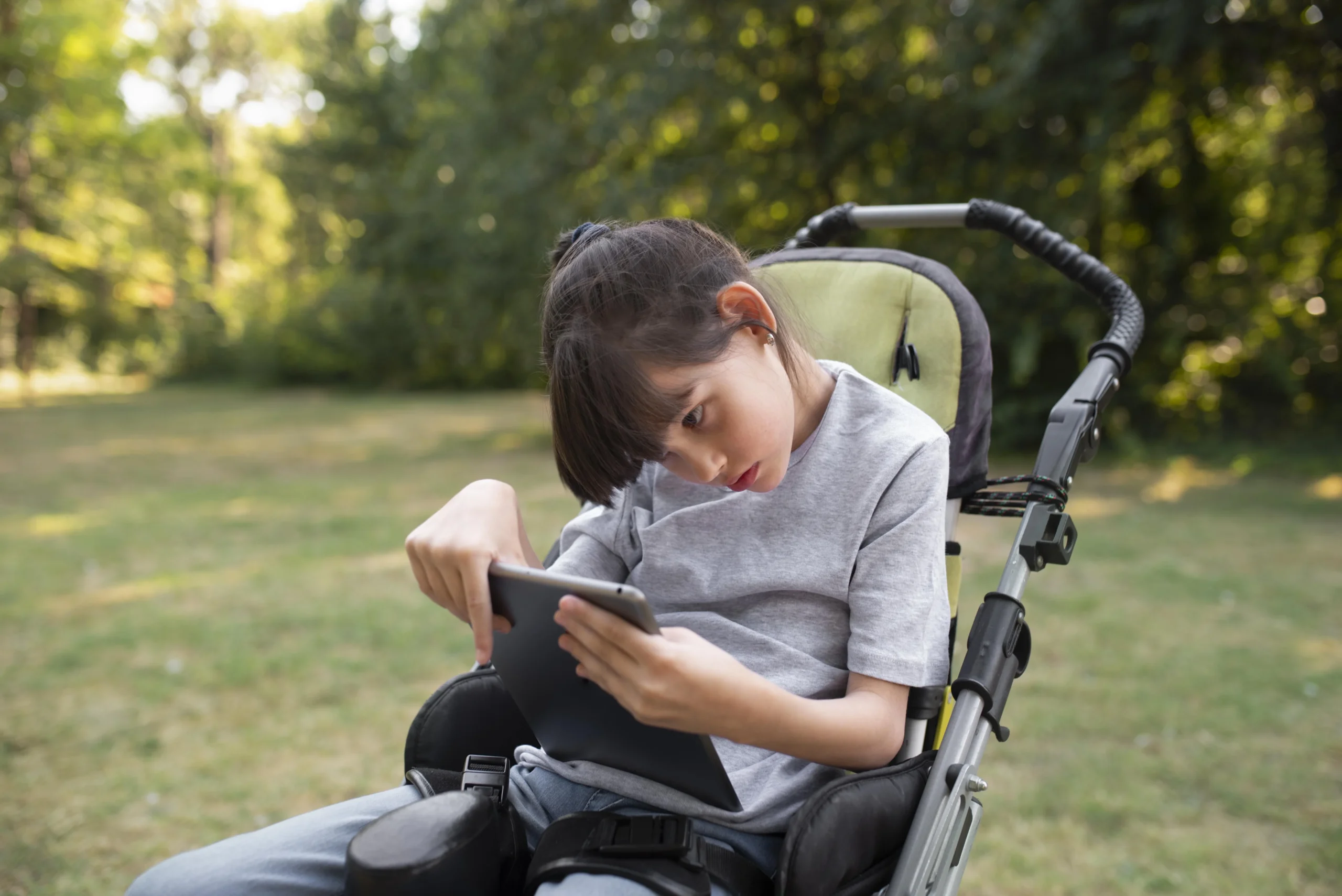
Spasticity may appear differently depending on the child’s age, affected muscles and severity.
Parents may initially notice that certain movements seem unusually difficult or that their child’s limbs do not relax easily.
1. Persistent Muscle Stiffness
One of the recognizable signs is resistance when moving the child’s arms or legs.
Parents may notice:
- Legs that feel unusually stiff during nappy changes.
- Difficulty bending the knees or elbows.
- Arms that remain bent close to the body.
- Resistance when gently straightening the legs.
- Reduced flexibility during everyday movements.
Muscle stiffness alone does not confirm spasticity. A clinical assessment is needed to identify the underlying cause.
2. Scissoring of the Legs
Some children with spasticity affecting their lower limbs may cross their legs when lifted or supported in a standing position.
This is commonly called a scissoring posture.
It can occur when increased muscle activity in the hip adductor muscles pulls the legs towards the midline.
Scissoring may interfere with standing, walking, transfers and positioning.
3. Toe Walking
Children with increased activity in the calf muscles may struggle to bring their heels down during standing or walking.
They may walk predominantly on their toes because the ankle plantar flexor muscles resist movement towards a neutral position.
Persistent toe walking has several possible causes, so it should not automatically be attributed to spasticity.
4. Difficulty Moving the Arms or Legs
Spasticity can make movements slower, less coordinated and more effortful.
For example, a child may struggle to:
- Straighten their elbow.
- Open their hand to grasp an object.
- Bend their knees while sitting.
- Move one leg forward during walking.
- Perform coordinated movements during play.
These difficulties can affect independence in everyday activities.
5. Abnormal Posture
Children with spasticity may develop characteristic postures depending on the muscles involved.
Examples include:
- Bent elbows and wrists.
- Tightly closed hands.
- Knees that remain bent.
- Legs that cross during movement.
- Feet pointing downwards.
- Difficulty maintaining an upright sitting posture.
Persistent abnormal positioning should be assessed because it may affect joint mobility and functional development.
How Does Spasticity Affect a Child’s Daily Activities?
Spasticity can affect more than the way muscles feel. It may influence a child’s ability to perform everyday movements independently.
The impact depends on the muscles involved, the degree of increased tone, muscle strength and the child’s overall functional abilities.
| Everyday activity | Possible difficulty |
|---|---|
| Sitting | Difficulty maintaining an upright posture |
| Standing | Stiff knees or difficulty placing heels on the floor |
| Walking | Toe walking, scissoring or reduced step length |
| Dressing | Difficulty bending or straightening limbs |
| Playing | Reduced reaching, grasping or coordinated movement |
| Climbing stairs | Difficulty bending knees and shifting weight |
| Personal care | Difficulty positioning limbs comfortably |
Children may also experience fatigue because moving against increased muscle resistance requires additional effort.
Spasticity can sometimes contribute to pain, muscle spasms, difficulties with hygiene and reduced participation in physical activities.
What Is the Difference Between Spasticity, Muscle Tightness and Contracture?
These terms are often used interchangeably, but they describe different clinical findings.
| Condition | What it means |
|---|---|
| Spasticity | Velocity-dependent increase in resistance to passive muscle stretching due to overactive stretch reflexes |
| Muscle tightness | A general description of reduced flexibility or restricted movement |
| Muscle contracture | A persistent restriction in joint movement caused by structural shortening or changes in muscles and surrounding tissues |
For example, a child may have a shortened calf muscle that limits ankle movement. Another child may have increased calf muscle activity due to spasticity.
Both problems can occur together, particularly in children with cerebral palsy.
This distinction is important because treatment should address the actual movement limitation rather than assuming every stiff muscle needs the same intervention. (Scholtes et al., 2006)
How Is Spasticity Assessed by a Pediatric Physiotherapist?
A pediatric physiotherapist evaluates muscle tone alongside posture, strength, joint movement and functional abilities.
The purpose is not simply to determine whether a muscle feels stiff, but to understand how increased tone affects the child’s everyday movement.
1. Muscle Tone Assessment
The physiotherapist moves the child’s limbs at different speeds to observe resistance.
Spasticity generally produces greater resistance when the muscle is stretched more quickly.
The assessment may include observing the presence of a catch, clonus or involuntary muscle activity.
2. Modified Ashworth Scale
The Modified Ashworth Scale (MAS) is commonly used to grade resistance during passive movement.
It provides a clinical estimate of resistance, but it does not independently establish the diagnosis or reliably distinguish spasticity from every other cause of increased muscle tone.
3. Modified Tardieu Scale
The Modified Tardieu Scale evaluates the muscle response at different stretching speeds.
It helps clinicians examine the dynamic component of increased muscle tone and distinguish it from fixed muscle shortening.
This information can be useful when deciding whether treatment should focus on neurological muscle activity, restricted muscle length or both.
These scales have limitations and should be interpreted alongside clinical findings and functional assessment (Yoo et al., 2022)
4. Range of Motion Assessment
The physiotherapist measures how far the affected joints can move.
For example, ankle dorsiflexion, knee extension, elbow extension and wrist movement may be assessed depending on the child’s presentation.
This helps identify whether reduced movement is caused by a dynamic muscle response, fixed shortening or another musculoskeletal restriction.
5. Functional Movement Assessment
The child may be observed during sitting, standing, walking, reaching and other age-appropriate activities.
The physiotherapist examines:
- Postural stability.
- Balance and weight shifting.
- Muscle strength.
- Walking pattern.
- Joint alignment.
- Functional independence.
The assessment also considers pain, comfort, fatigue and the child’s ability to participate in everyday activities.
A 2024 scoping review of pediatric cerebral palsy assessment methods highlighted that commonly used clinical scales have limitations in reliability and objectivity, reinforcing the importance of combining assessment tools with clinical judgement. (Nourizadeh et al., 2024)
How Can Pediatric Physiotherapy Help Children With Spasticity?
Pediatric physiotherapy aims to improve functional movement, maintain available joint mobility, support strength and help children participate in everyday activities.
Treatment depends on the child’s age, neurological condition, muscle involvement and individual goals.
1. Stretching and Positioning
Gentle, appropriately prescribed stretching may help maintain available joint movement and manage muscle shortening.
A physiotherapist may also recommend positioning strategies to support comfort and functional alignment.
Stretching should not be forced or painful. It does not independently eliminate neurological spasticity or guarantee prevention of contractures.
2. Strengthening Exercises
Children with spasticity can also experience muscle weakness.
Physiotherapy may include age-appropriate strengthening activities targeting muscles needed for sitting, standing, walking and other functional movements.
The focus is on improving controlled movement rather than simply reducing muscle tone.
3. Balance and Postural Control Training
Activities involving controlled reaching, weight shifting, supported standing and balance practice can help improve postural stability.
These activities are adapted to the child’s abilities and safety requirements.
4. Gait Training
For children who walk, physiotherapy may include:
- Overground walking practice.
- Weight-shifting activities.
- Step training.
- Treadmill training when appropriate.
- Balance and coordination exercises.
The aim is to improve functional walking, safety and participation in everyday environments.
5. Functional Task Practice
Physiotherapists use meaningful activities such as standing from a chair, reaching for toys, climbing steps and transferring between positions.
Repeated practice helps children develop skills that are useful in their everyday environments.
6. Orthoses and Positioning Support
Ankle-foot orthoses (AFOs) and other supportive devices may be recommended when clinically indicated.
These can help support alignment, improve foot positioning and assist functional mobility.
The choice of orthosis depends on the child’s muscle activity, joint range, walking pattern and functional goals.
International rehabilitation guidance recommends child- and family-selected goals, active practice of complete functional tasks and therapy in real-life environments rather than relying only on impairment-focused exercises (Jackman et al., 2022)
What Other Treatments Are Available for Childhood Spasticity?
Physiotherapy is an important part of management, but some children may require additional medical interventions.
Treatment is individualized and may involve a multidisciplinary team.
1. Botulinum Toxin Type A Injections
Botulinum toxin type A injections may be used to temporarily reduce excessive muscle activity in selected muscles.
They are sometimes recommended when focal spasticity interferes with walking, hand function, positioning, hygiene or comfort.
The injections temporarily reduce nerve signaling to the targeted muscles. Their effects are not permanent, and treatment may need to be repeated in selected cases.
Physiotherapy and sometimes orthoses or serial casting may be included afterwards to support functional goals.
Importantly, reducing muscle tone does not automatically improve every functional activity. The treatment should have a clearly defined goal and be followed by appropriate rehabilitation (Gresits et al., 2025)
2. Oral Medication
Medicines such as baclofen may be prescribed in selected cases to manage more widespread spasticity.
They can cause side effects such as drowsiness, fatigue or weakness. Medication must therefore be prescribed and monitored by an appropriate specialist.
3. Intrathecal Baclofen
For some children with severe generalized spasticity, intrathecal baclofen therapy may be considered.
A surgically implanted pump delivers medication into the fluid surrounding the spinal cord, allowing continuous administration under specialist supervision.
This is a specialized intervention that requires careful patient selection and long-term monitoring.
4. Orthopedic Management
When persistent muscle shortening or joint deformities develop, orthopedic interventions may be considered.
Depending on the child’s needs, these may include serial casting, soft-tissue surgery or other procedures.
Physiotherapy plays an important role in rehabilitation before and after appropriate interventions.
Can Spasticity Get Worse as a Child Grows?
The underlying neurological disturbance responsible for spasticity may remain non-progressive, but its functional effects can change during childhood.
As children grow, bones may lengthen faster than muscles and tendons can adapt. This can contribute to muscle shortening, restricted joint movement and contractures.
Parents may notice:
- Increasing difficulty straightening the knees.
- Reduced ankle movement.
- Greater difficulty wearing footwear or orthoses.
- Changes in walking pattern.
- More difficulty maintaining comfortable sitting or standing positions.
This is why regular monitoring is important.
A child may need changes to their physiotherapy program, orthoses or medical management as their growth and functional needs change.
Can Spasticity Sometimes Help a Child?
Yes. This is an important point that is often overlooked.
Some children use increased muscle tone to help maintain posture, stand or assist with transfers.
For example, a child with significant leg weakness may rely partly on increased muscle activity to remain upright.
Reducing tone without understanding its functional role could make certain activities more difficult.
Therefore, treatment should not aim to eliminate all muscle tone. It should address the specific problems caused by spasticity while preserving useful movement and function wherever possible.
Myth vs Fact: Understanding Childhood Spasticity
MYTH: Spasticity and muscle tightness are the same.
FACT:
Spasticity is a neurological finding involving increased resistance to faster muscle stretching. Muscle tightness can have several other causes, including muscle shortening and joint stiffness.
MYTH: Every child with cerebral palsy has spasticity.
FACT:
Cerebral palsy has different movement patterns. Some children have spasticity, while others experience dyskinesia, ataxia or mixed movement difficulties.
MYTH: Physiotherapy only involves stretching stiff muscles.
FACT:
Pediatric physiotherapy also includes strengthening, balance training, gait practice, postural control and functional movement activities.
MYTH: All muscle tone should be reduced.
FACT:
Some children use increased muscle tone to support posture or transfers. Treatment should focus on meaningful functional goals rather than eliminating all muscle tone.
MYTH: Spasticity always gets progressively worse.
FACT:
The underlying neurological disturbance in cerebral palsy is non-progressive, although growth-related muscle shortening, contractures and functional changes can develop over time.
When Should Parents Seek Professional Help?
Parents should arrange a clinical assessment if their child has:
- Persistent stiffness in the arms or legs.
- Difficulty bending or straightening joints.
- Repeated scissoring of the legs.
- Persistent toe walking with restricted ankle movement.
- Unusual posture or movement patterns.
- Difficulty walking, sitting or maintaining balance.
- Painful muscle spasms.
- Increasing difficulty with everyday activities.
Sudden onset of weakness, new neurological symptoms, severe pain or rapid deterioration requires urgent medical assessment rather than being assumed to be ordinary spasticity.
Final Thoughts
Childhood spasticity can affect much more than muscle movement. It may influence how a child sits, stands, walks, plays and participates in everyday activities.
With appropriate assessment, individualized physiotherapy and medical support when needed, children can work towards better movement, comfort and functional independence.
Every child has different movement needs. The most effective approach is one that focuses on the child’s abilities, comfort, development and everyday goals.
Conclusion
Spasticity in children is a neurological movement difficulty that causes increased resistance to passive muscle stretching and can affect posture, coordination, walking and everyday activities.
Although cerebral palsy is a common cause, spasticity can also occur following brain or spinal cord injury and other neurological conditions.
Early assessment helps identify the muscles involved, distinguish dynamic spasticity from fixed muscle shortening and understand how movement is affected.
Pediatric physiotherapy plays an important role through individualized strengthening, positioning, balance training, functional movement practice and mobility support.
When necessary, medical treatments and orthopedic interventions may be combined with rehabilitation.
The main goal is not simply to make muscles feel less stiff.
It is to help children move more comfortably, maintain useful functional abilities and participate as independently as possible in everyday life.
Frequently Asked Questions About Spasticity in Children
1. What causes spasticity in children?
Spasticity occurs when neurological pathways responsible for regulating muscle stretch reflexes are disrupted. It is commonly associated with cerebral palsy and may also occur following brain or spinal cord injuries.
2. Is spasticity the same as muscle tightness?
No. Spasticity is a neurological condition involving increased resistance to faster passive stretching. Muscle tightness is a broader description that can result from shortened muscles, connective tissue changes or joint stiffness.
3. Can cerebral palsy cause muscle stiffness?
Yes. Spastic cerebral palsy commonly causes increased muscle tone and stiffness. However, not every child with cerebral palsy has spasticity, as cerebral palsy can involve different movement patterns.
4. Can physiotherapy reduce spasticity in children?
Physiotherapy can help manage the functional effects of spasticity through strengthening, positioning, balance training, gait practice and active movement activities. Treatment goals are individualized for each child.
5. Can spasticity affect a child’s ability to walk?
Yes. Increased muscle activity around the hips, knees and ankles may affect foot placement, step length, balance and walking efficiency. The impact varies between children.
6. What exercises help children with spasticity?
Depending on the child’s abilities, a physiotherapist may prescribe strengthening, balance activities, supported standing, functional reaching, gait training and gentle range-of-motion exercises. Exercises should be individually selected.
7. Can spasticity get worse as a child grows?
The underlying neurological condition may remain non-progressive, but muscle shortening, contractures and changes in movement can develop as a child grows. Regular clinical monitoring helps identify these changes.
8. When should parents consult a pediatric physiotherapist?
Parents should seek an assessment if their child has persistent muscle stiffness, unusual postures, scissoring, difficulty walking, restricted joint movement or challenges with everyday activities. Sudden weakness or new neurological symptoms require urgent medical assessment.
Stay tuned with us for more health related topics.
Follow us on LinkedIn and Instagram for more.
More Read


Medical Disclaimer
This article is intended for general educational and informational purposes only. It does not replace professional medical advice, diagnosis or treatment. Muscle stiffness and movement difficulties can have different underlying causes, and an individual assessment is necessary to determine the appropriate management. Parents should consult a qualified pediatrician or healthcare professional if they have concerns about their child’s movement or development. Do not begin stretching exercises, medication or other treatments without guidance from an appropriate healthcare professional.


