


What is a Buffalo Hump?
If you have noticed a soft or sometimes firm swelling at the base of your neck, you are not alone. Many people come into the clinic worried about what they call a “neck hump” or “upper back fat.”
Medically, this is referred to as a buffalo hump or dorsocervical fat pad.
It appears at the junction where your neck meets your upper back.
This region is already under mechanical stress because it connects the flexible cervical spine with the relatively rigid thoracic spine.
When changes happen here, whether due to fat accumulation, posture, or hormones, it becomes visible quite quickly.
What many people assume is that this is just stubborn fat. In reality, it is often more complex.
Read about our Complete Neck Pain Guide : Causes, Symptoms, Exercises and Treatment
Quick Answer
A buffalo hump is a fat or fibrofatty deposit at the base of the neck. It may develop due to poor posture, hormonal imbalance, obesity, or long-term steroid use. Physiotherapy can help improve posture and reduce its appearance, but medical evaluation may be required in some cases. Early intervention gives better results.
Read about: Early Signs of Cervical Spine Damage You Should Never Ignore
Key Takeaways
- Buffalo hump is not always just fat. It can involve dense fibrofatty tissue.
- Poor posture can worsen its appearance even if it is not the primary cause.
- Hormonal imbalance, especially high cortisol, is a major contributing factor.
- Physiotherapy helps improve posture, muscle balance, and overall alignment.
- Exercises alone may not work if the cause is metabolic or hormonal.
- Early identification leads to better outcomes and faster improvement.
- Medical evaluation is important if symptoms appear suddenly or worsen quickly.
Read about : 15 Common Causes of Neck Pain You Should Know
It Is Not Always Just Fat
One of the biggest misconceptions I see is that buffalo hump is purely a fat problem. Recent evidence suggests otherwise.
In many cases, the tissue becomes a mix of fat and fibrous tissue. This is called fibrofatty tissue. It feels denser, less mobile, and does not respond easily to weight loss alone. (Liu et al., 2025)
This explains why some patients say, “I lost weight everywhere, but this area didn’t change much.” That is not your fault. The tissue itself behaves differently.
In clinic, I often notice two types:
- Soft, compressible hump which responds better to lifestyle changes
- Firm, rubbery hump which takes longer and may need medical input
Read about: Cervical Ligament Injury or Neck Ligament Tear
Why Does a Buffalo Hump Develop?im
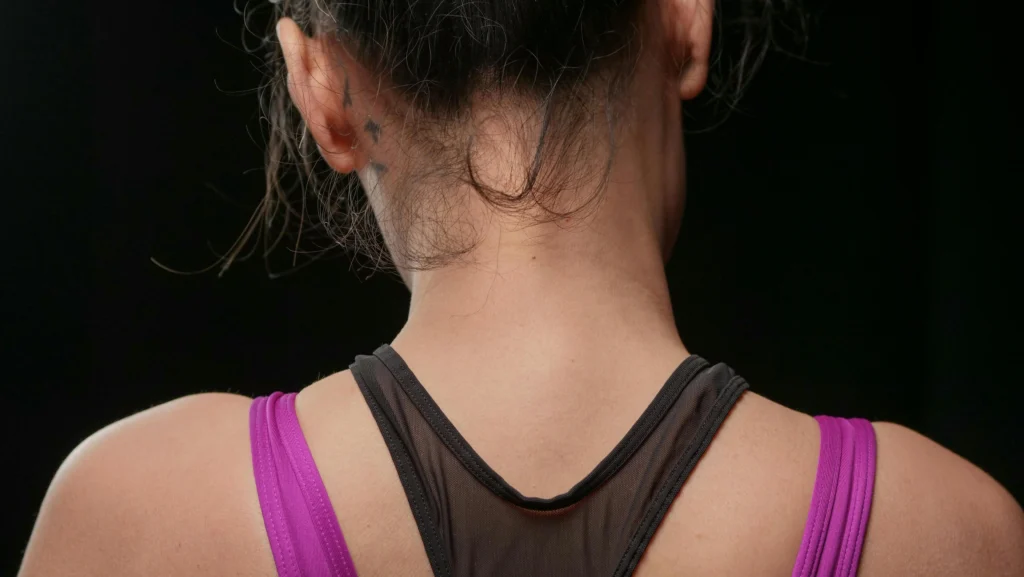
There is rarely a single cause. It is usually a combination of internal and external factors.
Hormonal Imbalance and Cortisol
This is one of the most important causes and often missed early.
When cortisol levels remain high for a long time, the body starts redistributing fat. Instead of spreading evenly, fat starts accumulating in specific areas:
- Face
- Abdomen
- Upper back
This is why buffalo hump is commonly seen in conditions like Cushing’s syndrome or in people taking long-term steroids. (Cleveland Clinic, 2024)
In my practice, if I see a hump along with fatigue, weight gain that does not match lifestyle, or skin changes, I do not start exercises immediately. I refer for medical evaluation first. (Fardet et al., 2012)
Learn how posture affects neck pain and correction exercises in our article on Simple Posture Correction Exercises for Forward Head Posture
Posture and Daily Habits
Now this is where most people relate.
Long hours of:
- Laptop work
- Phone use
- Slouched sitting
lead to forward head posture and rounded shoulders.
Over time:
- Neck moves forward
- Upper back rounds
- Soft tissue thickens
- Fat becomes more prominent visually
Posture alone may not create the hump, but it definitely makes it look worse.
Read in detail: Neck Pain from Phone Use? Here’s How to Treat Text Neck Syndrome
Obesity and Metabolic Factors
Increased body fat contributes to fat storage in the upper back region. However, this area tends to be stubborn.
Even with weight loss, this region may reduce slowly compared to others.
Read about: How to Relieve Morning Neck Stiffness Naturally
Medication and Lipodystrophy
Certain medications, especially in long-term treatments, can change how fat is distributed in the body.
This is seen in:
- Steroid therapy
- Some antiviral treatments
The fat does not increase randomly. It shifts to specific areas like the upper back.
Also Read : Neck Cracking: Benefits, Risks, and the Truth About Stroke
Why Some Buffalo Humps Are Painful
Patients often ask this, and it is a valid concern.
The hump itself is not usually the source of pain. The surrounding structures are.
Here is what happens:
- The added mass shifts your posture forward
- Neck and upper back muscles overwork to compensate
- Trigger points develop
- Movement becomes restricted
Over time, this leads to:
In clinic, I often find that once we reduce muscle overload, the pain improves even if the hump is still present.
Read: How to Fix Sagging,Ozempic Neck After Rapid Weight Loss
Not Every Neck Hump Is the Same
This is where proper assessment matters.
True Buffalo Hump
- Fat or fibrofatty tissue
- Linked to hormones or metabolism
Postural Kyphosis
- Due to spinal curvature
- Common in prolonged slouching
- More bony than fatty
Read about: What Is Military Neck Or Cervical Kyphosis And How To Treat It
Lipodystrophy
- Abnormal fat redistribution
- Seen in certain medical conditions
General Upper Back Fat
- More diffuse
- Associated with overall weight gain
Understanding this difference changes the entire treatment plan. (MedlinePlus, 2024)
Read about: Effective Neck Pain Exercises At Home: A Complete Guide to Relief and Improved Mobility
Physiotherapy Assessment: What We Actually Check
A proper assessment goes beyond just looking at the hump.
Cervical Alignment
We check how far forward the head sits.
Thoracic Mobility
Most patients have stiffness here. Limited movement forces the neck to compensate.
Scapular Control
Weakness in:
- Middle trapezius
- Lower trapezius
leads to poor posture support.
Muscle Imbalance Pattern
Common pattern:
- Tight: Upper trapezius, levator scapulae
- Weak: Deep neck flexors, lower trapezius
This imbalance is a key driver in visible hump progression.
Read: Spasm In Neck: What Causes It & How to Fix It Fast
When Should You Be Concerned About a Buffalo Hump?
Let me say this the way I usually explain it to patients sitting in front of me.
Not every buffalo hump is a red flag. But sometimes, your body is trying to tell you something deeper is going on.
Here are situations where I don’t ignore it:
- The hump appeared suddenly over weeks or a few months
- You also notice unexplained weight gain, especially around the face and abdomen
- You feel unusual fatigue, even without much activity
- Your skin bruises easily or feels thinner than before
- There is muscle weakness, especially when climbing stairs or lifting things
- You are on long-term steroid medication
In these cases, I usually pause physiotherapy progression and suggest a medical evaluation first.
Why this matters:
Because sometimes what looks like a posture issue is actually hormonal or metabolic, and no amount of exercise will fix the root cause.
Read about: Yoga for Neck Pain: Poses That Actually Work
A Simple Self-Check You Can Do at Home
Before jumping into exercises, I like patients to understand what they’re dealing with.
Here’s a quick self-check I often suggest:
Step 1: Mirror Observation
Stand sideways in front of a mirror.
- Is the hump soft and spread out?
- Or does it look like a defined bulge?
Softer usually leans toward fat.
More defined may involve posture or fibrotic tissue.
Step 2: Posture Correction Test
Now gently correct your posture:
- Bring your head slightly back
- Open your chest
- Relax your shoulders
Ask yourself:
- Does the hump look smaller?
If yes, posture is playing a major role.
If no, it may be more tissue-related.
Step 3: Touch and Feel
- Soft and movable → more likely fat
- Firm or dense → may be fibrofatty
Step 4: Movement Check
Turn your neck side to side.
- Do you feel stiffness or pulling?
- Is movement restricted?
If yes, muscle imbalance is likely contributing.
Why this matters:
This small self-check helps set expectations. It tells you whether you should focus more on posture correction, medical evaluation, or a combination of both.
Read about: The Most Effective McKenzie Exercises For Neck Pain
Can Physiotherapy Reduce Buffalo Hump?
This is where honesty matters.
Physiotherapy can:
- Improve posture
- Reduce muscle tension
- Improve spinal alignment
- Reduce the appearance in postural cases
But it cannot:
- Remove fat caused by hormonal imbalance
- Reverse fibrotic tissue completely
In real-life cases, improvement depends on the cause.
Also Read: Ultimate 6 Weeks Neck Rehabilitation Exercises For Pain Relief
Evidence-Based Physiotherapy Approach
Postural Retraining
Simple but powerful.
Cues I give patients:
- Keep chin slightly tucked
- Relax shoulders
- Avoid forcing chest up
Consistency matters more than intensity.
Deep Neck Flexor Activation
This is one of the most effective exercises.
- Chin tuck
- Hold for 5 to 10 seconds
- Repeat 10 times
This helps reposition the head over the spine.
Learn: How to do Chin Tucks for Neck Pain Relief and Posture Correction
Thoracic Mobility Work
If the upper back is stiff, the neck will compensate.
Exercises:
- Foam roller extension
- Seated thoracic stretch
Scapular Strengthening
Focus on:
- Lower trapezius
- Rhomboids
Exercises:
- Resistance band rows
- Prone Y and T raises
Learn About: The Ultimate Neck Stretch Routine for Desk Workers in 2026
Soft Tissue Work
Release tight areas:
- Upper trapezius
- Levator scapulae
- Chest muscles
This improves movement and reduces tension.
Read in detail: Best Desk Setup to Reduce Neck and Back Pain
Ergonomic Corrections
Small changes make a big difference:
- Screen at eye level
- Avoid prolonged laptop use without support
- Take breaks every 30 to 40 minutes
Read about: Which Is The Best Sitting Posture To Avoid Neck Pain And How To Achieve It
Why Exercises Sometimes Do Not Work
This is important to understand.
Exercise alone may not work if:
- The cause is hormonal
- The tissue is fibrotic
- The fat distribution is metabolic
Exercise works best when:
- Posture is the main issue
- The condition is early
- Combined with lifestyle changes
Patients who expect quick fixes often get discouraged. Those who stay consistent see gradual improvement.
Read About: Best Sleeping Position for Neck Pain: A Physiotherapist’s Complete Guide
Advanced Treatment Options
When physiotherapy alone is not enough, other options may be considered.
Medical Management
- Treat underlying hormonal disorders
- Adjust medications
Fat Reduction Procedures
- Liposuction
- Minimally invasive contouring
Recent surgical techniques show promising results in reshaping the dorsocervical fat pad. (Liu et al., 2025)
Read About: How to Choose the Right and Best Pillow for Neck Pain
Lifestyle Factors That Make a Real Difference
Stress Control
Chronic stress increases cortisol, which directly affects fat distribution.
Simple methods:
- Breathing exercises
- Walking
- Mindfulness
Strength Training
Helps improve:
- Muscle balance
- Metabolic health
Nutrition
Focus on:
- Whole foods
- Reduced sugar intake
- Balanced protein
Read in detail about: How to Fix Upper Crossed Syndrome Naturally
What to Expect During Recovery
Let us set realistic expectations.
- Postural cases improve in 6 to 12 weeks
- Mixed cases take longer
- Hormonal causes need medical management
The goal is not just reduction. It is correction of the underlying issue.
Read : A Complete Guide To Neck Arthritis
Conclusion
Buffalo hump is often misunderstood. It is not always just fat, and it is not always a cosmetic issue.
From a physiotherapy perspective, it represents a combination of:
- Posture
- Muscle imbalance
- Sometimes deeper metabolic or hormonal changes
The key is identifying the cause early and addressing it correctly. With the right combination of therapy, lifestyle changes, and medical support when needed, meaningful improvement is absolutely possible.
Read : Chiropractic for Neck Pain: Does It Really Work?
Frequently Asked Questions
1. What is a buffalo hump?
It is a buildup of fat or fibrofatty tissue at the base of the neck, often linked to posture, hormones, or weight gain.
2. Can posture correction reduce buffalo hump?
Yes, especially if posture is a major contributing factor. It can visibly improve the appearance over time.
3. Is buffalo hump permanent?
Not always. Some cases improve with physiotherapy and lifestyle changes, while others may need medical treatment.
4. Why does my buffalo hump feel hard?
In some cases, the tissue becomes fibrotic, making it feel firm rather than soft.
5. Does weight loss help reduce buffalo hump?
It can help, but this area may be resistant due to the nature of the tissue.
6. When should I see a doctor?
If the hump appears suddenly or is associated with fatigue, weakness, or hormonal symptoms.
7. What exercises are best for buffalo hump?
Chin tucks, thoracic extension exercises, and scapular strengthening are most effective.
8. Can stress cause buffalo hump?
Chronic stress can increase cortisol levels, which may contribute to fat accumulation in this area.
Stay tuned with us for more health related topics.
Follow us on LinkedIn and Instagram for more.
More Read


Medical Disclaimer!
This article has been reviewed and written under the guidance of our Head Physiotherapist, Dr. Kruti Raj (PT, MUHS,CPT,CMPT). The information shared is intended for educational purposes only and should not be considered a substitute for personalized medical advice, diagnosis, or treatment.
Please consult us or any other qualified healthcare professional before beginning any exercise program, especially if you are experiencing pain, recovering from injury, or managing a medical condition.


