
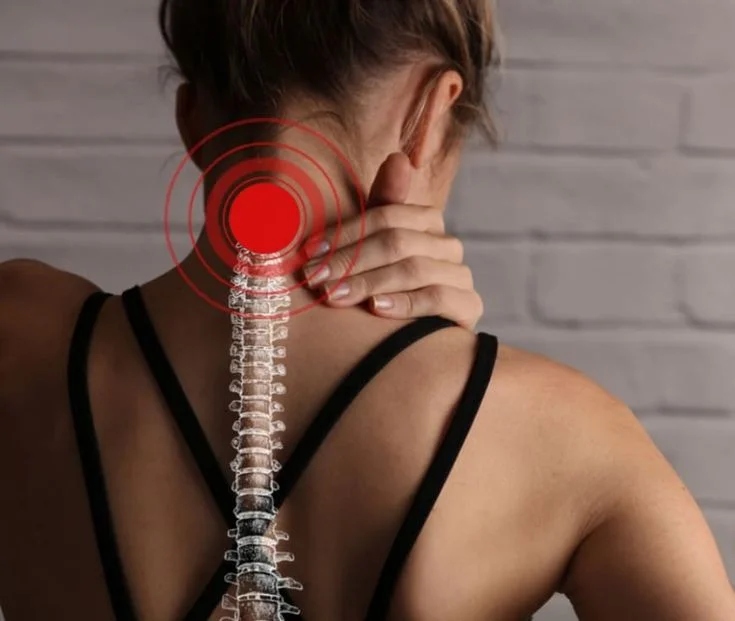

Cervical spondylosis refers to degenerative changes in the cervical spine, including disc degeneration, osteophyte formation, ligament thickening, and facet joint arthritis. Modern physiotherapy cervical spondylosis focuses on multimodal rehabilitation, combining stabilization training, neural mobility work, traction, posture correction, and neuromuscular retraining.
More than 85% of people above 60 years show radiological signs of cervical spondylosis, although symptoms may appear earlier due to sedentary lifestyles and prolonged screen use. (IJHSR)
Read in detail about: What is Cervical Spondylosis? The Truth Behind Chronic Neck Pain
Phase-Wise Physiotherapy Rehabilitation Plan
Phase 1: Pain Reduction and Muscle Activation (Week 1–2)
Goal: To Reduce inflammation, relieve nerve compression, and activate deep stabilizing muscles.
1. Gong’s Cervical Mobilization (Specialized Manual Therapy)
This is a less commonly discussed but highly effective technique used by spine physiotherapists.
Technique
- Patient seated
- Therapist applies sustained glide to cervical vertebra
- Neck gently rotated toward restricted side
Clinical study findings
Gong’s mobilization significantly improved pain scores, cervical range of motion, and functional disability compared with other mobilization methods in cervical spondylosis patients.
Why it works
- restores facet joint glide
- reduces joint stiffness
- improves cervical mechanics
2. Sustained Natural Apophyseal Glide (SNAG)
A Mulligan concept technique.
How it works
- Therapist applies sustained glide to the cervical facet joint
- Patient actively rotates neck during glide
Benefits
- immediate pain reduction
- improved cervical movement
Clinical insight
SNAGs help restore normal joint arthrokinematics and reduce mechanical pain.
3. Cervical Foraminal Opening Exercise
Goal: To Reduce nerve root compression.
Exercise
- Sit upright
- Tilt head away from painful side
- Slightly rotate toward the same side
- Hold 5 seconds
Repeat 10 times.
This position widens the neural foramen, relieving nerve pressure.
4. Deep Cervical Flexor Activation (Craniocervical Flexion)
This is considered the foundation exercise for cervical spondylosis rehabilitation.
How to perform
- Lie on your back
- Slightly tuck your chin (like saying “yes”)
- Hold for 5 seconds
- Repeat 10 times
Clinical insight
Deep cervical flexor training improves cervical stability and reduces disability more effectively than conventional neck strengthening programs. (SpringerLink)
Key benefit
Improves stability of C2–C7 segments and reduces mechanical strain.
5. Isometric Neck Stabilization
Target muscles
- Longus colli
- Longus capitis
- Deep cervical extensors
Exercise method
Place your palm against the forehead and gently resist the head without moving it.
Hold 5–8 seconds
Repeat 10 repetitions
Evidence
Randomized trials show isometric exercises significantly reduce neck pain and disability in cervical spondylosis patients within 4 weeks. (Springer)
6. Scapular Setting Exercise
Many cervical spondylosis patients have upper crossed syndrome, causing neck overload.
Exercise
- Sit upright
- Pull shoulder blades down and back
- Hold 10 seconds
- Repeat 10 times
Why it matters
Improves thoracic posture and reduces cervical load.
Get our Complete Guide to Neck Pain: Causes, Symptoms, Exercises and Treatment
Phase 2: Mobility and Controlled Strengthening (Week 3–6)
Goal: To Restore cervical mobility and improve muscular endurance.
7. Segmental Cervical Rotation Training
Unlike simple neck rotation, this exercise targets segmental control of cervical joints.
Steps
- Maintain chin tuck (Learn How to do Chin Tucks for Neck Pain Relief and Posture Correction)
- Slowly rotate head
- Stop before pain
- Return slowly
Repeat 10 times each side.
Clinical importance
Helps restore normal cervical movement patterns and reduces compensatory motion.
8. Cervical Stabilization Exercise
Research shows stabilization exercises significantly outperform conventional therapy in pain reduction for cervical spondylosis. (Medico Publication)
Exercise method
- Chin tuck
- Slight head lift
- Hold 5 seconds
- Repeat 10 times
This activates deep stabilizing muscles that support cervical vertebrae.
9. Neural Mobilization for Cervical Radiculopathy
For patients with arm pain or numbness.
Median nerve glide example
- Extend arm sideways
- Palm facing upward
- Slowly bend wrist backward
- Tilt head opposite side
Repeat 10 times.
Why it works
Reduces nerve root irritation and improves neural mobility.
10. Upper Limb Neurodynamic Glide (ULNT-1)
Steps
- Arm abducted 90°
- Wrist extended
- Slowly extend elbow
- Side bend neck opposite side
Repeat 10 repetitions.
Studies show neural mobilization combined with physiotherapy significantly improves pain, function, and range of motion in cervical radiculopathy patients.
11. Cervical Nerve Root Sliding Exercise
A specific nerve decompression movement.
Movement
- tilt head toward painful side
- extend elbow on same side
Then reverse.
This alternates nerve tension and relaxation.
12. First Rib Mobilization Exercise
Many cervical spondylosis patients develop elevated first rib syndrome, compressing the brachial plexus.
Exercise
- Sit upright
- Place towel over shoulder
- Pull downward while tilting neck opposite direction
Repeat 10 reps.
Benefit
Reduces nerve tension and shoulder girdle load.
Read about : 15 Common Causes of Neck Pain You Should Know
Phase 3: Functional Rehabilitation (Week 6–12)
Goal: Restore strength, endurance, and spinal mechanics.
13. Cervical Extensor Endurance Training
Many cervical spondylosis patients have weak deep extensors, causing forward head posture.
Exercise
- Lie prone
- Slightly lift head while maintaining chin tuck
- Hold 10 seconds
- Repeat 8–10 times
This improves posterior cervical stability.
14. Quadruped Cervical Stabilization
This exercise retrains cervical muscles during body movement.
Steps
- Start in quadruped position
- Maintain neutral neck
- Lift one arm
- Hold 5 seconds
Repeat 10 times.
Benefit
Enhances sensorimotor control and neck proprioception.
15. Thoracic Mobility Exercises
A stiff thoracic spine forces excessive cervical motion.
Examples
- Thoracic extension over foam roller
- Seated thoracic rotation
Improves overall spine biomechanics.
16. Serratus Anterior Activation
Exercise
Wall slide with resistance band.
Steps
- Forearms on wall
- Slide arms upward
- Maintain chin tuck
Benefit
Improves scapular upward rotation and reduces cervical load.
17. Lower Trapezius Strengthening
Exercise
Prone Y raise.
Steps
- Lie prone
- Lift arms in Y shape
- Hold 5 seconds
Strengthens scapular stabilizers.
18. Deep Neck Proprioception Training
Cervical spondylosis affects joint position sense.
Exercise
Laser pointer training.
Patient wears laser pointer on head and traces targets on wall.
Benefit
Improves neuromuscular control.
Read about: Effective Neck Pain Exercises At Home: A Complete Guide to Relief and Improved Mobility
Advanced Physiotherapy Treatments
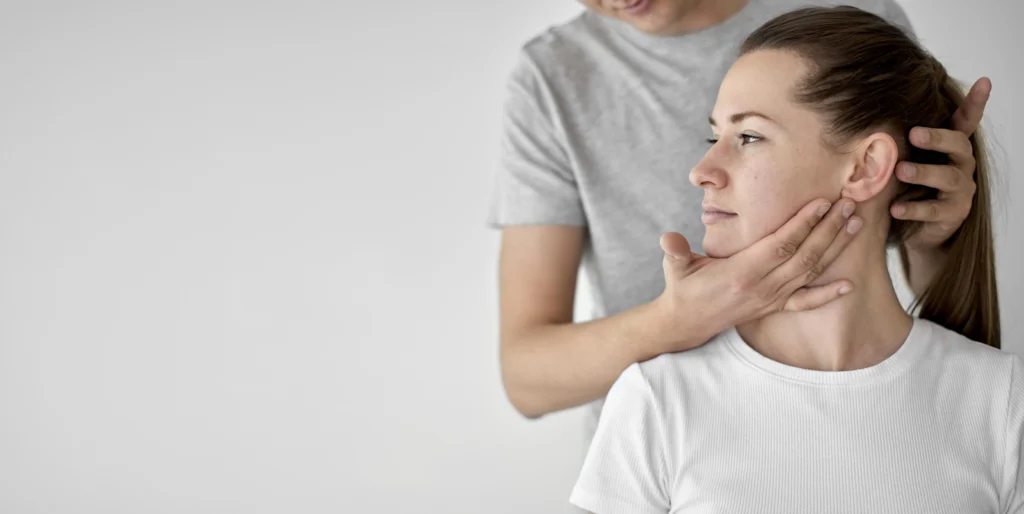
Modern physiotherapy for cervical spondylosis often includes technology-assisted treatments.
1. Cervical Traction Therapy
Traction increases space between vertebrae and reduces nerve compression.
Clinical research shows physiotherapists frequently use traction as part of a multimodal neck pain treatment strategy. (ScienceDirect)
Benefits
- Relieves nerve root compression
- Reduces muscle spasm
- Improves disc hydration
2. Non-Surgical Spinal Decompression
Advanced traction systems gently decompress cervical discs.
Case studies show this therapy can significantly improve pain, mobility, and grip strength in patients with multi-level cervical disc issues. (LWW Journals)
3. Articular Mobilization Therapy
Modern spine physiotherapy includes
- Maitland mobilization
- Mulligan mobilization
- manual facet glides
These restore joint mechanics rather than muscle strength alone.
4. High-Intensity Laser Therapy
Used for
- pain relief
- inflammation reduction
- tissue healing
It stimulates mitochondrial activity and improves circulation.
5. Radiofrequency-Guided Physiotherapy Rehab
Some advanced centers combine physiotherapy with facet joint radiofrequency procedures followed by rehabilitation.
This improves movement after pain reduction.
6. Neuromuscular Electrical Stimulation (NMES)
Stimulates weakened cervical muscles.
Benefits
- improves muscle recruitment
- enhances rehabilitation outcomes
7. Virtual Reality Rehabilitation
New rehabilitation programs use VR to improve
- cervical proprioception
- movement coordination
- posture training
8. Robotic Cervical Rehabilitation
New robotic systems are being tested to guide cervical movement training for patients with spondylosis.
9. Qigong-Based Cervical Exercises
Recent systematic reviews show traditional exercise systems like Qigong can significantly reduce pain and improve cervical mobility in spondylosis patients. (ScienceDirect)
Learn About: The Ultimate Neck Stretch Routine for Desk Workers in 2026
Physiotherapy Advice: What NOT To Do
Many patients worsen cervical spondylosis unknowingly.
Avoid the following.
1. Aggressive Neck Stretching
Deep end-range stretching may compress nerve roots.
1. Excessive Neck Extension Exercises
Extension may narrow the neural foramen and worsen symptoms.
2. Heavy Overhead Lifting
Exercises like
- overhead press
- heavy shrugs
increase cervical compression.
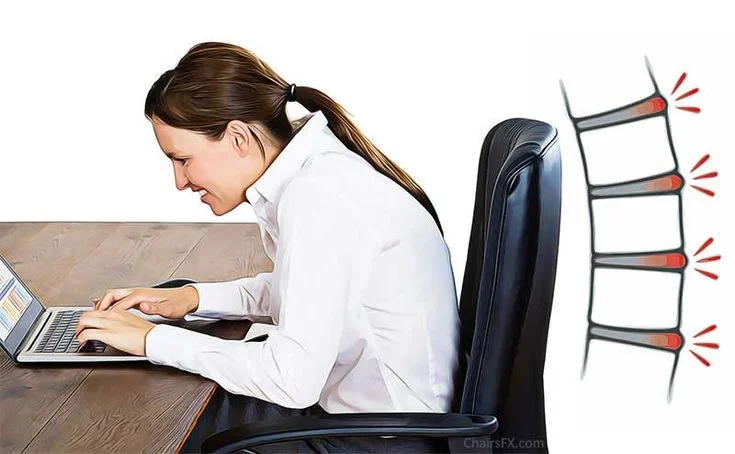
3. Unsupported Laptop Work
Forward head posture increases cervical disc pressure dramatically.
4. Prolonged Mobile Phone Use
The “text neck” posture can increase cervical load by up to 5 times normal stress.
5. Heavy Shoulder Shrugs
This overloads upper trapezius and worsens cervical compression.
6. Sleeping Without Proper Neck Support
Improper pillow height causes overnight cervical strain.
7. High-Velocity Neck Manipulations (Without Evaluation)
Sudden manipulation may worsen disc bulges or instability.
Learn how posture affects neck pain and correction exercises in our article on Simple Posture Correction Exercises for Forward Head Posture
Rare and Lesser-Known Facts About Cervical Spondylosis

1. Most nerve root compression occurs at C5–C7
These segments experience the greatest mechanical stress in cervical spondylosis.
2. Cervical problems often originate from shoulder mechanics
Weak scapular stabilizers increase cervical load.
3. Thoracic stiffness may trigger neck degeneration
Studies show limited thoracic mobility forces the cervical spine to compensate, accelerating degeneration.
4. Cervical spondylosis may cause dizziness
This occurs due to vertebral artery or proprioceptive dysfunction.
5. Eye movement training can reduce neck pain
Cervical muscles coordinate with visual and vestibular systems. Training eye tracking improves neck stability.
6. Neck pain can originate from the first rib
Many cases of “cervical spondylosis pain” are actually rib mobility problems.
7. Weak diaphragm can worsen neck pain
Poor breathing mechanics activate accessory neck muscles.
8. Neck pain may originate from jaw dysfunction
Temporomandibular joint problems can increase cervical muscle tension.
9. Posture correction alone may reduce symptoms by 40%
Many patients improve significantly with posture retraining alone.
Also read: How to Relieve Neck Tightness Without Equipment
Real Clinical Case Example
A 44-year-old patient with multi-level cervical spondylosis underwent spinal decompression therapy combined with physiotherapy exercises.
Results after one month
- Pain reduced from 8/10 to 0/10
- Cervical mobility normalized
- Grip strength increased significantly
- Cervical curvature improved. (LWW Journals)
This highlights the importance of multimodal rehabilitation.
Ideal Weekly Physiotherapy Program
Example rehabilitation schedule.
Week 1–2
- Deep cervical flexor training
- Isometric exercises
- Posture correction
- Gentle traction
Week 3–6
- Stabilization exercises
- Neural mobilization
- Thoracic mobility
Week 6–12
- Functional strengthening
- proprioception training
- endurance exercises
Clinical Insight
In cervical spondylosis, the real issue is often joint stiffness and nerve compression rather than just muscle weakness.
Therefore treatment must include:
- joint mobilization
- neural mobilization
- scapular mechanics correction
Simply prescribing neck strengthening exercises rarely solves the problem.
Physio Prescription
Daily routine
- 10 minutes deep cervical flexor training
- 10 minutes scapular strengthening
- 5 minutes thoracic mobility
- posture correction every hour
Red Flags
Seek medical evaluation if you experience
- progressive arm weakness
- severe numbness
- loss of balance
- difficulty walking
These may indicate spinal cord compression.
Common Myth
Myth 1
Cervical spondylosis only affects elderly people.
Reality
Due to smartphone and laptop use, the condition is increasingly seen in people in their 20s and 30s.
Myth 2
Cervical spondylosis always needs surgery.
Reality
More than 80–90% of patients improve with physiotherapy and conservative treatment.
Frequently Asked Questions
Yes. Physiotherapy helps reduce pain, improve neck mobility, strengthen supporting muscles, and relieve nerve compression in cervical spondylosis.
Common treatments include cervical mobilization, traction therapy, posture correction, neural mobilization, and strengthening exercises for the neck and shoulders.
Deep neck flexor strengthening, scapular stabilization exercises, neural gliding exercises, and controlled cervical mobility exercises are commonly recommended.
Most patients notice improvement within 4 to 6 weeks with regular physiotherapy sessions and consistent home exercise routines.
Yes. Cervical traction can help relieve pressure on spinal nerves, reduce pain, and improve neck movement when used under physiotherapy guidance.
Yes. Strengthening the neck and upper back muscles, improving posture, and maintaining spinal mobility can slow disease progression.
Most physiotherapists recommend performing neck and posture exercises daily or at least 4–5 times per week for best results.
Patients should avoid sudden neck jerks, heavy lifting on the shoulders, excessive neck extension, and poor sitting posture.
Final Word
Cervical spondylosis is not simply an aging problem. It is often a postural and biomechanical disorder that responds well to targeted physiotherapy.
With the right combination of stabilization training, traction therapy, posture correction, and neuromuscular rehabilitation, most patients can significantly reduce pain and restore neck function without surgery.
Stay tuned with us for more health related topics.
Follow us on LinkedIn and Instagram for more.
More Read


Medical Disclaimer!
This article has been reviewed and written under the guidance of our Head Physiotherapist, Dr. Kruti Raj (PT, MUHS,CPT,CMPT). The information shared is intended for educational purposes only and should not be considered a substitute for personalized medical advice, diagnosis, or treatment.
Please consult us or any other qualified healthcare professional before beginning any exercise program, especially if you are experiencing pain, recovering from injury, or managing a medical condition.


