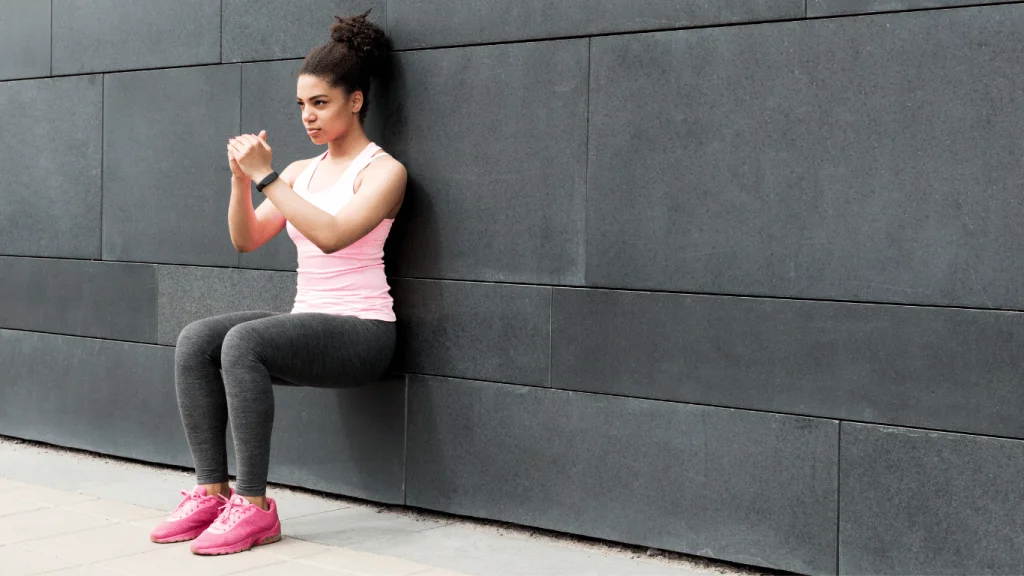

Strong knees are essential for everyday activities, from walking and climbing stairs to running and playing sports, yet knee weakness and pain affect millions worldwide. The good news is that targeted strength training can make a meaningful difference. Among the most effective and accessible exercises physiotherapists recommend is the wall slides for knee joint strength, an exercise that builds strength without high impact.
With evidence-supported practice and proper technique, wall slides can help increase quadriceps strength, improve joint stability, and enhance functional movement.
Understanding Wall Slides and Knee Strength
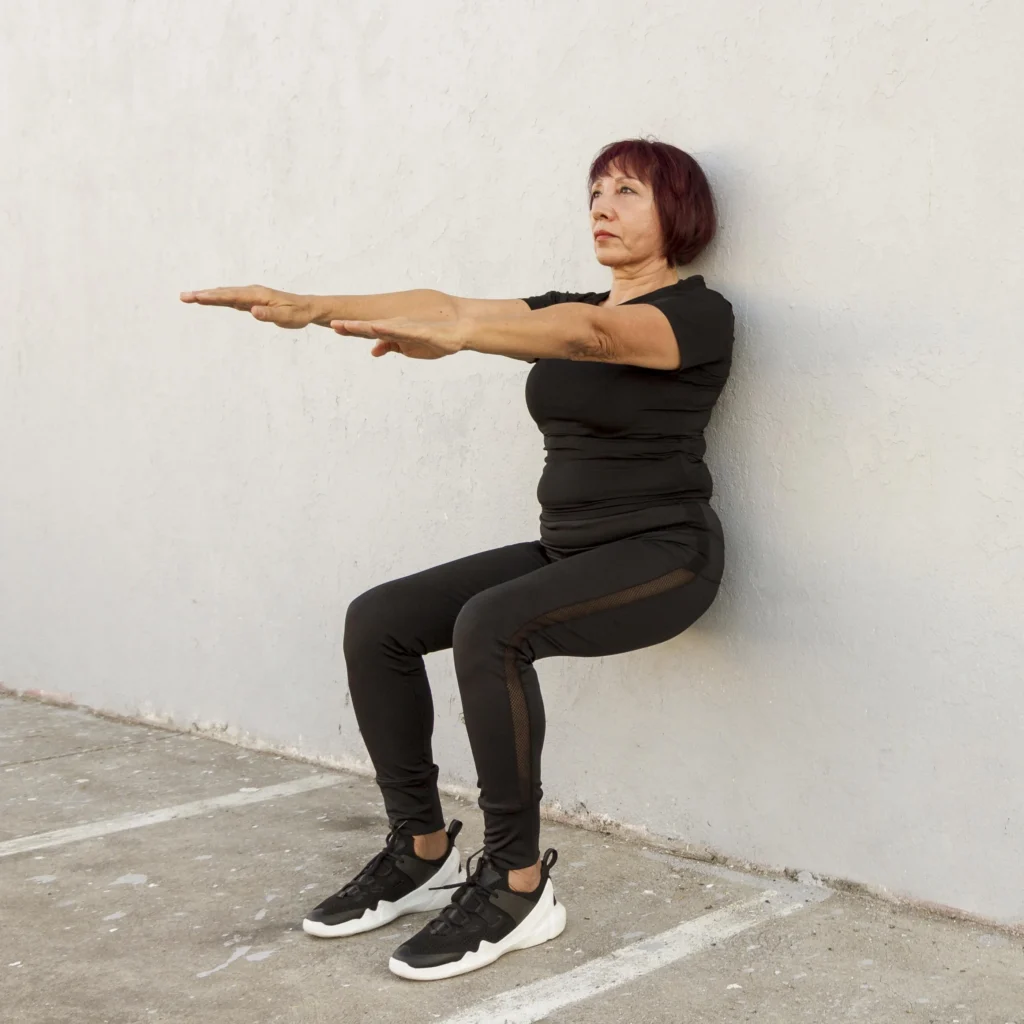
A wall slide is a closed-chain exercise, meaning your feet remain fixed on the ground while your body moves against a support (the wall).
This type of exercise enhances stability and reduces joint shear forces, making it ideal for strengthening the quadriceps (front thigh muscles), glutes, and hamstrings, all of which support knee function.
Unlike deep squats or weighted exercises, wall slides focus on controlled bodyweight movement that builds strength gradually without overloading the knee joint.
For people with knee discomfort or early stages of rehabilitation, this makes wall slides an ideal home exercise or early-stage strengthening movement.
Also Read: Best Knee Strengthening Exercises for Beginners to Reduce Knee Pain
Why Wall Slides Matter for Knee Health
1. Builds Quadriceps Strength Without Stressing the Joint
Quadriceps weakness is a common contributor to knee pain, especially in conditions like osteoarthritis or patellofemoral pain syndrome.
Wall slides engage quads while keeping knee flexion shallow enough to avoid irritation. By strengthening these muscles, the exercise reduces pressure on the kneecap and improves shock absorption.
2. Improves Movement Control and Balance
By integrating the lower body and core, wall slides enhance neuromuscular coordination, helping the body move with more confidence and less compensatory patterning.
This improves balance and reduces the risk of knee strain during daily activities.
3. Encourages Safer Functional Strengthening
Closed-chain exercises like wall slides are known to improve joint congruity and reduce unnecessary shear forces compared with open-chain movements.
This means you can build strength without risky movements that may aggravate existing knee issues.
4. Enhances Everyday Functional Mobility
Because wall slides mimic controlled knee bending in a safe context, they help with movement patterns used in everyday tasks such as sitting down, standing up, and navigating stairs, making daily life feel easier.
Also Read: Cat Cow Stretch Benefits for Back Pain- A Complete Guide
Step-by-Step Technique: How to Do Wall Slides Properly
Wall slides might look simple, but technique determines effectiveness and safety.
Step 1: Set Up
Stand with your back against a flat wall, feet shoulder-width apart, and about 12–18 inches away from the wall. Your feet should be parallel and pointing forward.
Step 2: Engagement and Alignment
Before bending your knees, draw your belly button gently toward your spine to engage your core and maintain neutral lumbar posture. Keep your shoulders relaxed.
Step 3: Initiate the Movement
Slowly slide your back down the wall by bending your knees. Aim for a knee bend of about 30–45 degrees initially. Avoid letting your knees extend past your toes, as this increases joint stress.
Step 4: The Hold
Hold the lowered position for 5–10 seconds. Focus on slow, steady breathing, inhaling on the descent and exhaling as you gently push back up.
Step 5: Return to Start
With control, slide back up the wall until you return to standing. Perform 8–12 controlled repetitions per set.
Gradually, as strength and comfort improve, you can increase the depth of the bend and the hold time.
Also Read: Ultimate Guide to Home Physiotherapy for Back Pain
Common Mistakes and How to Fix Them
Even a simple exercise can become less effective or risky if performed incorrectly. Here are key mistakes to avoid:
1. Bending Too Deeply Too Soon
Deep knee bends early in training place excess load on joint structures. Instead, limit your range to where there is no increase in pain and progress gradually.
2. Knees Going Past Toes
Ensuring that your knees stay aligned with your feet prevents undue stress on the knee cap and ligaments. Take small steps backward if your knees move forward too much.
3. Improper Foot Placement
Feet too close or too far from the wall alters mechanics. Aim for shoulder-width feet and adjust slightly to find a comfortable alignment.
4. Holding Breath
Holding breath increases tension. Coordinate your breath with movement for relaxation and better muscle engagement.
By correcting these errors, wall slides become more effective and safer.
Variations for Beginners and Advanced Users
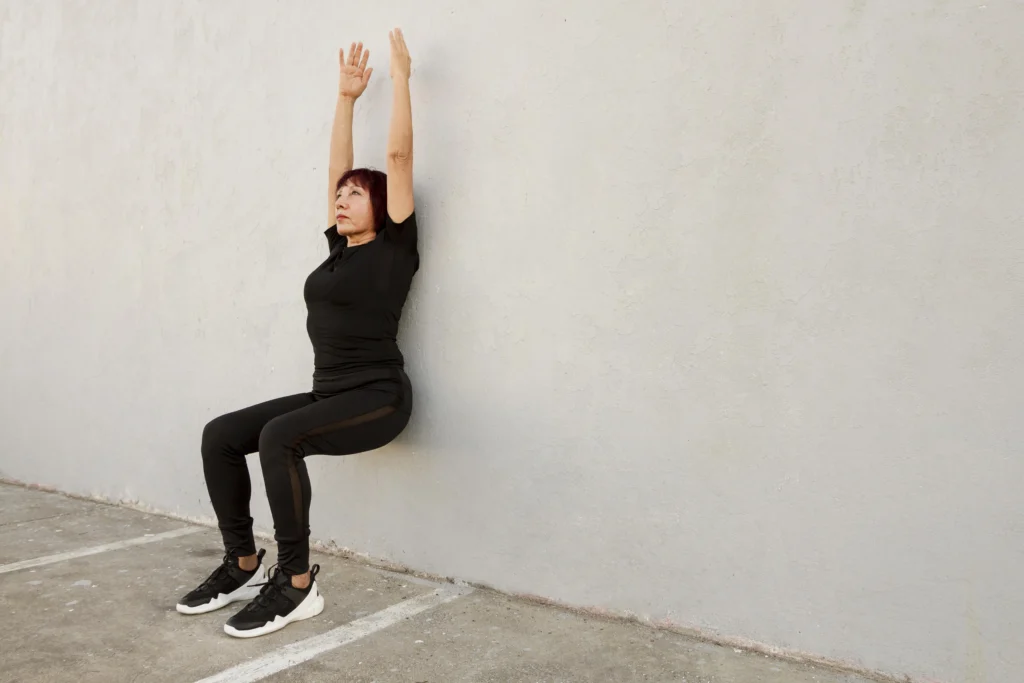
Wall slides can be modified to suit different levels of strength and mobility:
1. Assisted Wall Slides
For beginners or people with knee pain, perform wall slides with a stability ball between your back and the wall for added comfort and guidance.
2. Partial Range Wall Slides
If full movement is painful or unknown, start with very shallow knee bends and gradually increase depth over weeks.
3. Hold Progressions
Once basic repetitions become easy, increase the hold time at the bottom position from 5 to 10 or 15 seconds to build endurance.
4. Combined Upper Body Engagement
Extend your arms forward or overhead while performing wall slides to integrate core and upper body muscles, improving overall posture and movement coordination.
5. Single-Leg Wall Slide
For advanced progression, once pain-free basic movement is achieved, lifting one foot slightly while sliding increases unilateral strength and balance challenge.
These progressions make wall slides versatile for beginners and stronger individuals alike.
Also Read: Bird Dog Exercises for Back Pain Relief and Core Strengthening
Emerging Research and Rehabilitation Insights
Although fundamental, wall slides are often included in clinical knee rehabilitation protocols due to their safety and functional benefits.
Closed kinetic chain exercises (where your body moves against a stable contact like a wall) are known to improve joint compression in a controlled way, enhancing proprioception and reducing inappropriate knee shear forces.
Physiotherapists often pair wall slides with other quadriceps activation exercises (like straight-leg raises and heel slides) to maximize strength gains and joint range.
These combined strategies are shown to improve overall knee pain and function in chronic knee conditions and early osteoarthritis.
Early research also suggests that integrating balance and neuromuscular control exercises alongside strength work yields better outcomes than simple strength training alone, particularly in populations with knee instability or previous injury.
Also Read: Knee-to-Chest Stretch for Bach Pain Relief and Spinal Flexibility- A Complete Guide
Daily Integration: When and How Often to Do Wall Slides
For most people, performing wall slides 3–5 times per week is ideal. Start with one set per session and work up to 2–3 sets as strength and comfort increase.
As always, consistency is more valuable than intensity, small, regular sessions contribute significantly to long-term improvement.
Wall slides can be integrated into:
- Warm-up routines before walking or activity
- Cool-downs after strength training
- Home physiotherapy programs for knee rehabilitation
Also Read: Mastering the Art of Good Posture: Quick Tips for a Healthier You
Lesser-Known Facts and Practical Tips
1. Wall Slides Enhance Proprioception
Proprioception, the body’s awareness of position, plays a huge role in knee stabilization. Closed-chain exercises like wall slides stimulate proprioceptive receptors, improving joint control.
2. Simpler Variations Can Be More Effective
For some individuals, especially early in recovery, performing a shallower version with focus on quality and breath yields better results than deep bends done poorly.
3. Mental Engagement Matters
Stay mindful and focus on the muscles contracting throughout the movement. This mind-muscle connection improves activation and long-term strength gains.
4. Wall slides help train knee tracking
Proper knee tracking during sliding teaches the muscles to coordinate movement, reducing patellofemoral pain often associated with poor alignment.
Also Read: This 7 day knee strengthening exercise plan works like Miracle
Frequently Asked Questions (FAQ)
1. Are wall slides safe for knee pain relief?
Yes, when done with proper alignment, wall slides are widely used in physiotherapy to strengthen muscles around the knee and improve functional strength. Start shallow and progress gradually.
2. How deep should I bend my knees?
Aim for about 30–45 degrees initially. Going deeper adds strain and may aggravate pain.
3. How many times per week should I do wall slides?
Perform wall slides 3–5 times weekly, with 8–12 repetitions per set, working up to 2–3 sets over time.
4. Do wall slides help with knee arthritis?
They strengthen supporting muscles and can improve functional mobility in osteoarthritis, especially when integrated into a full exercise program.
5. Are wall slides good for beginners?
Absolutely. They are low-impact and can be modified with partial range, assisted versions, or holds to suit beginners.
6. Should wall slides be painful?
Mild muscle engagement is expected, but sharp or increasing knee pain indicates technique adjustment or professional consultation is needed.
7. Can I pair wall slides with other exercises?
Yes. Wall slides work well alongside straight-leg raises, heel slides, mini squats, and balance drills for comprehensive knee strengthening.
8. Can wall slides improve balance?
Yes. Because they require coordinated muscle engagement and controlled knee flexion, they enhance neuromuscular stability.
9. Do wall slides require equipment?
No equipment is needed, though a stability ball can provide comfort for some users.
10. Who should avoid wall slides?
People in acute post-surgical recovery or with severe knee instability should consult a physiotherapist before starting.
Also Read: The Diagnosis That Changed Everything: Parent’s Life With Cerebral Palsy
From My Physiotherapy Practice to You
In my experience, wall slides are often underestimated because they look simple.
Yet, when performed with mindful technique and consistency, they become one of the most effective exercises for building knee stability, improving functional movement, reducing pain, and preventing future injury.
Start with smaller depths, controlled movement, and focus on daily consistency.
Over time, you’ll notice that the knee feels more capable, balanced, and ready for life’s movements, from climbing stairs to walking comfortably without fear.
Remember, progression matters more than intensity. Be patient, stay consistent, and enjoy each small gain because that is what builds lasting strength.
Medical Disclaimer!
This article has been reviewed and written under the guidance of our Head Physiotherapist, Dr. Kruti Raj (PT, MUHS,CPT,CMPT). The information shared is intended for educational purposes only and should not be considered a substitute for personalized medical advice, diagnosis, or treatment.
Please consult us or any other qualified healthcare professional before beginning any exercise program, especially if you are experiencing pain, recovering from injury, or managing a medical condition.
Stay tuned with us for more health related topics.