


If you’ve been getting headaches and someone said “it’s just stress,” that’s not helpful, especially when you need to know how to relieve stress headache instantly.
Because what you feel is real.
The tightness. The heaviness.
The dull pressure that sits behind your eyes or wraps around your head.
From a physiotherapy point of view, stress headaches are not just mental.
They are physical patterns that build slowly through your day.
Most people I see in clinic have a similar pattern:
- long sitting hours
- shallow breathing
- tight neck and shoulders
- very little movement
Over time, your body stops resetting itself.
That is when headaches start showing up more often.
This 7-day reset is not a quick fix. It is a way to break that cycle.
Quick Answer
A 7-day reset plan for stress-related headaches focuses on reducing muscle tension, improving posture, and calming the nervous system through simple daily habits.
- Practice slow breathing to relax the body
- Reduce neck strain with gentle exercises
- Take regular movement breaks during the day
- Improve posture without forcing stiffness
- Limit screen time and eye strain
Consistency matters more than intensity. Small daily changes can significantly reduce headache frequency and severity.
Key Takeaways
- Stress headaches are often caused by muscle tension, posture, and breathing patterns
- Jaw clenching and screen habits are common hidden triggers
- Doing more exercises is not always better; consistency is more important
- Small daily resets can prevent headaches before they start
- Movement throughout the day is more effective than perfect posture
What actually causes stress-related headaches
Stress headaches are rarely just stress alone.
What happens inside your body is more layered:
- Neck muscles stay slightly contracted all day
- Jaw muscles remain tight without you noticing
- Breathing shifts from deep to shallow
- Nervous system stays in alert mode
All of this builds pressure.
A recent review highlights that tension headaches are strongly linked to muscle dysfunction and nervous system changes, not just emotional stress (Falla et al., 2018)
Another important point is breathing.
People with headaches often breathe using chest muscles, which increases neck strain (Courtney, 2009)
So if you only treat the “stress,” you miss the real drivers.
Quick self-test: Is your headache stress-related?
Before following any plan, it helps to know if you are on the right track.
Ask yourself:
- Does your headache feel like a tight band around your head?
- Does it start after long sitting or screen time?
- Do you feel neck or shoulder tightness along with it?
- Does it improve slightly after movement or rest?
If you said yes to most of these, it is very likely stress-related or tension-type.
If your headache is one-sided, throbbing, or comes with nausea, this plan may still help, but you may need a different approach as well.
Before you begin this plan
Keep these three things in mind:
- Do not force anything
- Small changes matter more than intense routines
- Consistency will beat motivation every time
What you should feel during this 7-day plan to relieve stress headache
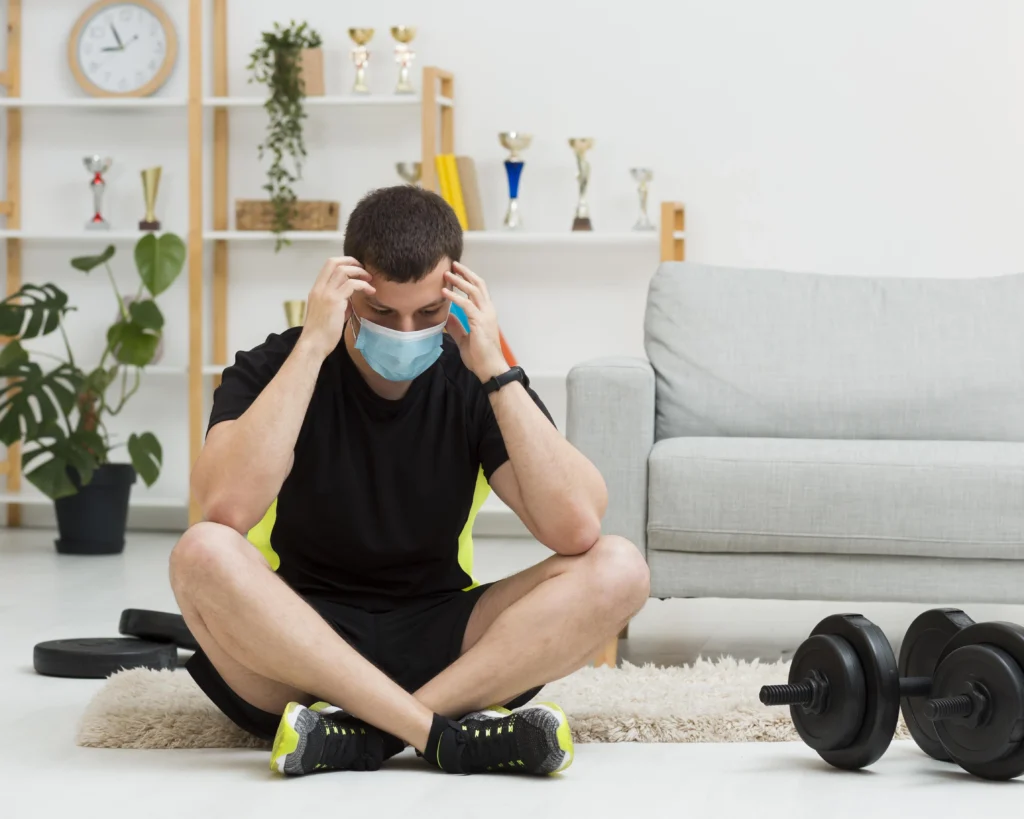
This is important because many people stop too early.
During the first few days, you may notice:
- slight soreness in neck muscles
- awareness of tension you never noticed before
- small reduction in headache intensity
By day 5 to 7:
- headaches may feel less frequent
- recovery becomes faster
- your body feels less “tight” overall
If pain sharply increases, stop and reassess.
Below is a 7-day reset program about how to relieve stress headache instantly:
DAY 1: Awareness before correction
Most people try to fix headaches immediately.
But the first step is noticing what your body is doing.
What to check today
Pause three times during your day and ask:
- Are my shoulders lifted?
- Is my jaw tight?
- Am I breathing slowly or holding my breath?
You will be surprised how often tension is present without pain.
Simple reset
- Sit comfortably
- Inhale through your nose for 4 seconds
- Exhale slowly for 6 seconds
- Relax your jaw consciously
Repeat for one minute
Slow breathing helps shift your body out of stress mode (Jerath et al., 2015)
DAY 2: Reduce load on your neck
Your neck is not weak. It is overworked.
Forward head posture increases the load on your cervical spine significantly, which contributes to headaches
(Nejati et al., 2015)
What to do
- Lie down and perform a gentle chin nod
- Think of saying a soft “yes”
- Hold for 5 seconds
- Repeat 8 to 10 times
Do not push your head back. Keep it subtle.
What most people get wrong
They try aggressive stretching. That often irritates the area more.
DAY 3: Free your shoulders
Your upper trapezius muscles are usually overactive, not weak.
They compensate for poor posture and breathing patterns.
Simple routine
- Shoulder rolls slowly 10 times
- Let your arms swing freely
- Take a 10-minute walk
Why this helps
Movement improves circulation and reduces sustained muscle contraction, which is a common trigger for headaches
Exercise-based therapy has been shown to reduce headache frequency and intensity (Luedtke et al., 2016)
DAY 4: Fix your breathing pattern
This is where many people notice a real shift.
Quick self-check
Place one hand on your chest and one on your stomach
If your chest moves more, you are overusing accessory muscles
Breathing reset
- Inhale and let your stomach expand
- Exhale slowly
- Keep shoulders relaxed
Practice for 5 minutes
Breathing patterns influence both muscle tension and pain perception (Courtney, 2009)
What to Do During an Active Headache Episode
When the headache is already there, keep it simple.
Do this instead of pushing through:
- Sit in a quiet place
- Slow your breathing
- Support your neck
- Avoid screens for some time
You can also try:
- gentle shoulder movement
- a short walk if tolerable
Avoid:
- aggressive stretching
- intense workouts
The goal is to calm the system, not fight the pain.
DAY 5: Stop sitting the same way all day
Your body does not like stillness for long periods.
It is not about perfect posture. It is about changing posture often.
What to do
- Change position every 30 to 40 minutes
- Stand for short intervals
- Stretch your arms overhead gently
Important insight
The best posture is the next posture.
Sustained positions increase muscle fatigue and can trigger headaches (Côté et al., 2019)
Your Work Setup Matters More Than You Think
You do not need a perfect ergonomic setup.
Just fix these basics:
- Screen at eye level
- Back supported
- Feet flat on the ground
- Keyboard close to your body
And most importantly:
Do not stay in one position too long.
Even a perfect setup will cause problems if you stay still.
DAY 6: Calm your nervous system
Even if your muscles relax, your brain may still stay in a high-alert state.
This is called central sensitization, where the body becomes more sensitive to pain signals (Woolf, 2011)
Body scan practice
- Lie down comfortably
- Focus on each part of your body from feet to head
- Relax each area consciously
This takes about 5 minutes
DAY 7: Build your routine
Now you combine everything.
Simple daily structure
Morning
- Breathing practice
- Neck activation
During work
- Movement breaks
- Shoulder relaxation
Evening
- Body scan
- Reduce screen exposure
Ask yourself
- When do my headaches usually start?
- What was I doing before that?
This awareness is what helps you prevent headaches long term.
A Simple 10-Minute Daily Reset Routine
If you do not want to follow all steps, just do this.
- 2 minutes slow breathing
- 2 minutes chin nods
- 2 minutes shoulder rolls
- 2 minutes walking
- 2 minutes body scan
Keep it easy.
No force. No rush.
Done daily, this alone can reduce headache frequency.
Things Most People Don’t Realize
Jaw tension plays a bigger role than you think
Most people never connect their jaw to their headache.
But in clinic, this is one of the first things I check.
You might not notice it, but habits like:
- lightly clenching your teeth
- pressing your tongue to the roof of your mouth
- grinding during stress
keep your jaw muscles constantly active.
These muscles are closely connected to your neck.
When they stay tight, they increase tension around the base of your skull.
That tension can travel upward and feel like a headache.
Clenching has been strongly linked to both headaches and neck pain (Glaros et al., 2007)
Simple check:
Right now, see if your teeth are touching.
If they are, gently let your jaw drop and relax your tongue.
That small change alone can reduce background tension.
More exercises are not always better
This is a very common mistake.
People feel a headache coming and think:
“I need to stretch more” or “I need more exercises.”
So they:
- stretch aggressively
- repeat multiple routines
- try to fix everything in one go
And then the headache actually gets worse.
Why?
Because irritated muscles do not respond well to overload.
They need the right amount of input, not more input.
Think of it this way:
Your body is already overwhelmed.
Adding more intensity does not calm it down.
What works better:
- fewer exercises
- done slowly
- done consistently
Even 5 to 10 minutes done properly every day is more effective than 30 minutes done once in a while to relieve stress headache.
Screens are a silent trigger
This is one of the biggest hidden causes today.
It is not just screen time. It is how you use screens.
When you are on your phone or laptop:
- your head moves slightly forward
- your shoulders round
- your eyes focus without breaks
- your blinking reduces
All of this builds tension without you realizing it.
Digital eye strain and prolonged screen use are linked to headaches and muscle fatigue (Rosenfield, 2016)
What most people miss:
Even if your posture looks okay, staying still for long periods is enough to trigger symptoms.
Simple fix:
- look away from screen every 20 to 30 minutes
- move your neck and shoulders
- blink consciously
You do not need a perfect setup. You just need regular breaks.
One more thing most people overlook
Your headache often starts before you feel it.
You might notice:
- neck stiffness in the morning
- slight heaviness by afternoon
- reduced focus
These are early signals.
If you respond at this stage with:
- movement
- breathing
- short breaks
You can often prevent the full headache from developing.
Ignoring these early signs is what keeps the cycle going.
Lesser-Known home remedies for stress headache relief
In my practice, I often see that small, overlooked habits make a big difference.
Here are 5 simple but lesser-known home remedies for stress headache relief:
1. Jaw Relaxation Reset
Most people unknowingly clench their jaw during stress.
Keep your teeth slightly apart, tongue resting on the roof of your mouth, and relax your jaw for 2-3 minutes.
This reduces tension in the temples and can ease headache quickly.
2. Tongue-to-Palate Breathing
Place your tongue gently on the roof of your mouth and take slow nasal breaths.
This helps relax deep neck muscles and calms the nervous system.
3. Cold Water Face Splash
Splash cold water on your face or hold a cool cloth over your eyes.
It activates a calming reflex and reduces headache intensity.
4. Hand Pressure Point (Between Thumb & Index Finger)
Gently press the web space between your thumb and index finger for 30-60 seconds.
Many patients feel reduced headache intensity with this simple technique.
5. Shoulder Drop Release
Lift your shoulders up toward your ears, then drop them completely.
Repeat 10 times.
This releases built-up tension in the upper traps, a major headache trigger.
Physio Insight:
These remedies work best when your headache is driven by muscle tension and stress, which is the most common type I see in clinic.
Common Mistakes That Keep Headaches Coming Back
These are things I see almost every day:
- Jumping into stretches when the muscle is already irritated
- Sitting “perfectly straight” and holding it for hours
- Ignoring early signs like neck tightness
- Using only painkillers without changing habits
- Doing exercises for a few days and then stopping
Fixing these alone can make a big difference.
Small Lifestyle Changes That Helps Relieve Stress Headache
These are simple, but powerful:
- Drink enough water
- Do not skip meals
- Reduce late-night screen exposure
- Get consistent sleep timing
- Step outside for sunlight daily
None of these alone will fix headaches.
But together, they reduce the load on your system.
When you should not ignore your headache
Seek professional help if you notice:
- sudden severe headache
- dizziness or blurred vision
- headache after injury
When This Plan Works Best and When It Doesn’t
This plan works well for:
- tension-type headaches
- posture-related headaches
- stress-induced headaches
It may not be enough for:
- migraines with strong symptoms
- headaches due to medical conditions
- post-injury headaches
In those cases, this can still support recovery, but you may need additional care.
Final thoughts
This plan relieve stress headache is not about eliminating headaches instantly.
It is about changing the pattern that creates them.
When you improve:
- how you sit
- how you breathe
- how often you move
You reduce the load on your body.
And that is what brings real, lasting relief.
Once you know how to relieve stress headache instantly, you can stop the pain before it takes over your day.
Frequently Asked Questions
1. Can stress alone cause headaches?
Not directly. Stress leads to muscle tension, poor posture, and shallow breathing, which together trigger headaches.
2. How quickly can this 7-day plan work?
Some people feel relief within a few days, but consistent practice is needed for lasting results.
3. Is it okay to take painkillers?
Painkillers may help temporarily, but they do not address the root cause of stress-related headaches.
4. Can poor posture really cause headaches?
Yes, especially forward head posture, which increases strain on neck muscles.
5. Are breathing exercises actually effective?
Yes, they help calm the nervous system and reduce muscle tension.
6. What is the biggest mistake people make?
Doing too many exercises instead of focusing on small, consistent habits.
7. When should I see a physiotherapist?
If headaches persist for more than two weeks or worsen over time.
Stay tuned with us for more health related topics.
Follow us on LinkedIn and Instagram for more.
More Read


Medical Disclaimer!
This article has been reviewed and written under the guidance of our Head Physiotherapist, Dr. Kruti Raj (PT, MUHS,CPT,CMPT). The information shared is intended for educational purposes only and should not be considered a substitute for personalized medical advice, diagnosis, or treatment.
Please consult us or any other qualified healthcare professional before beginning any exercise program, especially if you are experiencing pain, recovering from injury, or managing a medical condition.


