


Safe core exercises after delivery can help rebuild abdominal strength, improve posture, and support postpartum recovery gradually.
You finally get a moment to stand up after feeding the baby and suddenly your lower back aches.
You cough and feel pressure down there.
You try getting out of bed and your stomach feels weak, almost disconnected.
Nobody really talks about these moments enough.
Most mothers expect sleepless nights after delivery.
What surprises them is how unfamiliar their own body feels.
Even women who exercised throughout pregnancy often say the same thing during physiotherapy sessions:
“My core just doesn’t feel like mine anymore.”
And honestly, that feeling is valid.
Pregnancy changes the abdominal wall, breathing mechanics, pelvic floor muscles, posture, rib cage movement, and even the way pressure moves through the body.
Delivery adds another layer of recovery, whether vaginal or C-section.
This is why postpartum core recovery is not about rushing into crunches or “getting your abs back.”
It is about rebuilding support from the inside out.
Quick Answer
Safe core exercises after delivery should begin with gentle breathing, pelvic floor awareness, walking, and deep core activation instead of intense ab workouts. Most mothers can start light rehabilitation exercises within days after birth if medically cleared, while progressive strengthening is introduced gradually over weeks and months depending on symptoms, healing, and delivery type.
The safest postpartum core recovery focuses on breathing mechanics, pressure management, pelvic floor health, and functional strength for daily motherhood activities like lifting, feeding, walking, and carrying the baby.
As a pelvic health physiotherapist, I often tell mothers this:
Your first postpartum core exercise is not a plank.
It is learning how to breathe normally again.
Recent evidence also supports early guided postpartum rehabilitation instead of waiting months to move. (ScienceDirect)
Let’s talk honestly about what safe core recovery after delivery actually looks like, what timelines are realistic, and which exercises truly help instead of making symptoms worse.
Key Takeaways
- Postpartum core recovery starts with breathing and pelvic floor coordination, not crunches.
- Walking, diaphragmatic breathing, heel slides, and glute bridges are among the safest early postpartum exercises.
- Many women return to workouts too quickly and ignore symptoms like leaking, pelvic heaviness, or abdominal doming.
- Core recovery timelines differ for every mother depending on delivery type, healing, sleep, and symptoms.
- C-section recovery requires additional attention to scar healing, abdominal loading, and movement patterns.
- Diastasis recti does not always need to fully close for the core to function well.
- Pelvic floor physiotherapy can help with leaking, prolapse symptoms, back pain, and postpartum weakness.
- Safe postpartum rehabilitation focuses on function, pressure management, and long-term strength instead of “bouncing back.”
Why Your Core Feels Weak After Delivery
Many women assume their abdominal muscles simply became “loose” during pregnancy.
The reality is more complex.
Your core is not just the six-pack muscles. It includes:
- the diaphragm
- deep abdominal muscles
- pelvic floor muscles
- lower back stabilizers
- connective tissue around the abdomen
During pregnancy, these structures stretch and adapt for months.
Your rib cage expands.
Your breathing pattern changes.
The linea alba, which is the tissue between the abdominal muscles, becomes thinner.
The pelvic floor handles increasing pressure every week.
Then delivery happens.
After birth, the body does not instantly reset at the six-week mark, even though social media often makes it look that way.
Connective tissue healing may continue for many months postpartum.
That is why some mothers feel okay initially but suddenly notice leaking, heaviness, or back pain when they start exercising aggressively later.
One Thing Most Mothers Never Expect
A lot of postpartum discomfort shows up during ordinary tasks, not workouts.
It happens while:
- lifting the baby carrier into the car
- standing at the kitchen counter
- rocking the baby at 3 AM
- carrying the baby on one hip
- getting up quickly from bed
- pushing a stroller uphill
- holding your breath while picking up laundry
Most postpartum strain comes from repetitive daily movements combined with poor pressure management.
Not from gym exercises.
That is why postpartum rehab should prepare mothers for real life first.
Safe Core Exercise Timeline After Delivery
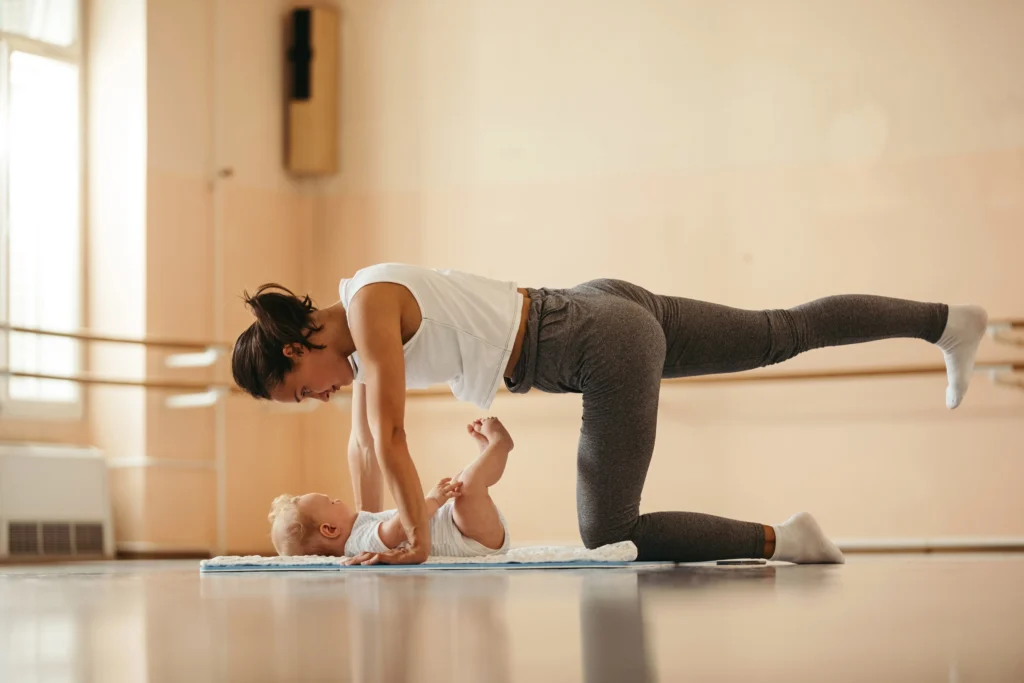
Every mother heals differently.
A woman with a smooth vaginal delivery may recover faster than someone with a difficult forceps delivery, severe tearing, or C-section complications.
These timelines are general physiotherapy guidelines, not strict rules.
Symptoms matter more than the calendar.
First 0 To 2 Weeks After Delivery
Main Goal: Recovery, Breathing, And Gentle Movement
This phase is about healing.
Not shrinking your stomach.
Not burning calories.
Not “bouncing back.”
Your body has just gone through one of the biggest physical events possible.
Some mothers feel emotional seeing how weak their body feels during this stage.
Even rolling over in bed can feel surprisingly difficult.
That weakness is common.
Safe Exercises During This Stage
Diaphragmatic Breathing
This sounds simple but it matters more than most women realize.
Place one hand on your ribs and inhale slowly through the nose.
Let the rib cage expand sideways.
Exhale gently without forcing the stomach inward.
Many postpartum women unknowingly hold tension in their upper chest and neck while breathing.
Good breathing improves:
- pelvic floor coordination
- abdominal pressure management
- nervous system regulation
- rib cage mobility
Gentle Pelvic Floor Awareness
Not every woman should start aggressive Kegels immediately.
Some pelvic floors are actually tight and overactive after delivery.
A pelvic floor that cannot relax properly may contribute to:
- pelvic pain
- constipation
- heaviness
- painful intercourse
This is something many online postpartum fitness programs completely ignore.
Walking Around The House
Short walks improve circulation and reduce stiffness.
Walking is underrated postpartum rehab.
It restores natural trunk rotation, breathing rhythm, and hip movement.
What To Avoid In Early Recovery
Avoid:
- crunches
- sit-ups
- intense planks
- jumping workouts
- heavy lifting
- breath-holding exercises
A lot of mothers feel pressure to “start getting fit again” within days because of social media transformation videos.
Unfortunately, some women worsen prolapse symptoms or abdominal doming by returning too aggressively.
Weeks 2 To 6 Postpartum
Main Goal: Reconnect Deep Core Muscles
This stage is less about intensity and more about coordination.
Many women say:
“My stomach still feels numb or disconnected.”
Especially after C-sections.
That feeling is real.
Surgery affects nerves, fascia, and muscle activation around the abdomen.
Safe Exercises During This Stage
Heel Slides
Lie on your back with knees bent.
Slowly slide one heel away while gently exhaling.
This helps retrain the deep abdominal system without excessive strain.
Pelvic Tilts
A small movement, but extremely useful.
Pelvic tilts improve spinal mobility and help mothers reconnect with abdominal control.
Glute Bridges
These are excellent because weak glutes often contribute to postpartum back pain.
A lot of mothers overuse their lower back while lifting because the glutes are not contributing enough.
Bent Knee Fallouts
These improve pelvic stability gently.
A Lesser-Known Postpartum Problem
Many mothers start “core workouts” too early but ignore rib positioning.
After pregnancy, the ribs often remain flared outward.
This changes breathing mechanics and abdominal pressure patterns.
So even if someone is exercising regularly, they may still:
- leak urine
- feel abdominal bulging
- develop back tightness
- struggle activating deep core muscles
This is one reason physiotherapists focus heavily on breathing before advanced strengthening.
6 To 12 Weeks Postpartum
Main Goal: Functional Strength
This is where many women get cleared for exercise by their doctor.
But medically cleared does not always mean fully recovered.
There is a difference.
This phase should focus on building strength for motherhood movements:
- lifting the baby
- carrying groceries
- climbing stairs
- getting off the floor
- pushing strollers
Safe Exercises
Bird Dog
This improves spinal stability and coordination.
Move slowly.
Fast repetitions usually lead to compensation.
Dead Bug Variations
Excellent for rebuilding abdominal control safely.
Sit To Stand Drills
Simple but functional.
Especially helpful for mothers struggling with pelvic heaviness while getting up repeatedly.
Wall Squats With Exhalation
Exhaling during effort reduces pressure on the pelvic floor.
The Truth About Diastasis Recti
One of the biggest misconceptions online is that every abdominal separation must fully “close.”
That is not always true.
Many women function perfectly well with a small gap.
What matters more is:
- tissue tension
- symptom control
- functional strength
- pressure management
Recent studies show exercise may improve abdominal function and reduce inter-recti distance in some women. (Skoura et al. 2024)
But there is no magical single exercise that “fixes” diastasis overnight.
And no, hundreds of crunches are not the answer.
3 To 6 Months Postpartum
Main Goal: Progressive Strength And Endurance
At this point, many women feel stronger but symptoms can still appear under fatigue.
This is why some mothers only notice:
- leaking while running
- pelvic heaviness after long walks
- back pain while carrying the baby
- abdominal pressure during workouts
Months after delivery.
Sleep deprivation also affects recovery more than people realize.
Research shows poor sleep impacts muscle recovery, coordination, and tissue healing.
And let’s be honest.
Most new mothers are severely sleep deprived.
Calculate your ideal sleep timings here: “Sleep Calculator“
Safe Exercises During This Phase
Modified Side Planks
These strengthen the side core muscles and pelvic stabilizers.
Resistance Band Rotations
Resistance band rotations useful for restoring trunk control safely.
Farmer Carries
Very practical.
Motherhood itself involves carrying weight constantly.
Supported Lunges
Helpful for hip and pelvic stability.
Why Some Women Leak Urine While Brushing Teeth
This surprises many mothers.
Leaking does not only happen during jumping.
Sometimes it happens during:
- bending forward
- coughing
- laughing
- sneezing
- getting out of bed
Why?
Because pressure control inside the abdomen matters.
If the pelvic floor and breathing system are not coordinating properly, even small daily tasks can create symptoms.
Pelvic floor muscle training remains one of the most evidence-supported postpartum interventions for urinary incontinence. (Beamish et al. 2025)
The Instagram Workout Problem
Many postpartum workout videos online look impressive but ignore rehabilitation principles.
Some women are doing:
- burpees
- jump squats
- advanced planks
- intense ab circuits
Before they can even breathe properly under load.
Symptoms may not appear immediately.
Sometimes prolapse symptoms show up weeks later.
This is why symptom-guided progression matters more than aesthetics.
Core Recovery After C-Section
A C-section is major abdominal surgery.
And yet many mothers feel pressured to recover quickly because the baby still needs constant care.
Common C-section issues include:
- scar tightness
- numbness
- abdominal pulling
- altered posture
- fear of movement
One thing many women are never told:
Scar stiffness can affect movement patterns for months.
Some mothers unconsciously twist less, walk differently, or brace excessively because of scar discomfort.
Gentle scar mobility work later in recovery may help tissue flexibility.
The Belly Binder Debate
Many women ask whether belly binders help.
They can provide temporary support and comfort, especially early postpartum.
But they do not rebuild core strength.
Over-relying on external support without retraining the muscles may delay proper recovery for some women.
Think of binders as temporary support, not treatment.
Feeding Posture Matters More Than You Think
Hours of feeding posture can absolutely contribute to:
- neck pain
- rib stiffness
- rounded shoulders
- back pain
- abdominal tension
Many mothers spend hours collapsed forward while feeding.
Small posture changes help:
- support pillows
- feet flat on the floor
- relaxed shoulders
- proper breathing during feeds
These little adjustments reduce strain more than most people expect.
Signs You Are Progressing Too Quickly
Slow down if you notice:
- pelvic heaviness
- vaginal pressure
- urine leakage
- abdominal doming
- sharp pain
- worsening back pain
- pulling near the C-section scar
Your body is giving feedback.
Listen to it.
When To See A Pelvic Floor Physiotherapist
Please do not normalize symptoms just because “everyone says it happens after babies.”
You should seek professional help if you have:
- leaking
- painful intercourse
- pelvic heaviness
- constipation
- abdominal separation concerns
- persistent back pain
- scar discomfort
- fear of exercise
Postpartum rehabilitation is healthcare.
Not vanity.
Final Thoughts
Gentle postpartum core rehabilitation can support long-term strength, pelvic stability, and safer recovery after delivery.
Your body does not need punishment after delivery.
It needs support.
Some mothers return to exercise quickly.
Others need many months to feel strong again.
Neither experience is wrong.
The healthiest postpartum recoveries are usually the least extreme ones.
Not the “bounce back” transformations.
Not the punishing ab workouts.
Just consistent movement, smart progression, proper breathing, sleep when possible, and patience with a body that has already done something extraordinary.
And honestly, if your body feels different after creating a human being, that makes complete sense.
Frequently Asked Questions
When can I start core exercises after delivery?
Most mothers can begin gentle breathing exercises, pelvic floor awareness, and short walks within days after delivery if approved by their healthcare provider. More advanced strengthening should be introduced gradually over weeks and months.
Are planks safe after pregnancy?
Planks may be safe later in recovery, but starting them too early can increase abdominal pressure and worsen symptoms like doming or pelvic heaviness in some women.
Can I exercise with diastasis recti?
Yes. Many women with diastasis recti benefit from guided physiotherapy exercises focused on deep core activation, breathing control, and pressure management.
Why do I still look pregnant months after delivery?
Postpartum abdominal fullness can happen because of muscle weakness, stretched connective tissue, posture changes, rib flare, bloating, or diastasis recti. Recovery takes time and varies greatly between mothers.
Is leaking urine after childbirth normal?
Although common, urine leakage should not be ignored. Pelvic floor physiotherapy and proper rehabilitation can significantly improve postpartum bladder control.
Are belly binders helpful after delivery?
Belly binders may provide temporary comfort and support, but they do not replace proper core rehabilitation or strengthen abdominal muscles.
When can I return to running postpartum?
Many physiotherapists recommend waiting at least 3 to 6 months and ensuring good pelvic floor control, strength, and symptom-free movement before returning to running.
Should I see a pelvic floor physiotherapist after delivery?
Yes. A pelvic floor physiotherapist can help assess abdominal recovery, pelvic floor function, scar healing, posture, breathing mechanics, and safe exercise progression after childbirth.
Stay tuned with us for more health related topics.
Follow us on LinkedIn and Instagram for more.
More Read


Medical Disclaimer!
This article has been reviewed and written under the guidance of our Head Physiotherapist, Dr. Kruti Raj (PT, MUHS,CPT,CMPT). The information shared is intended for educational purposes only and should not be considered a substitute for personalized medical advice, diagnosis, or treatment.
Please consult us or any other qualified healthcare professional before beginning any exercise program, especially if you are experiencing pain, recovering from injury, or managing a medical condition.


