


Physiotherapy after C-section can help:
improve mobility, rebuild core strength, reduce discomfort, and support safer postpartum recovery.
Most women are prepared for the surgery itself.
Very few are prepared for the strange little moments afterward.
The first time you try to laugh and feel pulling near the incision.
The hesitation before standing fully upright.
The fear of coughing.
The way rolling out of bed suddenly feels like a complicated task.
Quick Answer
Physiotherapy after a C-section helps restore core strength, posture, pelvic floor function, breathing mechanics, scar mobility, and movement confidence after cesarean delivery. Modern postpartum rehabilitation focuses on gradual healing, pressure management, gentle strengthening, and safe return to daily activities instead of rushing recovery. Guided physiotherapy can help reduce pain, improve mobility, and support long-term postpartum health.
And then there is the advice from everyone around you.
“Just rest.”
“Don’t move too much.”
“Your body will heal naturally.”
Some healing absolutely happens on its own.
But many mothers quietly continue dealing with:
back pain, abdominal weakness, scar tightness, urine leakage, constipation, or pelvic heaviness for months because nobody explained what recovery should actually involve.
A C-section is childbirth, but it is also major abdominal surgery.
The body does not simply need rest. It needs guided recovery.
This is where physiotherapy becomes incredibly valuable.
Modern postpartum physiotherapy is no longer only about doing a few pelvic floor exercises.
It focuses on breathing patterns, scar mobility, nervous system recovery, posture, deep core coordination, bowel mechanics, movement confidence, and gradual strength rebuilding.
The goal is not to “bounce back.”
The goal is helping the body feel functional, safe, and strong again.
Key Takeaways
- C-section recovery involves healing of muscles, fascia, nerves, posture, and breathing mechanics.
- Early walking and breathing exercises often improve recovery more than prolonged bed rest.
- Pelvic floor symptoms can still occur after cesarean birth.
- Scar mobility work may help reduce tightness and pulling sensations.
- Rib stiffness and back pain are common but often overlooked postpartum issues.
- Modern physiotherapy focuses on pressure management instead of aggressive abdominal exercises.
- Recovery is rarely perfectly linear and energy levels may fluctuate daily.
- Small consistent movement habits usually help recovery more than intense workouts.
Why Recovery After a C-Section Feels Different Than Expected
One of the biggest surprises for new mothers is realizing the discomfort is not limited to the incision.
Sometimes the neck hurts more than the scar.
Sometimes the ribs feel stiff.
Sometimes the lower back becomes unbearable during feeding sessions at 3 a.m.
This happens because pregnancy and surgery change the way the entire body moves.
After a cesarean birth, many women unconsciously:
- breathe more shallowly,
- lean forward slightly,
- tighten the abdomen protectively,
- and avoid trunk rotation.
Over time, these protective patterns can create secondary pain elsewhere.
Recent postpartum rehabilitation research now focuses heavily on breathing mechanics and pressure management instead of only abdominal strengthening. (Asma et al. 2024)
What Actually Happens During a C-Section
Many people do not realize how many layers the body goes through during surgery.
A cesarean delivery involves:
- skin,
- connective tissue,
- fascia,
- abdominal layers,
- the uterus,
- nerves,
- and surrounding structures.
Healing externally and healing internally are not the same thing.
A mother may feel “mostly fine” after several weeks while deeper tissues are still recovering.
That is often why some women suddenly feel pain again after trying to return to workouts too quickly.
The Part Nobody Talks About: Fear of Movement
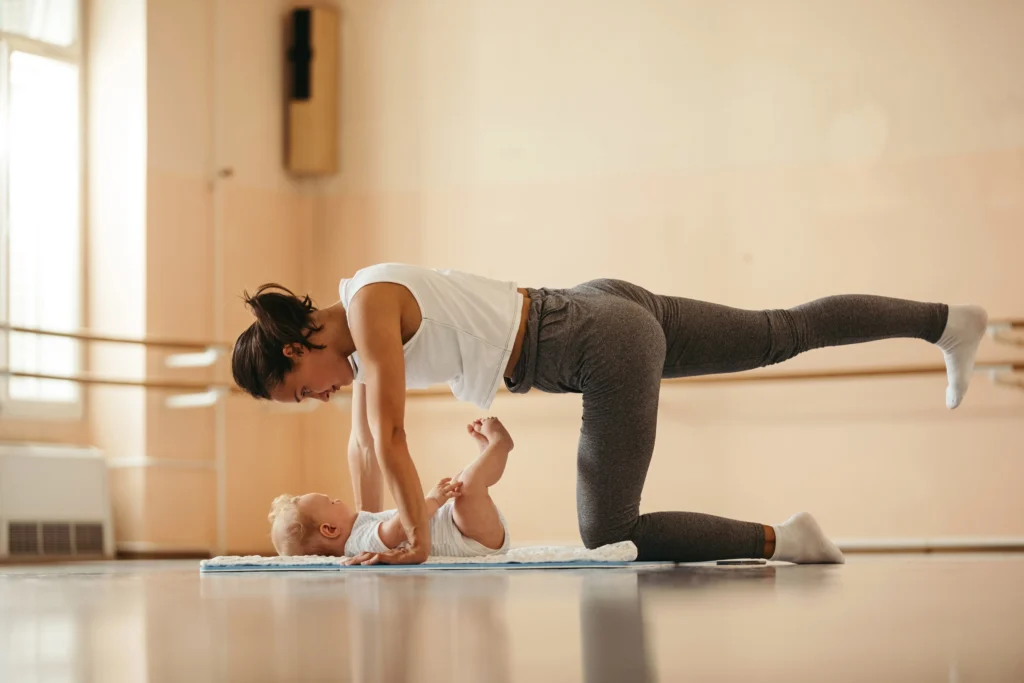
One thing physiotherapists notice often is movement hesitation.
Women become careful with:
- getting out of bed,
- standing upright,
- twisting,
- lifting the baby,
- or even laughing.
Sometimes the nervous system continues anticipating pain even after tissue healing improves.
This matters because fear changes movement quality.
A mother may begin:
- walking differently,
- tightening her shoulders,
- gripping abdominal muscles constantly,
- or holding her breath during movement.
These patterns increase fatigue and strain.
A good rehabilitation program gently restores confidence alongside physical recovery.
Why Breathing Exercises Matter More Than Most People Think
Breathing sounds too simple to matter.
But after a C-section, breathing mechanics often change significantly.
Many women protect the incision unconsciously by switching to shallow chest breathing.
The diaphragm stops moving fully, rib mobility reduces, and deep core muscles stop coordinating properly.
This affects:
- posture,
- pelvic floor pressure,
- abdominal activation,
- and even bowel movements.
One newer area of physiotherapy research is the connection between diaphragm function and pelvic floor recovery postpartum. (ScienceDirect)
The Rib Tightness Nobody Warns You About
This is something many mothers mention during physiotherapy sessions.
They expect abdominal soreness.
They do not expect upper rib stiffness.
After surgery, women often move less through the rib cage because:
- breathing becomes guarded,
- posture changes,
- and the body tries to minimize discomfort.
This can lead to:
- mid-back tightness,
- neck pain,
- and difficulty taking deep breaths,
- shoulder stiffness.
Sometimes improving rib movement reduces pain faster than focusing only on the abdomen.
Early Physiotherapy After C-Section
In the first few days, rehabilitation is very gentle.
The focus is usually:
- circulation,
- breathing,
- posture,
- and safe mobility.
Not intense exercise.
Not abdominal workouts.
Just helping the body move safely again.
Walking Is One of the Best Early Recovery Tools
Many mothers assume movement will damage the stitches.
Actually, appropriate walking usually helps recovery.
Short walks can improve:
- circulation,
- digestion,
- lung expansion,
- bowel activity,
- and stiffness.
Early mobilization is also associated with lower complication rates after surgery.
But walking does not mean pushing through exhaustion.
The body usually tolerates several short walks better than one long walk.
Getting Out of Bed Correctly Makes a Huge Difference
One small technique can dramatically reduce discomfort.
Instead of sitting straight upward:
- roll onto one side first,
- push with the arms,
- then lower the legs off the bed.
This reduces pressure on healing abdominal tissues.
Most women immediately notice the difference.
Why Some Women Still Leak Urine After a C-Section
This surprises many mothers.
They assume pelvic floor problems only happen after vaginal delivery.
Pregnancy itself places months of pressure on the pelvic floor muscles.
Even after cesarean birth, women may experience:
- urine leakage,
- pelvic heaviness,
- constipation,
- painful intercourse,
- or reduced pelvic control.
Not Every Pelvic Floor Is Weak
This is a newer and very important concept.
Some postpartum pelvic floors become overly tight instead of weak.
Women may:
- constantly brace,
- tighten the abdomen,
- grip pelvic muscles unconsciously,
- or stay in a stress response.
In these situations, aggressive Kegel exercises can sometimes worsen symptoms.
A pelvic health physiotherapist assesses whether muscles need:
- strengthening,
- relaxation,
- coordination training,
- or pressure management work.
Scar Tissue Is More Important Than Most Mothers Realize
Many women ignore the scar once it closes.
But scars are not just cosmetic.
Scar tissue may sometimes:
- feel numb,
- become sensitive,
- feel stuck,
- or create pulling sensations during movement.
Some women notice discomfort months later while:
- reaching overhead,
- twisting,
- exercising,
- or carrying heavier objects.
Modern scar rehabilitation often includes:
- gentle desensitization,
- mobility work,
- breathing coordination,
- and tissue gliding techniques.
One Lesser-Known Fact About C-Section Scars
Tiny skin nerves can be affected during surgery.
That strange numbness or altered sensation near the incision is often nerve-related rather than simply skin tightness.
For some women, sensation gradually improves over months.
Gentle touch exposure and scar desensitization techniques may help the nervous system adapt better.
Why the “Mom Pouch” Is Not Always Fat
This is one of the biggest misconceptions postpartum.
Many women panic because the lower abdomen still protrudes months later.
But the issue is not always body fat.
Sometimes it involves:
- deep core weakness,
- altered pressure management,
- abdominal separation,
- scar restriction,
- or posture changes.
Recent physiotherapy approaches focus less on “flattening the stomach” and more on restoring function and coordination. (Benjamin et al. 2019)
Diastasis Recti
Diastasis Recti Is More Complex Than Social Media Makes It Sound
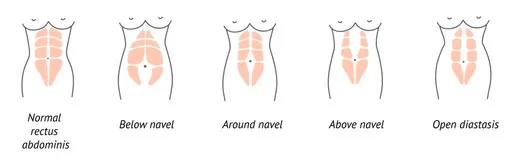
Social media often creates fear around abdominal separation.
In reality:
- many women naturally have some separation postpartum,
- and the size of the gap alone does not determine function.
A woman with a small separation may still feel weak.
Another woman with a wider separation may function very well.
Physiotherapists now focus more on:
- pressure control,
- tension generation,
- breathing,
- and functional movement quality.
Constipation After C-Section Is Extremely Common
This rarely gets discussed enough.
Pain medication, reduced movement, fear of straining, dehydration, and abdominal guarding all contribute.
Many women become nervous about using abdominal muscles during bowel movements.
Physiotherapists often teach:
- breathing techniques,
- supported toilet positioning,
- pelvic floor relaxation,
- and pressure management strategies.
Something as simple as placing the feet on a small stool can reduce strain significantly.
Why Back Pain Becomes So Intense After Delivery
The lower back usually suffers because several systems are overloaded simultaneously.
Common contributors include:
- weak glutes,
- reduced core support,
- prolonged feeding posture,
- poor sleep,
- carrying the baby constantly,
- and hormonal ligament laxity.
Many mothers notice the pain more while:
- lifting the baby from the crib,
- feeding for long periods,
- or standing after sitting for too long.
Interestingly, strengthening the hips and improving breathing mechanics often helps back pain more than aggressive abdominal exercises.
Recovery Is Not Linear
This is important psychologically.
Many women feel discouraged because:
- one day feels great,
- the next day feels exhausting again.
That fluctuation is normal.
Sleep deprivation, stress, feeding demands, hormonal shifts, and physical healing all interact together.
Progress after childbirth is rarely perfectly steady.
Returning to Exercise Too Fast Can Backfire
One of the biggest mistakes physiotherapists see is rushing into:
- HIIT workouts,
- running,
- crunches,
- or heavy lifting.
The body may appear healed externally while deeper tissues are still regaining load tolerance.
Symptoms that suggest overload include:
- pelvic heaviness,
- urine leakage,
- scar pulling,
- abdominal bulging,
- or increased bleeding.
These are signals to slow down, not push harder.
Modern Physiotherapy Is Moving Away From “Bounce Back” Culture
There has been a major shift in postpartum rehabilitation over the last few years.
Older approaches focused heavily on:
- tightening the stomach,
- rapid weight loss,
- and doing endless Kegels.
Current evidence-based rehabilitation focuses more on:
- functional recovery,
- nervous system regulation,
- gradual loading,
- breathing coordination,
- pelvic floor adaptability,
- and long-term movement health.
Sleep Deprivation Changes Recovery Too
This is another overlooked factor.
Healing does not happen separately from motherhood.
The body is recovering while the mother is:
- waking multiple times nightly,
- feeding frequently,
- lifting repeatedly,
- and functioning on limited rest.
Pain sensitivity often increases when sleep quality drops.
That is one reason recovery timelines vary so much between women.
Calculate your ideal sleep timings here: “Sleep Calculator“
Small Things That Help Recovery More Than Expected
Sometimes the biggest improvements come from simple changes.
Examples include:
- placing pillows behind the back during feeding,
- avoiding breath-holding while lifting,
- walking several times daily,
- changing positions frequently,
- using side-rolling techniques,
- and learning how to engage the deep core gently.
Recovery is often about consistency more than intensity.
When Should You See a Women’s Health Physiotherapist?
Professional assessment is helpful if symptoms continue beyond the early recovery phase.
Especially if there is:
- persistent leakage,
- pelvic pressure,
- scar discomfort,
- painful intercourse,
- severe back pain,
- constipation,
- abdominal doming,
- or fear of movement.
Many mothers assume these issues are “just part of motherhood.”
They are common.
But common does not mean something should simply be ignored.
A Physiotherapist’s Honest Advice to Mothers Recovering From a C-Section
Try not to judge your body only by appearance during this stage.
Recovery after cesarean birth is not just about the stomach.
Your body is healing:
- surgically,
- hormonally,
- neurologically,
- emotionally,
- and mechanically all at once.
Some days you may feel strong.
Other days even standing up feels exhausting.
That does not mean recovery is failing.
The body usually responds best to:
- gentle movement,
- gradual strengthening,
- patience,
- breathing,
- nourishment,
- and proper support.
Not punishment.
Conclusion
Physiotherapy after a C-section is not only about exercise.
It is about helping the body feel coordinated, supported, and functional again after major surgery and childbirth.
Modern postpartum rehabilitation now looks far beyond the incision itself.
It considers breathing patterns, scar mobility, pelvic floor function, posture, nervous system recovery, bowel mechanics, and movement confidence.
Early physiotherapy and gradual rehabilitation after a C-section can support better recovery, posture, and long-term core health.
Many women silently struggle with symptoms because they believe discomfort is simply something mothers must tolerate.
It is not.
With proper rehabilitation, most women can improve strength, reduce pain, move more comfortably, and regain confidence in their body gradually and safely.
Frequently Asked Questions
When should physiotherapy begin after a C-section?
Gentle physiotherapy including breathing exercises, circulation exercises, and short walks may begin within 24 to 48 hours if approved by the medical team. Structured rehabilitation usually progresses gradually after medical clearance.
Can I still have pelvic floor weakness after a cesarean birth?
Yes. Pregnancy itself places pressure on the pelvic floor muscles, so urine leakage, pelvic heaviness, or reduced pelvic control may still occur after a C-section.
Why does my back hurt after a C-section?
Back pain is often linked to weak deep core muscles, feeding posture, sleep deprivation, lifting the baby frequently, and altered movement patterns after surgery.
Is walking good after cesarean delivery?
Yes. Gentle walking improves circulation, digestion, mobility, and overall recovery. Most women tolerate several short walks better than one long walk.
Can physiotherapy help with C-section scar tightness?
Yes. Scar rehabilitation techniques may improve tissue mobility, reduce discomfort, and improve comfort during movement and exercise.
When can I start abdominal exercises after a C-section?
Recovery usually starts with breathing and gentle deep core activation before progressing to stronger abdominal exercises later in the healing process.
Why does the lower abdomen still bulge months later?
The postpartum abdominal bulge may be related to pressure management issues, posture changes, deep core weakness, scar restrictions, or abdominal separation instead of only body fat.
When should I see a women’s health physiotherapist?
You should seek professional assessment if you experience persistent pain, urine leakage, pelvic heaviness, constipation, scar discomfort, or difficulty returning to normal activities.
Stay tuned with us for more health related topics.
Follow us on LinkedIn and Instagram for more.
More Read


Medical Disclaimer!
This article has been reviewed and written under the guidance of our Head Physiotherapist, Dr. Kruti Raj (PT, MUHS,CPT,CMPT). The information shared is intended for educational purposes only and should not be considered a substitute for personalized medical advice, diagnosis, or treatment.
Please consult us or any other qualified healthcare professional before beginning any exercise program, especially if you are experiencing pain, recovering from injury, or managing a medical condition.


