


Pregnancy exercises for office workers can help reduce stiffness, improve posture, and ease back and hip discomfort from long sitting hours.
Most pregnancy fitness articles sound like they were written for women relaxing at home with unlimited free time.
Real office workers know that is not how pregnancy feels.
You are answering emails while your lower back tightens by 11 AM.
Your ribs start hurting during Zoom calls.
Your feet swell inside formal shoes.
You stand up after two hours at your desk and suddenly feel like your hips aged twenty years overnight.
Quick Answer
The best pregnancy exercises for office workers include pelvic tilts, walking, ankle pumps, hip stretches, wall squats, rib breathing exercises, and posture correction movements. These exercises help reduce lower back pain, swelling, hip tightness, neck strain, and stiffness caused by prolonged sitting during pregnancy. Physiotherapists also recommend standing or moving every 30 to 45 minutes instead of remaining seated for long hours.
Small movement breaks throughout the workday often help more than one intense workout session done occasionally.
As a physiotherapist, I see this pattern constantly in pregnant women with desk jobs.
The issue is usually not laziness or lack of exercise.
The problem is prolonged sitting, stiff hips, poor workstation posture, reduced circulation, and muscles that stop working the way they should.
The good news is that you do not need intense workouts to feel better.
Small movement habits done consistently throughout the workday can completely change how your body feels during pregnancy.
A newer review published highlighted that reducing sedentary time during pregnancy is now considered just as important as formal exercise because prolonged sitting may increase musculoskeletal discomfort and metabolic health risks.
Key Takeaways
- Long sitting hours during pregnancy can worsen back pain, swelling, hip tightness, and poor posture.
- Movement frequency matters more than intense workouts for pregnant office workers.
- Pelvic tilts, hip stretches, ankle pumps, and walking are among the most effective desk-friendly pregnancy exercises.
- Standing or stretching every 30 to 45 minutes may help improve circulation and reduce stiffness.
- Rib breathing exercises can reduce neck tension and improve breathing mechanics during pregnancy.
- Weak glute muscles from prolonged sitting often contribute to lower back discomfort.
- Supportive workstation setup and posture correction can significantly reduce pregnancy pain.
- Gentle, consistent movement usually works better than overexercising during pregnancy.
Why Office Workers Struggle More During Pregnancy
Pregnancy already shifts your center of gravity forward.
Add eight hours of sitting, rounded shoulders, weak glutes, laptop posture, and tight hip flexors into the mix, and the body starts compensating everywhere.
This is why many office workers notice symptoms like:
- Lower back pain during meetings
- Rib pain while sitting
- Neck stiffness after screen time
- Swollen feet by evening
- Hip tightness when standing up
- Sciatic pain after commuting
- Tingling in the legs
- Tailbone pain during prolonged sitting
One thing many women do not realize is that pregnancy hormones also loosen ligaments.
That extra joint mobility can make poor posture feel much worse.
Sometimes the pain is not coming from where you think.
For example, tight hip flexors from prolonged sitting can create pressure in the lower back and pelvis that feels like pregnancy pelvic pain.
The Biggest Mistake Pregnant Office Workers Make
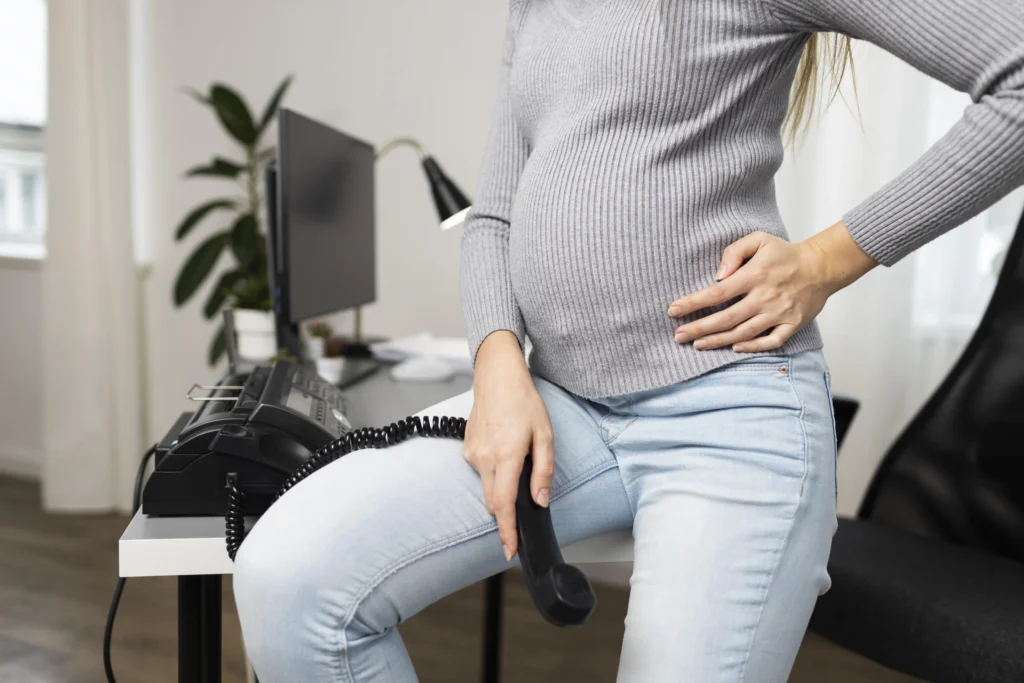
Most women think one workout in the evening cancels out ten hours of sitting.
It does not.
Current physiotherapy approaches focus more on movement frequency throughout the day instead of one intense exercise session.
That means:
- Standing often
- Changing positions regularly
- Stretching briefly between tasks
- Walking for a few minutes
- Avoiding long periods of static posture
Even two-minute movement breaks help circulation and reduce stiffness.
This matters more during pregnancy because blood volume increases significantly, and circulation can become sluggish during prolonged sitting.
A 2025 study in Scientific Reports also linked higher sedentary time during pregnancy with increased metabolic health concerns, including gestational diabetes risk. (Ding et al. 2025)
Best Pregnancy Exercises for Office Workers
These are the exercises I personally recommend most often to pregnant women working desk jobs because they are realistic, effective, and easy to repeat during the day.
Seated Pelvic Tilts
Pelvic tilt is one of the best exercises for women whose lower back starts aching after prolonged sitting.
How to Do It
- Sit near the edge of your chair
- Keep feet flat
- Gently arch the lower back
- Then tuck the pelvis inward slowly
- Repeat 10 to 15 times
Why It Helps
Pregnant women often develop an exaggerated arch in the lower back without noticing it.
Pelvic tilts help restore movement to the lumbar spine and activate deep abdominal support muscles.
The movement should feel smooth, not forceful.
Ankle Pumps Under the Desk
Most office workers ignore swollen feet until shoes suddenly feel tight at the end of the day.
Ankle pumps sound simple, but physiotherapists use them constantly because calf muscles act like a circulation pump.
How to Do It
- Point toes downward
- Pull toes upward
- Repeat slowly for 20 to 30 repetitions
Why It Helps
This encourages blood flow and reduces heaviness in the legs.
It is especially useful during long meetings, flights, or commutes.
Chair Cat-Camel Stretch
Cat-Camel Stretch exercise helps women who feel stiff when getting up from their chair.
How to Do It
- Sit upright
- Round your back gently
- Then slowly arch the spine
- Coordinate movement with breathing
Why It Helps
The spine loves movement.
Pregnancy and office work both reduce spinal mobility.
This stretch helps relieve:
- Mid-back tightness
- Rib stiffness
- Lower back discomfort
It also encourages better breathing mechanics.
Rib Breathing Exercise
Many pregnant women unconsciously stop breathing properly.
As the uterus grows upward, the rib cage expands sideways.
Some women respond by switching to shallow chest breathing without realizing it.
That often increases:
- Neck tension
- Shoulder tightness
- Fatigue
- Rib discomfort
Try This
- Place hands around the rib cage
- Breathe in slowly through the nose
- Feel the ribs expand sideways
- Exhale slowly
Physiotherapy Insight
Women with stressful desk jobs often hold tension in the upper chest and shoulders all day.
Proper rib breathing helps reduce unnecessary muscle tension.
Standing Hip Flexor Stretch
If you sit for long hours, your hip flexors are probably tight already.
Pregnancy makes this worse.
How to Do It
- Stand near your desk
- Step one leg backward
- Bend the front knee slightly
- Shift weight forward gently
What Women Usually Notice
Many women suddenly realize:
“My lower back pain decreases immediately after stretching the front of my hips.”
That is because tight hip flexors pull the pelvis forward and increase strain on the lumbar spine.
Shoulder Blade Reset
Laptop posture during pregnancy becomes brutal by the second trimester.
Your shoulders round forward, neck muscles overwork, and upper back fatigue starts appearing daily.
Exercise
- Sit tall
- Pull shoulder blades backward and downward
- Hold for 5 seconds
- Relax slowly
Why It Works
This activates postural muscles that become weak during prolonged desk work.
Small posture corrections repeated throughout the day matter more than aggressive stretching.
Wall Squats
Wall Squats is one of my favorite pregnancy strengthening exercises for office workers because it targets muscles that become inactive from prolonged sitting.
Steps
- Stand against a wall
- Slide down slightly
- Hold briefly
- Return slowly
Benefits
- Activates glutes
- Improves pelvic support
- Strengthens thighs
- Helps posture
Weak glutes are extremely common in desk workers.
Interestingly, many women with “back pain” actually improve once glute strength improves.
Seated Figure-4 Stretch
Pregnant office workers often complain of deep hip pain after sitting.
Sometimes the issue is not the pelvis itself but tight glute muscles compressing nearby nerves.
How to Do It
- Sit comfortably
- Cross one ankle over the opposite knee
- Lean forward gently
Why It Helps
This stretch targets:
- Glutes
- Piriformis
- Deep hip muscles
Women with sciatic-type discomfort often find this surprisingly relieving.
Calf Stretch for Pregnancy Cramps
Nighttime calf cramps become very common during pregnancy.
Desk workers are especially prone because circulation slows during prolonged sitting.
How to Do It
- Stand facing a wall
- Keep one leg behind
- Press heel downward
- Lean forward gently
Helpful Tip
Many women stretch only when cramps occur.
Daily calf stretching works much better as prevention.
Walking Is Still One of the Best Exercises
Pregnancy fitness does not need to be complicated.
Honestly, regular walking still beats many trendy workouts.
Walking helps:
- Circulation
- Hip mobility
- Pelvic movement
- Mental health
- Swelling
- Blood sugar control
A lot of women feel dramatically better simply by adding short walks between work blocks.
Even five minutes matters.
Lesser-Known Problems Office Workers Experience During Pregnancy
Rib Flare Pain
Women often think something is wrong with their lungs or ribs.
In reality, prolonged sitting combined with expanding ribs can overload the muscles between the ribs.
This is very common during late pregnancy.
Tailbone Pain
Many pregnant women only feel tailbone pain while sitting.
That usually points toward pressure sensitivity, pelvic floor tension, posture issues, or prolonged compression from sitting surfaces.
Soft posture support and movement breaks help more than constant resting.
Foot Size Changes
Yes, pregnancy can permanently change foot size.
Hormonal ligament laxity can flatten the arches slightly over time.
That is why supportive footwear suddenly becomes important during pregnancy.
Breath-Holding During Work Stress
This one surprises people.
Stressed office workers often hold their breath unconsciously while concentrating.
Physiotherapists notice this pattern constantly.
Breath-holding increases neck tension, rib tightness, pelvic floor tension, and fatigue.
Best Workstation Setup During Pregnancy
Tiny adjustments can significantly reduce pain.
Chair
- Support the lower back
- Avoid leaning forward constantly
- Keep hips slightly above knees
Laptop Height
Looking downward for hours overloads neck muscles.
Raise screens closer to eye level whenever possible.
Feet Position
Feet should rest comfortably.
Dangling feet increase pressure behind the thighs and worsen swelling.
Arm Support
Unsupported arms create upper trapezius tension very quickly during pregnancy.
How Often Should Pregnant Office Workers Move?
The sweet spot is frequent small movement.
A practical routine looks like this:
- Stretch for 1 to 2 minutes every 30 to 45 minutes
- Walk briefly after long meetings
- Change sitting posture regularly
- Avoid remaining still for hours
Modern physiotherapy research increasingly supports movement snacks throughout the day rather than relying only on scheduled workouts.
Exercises to Avoid During Pregnancy
Not every exercise is pregnancy-friendly.
Avoid:
- Intense jumping workouts
- Sudden twisting movements
- Heavy breath-holding exercises
- Aggressive abdominal exercises
- Exercises causing dizziness or pain
Stop immediately if you experience:
- Vaginal bleeding
- Chest pain
- Severe dizziness
- Fluid leakage
- Painful contractions
What I Usually Tell Pregnant Office Workers in Clinic
Your body is not weak.
It is adapting constantly while also tolerating long periods of sitting, stress, deadlines, commuting, and poor workstation setups.
That combination is exhausting.
The women who usually feel best during pregnancy are not necessarily doing intense workouts.
They are simply moving more often, stretching consistently, correcting posture early, and listening to their bodies before pain becomes severe.
Pregnancy exercise should make you feel supported, not punished.
That mindset changes everything.
Final Thoughts
Pregnancy can feel surprisingly hard on the body when your job involves sitting for long hours.
Many office workers expect the baby bump to be the main challenge.
But in reality, it is often the combination of prolonged sitting, stiff hips, screen posture, stress, and reduced movement that creates the most discomfort.
The good news is that your body usually responds very well to small, consistent changes.
You do not need extreme workouts, complicated routines, or hours in the gym.
In most cases, regular movement breaks, posture correction, walking, breathing exercises and gentle strengthening pregnancy exercises for office workers make a noticeable difference within a few weeks.
As a physiotherapist, one thing I have noticed repeatedly is that pregnant women feel better when they stop thinking of exercise as a separate task and start treating movement as part of the workday itself.
Standing during calls, stretching between meetings, walking after lunch, and changing posture often can reduce more pain than a single intense workout done occasionally.
Also, do not ignore early signs of discomfort.
Mild back tightness, rib pain, swelling, or hip stiffness are often your body’s way of asking for movement, support, or posture changes before the pain becomes more frustrating later in pregnancy.
Most importantly, try not to compare your pregnancy with anyone else’s.
Some women stay comfortable throughout pregnancy, while others struggle with fatigue, pelvic pain, or swelling despite doing everything right.
The goal is not perfection.
The goal is supporting your body in a realistic and sustainable way while managing work, energy levels, and daily life.
Small movements done consistently are often the real game changer during pregnancy.
Frequently Asked Questions
Can office workers safely exercise during pregnancy?
Yes, most women with healthy pregnancies can safely perform gentle exercises, walking, stretching, and posture correction exercises after medical approval.
How often should pregnant women move while working at a desk?
Physiotherapists commonly recommend standing, stretching, or walking briefly every 30 to 45 minutes during office work.
Which exercise is best for pregnancy back pain?
Pelvic tilts, hip flexor stretches, walking, and gentle glute strengthening exercises are commonly recommended for pregnancy-related back pain.
Can sitting too long during pregnancy cause swelling?
Yes, prolonged sitting can slow circulation and contribute to swelling in the legs, ankles, and feet during pregnancy.
Are squats safe during pregnancy?
Supported squats are generally safe for many pregnant women, but women with pelvic pain or high-risk pregnancies should seek professional guidance first.
Why do pregnant office workers get hip tightness?
Long periods of sitting can tighten hip flexors and glute muscles, leading to stiffness, discomfort, and reduced pelvic mobility.
Can walking help during pregnancy?
Yes, walking is one of the safest and most effective exercises for improving circulation, reducing stiffness, and supporting overall pregnancy health.
When should pregnant women stop exercising?
Exercise should stop immediately if there is dizziness, chest pain, vaginal bleeding, severe pain, fluid leakage, or contractions.
Stay tuned with us for more health related topics.
Follow us on LinkedIn and Instagram for more.
More Read


Medical Disclaimer!
This article has been reviewed and written under the guidance of our Head Physiotherapist, Dr. Kruti Raj (PT, MUHS,CPT,CMPT). The information shared is intended for educational purposes only and should not be considered a substitute for personalized medical advice, diagnosis, or treatment.
Please consult us or any other qualified healthcare professional before beginning any exercise program, especially if you are experiencing pain, recovering from injury, or managing a medical condition.


