


When can babies hear in the womb?
A baby’s hearing begins to develop during pregnancy, allowing them to respond to sounds and voices before birth.
One of the most magical moments during pregnancy is realizing that your baby may be experiencing more of the world than you ever imagined.
Many parents find themselves talking to their bump, singing in the car, reading bedtime stories aloud, or even introducing the baby to family members before birth.
But a common question often follows:
Can my baby actually hear me?
The answer is yes.
By the second half of pregnancy, your baby’s developing auditory system is capable of detecting sounds from both inside and outside the womb.
Even more fascinating, research suggests that babies may become familiar with certain sounds before they are born, particularly their mother’s voice.
That does not mean your baby understands words or conversations.
Quick Answer
Yes, babies can hear sounds during the second half of pregnancy. They may hear their mother’s voice, heartbeat, breathing, and some external sounds filtered through the womb. Research suggests babies can become familiar with voices and sound patterns before birth.
However, they may recognize patterns, rhythms, and familiar voices that become part of their earliest sensory experiences.
As a physiotherapist, I often remind parents that the womb is not a silent, empty space.
It is an active sensory environment filled with movement, vibrations, rhythms, and sounds that help shape early development.
Let’s explore what science tells us about hearing before birth.
Key Takeaways
- Babies can hear sounds during the second half of pregnancy.
- The mother’s voice is one of the most familiar sounds in the womb.
- Babies may recognize familiar voices after birth.
- Language rhythms and sound patterns can be learned before birth.
- Music can create familiarity but does not increase intelligence.
- The womb is not silent and contains many internal sounds.
- Most everyday sounds are safe during pregnancy.
- Talking to your baby may support bonding and familiarity.
The Surprising World of Sound Inside the Womb
Many people imagine the womb as a quiet place.
In reality, it is surprisingly noisy.
Your baby spends months surrounded by sounds created by your body.
These include:
- Your heartbeat
- Blood flowing through blood vessels
- Breathing movements
- Digestive sounds
- Muscle activity
- Your voice
External sounds also reach the womb, although they are softened and filtered before reaching the baby.
The result is a rich sensory environment that exposes the developing auditory system to constant stimulation.
Rather than growing in silence, babies spend months immersed in a world of rhythm and sound.
Inside Your Baby’s World
Your baby’s daily soundtrack may include:
- Your heartbeat
- Your breathing
- Your voice
- Digestive sounds
- Your movements
- Filtered outside sounds
The womb is far from silent. It is filled with familiar rhythms and sounds that accompany your baby every day.
When Does Hearing Develop During Pregnancy?
The ability to hear develops gradually.
Like every other body system, the auditory system matures in stages.
Early in pregnancy, the structures responsible for hearing begin forming.
Over time, these structures become increasingly capable of detecting and processing sound.
How the Fetal Auditory System Forms
The ears begin developing during the first trimester.
However, simply having ears does not mean hearing is fully functional.
The auditory pathway involves multiple structures, including:
- The outer ear
- Middle ear
- Inner ear
- Auditory nerves
- Brain regions responsible for sound processing
These systems continue developing throughout pregnancy.
By the second half of pregnancy, hearing becomes increasingly functional.
When Babies Begin Responding to Sound
Researchers have observed fetal responses to sound during the later stages of pregnancy.
These responses may include:
- Changes in movement
- Changes in heart rate
- Startle reactions
Studies suggest that fetuses can detect and respond to auditory stimulation before birth. (Movalled et al. 2023)
This indicates that the developing auditory system is actively processing information rather than passively waiting for birth.
Fascinating Baby Fact
Researchers have observed changes in fetal movement and heart rate when babies are exposed to sounds during pregnancy, suggesting that the developing auditory system is already active before birth.
What Does Your Baby Actually Hear?
This is where things become especially interesting.
Your baby does not hear the world exactly as you do.
The uterus, abdominal tissues, and amniotic fluid all affect how sound travels.
Some sounds become softer.
Others become distorted.
Certain frequencies pass through more effectively than others.
Your Voice
Of all the sounds your baby hears, your voice is one of the most important.
The maternal voice reaches the baby in two different ways.
First, through the air as sound waves.
Second, through vibrations conducted directly through your body.
This combination makes your voice particularly noticeable.
Researchers have found that fetuses respond differently to their mother’s voice compared with unfamiliar voices. (Lee et al. 2014)
Your Heartbeat
Long before birth, your heartbeat becomes one of the most familiar sounds your baby experiences.
The rhythmic pattern is present day and night.
It provides a constant source of sensory input throughout pregnancy.
Some researchers believe this rhythmic exposure may contribute to the calming effect of heartbeat-like sounds after birth.
Your Breathing
Every breath creates movement and sound.
The baby experiences these rhythmic breathing patterns continuously.
While adults rarely notice their own breathing sounds, they form part of the baby’s everyday environment.
Your Digestive System
The womb is not a quiet place.
Digestive sounds are among the most common noises babies hear before birth.
Gurgling, fluid movement, and intestinal activity all contribute to the soundtrack of life inside the womb.
Everyday Sounds From Outside
Although filtered by the womb, external sounds can still reach the baby.
Examples include:
- Conversations
- Music
- Household sounds
- Traffic noise
- Pets
- Television
These sounds are softer and less detailed than they would be outside the womb, but they still contribute to the baby’s sensory experience.
What Babies Hear Best
| More Easily Heard | Less Clearly Heard |
|---|---|
| Mother’s voice | Detailed speech sounds |
| Heartbeat | High-pitched noises |
| Breathing rhythms | Distant conversations |
Can Your Baby Recognize Your Voice?
One of the most remarkable findings in prenatal research is that babies appear to become familiar with their mother’s voice before birth.
The maternal voice is heard repeatedly throughout pregnancy.
Because it is both frequent and biologically significant, it becomes one of the baby’s most familiar sensory experiences.
Evidence From Newborn Studies
Researchers have shown that newborn babies often demonstrate a preference for their mother’s voice shortly after birth.
This suggests that voice recognition begins before delivery. (DeCasper & Fifer 1980)
Why Familiarity Matters
Recognition is not the same as understanding.
Your baby does not know the meaning of your words.
Instead, the brain becomes familiar with:
- Voice patterns
- Speech rhythm
- Intonation
- Emotional tone
These familiar patterns may help newborns feel comforted and secure after birth.
Why Your Voice Matters
Your voice reaches your baby in two ways:
- Through sound waves in the environment
- Through vibrations traveling through your body
This is why your voice often becomes one of the most familiar sounds your baby hears before birth.
Does Your Baby Hear Other People’s Voices?
Many partners wonder whether the baby can hear them too.
The answer is probably yes.
However, the mother’s voice is typically the most prominent because it reaches the baby through both airborne sound and body vibrations.
Other voices may also become familiar if they are heard frequently.
This could include:
- A partner’s voice
- Siblings
- Family members
- Caregivers
Repeated exposure appears to matter more than occasional conversations.
Why Babies May Respond Differently to Familiar Voices
The developing brain is constantly looking for patterns.
When a voice is heard repeatedly, it becomes more familiar.
This familiarity may influence how newborns respond after birth.
Some studies suggest babies may show preferences for voices and speech patterns encountered during pregnancy.
Your Baby May Already Be Learning the Rhythm of Language
One of the most fascinating discoveries in developmental science is that babies appear capable of learning certain language characteristics before birth.
Researchers have found that newborn babies can distinguish between familiar language rhythms and unfamiliar ones. (May et al. 2011)
What Babies Are Actually Learning
They are not learning vocabulary.
They are not learning grammar.
Instead, they become familiar with:
- Speech melody
- Rhythm
- Intonation
- Language cadence
This early exposure may help prepare the brain for language development after birth.
Why This Is So Remarkable
Before taking a single breath, babies are already becoming familiar with aspects of human communication.
That familiarity begins long before they ever see the faces attached to the voices they hear every day.
And hearing familiar sounds is only part of the story.
Researchers have also explored whether babies can respond to music, remember repeated sounds, and react to the broader acoustic world around them before birth.
Science Snapshot
Studies suggest that newborn babies can distinguish familiar language rhythms from unfamiliar ones shortly after birth, indicating that exposure to language begins influencing development before delivery.
Can Babies Hear Music Before Birth?
This is one of the most common questions expectant parents ask.
Many people have heard stories about babies recognizing songs after birth or becoming calmer when hearing familiar music played during pregnancy.
Research suggests that babies can detect musical sounds before birth and may become familiar with repeated melodies.
However, this does not mean music makes babies smarter or accelerates intelligence.
What Research Actually Shows
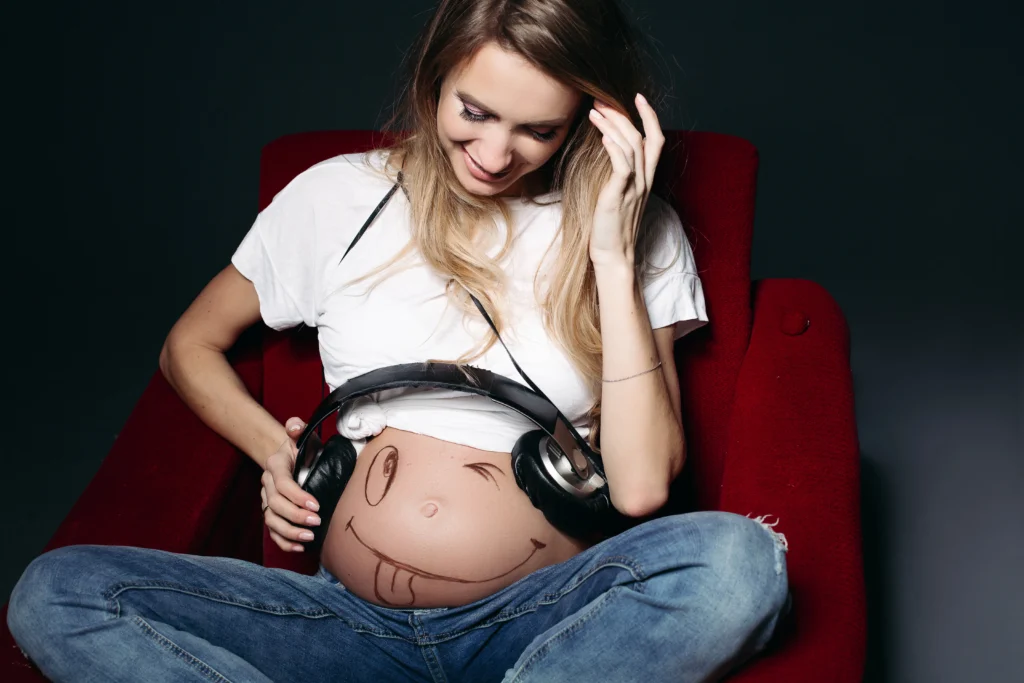
Studies suggest that fetuses can respond to musical stimulation and may retain familiarity with sounds repeatedly heard during pregnancy. (Kaczmarski et al. 2026)
The key word is familiarity.
A baby may recognize a repeated melody after birth because it has been heard many times before.
Is Classical Music Better?
Despite popular myths, there is no evidence that classical music is superior to other forms of music for fetal development.
The most important factor is usually not the type of music.
It is the emotional experience surrounding it.
If music helps the mother relax, move comfortably, and enjoy her pregnancy, that may be one of its greatest benefits.
Myth vs Reality
Myth: Playing classical music during pregnancy makes babies smarter.
Reality: Research suggests babies may become familiar with repeated musical patterns, but there is no evidence that prenatal music exposure increases intelligence.
How Loud Is the Womb?
Many people imagine sounds reaching the baby as faint whispers.
The reality is more complex.
The womb contains constant internal sounds generated by:
- Blood flow
- Breathing
- Digestion
- Heartbeat
- Movement
Some researchers have compared parts of the intrauterine environment to the background noise level of a busy room.
The womb is not silent.
It is a living acoustic environment.
Why External Sounds Sound Different
Before reaching the baby, sound must travel through:
- Skin
- Muscle
- Uterine tissue
- Amniotic fluid
These structures reduce and filter sound.
Higher-pitched sounds are often dampened more than lower-frequency sounds.
This is one reason speech rhythm and melody may be easier to perceive than specific words.
Can Loud Noises Harm the Baby?
Most everyday sounds are unlikely to cause harm.
Normal activities such as:
- Talking
- Listening to music
- Household noise
- Traffic sounds
are generally considered safe.
However, repeated exposure to extremely loud environments may warrant discussion with a healthcare provider.
Examples may include:
- Industrial workplaces
- Certain manufacturing settings
- Repeated exposure to very high sound levels
For most pregnancies, ordinary daily noise is not a concern.
Should You Put Headphones on Your Belly?
This practice has become popular on social media.
Research does not show that placing headphones directly on the abdomen provides special developmental benefits.
In fact, excessive sound exposure is unnecessary.
Babies already receive plenty of sensory input through normal daily life.
Does Talking to Your Baby Matter?
This question is often asked by parents who feel slightly awkward speaking to a baby they have not yet met.
The answer may be reassuring.
You do not need to deliver speeches or narrate every moment of your day.
Simply living your life with some positive affirmations can naturally expose your baby to your voice.
Why Talking Can Still Be Meaningful
Talking to your baby may:
- Encourage bonding
- Help parents feel connected
- Create familiar sound patterns
- Support emotional attachment
The benefits may extend beyond the baby.
Many parents report feeling more connected to the pregnancy when they intentionally communicate with their unborn child.
Everyday Conversation Is Enough
You do not need special scripts.
Many babies hear:
- Conversations
- Laughter
- Singing
- Reading aloud
- Daily routines
throughout pregnancy.
These ordinary experiences provide plenty of auditory stimulation.
A Simple Bonding Moment
You don’t need special words.
Talk about your day. Sing your favorite song. Read a page from a book. Tell your baby about upcoming plans.
The goal is not teaching. The goal is connection.
Common Myths About Fetal Hearing
Pregnancy is full of advice, and not all of it is accurate.
Let’s look at a few common myths.
Myth: Babies Cannot Hear Anything Until Birth
Reality: Research clearly shows that fetuses can respond to sounds before birth. (Movalled et al. 2023)
Myth: Playing Music Makes Babies Smarter
Reality: There is no evidence that prenatal music exposure increases intelligence.
Music may create familiarity and enjoyment, but claims of dramatic IQ benefits are not supported by research.
Myth: You Must Constantly Stimulate Your Baby
Reality: Babies already experience a rich sensory environment inside the womb.
Constant stimulation is unnecessary.
Myth: Talking to Your Baby Is Pointless
Reality: Your voice becomes one of the most familiar sounds your baby hears before birth.
This familiarity may influence recognition and comfort after delivery.
What Your Baby Is Really Learning
One of the most important messages from prenatal hearing research is that babies are not learning facts.
They are learning familiarity.
The developing brain becomes accustomed to:
- Voices
- Rhythms
- Repeated sounds
- Language patterns
- Daily sensory experiences
These early experiences help prepare the baby for the world outside the womb.
Physiotherapist Insight
Many parents focus on talking to their baby, but movement is another important sensory experience.
Every walk, stretch, position change, and daily activity provides gentle movement patterns that your baby experiences alongside the sounds they hear.
Physiotherapist’s Advice
As a physiotherapist, I often encourage parents to think less about “teaching” and more about “connecting.”
Pregnancy already provides a rich sensory environment.
Your baby hears:
- Your voice
- Your movements
- Your breathing
- Your daily routines
You do not need expensive programs or special devices.
Instead, focus on healthy habits that support both mother and baby.
Stay Active
Movement benefits maternal health and provides natural sensory experiences for the baby.
Prioritize Rest
Quality sleep supports both physical recovery and overall well-being.
Enjoy Meaningful Moments
Talk to your baby if it feels natural.
Read if you enjoy reading.
Listen to music you love.
Connection matters more than perfection.
Important Reminder
If you have concerns about your baby’s development, hearing, or pregnancy health, always discuss them with your healthcare provider. Online information should support, not replace, professional medical advice.
Final Thoughts
Long before your baby opens their eyes to the outside world, they are already listening.
Not listening in the way adults do.
But listening enough to become familiar with the sounds that surround them every day.
Your voice.
Your heartbeat.
Your laughter.
Your conversations.
Your daily rhythms.
These sounds become part of your baby’s earliest sensory experiences.
As a physiotherapist, I find that reassuring.
You do not need special equipment, expensive programs, or perfectly planned stimulation activities.
The simple moments already matter.
Every conversation.
Every bedtime story.
Every song you sing in the car.
Every laugh shared with loved ones.
Together, they help create the rich sensory world your baby experiences before birth.
Before You Meet Your Baby
Long before your baby sees your face, they may already know the sound of your voice, the rhythm of your heartbeat, and the patterns of your daily life. Those simple everyday moments become part of your baby’s earliest experiences of the world.
Frequently Asked Questions
When can babies hear during pregnancy?
The structures needed for hearing begin developing early in pregnancy, but babies typically start responding to sounds during the second half of pregnancy as the auditory system matures.
Can my baby hear my voice in the womb?
Yes. Your baby can hear your voice through sound waves and body vibrations. Research suggests babies become familiar with their mother’s voice before birth.
Does my baby recognize my voice after birth?
Studies suggest that newborns often show a preference for their mother’s voice, indicating that recognition begins before birth.
Can babies hear their father’s voice before birth?
Yes. Babies may become familiar with frequently heard voices, including a partner’s voice, although the mother’s voice is usually heard most clearly.
Can babies hear music during pregnancy?
Yes. Babies can hear and become familiar with repeated musical patterns before birth, although music has not been proven to increase intelligence.
Should I talk to my baby during pregnancy?
Talking to your baby can help create familiarity with your voice and may strengthen emotional bonding during pregnancy.
Can loud noises harm my baby?
Most everyday sounds are considered safe. However, repeated exposure to extremely loud environments should be discussed with your healthcare provider.
What does a baby actually hear inside the womb?
Babies hear a mixture of internal sounds such as heartbeat, breathing, and digestion, along with filtered external sounds including voices, music, and environmental noise.
Stay tuned with us for more health related topics.
Follow us on LinkedIn and Instagram for more.
More Read


Medical Disclaimer!
This article has been reviewed and written under the guidance of our Head Physiotherapist, Dr. Kruti Raj (PT, MUHS,CPT,CMPT). The information shared is intended for educational purposes only and should not be considered a substitute for personalized medical advice, diagnosis, or treatment.
Please consult us or any other qualified healthcare professional before beginning any exercise program, especially if you are experiencing pain, recovering from injury, or managing a medical condition.


