


Does pregnancy make you more flexible?
Many women notice changes in mobility as pregnancy hormones prepare the body for childbirth.
One day during pregnancy, you bend down to pick something up and notice that your body feels different.
Perhaps your hips seem looser.
Maybe certain stretches feel easier than before.
Or perhaps you experience the opposite. You feel tighter, stiffer, and less mobile than ever.
This often creates confusion.
After all, pregnancy is commonly associated with increased flexibility.
Many women hear that pregnancy hormones loosen the joints and assume they should automatically become more flexible.
The reality is more complicated.
Quick Answer
Pregnancy can increase flexibility because hormones such as relaxin affect ligaments and connective tissues throughout the body. However, increased flexibility does not always mean better movement. Many women experience a combination of greater joint mobility, muscle tightness, and reduced stability. During pregnancy, maintaining a balance between flexibility and strength is often more important than becoming more flexible.
As a women’s health physiotherapist,
I often explain that pregnancy changes both flexibility and stability.
While some joints become more mobile, muscles may become tighter.
While certain movements feel easier, others become more restricted.
Understanding these body changes can help you move more comfortably, exercise more safely, and avoid common mistakes that may contribute to pain during pregnancy.
The goal is not simply to become more flexible.
The goal is to maintain healthy movement while supporting a body that is rapidly adapting to pregnancy.
Key Takeaways
- Pregnancy hormones can increase joint mobility throughout the body.
- Relaxin helps prepare the body for childbirth by affecting connective tissues.
- Increased mobility does not automatically mean improved flexibility or movement quality.
- Many women feel both mobile and stiff at the same time during pregnancy.
- Stability is just as important as flexibility throughout pregnancy.
- Postural changes influence movement patterns and joint mechanics.
- Overstretching can sometimes worsen discomfort in already mobile joints.
- Strength training helps support joints affected by pregnancy-related mobility changes.
- Safe stretching should feel gentle, controlled, and comfortable.
- The goal is functional movement, not extreme flexibility.
Does Pregnancy Really Make You More Flexible?
The short answer is yes, but not always in the way people expect.
Many women experience increased joint mobility during pregnancy.
However, this does not necessarily mean they can suddenly perform deeper stretches or become naturally flexible.
Flexibility And Mobility Are Not The Same Thing
When most people think about flexibility, they think about muscles stretching.
Pregnancy often affects something different.
It affects joint mobility.
Joint mobility refers to how much movement occurs around a joint.
This distinction is important because a joint can become more mobile while surrounding muscles simultaneously become tighter.
Why Experiences Differ
Some women feel:
- Looser
- More mobile
- Less restricted
Others feel:
- Tight
- Stiff
- Less flexible
Both experiences can be completely normal.
Understanding The Hormone Relaxin
One of the main reasons flexibility changes during pregnancy is a hormone called relaxin.
What Is Relaxin?
Relaxin is a hormone produced during pregnancy that helps prepare the body for childbirth.
Its primary role is to support changes in connective tissues. (Cleveland Clinic)
Why Relaxin Matters
Relaxin influences:
- Ligaments
- Tendons
- Connective tissues
- Joint stability
These adaptations help the pelvis prepare for labor and delivery.
A Common Misconception
Many people believe relaxin only affects the pelvic region.
In reality, its effects may be felt throughout the body.
This is one reason some women notice changes in:
- Hips
- Knees
- Ankles
- Lower back
- Shoulders
How Joint Mobility Changes During Pregnancy
As pregnancy progresses, joints may become slightly more mobile.
Why Increased Mobility Happens
Hormonal changes alter connective tissue behavior.
Combined with growing physical demands, this can influence joint mechanics.
Small Changes Can Feel Significant
Even subtle increases in mobility may be noticeable.
Women often describe sensations such as:
- Feeling looser
- Feeling less stable
- Feeling different while walking
- Feeling less supported during exercise
Not Every Joint Changes Equally
Some areas experience greater changes than others.
The pelvis, hips, and lower back are particularly affected because they play important roles in supporting pregnancy and childbirth.
Flexibility Versus Stability
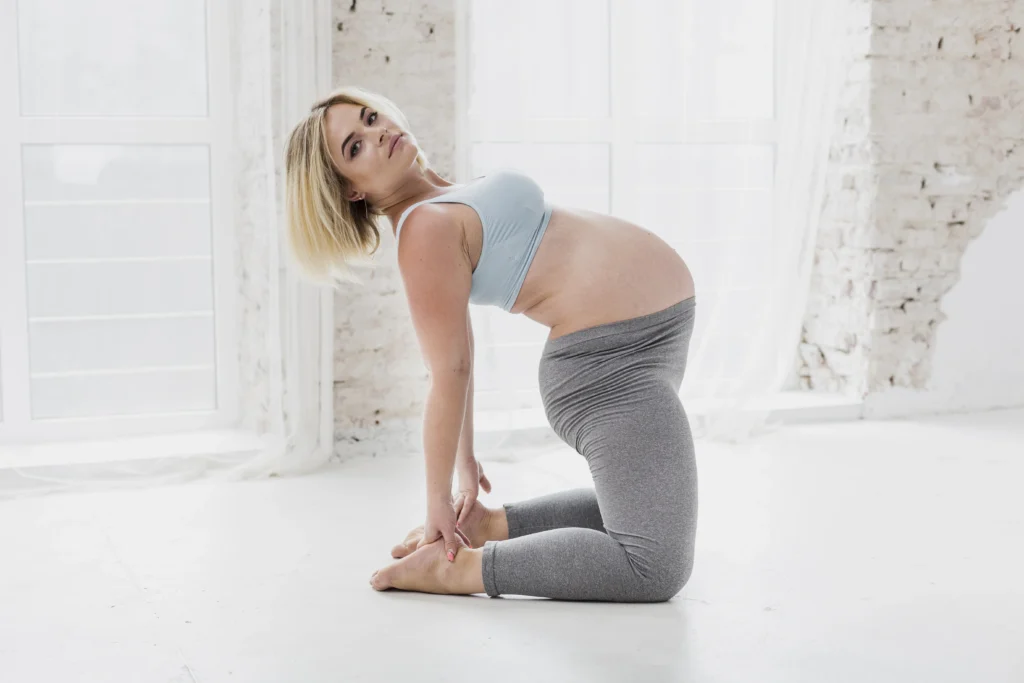
This may be the most important concept in the entire article.
More Mobility Is Not Always Better
Many people assume increased flexibility automatically improves movement.
As physiotherapists, we know that is not always true.
The Body Needs Stability Too
Healthy movement requires a balance between:
- Mobility
- Stability
Too little mobility can create stiffness.
Too little stability can create discomfort and inefficient movement.
Pregnancy Challenges This Balance
As joints become more mobile, muscles often need to work harder to provide support.
When that support is insufficient, symptoms may develop.
Why Some Women Feel Stiff Instead Of Flexible
One of the most common questions I hear is:
“If pregnancy increases flexibility, why do I feel so stiff?”
The answer lies in how the body adapts.
Growing Demands On The Muscles
As pregnancy progresses:
- The abdomen expands
- Posture changes
- Balance shifts
- Muscles work differently
Some muscles become overloaded and protective.
Protective Tightness
Muscles often tighten when they feel they need to provide additional support.
This can create sensations of stiffness even when joint mobility has increased.
Tight Does Not Always Mean Inflexible
Many women are surprised to learn they can feel both mobile and tight at the same time.
The Impact On Posture And Movement
Pregnancy changes how the body moves.
The Center Of Gravity Shifts
As the baby grows, the center of gravity moves forward. (Conder et al. 2019)
This affects:
- Standing posture
- Walking mechanics
- Balance strategies
Movement Patterns Adapt
The body naturally develops new movement strategies.
For example:
- Steps may become wider
- Walking speed may change
- Balance adjustments become more frequent
Why This Matters
These adaptations influence how forces move through the body and can affect perceived flexibility.
Can Too Much Flexibility Become A Problem?
One of the biggest myths in fitness is that more flexibility is always better.
Pregnancy demonstrates why this is not necessarily true.
Excessive Mobility Can Reduce Stability
When joints become too mobile, muscles must compensate.
This may contribute to:
- Joint discomfort
- Pelvic pain
- Feelings of instability
- Lower back pain
Overstretching Is Common
Many pregnant women continue stretching routines that were appropriate before pregnancy.
However, joints may respond differently during pregnancy.
More Stretching Is Not Always The Answer
Sometimes the body benefits more from strengthening and stability work than from additional stretching.
Did You Know?
Many women assume that becoming more flexible during pregnancy is always beneficial. In reality, excessive joint mobility can sometimes contribute to pelvic pain, lower back discomfort, and feelings of instability if muscles are not providing enough support.
How Pregnancy Affects The Pelvis
The pelvis experiences some of the most important flexibility-related changes during pregnancy.
Preparing For Birth
The body gradually prepares for labor and delivery.
Connective tissues around the pelvis become more adaptable.
Why Pelvic Stability Matters
Even though mobility increases, the pelvis still requires support.
This support comes primarily from muscles.
Common Symptoms
When mobility and stability become imbalanced, women may experience:
- Pelvic girdle pain
- Hip discomfort
- Lower back pain
These symptoms do not mean something is wrong.
They often indicate that the body needs additional support.
The Relationship Between Flexibility And Exercise
Pregnancy exercise programs should account for changing mobility.
Movement Remains Important
Regular movement supports:
- Circulation
- Strength
- Joint health
- Physical function
Focus On Quality
Rather than chasing extreme flexibility, focus on:
- Controlled movement
- Good technique
- Comfortable range of motion
Listen To Your Body
Pregnancy is not the time to force stretches or push aggressively into discomfort.
Safe Stretching During Pregnancy
Stretching can still be beneficial during pregnancy.
The key is understanding how to do it safely.
Stretch Gently
Pregnancy is generally not the time to pursue maximum flexibility gains.
Avoid Aggressive Positions
Deep stretching may place unnecessary stress on already mobile joints.
Prioritize Comfort
A stretch should feel comfortable and controlled.
Pain is not the goal.
Combine Stretching With Strength
Strong muscles help support mobile joints.
This combination often produces the best results.
A Physiotherapist’s Perspective On Flexibility
One of the biggest mistakes I see is women focusing entirely on flexibility.
Stability Deserves Equal Attention
The body needs both mobility and support.
Strong Muscles Protect Mobile Joints
Exercises that improve strength often reduce discomfort more effectively than additional stretching.
Every Woman Responds Differently
Pregnancy is highly individual.
Some women need more mobility work.
Others benefit more from stability training.
There Is No Perfect Flexibility Level
The goal is functional movement, not extreme mobility.
Physiotherapist’s Advice
During pregnancy, don’t judge progress by how deeply you can stretch. Focus on moving comfortably, maintaining good strength, and supporting your joints. In many cases, improving stability is more valuable than increasing flexibility.
What Happens After Birth?
Many women wonder whether flexibility changes disappear immediately after delivery.
Recovery Takes Time
Hormonal changes do not reverse overnight.
The body gradually adapts during the postpartum period.
Some Changes Persist Temporarily
Women may notice:
- Continued joint mobility
- Changes in posture
- Different movement patterns
for several months after birth.
The Body Continues Adapting
Postpartum recovery is a process, not a single event.
When Flexibility Changes Need Attention
Most flexibility-related changes are normal.
However, professional assessment may be helpful if you experience:
- Significant instability
- Severe joint pain
- Recurrent falls
- Difficulty walking
- Symptoms affecting daily activities
Early intervention can help improve comfort and confidence.
Final Thoughts
Pregnancy changes flexibility in fascinating ways.
For some women, movement feels easier.
For others, stiffness becomes a daily challenge.
Often, both experiences occur simultaneously.
As a physiotherapist, I encourage women to think beyond flexibility alone.
The body is not simply becoming looser.
It is adapting to support a growing baby, prepare for childbirth, and maintain movement despite enormous physical changes.
The most successful approach is not chasing maximum flexibility.
It is creating balance.
Balance between mobility and stability.
Balance between stretching and strengthening.
Balance between supporting your body and listening to its signals.
When viewed this way,
pregnancy flexibility becomes less about how far you can stretch and more about how well your body can:
move, adapt, and support you throughout one of the most remarkable journeys of your life.
Frequently Asked Questions About Flexibility During Pregnancy
Does pregnancy really make you more flexible?
Pregnancy can increase joint mobility because hormones affect connective tissues. However, not every woman notices increased flexibility, and experiences vary considerably.
What hormone affects flexibility during pregnancy?
Relaxin is one of the main hormones associated with changes in connective tissue flexibility and joint mobility during pregnancy.
Why do I feel stiff if pregnancy makes me more flexible?
Muscles often become tighter to compensate for increased joint mobility, which can create feelings of stiffness despite greater movement at the joints.
Can too much flexibility cause problems during pregnancy?
Yes. Excessive joint mobility may contribute to instability, pelvic girdle pain, lower back pain, and discomfort during movement.
Is stretching safe during pregnancy?
Gentle stretching is generally safe for most women, but aggressive or forced stretching should be avoided.
Should I focus on flexibility or strength during pregnancy?
Both are important, but many women benefit more from improving strength and stability rather than increasing flexibility.
Does relaxin only affect the pelvis?
No. Relaxin can influence connective tissues throughout the body, including the hips, knees, ankles, and shoulders.
Will pregnancy flexibility changes go away after birth?
Many changes gradually improve postpartum, although some women notice lingering mobility changes for several months.
Stay tuned with us for more health related topics.
Follow us on LinkedIn and Instagram for more.
More Read




Medical Disclaimer!
This article has been reviewed and written under the guidance of our Head Physiotherapist, Dr. Kruti Raj (PT, MUHS,CPT,CMPT). The information shared is intended for educational purposes only and should not be considered a substitute for personalized medical advice, diagnosis, or treatment.
Please consult us or any other qualified healthcare professional before beginning any exercise program, especially if you are experiencing pain, recovering from injury, or managing a medical condition.


