Most uterine fibroids can be managed effectively with personalized treatment.
Uterine fibroids are one of the most common non-cancerous growths affecting women during their reproductive years.
While many women with fibroids never experience symptoms, others may struggle with heavy menstrual bleeding, pelvic pain, frequent urination, fertility challenges, or pressure on nearby organs.
Quick Answer
Uterine fibroids are non-cancerous growths that develop in or around the uterus. While many women have no symptoms, fibroids can cause heavy menstrual bleeding, pelvic pain, pressure symptoms, infertility, and pregnancy complications. Treatment depends on the size, location, symptoms, and future pregnancy plans, and may include medication, minimally invasive procedures, or surgery.
Also known as leiomyomas or myomas, uterine fibroids develop from the smooth muscle tissue of the uterus.
They can vary significantly in size, number, and location, ranging from tiny growths that are only visible under a microscope to large masses that enlarge the uterus and cause noticeable abdominal swelling.
Although hearing the word “tumor” can be alarming, uterine fibroids are almost always benign (non-cancerous) and rarely develop into cancer.
With early diagnosis and appropriate treatment, most women can effectively manage fibroid-related symptoms and maintain a healthy quality of life.
Understanding the different types of fibroids, their causes, symptoms, and available treatment options can help women make informed decisions about their reproductive health. (Stewart et al., 2017)
Key Takeaways
- Uterine fibroids are common non-cancerous tumors of the uterus.
- Many women have fibroids without experiencing any symptoms.
- Common symptoms include heavy menstrual bleeding, pelvic pain, pressure, and frequent urination.
- Fibroids may affect fertility and pregnancy depending on their size and location.
- Ultrasound is the first-line imaging test used to diagnose uterine fibroids.
- Treatment options include medication, uterine artery embolization, focused ultrasound, myomectomy, and hysterectomy.
- Early diagnosis helps prevent complications such as anemia, chronic pain, and reduced quality of life.
What Are Uterine Fibroids?
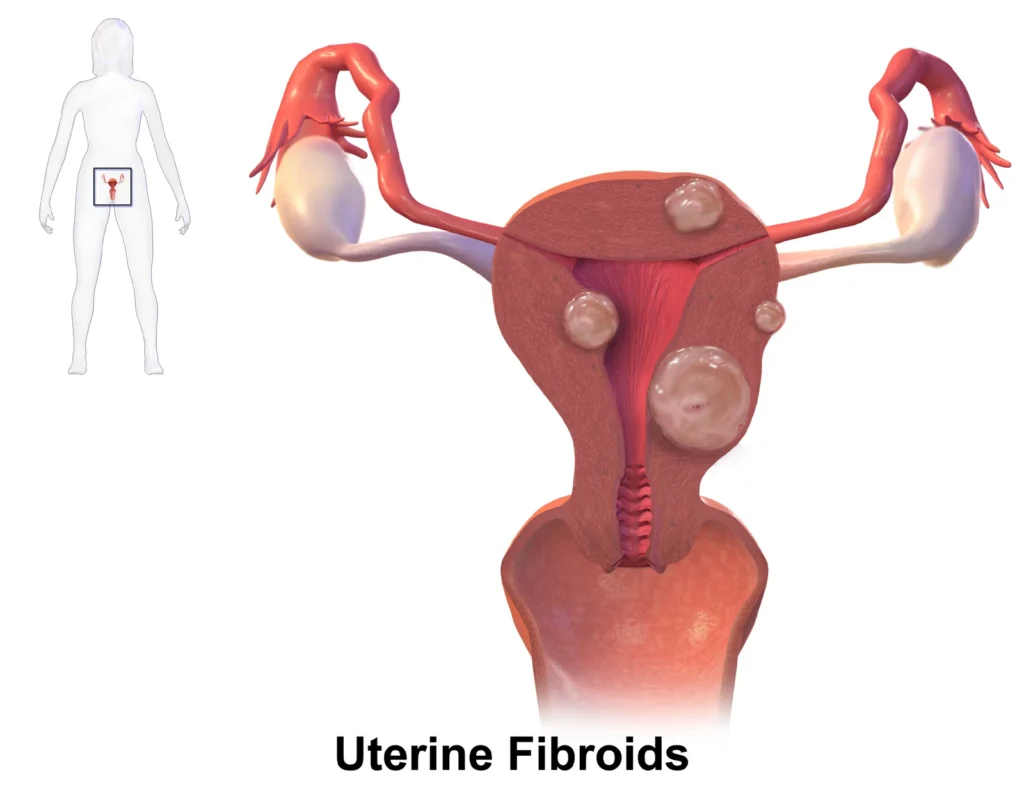
Uterine fibroids are benign growths made up of smooth muscle cells and fibrous connective tissue that develop within or around the uterus.
They are among the most common gynecological conditions, affecting up to 70-80% of women by the age of 50, although many remain symptom-free throughout their lives.
Fibroids may occur as a single growth or as multiple tumors.
Their size can range from a few millimeters to several centimeters, and in some cases, they may grow large enough to distort the shape of the uterus.
Not every fibroid requires treatment.
Small fibroids that do not cause symptoms are often monitored through regular follow-up examinations.
Treatment is generally recommended when fibroids cause significant symptoms, affect fertility, or continue to grow.
Types of Uterine Fibroids
Fibroids are classified according to their location within the uterus.
Intramural Fibroids
These are the most common type of uterine fibroids.
They develop within the muscular wall of the uterus and may cause heavy menstrual bleeding, pelvic pain, and enlargement of the uterus if they become large.
Submucosal Fibroids
Submucosal fibroids grow just beneath the inner lining of the uterus (endometrium).
Even relatively small submucosal fibroids can cause heavy menstrual bleeding and may interfere with implantation, increasing the risk of infertility or miscarriage.
Subserosal Fibroids
Subserosal fibroids develop on the outer surface of the uterus.
Instead of causing heavy bleeding, they are more likely to produce pressure symptoms by pressing against nearby organs such as the bladder or bowel.
Pedunculated Fibroids
Some fibroids are attached to the uterus by a narrow stalk, known as a peduncle.
These are called pedunculated fibroids and may occur either inside or outside the uterus.
In rare cases, the stalk can twist, causing sudden severe pelvic pain that requires immediate medical attention. (Bulun et al., 2013)
What Causes Uterine Fibroids?
The exact cause of uterine fibroids is not fully understood. Researchers believe they develop due to a combination of hormonal, genetic, and environmental factors.
Estrogen and progesterone, the two primary female reproductive hormones, play an important role in fibroid growth.
These hormones stimulate the growth of the uterine lining during each menstrual cycle and may also encourage fibroid cells to multiply.
Certain genetic changes within uterine muscle cells can also trigger abnormal cell growth, leading to the formation of fibroids.
Growth factors produced naturally by the body, along with changes in the extracellular matrix (the material that supports surrounding cells), are also thought to contribute to fibroid development.
While these factors increase the likelihood of fibroids, the exact reason why one woman develops fibroids and another does not remains unclear.
Risk Factors
Several factors increase the risk of developing uterine fibroids.
These include:
- Age between 30 and 50 years.
- Family history of uterine fibroids.
- Early onset of menstruation.
- Obesity or overweight.
- African ancestry (higher prevalence and earlier onset).
- High estrogen exposure.
- Vitamin D deficiency.
- High blood pressure.
- Diets high in red meat and low in fruits and green vegetables.
Having one or more risk factors does not necessarily mean you will develop fibroids, but it increases the likelihood compared with women without these factors.
How Do Uterine Fibroids Develop?
Fibroids begin when a single smooth muscle cell within the uterus undergoes genetic changes and starts multiplying abnormally.
Over time, these cells form a well-defined mass surrounded by fibrous connective tissue.
As estrogen and progesterone stimulate their growth, fibroids may enlarge during the reproductive years and often shrink naturally after menopause, when hormone levels decline.
Not all fibroids grow continuously.
Some remain unchanged for years, while others may increase or decrease in size depending on hormonal changes, pregnancy, or approaching menopause.
Understanding how fibroids develop helps explain why treatment varies from one woman to another.
Management depends not only on the size of the fibroid but also on its location, symptoms, future pregnancy plans, and overall health. (Donnez et al., 2016)
Symptoms of Uterine Fibroids
Many women with uterine fibroids never experience symptoms and may only discover them during a routine pelvic examination or imaging test.
However, when fibroids become larger or are located in certain areas of the uterus, they can cause a wide range of symptoms.
The severity of symptoms often depends more on the size, number, and location of the fibroids than on their presence alone.
Common symptoms include:
- Heavy or prolonged menstrual bleeding
- Painful menstrual cramps (dysmenorrhea)
- Pelvic pain or a feeling of pressure
- Frequent urination due to pressure on the bladder
- Difficulty emptying the bladder completely
- Constipation or bloating caused by pressure on the bowel
- Pain during sexual intercourse
- Lower back pain
- Enlarged abdomen or a noticeable abdominal bulge
Women with heavy menstrual bleeding caused by fibroids may also develop iron-deficiency anemia, leading to fatigue, weakness, dizziness, headaches, and reduced physical stamina.
The symptoms may gradually worsen as fibroids grow, although some fibroids remain stable or even shrink over time.
How Are Uterine Fibroids Diagnosed?
Diagnosis begins with a detailed medical history and discussion of your symptoms, menstrual cycle, reproductive goals, and family history.
Your healthcare provider will usually perform a pelvic examination to assess whether the uterus is enlarged or irregular in shape.
To confirm the diagnosis and determine the size, number, and location of fibroids, additional investigations may include:
- Pelvic ultrasound (transabdominal or transvaginal): The first-line imaging test for detecting fibroids.
- Magnetic Resonance Imaging (MRI): Provides detailed information about large or multiple fibroids and is often used when planning treatment.
- Hysteroscopy: Allows direct visualization of the uterine cavity, particularly useful for diagnosing submucosal fibroids.
- Saline infusion sonography: Improves visualization of the uterine cavity and helps identify fibroids that project into the uterus.
- Blood tests: May be performed to assess iron-deficiency anemia resulting from heavy menstrual bleeding.
Accurate diagnosis helps determine whether treatment is necessary and which treatment option is most appropriate for your individual situation.
Possible Complications
Although uterine fibroids are non-cancerous, untreated symptomatic fibroids can lead to several complications.
Heavy menstrual bleeding may result in chronic iron-deficiency anemia, affecting energy levels and overall health.
Large fibroids can compress nearby organs, causing persistent urinary symptoms, constipation, pelvic discomfort, or lower back pain.
Some women experience recurrent pregnancy loss, infertility, or pregnancy-related complications depending on the size and location of the fibroids.
In rare cases, a fibroid may outgrow its blood supply and undergo degeneration, causing sudden severe pelvic pain.
Myth vs Fact
| Myth | Fact |
|---|---|
| Fibroids always turn into cancer. | Uterine fibroids are almost always benign. Cancerous transformation is extremely rare. |
| Every fibroid requires surgery. | Many fibroids can be managed with monitoring, medications, or minimally invasive treatments. |
| Fibroids always cause infertility. | Many women with fibroids conceive naturally. Fertility depends largely on the size and location of the fibroids. |
| Heavy periods are a normal part of having fibroids. | Heavy menstrual bleeding caused by fibroids should be evaluated and treated to prevent anemia and other complications. |
Uterine Fibroids, Fertility, and Pregnancy
Many women with uterine fibroids conceive naturally and have healthy pregnancies.
However, fibroids located inside the uterine cavity or those that significantly distort the shape of the uterus may reduce fertility by interfering with sperm transport, embryo implantation, or normal fetal development.
During pregnancy, fibroids may increase in size due to hormonal changes, although some remain unchanged or even decrease.
Depending on their size and location, fibroids have been associated with an increased risk of:
- Miscarriage
- Preterm labor
- Breech presentation
- Placental complications
- Cesarean delivery
- Postpartum hemorrhage
Women who are planning pregnancy or experiencing infertility should discuss treatment options with their gynecologist to determine whether fibroid management is recommended before conception. (Pritts et al., 2009)
Physiotherapy Perspective
Physiotherapy cannot shrink or remove uterine fibroids, but it can play an important supportive role in improving symptoms and overall quality of life.
Women with fibroids often experience chronic pelvic pain, lower back pain, abdominal discomfort, reduced mobility, pelvic floor muscle dysfunction, and decreased physical activity due to heavy menstrual bleeding or pressure symptoms.
A women’s health physiotherapist can develop an individualized rehabilitation program that may include:
- Pelvic floor muscle assessment and rehabilitation
- Pain management techniques
- Postural correction
- Core stability exercises
- Gentle stretching and mobility exercises
- Breathing and relaxation techniques
- Education on activity modification during symptomatic periods
For women recovering from procedures such as myomectomy or hysterectomy, physiotherapy can also assist with restoring strength, improving mobility, scar management, and safely returning to normal daily activities.
While physiotherapy does not replace medical treatment, it complements gynecological care by helping women manage pain, improve function, and enhance their overall well-being.
Treatment for Uterine Fibroids
Treatment for uterine fibroids depends on several factors, including the size, number, and location of the fibroids, the severity of symptoms, your age, overall health, and whether you wish to become pregnant in the future.
Not all fibroids require treatment.
Women with small fibroids that do not cause symptoms may only need regular monitoring through routine pelvic examinations and imaging.
Treatment is generally recommended when fibroids cause heavy menstrual bleeding, chronic pelvic pain, infertility, recurrent pregnancy loss, pressure symptoms, or rapid growth.
Your gynecologist will recommend the most suitable treatment plan based on your individual needs and reproductive goals.
Medications
Medications help manage symptoms but usually do not permanently eliminate fibroids.
Common medical treatments include:
- Nonsteroidal anti-inflammatory drugs (NSAIDs) to relieve menstrual pain.
- Tranexamic acid to reduce heavy menstrual bleeding.
- Iron supplements to treat iron-deficiency anemia.
- Gonadotropin-releasing hormone (GnRH) agonists or antagonists to temporarily shrink fibroids before surgery or control symptoms.
- Selective progesterone receptor modulators (where approved and clinically appropriate).
- Hormonal contraceptives to help regulate menstrual bleeding in selected women.
Medication is often recommended for women with mild to moderate symptoms or as a temporary measure before definitive treatment.
Minimally Invasive Procedures
Several minimally invasive treatments are available for women who wish to avoid major surgery or preserve the uterus whenever possible.
These include:
- Uterine Artery Embolization (UAE): Blocks the blood supply to fibroids, causing them to shrink over time.
- MRI-Guided Focused Ultrasound Surgery (MRgFUS): Uses high-intensity ultrasound waves to destroy fibroid tissue without surgical incisions.
- Radiofrequency Ablation (RFA): Uses heat energy to shrink fibroids while preserving healthy uterine tissue.
These procedures may not be suitable for every woman, particularly those planning future pregnancies, and should be discussed with a gynecologist.
Surgical Treatment
Surgery may be recommended when fibroids are large, cause severe symptoms, affect fertility, or do not respond to conservative treatment.
The choice of surgery depends on the woman’s age, symptoms, and future pregnancy plans.
Common surgical options include:
- Myomectomy: Removes fibroids while preserving the uterus. This is often the preferred option for women who wish to have children in the future.
- Hysteroscopic Myomectomy: Removes submucosal fibroids through the cervix without external incisions.
- Laparoscopic or Robotic Myomectomy: Minimally invasive techniques used for selected fibroids.
- Open Myomectomy: Recommended for very large or multiple fibroids.
- Hysterectomy: Complete removal of the uterus. This is considered the definitive treatment for fibroids and is generally recommended for women with severe symptoms who have completed their families.
Your healthcare provider will explain the benefits, risks, recovery time, and potential effects on fertility before recommending surgery. (Informedhealth.org et al., 2025)
Lifestyle and Self-Care
Although lifestyle changes cannot prevent or cure uterine fibroids, they may help improve overall health and reduce symptom severity.
Healthy habits include:
- Eating a balanced diet rich in fruits, vegetables, whole grains, and lean proteins.
- Maintaining a healthy body weight.
- Engaging in regular physical activity.
- Limiting highly processed foods and excessive red meat intake.
- Managing stress through relaxation techniques, yoga, or mindfulness.
- Consuming iron-rich foods if heavy menstrual bleeding has caused anemia.
- Attending regular gynecological check-ups.
Women with significant menstrual blood loss should also discuss iron supplementation with their healthcare provider if needed.
Can Uterine Fibroids Be Prevented?
There is no guaranteed way to prevent uterine fibroids because their exact cause remains unclear.
However, maintaining a healthy weight, following a nutritious diet, exercising regularly, and managing chronic medical conditions may help reduce the risk of developing symptomatic fibroids.
Early evaluation of heavy menstrual bleeding, pelvic pain, or pressure symptoms allows timely diagnosis and treatment before complications develop.
When Should You See a Doctor?
You should consult a healthcare professional if you experience:
- Heavy or prolonged menstrual bleeding.
- Severe menstrual pain.
- Persistent pelvic pain or pressure.
- Frequent urination or difficulty emptying your bladder.
- Constipation caused by pelvic pressure.
- Pain during sexual intercourse.
- Difficulty becoming pregnant.
- Rapid enlargement of the abdomen.
- Symptoms of anemia such as fatigue, dizziness, or weakness.
- Bleeding after menopause.
Prompt medical evaluation helps identify the cause of your symptoms and ensures appropriate treatment.
Final Thoughts
A diagnosis of uterine fibroids can feel overwhelming, but it is important to remember that fibroids are one of the most common benign conditions affecting women. Many women live healthy, active lives with fibroids, and a wide range of effective treatments are available when symptoms occur.
If you experience heavy periods, persistent pelvic pain, pressure symptoms, or difficulty becoming pregnant, don’t ignore these signs. Early consultation with a gynecologist, combined with supportive care such as women’s health physiotherapy when appropriate, can help relieve symptoms, improve quality of life, and support your long-term reproductive health.
Conclusion
Uterine fibroids are among the most common non-cancerous conditions affecting women of reproductive age.
While many fibroids cause no symptoms, others can significantly affect menstrual health, fertility, pregnancy, and overall quality of life.
Fortunately, a wide range of effective treatments is available, from medications and minimally invasive procedures to fertility-preserving surgery and definitive surgical options.
The best treatment depends on the size and location of the fibroids, symptom severity, and your future reproductive plans.
If you experience heavy periods, persistent pelvic pain, or pressure symptoms, don’t ignore them.
Early diagnosis and personalized treatment can help relieve symptoms, prevent complications, and improve your overall well-being.
Alongside medical care, women’s health physiotherapy can support pain management, pelvic floor function, and recovery, helping you return to your daily activities with greater comfort and confidence. (Bulun et al., 2013)
Frequently Asked Questions
Can uterine fibroids disappear on their own?
Small fibroids may shrink naturally after menopause due to lower hormone levels, but they rarely disappear completely during the reproductive years.
Are uterine fibroids cancerous?
No. Uterine fibroids are benign (non-cancerous) growths, and cancer arising from a fibroid is extremely rare.
Can fibroids cause heavy menstrual bleeding?
Yes. Heavy or prolonged menstrual bleeding is one of the most common symptoms of uterine fibroids, particularly submucosal fibroids.
Can I get pregnant if I have fibroids?
Many women with fibroids conceive naturally. However, some fibroids may affect fertility or increase the risk of pregnancy complications depending on their size and location.
Can physiotherapy treat uterine fibroids?
Physiotherapy cannot remove fibroids but can help manage pelvic pain, lower back pain, improve pelvic floor function, and support recovery after treatment.
Stay tuned with us for more health related topics.
Follow us on LinkedIn and Instagram for more.
More Read




Medical Disclaimer!
This article has been reviewed and written under the guidance of our Head Physiotherapist, Dr. Kruti Raj (PT, MUHS,CPT,CMPT). The information shared is intended for educational purposes only and should not be considered a substitute for personalized medical advice, diagnosis, or treatment.
Please consult us or any other qualified healthcare professional before beginning any exercise program, especially if you are experiencing pain, recovering from injury, or managing a medical condition.