


Routine tests during pregnancy help monitor your health, track your baby’s growth, and identify any concerns early.
The day you see a positive pregnancy test is often the day a whole new vocabulary enters your life.
Blood tests.
Dating scans.
NT scans.
Anatomy scans.
Glucose tests.
Growth scans.
Non-stress tests.
For many expecting mothers, the list feels endless.
It is completely normal to wonder:
- Which tests are really necessary?
- Why are they done?
- Will they hurt?
- What happens if a result is abnormal?
- Does every pregnant woman need every test?
Quick Answer
Pregnancy tests and scans help monitor the health of both mother and baby throughout pregnancy. Some tests are routine, while others are recommended only in certain situations. From the first positive pregnancy test to third trimester monitoring, each investigation provides valuable information about your baby’s growth, your health, and the progress of your pregnancy.
As a women’s health physiotherapist,
I often meet women who are more anxious about upcoming tests than about the physical changes of pregnancy itself.
Much of that anxiety comes from not knowing what to expect.
The good news is that most pregnancy tests and scans are routine checks designed to monitor your health and your baby’s development.
Rather than thinking of them as exams you need to pass, think of them as tools that help your healthcare team provide the best possible care.
This guide walks you through pregnancy one trimester at a time, explaining the most common tests and scans in simple language.
Key Takeaways
- Pregnancy tests help monitor both maternal and fetal health.
- Screening tests estimate risk, while diagnostic tests confirm or rule out conditions.
- The first trimester includes hCG testing, blood work, urine testing, and the dating scan.
- The anatomy scan is one of the most detailed ultrasounds during pregnancy.
- Gestational diabetes screening helps identify blood sugar problems early.
- Some specialized tests are recommended only for selected pregnancies.
- Ultrasound uses sound waves and does not expose the baby to radiation.
- Not every expecting mother will need every available test.
- Understanding the purpose of each investigation can reduce anxiety.
- Regular antenatal care supports healthy pregnancy outcomes.
Why Routine Pregnancy Tests Matter
Pregnancy is constantly changing.
A test that is useful at eight weeks may not be helpful at twenty-eight weeks.
Each investigation has a specific purpose.
Some check your health.
Some monitor your baby’s growth.
Some identify conditions that can be managed early.
Many routine pregnancy tests help detect problems before symptoms appear.
The World Health Organization recommends regular antenatal care because early identification and management of pregnancy complications improve outcomes for both mothers and babies. (WHO 2024)
The Difference Between Screening And Diagnostic Tests
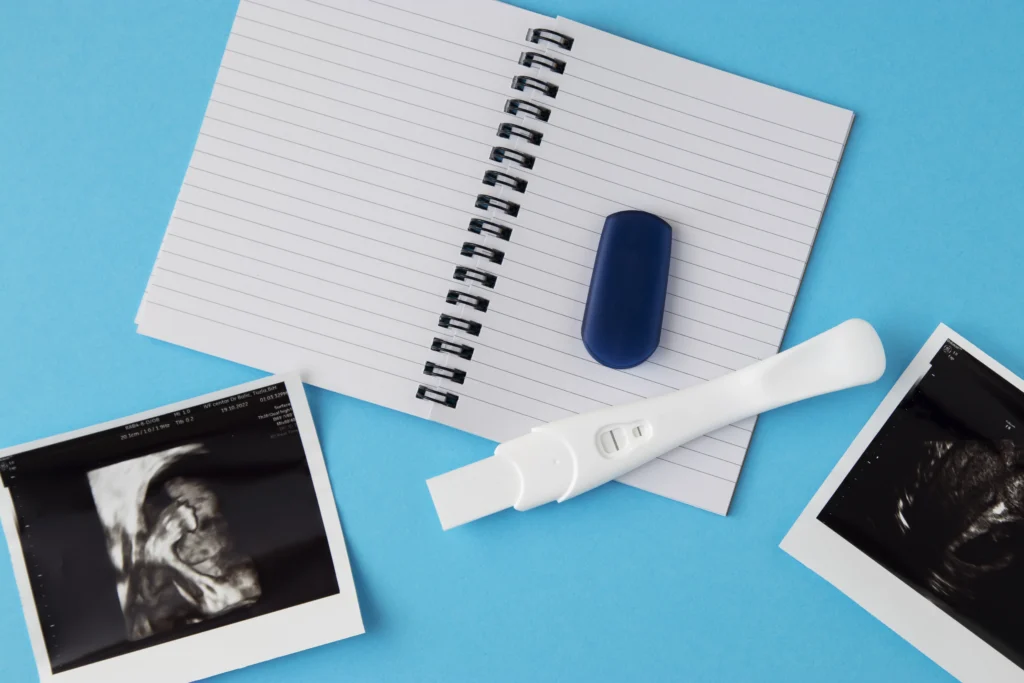
One of the most confusing parts of pregnancy care is understanding the difference between screening and diagnostic tests.
Screening Tests
Screening tests estimate the likelihood that a condition may be present.
They do not provide a definite diagnosis.
Examples include:
- First trimester screening
- NIPT
- Gestational diabetes screening
Diagnostic Tests
Diagnostic tests are designed to confirm or rule out a condition.
Examples include:
- Chorionic villus sampling (CVS)
- Amniocentesis
Not every woman needs diagnostic testing.
These tests are usually recommended only in certain situations.
Understanding this difference helps reduce unnecessary worry when a screening test suggests additional evaluation.
First Trimester Tests And Scans
The first trimester lays the foundation for the rest of pregnancy.
Pregnancy Test (hCG)
The first test most women take measures human chorionic gonadotropin, commonly called hCG.
This hormone is produced after implantation.
Home pregnancy tests detect hCG in urine.
Blood tests can measure hCG more precisely. (Cleveland Clinic)
Blood Group And Rh Factor
Early pregnancy blood work usually determines:
- Blood group
- Rh factor
This information becomes important if the mother is Rh negative. (Cleveland Clinic)
Complete Blood Count
A complete blood count checks:
- Hemoglobin
- Red blood cells
- White blood cells
- Platelets
This helps identify conditions such as anemia.
Routine Blood Tests During Pregnancy
Many healthcare providers also screen for infections and conditions that may affect pregnancy.
These may include testing for:
- Hepatitis B
- HIV
- Syphilis
- Rubella immunity
Recommendations vary depending on individual circumstances and local guidelines.
Urine Testing
Urine tests help detect:
- Urinary tract infections
- Protein
- Glucose
- Kidney function changes
Many women are surprised to learn that urinary infections can occur without obvious symptoms during pregnancy.
Dating And Viability Scan
One of the most exciting early appointments is the dating scan.
This ultrasound helps:
- Confirm pregnancy
- Estimate gestational age
- Check fetal heartbeat
- Determine the expected due date
- Identify multiple pregnancies
Many women discover that the estimated due date changes slightly after this scan.
First Trimester Screening
This screening combines ultrasound findings and blood tests to estimate the likelihood of certain chromosomal conditions.
The ultrasound often includes measurement of nuchal translucency, sometimes called the NT scan.
Second Trimester Tests And Scans
Many women find the second trimester more comfortable physically.
However, important testing continues.
The Anatomy Scan
Often performed around the middle of pregnancy, this detailed ultrasound examines the baby’s development.
The anatomy scan evaluates many structures, including:
- Brain
- Heart
- Spine
- Kidneys
- Limbs
- Abdomen
Many people associate this scan with learning the baby’s sex.
In reality, its primary purpose is to assess development.
Maternal Blood Screening
Depending on individual circumstances, additional blood screening may be recommended during the second trimester.
Your healthcare provider will explain which routine tests are appropriate for you during this phase of pregnancy.
Gestational Diabetes Screening
Pregnancy changes how the body processes sugar.
Many women undergo a glucose screening test during the second trimester. (Nahum et al. 2002)
This test helps identify gestational diabetes.
Early diagnosis allows appropriate management and monitoring.
Cervical Length Assessment
Some women may undergo ultrasound assessment of cervical length.
This can help identify increased risk of preterm birth in certain situations.
Not every pregnancy requires this evaluation.
Third Trimester Tests And Scans
The final months of pregnancy focus on growth, wellbeing, and preparation for birth.
Growth Scan
Some women may have a growth ultrasound to evaluate:
- Baby’s growth
- Amniotic fluid
- Placental position
- Fetal movements
Growth scans are not always routine and may depend on individual pregnancy needs.
Repeat Blood Tests
Certain blood tests may be repeated later in pregnancy.
These may include checking hemoglobin levels or other factors depending on local recommendations.
Group B Streptococcus Screening
In some countries, screening for Group B Streptococcus is recommended during late pregnancy. (Sabbatucci et al. 2022)
Practices vary internationally.
Your healthcare provider can explain local guidelines.
Fetal Position Assessment
As birth approaches, your healthcare provider checks the baby’s position.
This helps plan ongoing care.
Non-Stress Test
A non-stress test monitors the baby’s heart rate and movement.
It is often used when additional monitoring is considered helpful.
The test is painless and usually involves external monitors placed on the abdomen.
Special Tests That May Be Recommended In Some Pregnancies
Not every woman needs these investigations.
They are generally offered based on age, family history, screening results, or other medical factors.
Non-Invasive Prenatal Testing (NIPT)
NIPT analyzes small amounts of fetal DNA circulating in the mother’s blood.
It is a screening test, not a diagnostic test.
Chorionic Villus Sampling (CVS)
CVS collects a small sample of placental tissue for genetic analysis.
This is a diagnostic procedure.
Amniocentesis
Amniocentesis involves collecting a small amount of amniotic fluid.
It can provide important diagnostic information when indicated.
Your healthcare provider will discuss the benefits and risks before recommending these procedures.
What Happens During An Ultrasound?
Many first-time mothers are nervous before their first scan.
Understanding the process can help.
Ultrasound Uses Sound Waves
Unlike X-rays, ultrasound does not use radiation.
It uses sound waves to create images.
What You Can Expect
During the examination:
- Gel is applied to the abdomen.
- A handheld device called a transducer is moved across the skin.
- Images appear on a monitor.
Some early ultrasounds may be performed differently depending on the stage of pregnancy.
Will It Hurt?
Most ultrasounds are painless.
Occasionally, slight pressure may be felt.
Did You Know?
Ultrasound scans use sound waves to create images of your baby. Unlike X-rays or CT scans, routine pregnancy ultrasounds do not use radiation, making them a valuable tool for monitoring fetal development.
What If A Test Result Is Abnormal?
Hearing that a result is “outside the normal range” can be frightening.
It is important to remember that many screening tests identify women who simply need additional evaluation.
An abnormal screening result does not necessarily mean that the baby has a health problem.
Many women go on to have healthy pregnancies after further assessment.
Always discuss results directly with your healthcare provider.
A Physiotherapist’s Advice For Reducing Scan Anxiety
Many women experience significant stress before appointments.
Remember The Purpose
Most tests are designed to provide reassurance and information.
Ask Questions
Understanding what a test is looking for often reduces anxiety.
Practice Relaxed Breathing
Slow breathing can help reduce tension before and during appointments.
Stay Active
Appropriate physical activity can help manage stress throughout pregnancy.
Avoid Information Overload
Online information is not always accurate or relevant to your individual pregnancy.
Trust your healthcare team.
Physiotherapist’s Perspective
Many women become anxious before pregnancy tests and scans because they are unsure what to expect. Understanding the purpose of each investigation, staying physically active, and practicing calm breathing techniques can help make the pregnancy journey feel more manageable.
When To Ask Questions About Your Test Results
Never feel uncomfortable asking questions.
You may wish to ask:
- Why is this test recommended?
- What does the result mean?
- Is this a screening or diagnostic test?
- Will additional testing be necessary?
- How will this affect my pregnancy care?
Being informed helps you become an active participant in your healthcare decisions.
Final Thoughts
Routine tests and scans during pregnancy are not simply medical procedures.
They are milestones.
The positive pregnancy test confirms a new beginning.
The dating scan introduces many parents to their baby’s heartbeat.
The anatomy scan offers a detailed look at growth and development.
Later tests help ensure both mother and baby continue to thrive.
As a physiotherapist, I encourage women to approach these appointments with curiosity rather than fear.
Knowledge often replaces anxiety with confidence.
Remember that every pregnancy is unique.
Not every woman will need every available test.
Your healthcare team recommends investigations based on your individual needs and circumstances.
Most importantly, these tests are not about finding problems.
They are about supporting healthy pregnancies, providing reassurance,
and helping mothers and babies receive the best possible care from the very beginning of their journey together.
Frequently Asked Questions About Pregnancy Tests and Scans
What is the first test done during pregnancy?
The first test is usually an hCG pregnancy test, which detects the pregnancy hormone in urine or blood.
What is the purpose of the dating scan?
The dating scan helps confirm the pregnancy, estimate the due date, check the baby’s heartbeat, and identify multiple pregnancies.
What is the anatomy scan?
The anatomy scan is a detailed ultrasound that examines the baby’s organs, spine, limbs, brain, heart, and overall development.
Are pregnancy ultrasounds safe?
Yes. Ultrasound uses sound waves rather than radiation and is widely used to monitor pregnancy.
What is gestational diabetes screening?
This test checks how your body processes sugar during pregnancy and helps identify gestational diabetes.
What is the difference between screening and diagnostic tests?
Screening tests estimate the likelihood of a condition, while diagnostic tests can confirm or rule out a diagnosis.
Will every pregnant woman need every available test?
No. Some tests are routine, while others are recommended only in specific medical situations or based on risk factors.
What should I do if a test result is abnormal?
An abnormal screening result does not always mean there is a problem. Your healthcare provider will explain the findings and whether further evaluation is needed.
Stay tuned with us for more health related topics.
Follow us on LinkedIn and Instagram for more.
More Read


Medical Disclaimer!
This article has been reviewed and written under the guidance of our Head Physiotherapist, Dr. Kruti Raj (PT, MUHS,CPT,CMPT). The information shared is intended for educational purposes only and should not be considered a substitute for personalized medical advice, diagnosis, or treatment.
Please consult us or any other qualified healthcare professional before beginning any exercise program, especially if you are experiencing pain, recovering from injury, or managing a medical condition.


