
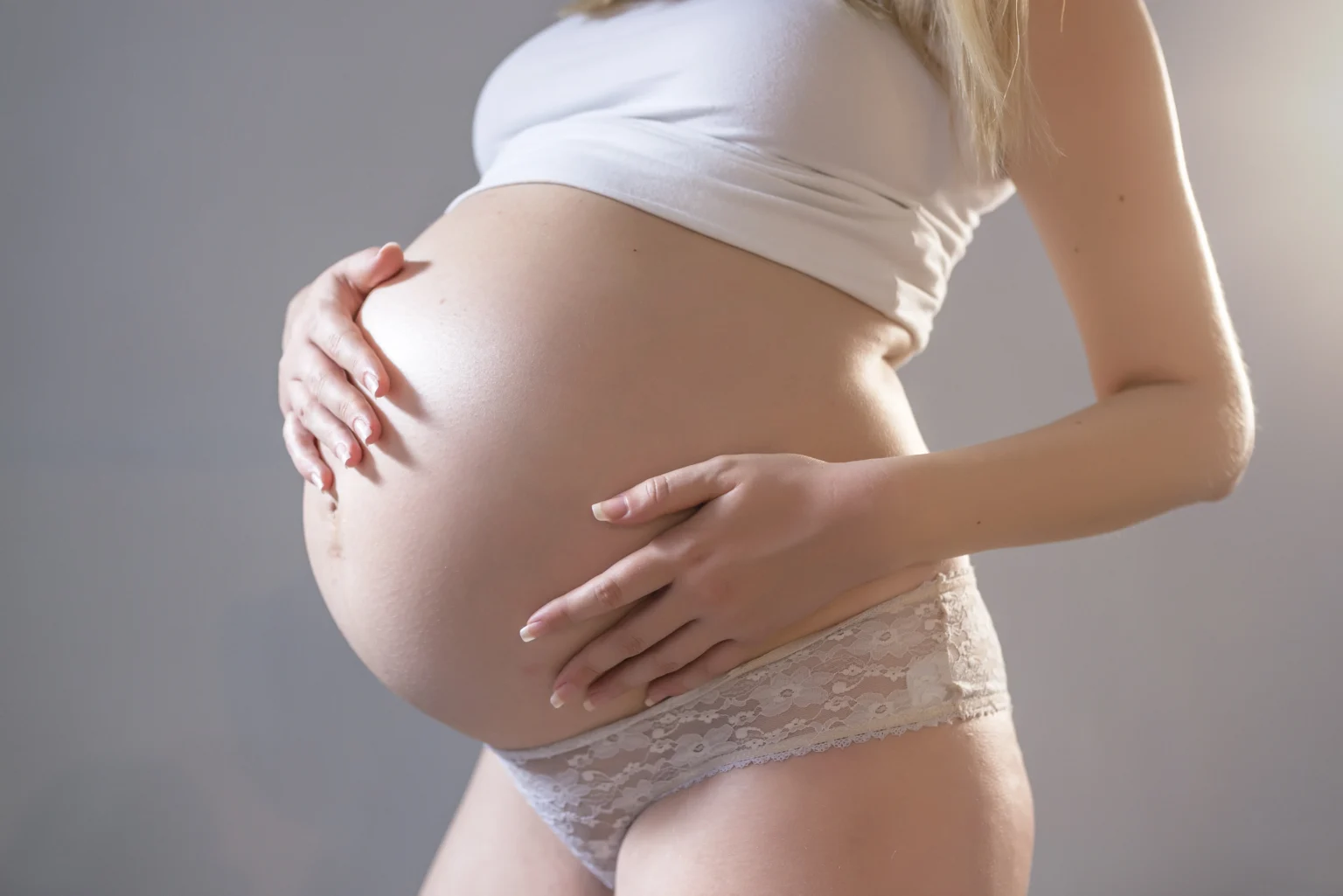

Pregnancy changes your body in remarkable ways, and one of the first things many women notice is the shape of their growing belly.
Some people may tell you that a high belly means you are having a girl, while others insist that a low or pointy belly means you are expecting a boy.
Quick Answer
Your pregnancy belly shape is usually influenced by your body type, posture, muscles, the baby’s position, and normal pregnancy changes. Contrary to popular myths, the shape of your belly cannot reliably predict your baby’s sex or future health.
As a physiotherapist, I hear these beliefs all the time.
They are often shared with good intentions, but they can also create unnecessary confusion and anxiety.
The truth is that your belly shape is usually influenced by your body, your posture, your muscles, and the way your baby is positioned rather than old pregnancy myths.
Understanding what really affects belly shape can help you appreciate the incredible changes your body goes through during pregnancy.
Key Takeaways
- Every healthy pregnancy belly can look different.
- Belly shape does not scientifically predict the baby’s sex.
- Body type and posture can influence abdominal appearance.
- The baby’s position may temporarily change the shape of your belly.
- First pregnancies often look different from later pregnancies.
- Pregnancy naturally changes posture and the center of gravity.
- Most day-to-day changes in belly shape are completely normal.
- Focus on your health and comfort rather than comparing your bump with others.
Can Your Belly Shape Really Tell You Anything?
The simple answer is yes, but probably not in the way many people think.
Your belly shape may reflect normal changes in your body and pregnancy, but it cannot reliably predict whether you are having a boy or a girl.
It also cannot tell you whether your baby will be large, small, or whether your labor will be easy.
As a physiotherapist, I encourage women to see belly shape as one small part of a much bigger picture.
Every pregnancy is unique, and healthy pregnancies come in many different shapes and sizes.
The Biggest Myth About Belly Shape
One of the oldest pregnancy myths is that the shape of your belly reveals your baby’s sex.
You may have heard:
- A pointy belly means a boy.
- A wide belly means a girl.
- Carrying high means one thing.
- Carrying low means another.
There is no scientific evidence that the external shape of the abdomen can accurately predict the baby’s sex.
Modern ultrasound and genetic testing provide much more reliable information.
Fortunately, your belly does not have to match a particular shape to be perfectly normal.
What Actually Influences Belly Shape?
Several factors can affect how a pregnant belly looks.
Most of them have nothing to do with the baby’s gender.
Your Body Type
Every woman’s body is different.
Height, torso length, pelvic shape, and body composition can all influence how the pregnancy appears from the outside.
For example, women with a longer torso may notice that the baby has more vertical space, while women with a shorter torso may feel that their belly projects outward earlier.
This variation is usually a normal part of human anatomy.
Your Posture
Posture can also influence belly appearance.
As pregnancy progresses, the body naturally adapts to support the growing baby.
Research exploring the biomechanics of pregnancy reports that pregnancy can influence spinal posture, balance, and movement patterns. (Conder et al. 2019)
As a physiotherapist, I often explain that these changes are not signs that the body is failing.
They are examples of the body adapting to a changing center of gravity.
Your Muscles
The abdominal and trunk muscles help support the body during pregnancy.
The way these muscles function can influence posture and movement, which may also affect how the belly appears.
This is one reason why gentle exercise and prenatal physiotherapy can help improve comfort during pregnancy.
Why Does Your Belly Look Different at Different Stages?
One of the most common questions I hear is:
“Why did my belly suddenly change shape?”
The answer is that pregnancy is constantly changing.
As the uterus grows and the baby develops, the appearance of the abdomen naturally changes.
Research investigating pregnancy biomechanics has shown that changes in body mass distribution affect posture and balance throughout pregnancy. (Opala-Berdzik et al. 2010)
This means that your belly at twenty weeks may look very different from your belly at thirty weeks.
Both can be completely normal.
First Pregnancy Versus Later Pregnancies
Many women notice that their first pregnancy looks different from later ones.
During a first pregnancy, the abdominal wall and surrounding tissues are adapting to these changes for the first time.
In later pregnancies, women often feel that they “show” earlier.
There are several possible reasons for this, including previous stretching of the abdominal wall and natural differences in muscle support.
This variation is common and should not automatically be viewed as a problem.
Can Your Belly Shape Change During the Day?
Surprisingly, yes.
Many pregnant women notice that their belly looks different in the morning and the evening.
Several factors may contribute to these normal changes:
- The baby’s movements
- Your posture
- Muscle fatigue
- Digestion
- Daily activity levels
A belly that looks slightly different at the end of a long day is not necessarily a cause for concern.
Pregnancy and Your Center of Gravity
As the baby grows, the body’s center of gravity gradually changes.
To maintain balance, many women naturally adjust the way they stand and walk.
Studies examining pregnancy-related postural changes have reported that pregnancy influences body posture and musculoskeletal function. (Schröder et al. 2016)
As a physiotherapist, I often reassure women that these changes are normal adaptations rather than signs of poor posture.
The body is simply finding new ways to remain stable and comfortable.
A Lesser-Known Fact About Belly Shape
Many people think the belly grows evenly in every direction.
In reality, the appearance of the abdomen may change depending on the baby’s movements.
Some days the baby may change position, making one side of the abdomen appear slightly different from the other.
These temporary changes are often part of a normal pregnancy experience.
Physiotherapist’s Perspective
One of the most important messages I try to share with pregnant women is that comparison can create unnecessary stress.
Social media often shows one version of what a pregnant body “should” look like.
Real life is very different.
Some women carry high.
Some carry low.
Some have a round belly.
Others have a more pointed appearance.
Most of these differences simply reflect the natural variation of the human body.
Rather than focusing on whether your belly looks like someone else’s, focus on healthy habits that support your pregnancy:
- Stay gently active.
- Move regularly.
- Practice good posture.
- Perform pregnancy-safe exercises.
- Attend your prenatal appointments.
Your body is not trying to fit a stereotype.
It is adapting to support the growth and development of your baby.
Can Your Baby’s Position Affect Your Belly Shape?
Yes, it can.
As your baby grows and moves inside the uterus, the appearance of your abdomen may change from time to time.
Some days your belly may look rounder, while on other days you may notice that one side seems more prominent.
This often happens because babies move frequently throughout pregnancy.
The MSD Manual explains that fetal position and presentation can change during pregnancy, particularly before the final weeks when the baby gradually settles into a birth position. (MSD Manual 2024)
As a physiotherapist,
I often reassure women that these temporary changes are usually a normal part of pregnancy.
What Does It Mean When Your Belly “Drops”?
Many women hear people say,
“It looks like your baby has dropped.”
This change is often called lightening.
It usually happens when the baby’s head moves lower into the pelvis in preparation for birth.
However, the timing is different for everyone.
Some women notice this change weeks before labor, while others may not notice it until labor begins.
A lower belly does not always mean that delivery is about to happen.
It is simply one of the many natural changes that can occur during late pregnancy.
Why Does Your Belly Look Different From Other Women’s?
One of the biggest sources of pregnancy anxiety is comparison.
Many women wonder why their belly looks smaller, bigger, rounder, or lower than someone else’s.
The answer is that every pregnancy is unique.
Several factors influence appearance:
- Height
- Torso length
- Body composition
- Muscle tone
- Posture
- Number of previous pregnancies
- Baby’s position
- Gestational age
There is no single “perfect” pregnancy belly.
As a physiotherapist, I often remind women that healthy pregnancies come in many different shapes.
Can Diastasis Recti Affect Belly Shape?
Diastasis recti is a condition where the abdominal muscles separate along the midline as the uterus grows.
This is a common adaptation during pregnancy.
Some women notice:
- A ridge along the middle of the abdomen
- A change in abdominal shape
- A feeling of reduced core support
Diastasis recti does not automatically mean something is wrong.
In many cases, it improves naturally after childbirth, while some women may benefit from physiotherapy-guided rehabilitation.
The important thing is not to panic if you notice changes in your abdominal wall.
Can Your Belly Shape Change During the Same Day?
Many pregnant women are surprised by how much their belly can change over just a few hours.
You may notice differences because of:
- Your posture
- The baby’s movements
- Digestion
- Muscle fatigue
- Daily activity
- Fluid retention
A belly that looks slightly different in the evening compared with the morning is often completely normal.
A Lesser-Known Fact
Many pregnant women become concerned if one side of the belly temporarily appears larger.
In many cases, this simply reflects the baby’s position at that moment.
As the baby moves, the appearance of the abdomen may change again.
When Should You Talk to Your Healthcare Provider?
Most differences in belly shape are harmless.
However, you should seek medical advice if you notice:
- Sudden severe abdominal pain
- Heavy vaginal bleeding
- A significant decrease in fetal movements
- Rapid swelling that concerns you
- Fluid leaking from the vagina
- Any symptom that feels unusual or worrying
Trust your instincts.
If something does not feel right, it is always appropriate to contact your healthcare provider.
Myths vs Facts
Myth
A pointy belly means you are having a boy.
Fact
There is no scientific evidence that belly shape predicts the baby’s sex.
Myth
A low belly means labor will start immediately.
Fact
Belly position varies, and a lower abdomen does not always mean labor is near.
Myth
A small belly means the baby is too small.
Fact
Belly size alone cannot accurately determine the baby’s growth.
Myth
Every healthy pregnancy belly should look the same.
Fact
Healthy pregnancies come in many different shapes and sizes.
Myths vs Facts About Pregnancy Belly Shape
| Myth | Fact |
|---|---|
| A pointy belly means you are having a boy. | There is no scientific evidence that belly shape predicts the baby’s sex. |
| A low belly means labor is about to start. | Belly position varies and does not reliably predict labor timing. |
| Every healthy pregnancy belly looks the same. | Healthy pregnancies come in many different shapes and sizes. |
| A small belly means the baby is too small. | Belly size alone cannot accurately measure fetal growth. |
A Physiotherapist’s Perspective
Pregnancy is not a competition.
One woman may have a small, neat bump.
Another may have a larger, rounder belly.
Neither is automatically healthier than the other.
As a physiotherapist, I encourage women to focus on how their body feels rather than how it compares with someone else’s.
Simple habits can help support your body throughout pregnancy:
- Stay physically active.
- Practice good posture.
- Perform pregnancy-safe exercises.
- Move regularly.
- Listen to your body.
Your body is constantly adapting to support your growing baby, and those changes deserve appreciation rather than criticism.
Final Thoughts
Your pregnancy belly tells a story, but not the one that old myths suggest. In most cases, the shape of your bump reflects normal changes in your body, your posture, your muscles, and the position of your growing baby.
As a physiotherapist, I often remind women that there is no ideal pregnancy belly. Every woman has a unique body, and every pregnancy follows its own path.
Comparing your bump with someone else’s can create unnecessary worry. Instead, focus on healthy habits, gentle movement, and regular prenatal care that support both you and your baby.
A Gentle Reminder:
Your belly does not have to look a certain way to be normal. The most important signs of a healthy pregnancy come from proper medical care, not from old pregnancy myths.
Frequently Asked Questions
Can belly shape tell if I am having a boy or a girl?
No. There is no scientific evidence that the shape of your pregnancy belly predicts the baby’s sex.
Why does my belly look different from other pregnant women?
Body type, posture, muscles, baby’s position, and gestational age all influence belly shape.
Can my baby’s position change my belly shape?
Yes. As your baby moves, the appearance of your abdomen may temporarily change.
Why does my belly look different in the evening?
Daily activity, posture, digestion, and the baby’s movements can all influence belly appearance.
Does a low belly mean labor is near?
Not necessarily. Belly position varies between pregnancies and is not a reliable sign of labor.
Can posture affect the way my belly looks?
Yes. Pregnancy naturally changes posture and body alignment, which may influence belly appearance.
Is it normal for my belly shape to change during pregnancy?
Yes. As your baby grows and moves, your belly may look different at different stages.
When should I contact my healthcare provider?
Seek medical advice if you have severe pain, heavy bleeding, decreased fetal movements, or any symptoms that concern you.
Stay tuned with us for more health related topics.
Follow us on LinkedIn and Instagram for more.
More Read


Medical Disclaimer!
This article has been reviewed and written under the guidance of our Head Physiotherapist, Dr. Kruti Raj (PT, MUHS,CPT,CMPT). The information shared is intended for educational purposes only and should not be considered a substitute for personalized medical advice, diagnosis, or treatment.
Please consult us or any other qualified healthcare professional before beginning any exercise program, especially if you are experiencing pain, recovering from injury, or managing a medical condition.


