


Acne is often associated with the teenage years, but for many women, persistent breakouts continue well into adulthood.
If acne appears repeatedly along the jawline, chin, cheeks, or neck and is accompanied by irregular periods, unwanted facial hair, or weight gain, it could be linked to Polycystic Ovary Syndrome (PCOS) rather than ordinary acne.
Quick Answer
PCOS acne is caused by hormonal imbalance, particularly elevated androgen levels that increase oil production and clog pores. While PCOS cannot be cured, acne can usually be managed through healthy lifestyle changes, proper skincare, medications, and treatment of the underlying hormonal condition.
PCOS is one of the most common hormonal disorders affecting women of reproductive age and is a major cause of adult female acne.
Unlike occasional pimples, PCOS-related acne is driven by hormonal imbalance, particularly elevated levels of androgens (male hormones), which stimulate the skin’s oil glands to produce excess sebum.
This creates an ideal environment for clogged pores, bacterial growth, and chronic inflammation, resulting in persistent or severe acne.
Studies estimate that up to 40-60% of women with PCOS experience acne, although the severity varies depending on hormone levels, genetics, insulin resistance, and lifestyle factors.
Acne associated with PCOS often persists longer than typical adolescent acne and may continue into the thirties or forties if the underlying hormonal imbalance is not addressed. (Damoulaki et al. 2025)
The encouraging news is that PCOS acne can usually be managed successfully.
Along with medical treatment, healthy lifestyle changes, balanced nutrition, regular exercise, and proper skincare can significantly improve both skin health and overall hormonal balance.
In this article, we’ll explore why PCOS causes acne, how it is diagnosed, available treatment options, and practical strategies to help achieve healthier, clearer skin.
Key Takeaways
- PCOS acne is primarily caused by hormonal imbalance and elevated androgen levels.
- Persistent acne around the jawline and chin is a common feature of hormonal acne.
- Insulin resistance and chronic inflammation can worsen acne severity.
- Healthy eating, regular exercise, stress management, and proper skincare support clearer skin.
- Medical treatment may include hormonal therapy, metformin, and topical acne medications.
- Early treatment helps reduce the risk of acne scars and long-term skin damage.
- Managing PCOS as a whole is the most effective way to achieve lasting improvement in acne.
What Is PCOS?
Polycystic Ovary Syndrome (PCOS) is a hormonal and metabolic disorder that affects how the ovaries function.
It disrupts normal ovulation and alters the balance of reproductive hormones, leading to a variety of symptoms that affect not only fertility but also the skin, hair, metabolism, and menstrual cycle.
Despite its name, not every woman with PCOS develops ovarian cysts.
Instead, the condition is diagnosed based on a combination of symptoms, hormone levels, and, in some cases, ultrasound findings.
According to the World Health Organization (WHO),
PCOS affects approximately 8% to 13% of women of reproductive age worldwide, although many cases remain undiagnosed. (World Health Organization, 2025)
Common symptoms of PCOS include:
- Irregular or absent menstrual periods
- Difficulty conceiving
- Acne
- Excess facial or body hair (hirsutism)
- Hair thinning on the scalp
- Weight gain
- Insulin resistance
- Darkened skin folds (acanthosis nigricans)
Because PCOS affects several body systems, symptoms can vary considerably.
Some women mainly experience menstrual irregularities, while others may find that acne becomes one of the earliest and most troublesome signs of the condition.
Can PCOS Cause Acne?
Yes.
PCOS is one of the leading hormonal causes of persistent acne in adult women.
Acne develops when hair follicles become blocked with excess oil (sebum), dead skin cells, and bacteria.
In women with PCOS, elevated androgen levels stimulate the sebaceous glands to produce more oil than normal, increasing the likelihood of clogged pores and inflamed pimples.
Unlike common teenage acne, PCOS acne often:
- Persists beyond adolescence
- Appears on the lower face and jawline
- Is deeper and more painful
- Returns repeatedly despite over-the-counter treatments
- May leave scars or dark marks after healing
Many women notice that their acne improves temporarily but quickly returns because the underlying hormonal imbalance remains untreated.
Why Does PCOS Cause Acne?
Several hormonal and metabolic changes associated with PCOS contribute to acne development.
Excess Androgens
The primary cause of PCOS acne is an increase in androgens, including testosterone.
These hormones stimulate the sebaceous glands in the skin, causing them to produce excessive amounts of sebum.
Too much sebum combines with dead skin cells to block hair follicles.
Once pores become clogged, bacteria naturally present on the skin can multiply, leading to redness, swelling, and acne lesions.
Women with higher androgen levels often experience more persistent or severe acne.
Increased Sebum Production
Sebum is an oily substance that normally helps protect and moisturize the skin.
However, excessive sebum production creates an environment where pores become blocked more easily.
As oil accumulates beneath the skin, it mixes with dead skin cells and bacteria, increasing the risk of:
- Blackheads
- Whiteheads
- Papules
- Pustules
- Painful cystic acne
This is one reason why women with PCOS frequently report oily skin alongside acne.
Insulin Resistance
Many women with PCOS also develop insulin resistance, where the body’s cells become less responsive to insulin.
To compensate, the pancreas produces more insulin.
Higher insulin levels stimulate the ovaries to produce additional androgens while also increasing the activity of insulin-like growth factor-1 (IGF-1),
both of which can worsen acne by increasing oil production and inflammation.
Improving insulin sensitivity through diet, regular exercise, and weight management may help reduce acne severity in many women.
Chronic Inflammation
PCOS is associated with chronic low-grade inflammation, even in women who are not overweight.
Inflammation plays a significant role in acne development by increasing redness, swelling, and the formation of inflamed pimples.
Persistent inflammation may also contribute to slower healing and increase the risk of acne scars and post-inflammatory pigmentation. (Escobar-Morreale et al. 2018)
Symptoms of PCOS Acne
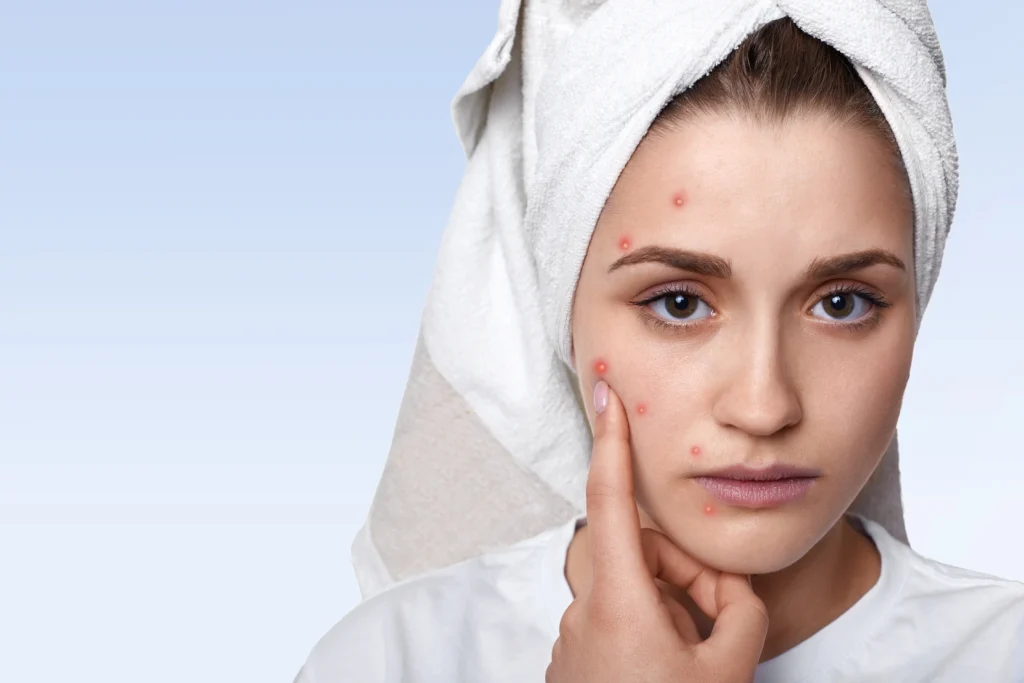
PCOS acne can vary from mild to severe and often differs from ordinary acne in both its appearance and persistence.
Common symptoms include:
Persistent Acne
Unlike occasional pimples, PCOS acne tends to recur frequently and may continue despite using regular skincare products.
Breakouts often persist for months or even years if the hormonal imbalance remains untreated.
Acne Along the Jawline and Chin
One of the most recognizable features of hormonal acne is its location.
PCOS acne commonly develops on:
- Chin
- Jawline
- Lower cheeks
- Neck
These areas are particularly sensitive to androgen-related changes.
Deep Cystic Acne
Many women with PCOS develop large, painful cysts beneath the skin.
Cystic acne is more likely to cause discomfort and permanent scarring than superficial pimples.
Oily Skin
Excess androgen levels stimulate the oil glands, making the skin appear greasy or shiny, especially across the face.
Oily skin often contributes to recurring breakouts throughout the day.
Acne Scars and Dark Spots
Repeated inflammation can damage the deeper layers of the skin, leaving behind:
- Acne scars
- Dark marks (post-inflammatory hyperpigmentation)
- Uneven skin texture
Early treatment reduces the risk of long-term skin damage.
Acne That Worsens Around Menstrual Periods
Many women notice that acne flares become more severe before or during menstruation due to additional hormonal fluctuations.
In women with PCOS, these flare-ups are often more pronounced and longer lasting than those experienced by women without the condition.
How Is PCOS Acne Diagnosed?
There is no single test that confirms PCOS acne.
Instead, healthcare providers diagnose it by evaluating your symptoms, hormone levels, menstrual history, and other features of Polycystic Ovary Syndrome while ruling out other possible causes of acne.
Because acne can develop for many reasons, identifying the underlying hormonal imbalance is essential for selecting the most effective treatment.
Medical History
Your healthcare provider will begin by asking questions about your skin and overall health, including:
- When the acne first appeared
- Whether the acne is persistent or comes and goes
- Menstrual cycle regularity
- Family history of PCOS or severe acne
- Recent weight changes
- Pregnancy history
- Current medications
- Previous acne treatments and their effectiveness
This information helps determine whether hormonal changes may be contributing to the condition.
Physical Examination
A physical examination looks for signs commonly associated with PCOS in addition to evaluating the severity of acne.
Your doctor may assess:
- Type and location of acne lesions
- Oily skin
- Excess facial or body hair
- Hair thinning on the scalp
- Body Mass Index (BMI)
- Signs of insulin resistance, such as darkened skin folds around the neck or underarms
The pattern of acne can also provide valuable clues.
Acne concentrated around the jawline and chin is often associated with hormonal changes.
Hormone Tests
Blood tests help evaluate hormone levels and identify hormonal imbalances that contribute to acne.
Common hormone tests include:
- Total testosterone
- Free testosterone
- DHEAS (Dehydroepiandrosterone sulfate)
- LH (Luteinizing Hormone)
- FSH (Follicle-Stimulating Hormone)
- Prolactin
- Thyroid function tests
These investigations also help rule out other endocrine disorders that may cause similar symptoms.
Blood Sugar and Insulin Tests
Since insulin resistance is common in women with PCOS, your healthcare provider may recommend tests such as:
- Fasting blood glucose
- HbA1c
- Fasting insulin levels
- Oral glucose tolerance test (when indicated)
Identifying insulin resistance is important because improving blood sugar control may also reduce androgen production and help improve acne.
Pelvic Ultrasound
A pelvic ultrasound may be recommended if PCOS is suspected based on symptoms and blood tests.
The scan helps evaluate the ovaries for features commonly seen in PCOS, such as multiple small follicles.
However, it’s important to remember that not every woman with PCOS has polycystic ovaries, and not every woman with polycystic ovaries has PCOS.
Ultrasound findings are only one part of the overall diagnosis. (Sheehan et al. 2004)
Other Causes of Acne That Should Be Ruled Out
Although PCOS is a common cause of adult female acne, several other conditions can produce similar symptoms.
Accurate diagnosis ensures that treatment targets the actual cause.
Hormonal Acne Unrelated to PCOS
Hormonal fluctuations during the menstrual cycle, pregnancy, or menopause can trigger acne without the presence of PCOS.
These breakouts often improve once hormone levels stabilize.
Acne Vulgaris
Acne vulgaris is the most common type of acne and usually begins during adolescence.
Unlike PCOS acne, it is not primarily caused by hormonal disorders, although hormones may still influence its severity.
Medication-Induced Acne
Certain medications can contribute to acne, including:
- Corticosteroids
- Some hormonal medications
- Lithium
- Certain anti-epileptic drugs
Your healthcare provider will review your medication history during the assessment.
Cosmetic-Related Acne
Using heavy, oil-based cosmetics or skincare products that clog pores may lead to acne breakouts.
Choosing non-comedogenic skincare products can help reduce this risk.
Stress-Related Acne
Chronic stress increases cortisol levels, which may stimulate oil production and worsen acne.
Although stress alone does not cause PCOS, it can aggravate existing acne.
Treatment Options for PCOS Acne
Successful treatment focuses on controlling the hormonal imbalance responsible for acne while reducing inflammation and preventing new breakouts.
Most women notice gradual improvement over several months rather than immediate results.
Lifestyle Modification
Healthy lifestyle habits form the foundation of PCOS management.
These changes can improve insulin sensitivity, reduce androgen levels, and help decrease acne severity over time.
Recommended lifestyle measures include:
- Maintaining a healthy body weight
- Exercising regularly
- Managing stress
- Getting adequate sleep
- Avoiding smoking
- Limiting alcohol consumption
Lifestyle improvements also benefit menstrual health and reduce the long-term metabolic risks associated with PCOS.
Healthy Diet
Although diet alone cannot cure PCOS acne, healthy eating supports hormonal balance and reduces insulin resistance.
A balanced eating pattern should emphasize:
- Fresh vegetables
- Fruits
- Whole grains
- Lean protein
- Healthy fats
- Legumes
- Nuts and seeds
Limiting highly processed foods, sugary beverages, and refined carbohydrates may help reduce insulin spikes that contribute to excess androgen production.
Exercise and Physiotherapy
Regular physical activity is one of the most effective non-medication approaches for improving PCOS symptoms.
Exercise helps by:
- Improving insulin sensitivity
- Supporting healthy weight management
- Reducing chronic inflammation
- Improving circulation
- Lowering stress levels
From a physiotherapy perspective, combining aerobic exercise with resistance training provides long-term benefits for hormonal and metabolic health.
A physiotherapist can develop an individualized exercise program based on a woman’s fitness level, medical history, and personal goals, making exercise safer, more sustainable, and easier to maintain.
Weight Management
For women who are overweight or obese, losing 5-10% of body weight may significantly improve insulin resistance and reduce androgen levels.
As hormone levels become more balanced, many women experience fewer acne breakouts along with improvements in menstrual regularity and other PCOS symptoms.
However, women with a normal BMI can also develop PCOS acne, so treatment should always focus on overall hormonal health rather than weight alone.
Medications
When lifestyle modifications are not sufficient, healthcare providers may prescribe medications based on the individual’s symptoms and reproductive goals.
Treatment options may include:
- Combined oral contraceptive pills
- Anti-androgen medications such as spironolactone
- Metformin to improve insulin sensitivity
- Topical retinoids
- Benzoyl peroxide
- Topical or oral antibiotics for short-term inflammatory acne
Medication should always be used under medical supervision, as treatment varies depending on age, pregnancy plans, and overall health.
Skin Care Tips for PCOS Acne
A consistent skincare routine complements medical treatment and helps reduce irritation and new breakouts.
Helpful skincare practices include:
- Wash your face twice daily using a gentle cleanser.
- Avoid scrubbing the skin aggressively.
- Use non-comedogenic moisturizers and sunscreen.
- Remove makeup before sleeping.
- Avoid squeezing or picking pimples to reduce scarring.
- Introduce new skincare products gradually.
- Keep hair clean and away from the face if excess oil contributes to breakouts.
While skincare alone cannot correct hormonal imbalance, it plays an important role in maintaining healthy skin and improving treatment outcomes.
Can PCOS Acne Be Cured?
PCOS itself is a long-term condition, which means there is currently no permanent cure.
However, PCOS acne can usually be controlled effectively by managing the underlying hormonal imbalance and adopting healthy lifestyle habits.
For many women, acne improves significantly when androgen levels decrease and insulin resistance is better managed.
Depending on the severity of the condition, treatment may involve lifestyle modifications, skincare, medications, or a combination of these approaches.
It is important to understand that acne improvement takes time.
Since the skin naturally renews itself every few weeks, noticeable changes often appear after two to three months, while optimal improvement may take six months or longer.
Even after acne clears, maintaining healthy habits and following your healthcare provider’s recommendations helps reduce the risk of future breakouts.
Natural Ways to Reduce PCOS Acne
While natural remedies cannot eliminate the hormonal imbalance responsible for PCOS, they can support healthier skin and improve the effectiveness of medical treatment.
Follow a Low-Glycemic Diet
Foods that rapidly increase blood sugar levels may worsen insulin resistance, which can contribute to increased androgen production.
Choosing low-glycemic foods may help stabilize blood sugar levels and support hormonal balance.
Examples include:
- Whole grains
- Lentils
- Beans
- Leafy green vegetables
- Fresh fruits
- Nuts
- Seeds
Replacing sugary snacks and refined carbohydrates with healthier alternatives may help reduce acne flare-ups over time.
Get Enough Sleep
Sleep is essential for hormone regulation and skin repair.
Aim for 7-9 hours of quality sleep every night and try to maintain a regular sleep schedule.
Poor sleep may increase stress hormones and inflammation, both of which can negatively affect acne.
Manage Stress
Chronic stress can increase cortisol levels, which may stimulate oil production and worsen existing acne.
Simple stress-management techniques include:
- Meditation
- Deep breathing exercises
- Yoga
- Journaling
- Spending time outdoors
- Relaxation exercises
Managing stress also supports overall physical and emotional well-being.
Stay Hydrated
Drinking adequate water supports normal skin function and overall health.
Although hydration alone does not cure acne, healthy skin is better able to maintain its protective barrier and recover from inflammation.
Avoid Picking or Squeezing Pimples
Picking acne lesions may:
- Increase inflammation
- Delay healing
- Introduce bacteria
- Increase the risk of permanent acne scars
- Cause dark spots after healing
Allow pimples to heal naturally or seek appropriate medical treatment instead of squeezing them.
Follow a Consistent Skincare Routine
Healthy skincare habits help support medical treatment and reduce new breakouts.
A simple routine should include:
- Gentle cleansing twice daily
- Oil-free moisturizer
- Broad-spectrum sunscreen
- Non-comedogenic skincare products
Avoid switching products too frequently, as consistency usually produces better long-term results.
When Should You See a Doctor?
Occasional pimples are common, but persistent or severe acne should be evaluated by a healthcare professional, particularly when accompanied by other symptoms of PCOS.
Seek medical advice if you experience:
- Acne that persists despite over-the-counter treatments
- Painful cystic acne
- Acne scars developing
- Frequent acne flare-ups
- Irregular or missed periods
- Excess facial or body hair
- Hair thinning
- Difficulty becoming pregnant
- Sudden worsening of acne during adulthood
Early diagnosis allows treatment to begin before acne becomes more severe or causes permanent scarring.
Physiotherapist’s Role in Managing PCOS
Although physiotherapists do not directly treat acne, they play an important role in managing several underlying factors that contribute to PCOS.
Regular physical activity improves metabolic health, reduces insulin resistance, and supports hormonal balance, all of which may indirectly reduce acne severity.
A physiotherapist can contribute by providing:
Individualized Exercise Programs
Exercise plans are tailored according to age, fitness level, body weight, and existing medical conditions.
Personalized programs improve safety, consistency, and long-term adherence.
Weight Management Support
For women who need to lose weight, physiotherapists develop structured exercise plans that promote gradual, sustainable weight loss while preserving muscle strength and joint health.
Improving Insulin Sensitivity
Regular aerobic exercise and resistance training help the body’s cells use insulin more effectively.
Better insulin sensitivity may lower androgen production and reduce acne flare-ups over time.
Reducing Stress
Exercise stimulates the release of endorphins, improves mood, and helps reduce stress, which may indirectly benefit skin health.
Encouraging Healthy Lifestyle Habits
Physiotherapists promote long-term healthy behaviors rather than short-term fitness programs, helping women better manage PCOS and its associated symptoms.
Myth vs Fact
| Myth | Fact |
|---|---|
| PCOS acne is the same as teenage acne. | PCOS acne is mainly caused by hormonal imbalance and often persists into adulthood. |
| Washing your face multiple times a day will cure acne. | Overwashing may irritate the skin. Gentle cleansing twice daily is usually sufficient. |
| Chocolate alone causes acne. | There is no strong evidence that chocolate alone causes acne, but diets high in refined sugars may worsen breakouts in some women. |
| Makeup should never be used if you have acne. | Non-comedogenic makeup can usually be used safely when removed properly each day. |
| PCOS acne will disappear without treating PCOS. | Managing the underlying hormonal imbalance is often necessary for long-term acne control. |
Common Myths About PCOS Acne
Many misconceptions about PCOS acne can delay appropriate treatment or lead to unrealistic expectations.
Myth: PCOS Acne Is Just Like Teenage Acne
Fact: PCOS acne is primarily caused by hormonal imbalance and often persists into adulthood. It commonly affects the jawline, chin, and neck and usually requires treatment that addresses the underlying hormonal changes.
Myth: Washing Your Face More Often Will Cure Acne
Fact: Excessive washing may irritate the skin and damage its natural protective barrier. Cleansing your face twice daily with a gentle cleanser is generally sufficient.
Myth: Eating Chocolate Always Causes Acne
Fact: Chocolate itself is not the direct cause of acne. However, diets high in refined sugars and highly processed foods may worsen insulin resistance and contribute to acne in some individuals.
Myth: Makeup Should Be Completely Avoided
Fact: Many women with PCOS can safely wear makeup by choosing non-comedogenic products and removing makeup thoroughly before sleeping.
Myth: Acne Will Disappear Once Periods Become Regular
Fact: While improved hormonal balance often reduces acne, skin improvement varies from person to person and may require ongoing skincare or medical treatment.
Final Thoughts
PCOS acne can affect both physical appearance and emotional well-being, but it is a manageable condition. Understanding the hormonal changes behind persistent breakouts is the first step toward finding the right treatment and improving long-term skin health.
By combining healthy lifestyle habits, a balanced diet, regular exercise, appropriate skincare, and medical guidance, many women can achieve clearer skin while improving their overall hormonal and metabolic health. Early diagnosis and consistent treatment provide the best opportunity for lasting results.
Conclusion
PCOS acne is more than a cosmetic concern.
It reflects underlying hormonal and metabolic changes that require a comprehensive approach to management.
Elevated androgen levels, increased oil production, insulin resistance, and chronic inflammation all contribute to persistent breakouts that may continue into adulthood if left untreated.
Fortunately, effective treatment is available.
Healthy lifestyle habits, balanced nutrition, regular exercise, appropriate skincare, and medical therapy can significantly improve acne while also supporting overall hormonal health.
If you experience persistent acne together with irregular periods, unwanted facial hair, or other symptoms of PCOS, consult a healthcare professional for an accurate diagnosis.
Early treatment not only improves skin health but also reduces the risk of long-term complications associated with PCOS.
Frequently Asked Questions
1. Can PCOS cause severe acne?
Yes. Elevated androgen levels can trigger persistent, inflammatory, and cystic acne, especially around the jawline and chin.
2. Will treating PCOS improve acne?
For many women, managing hormonal imbalance through lifestyle changes and medical treatment significantly reduces acne over time.
3. Which foods may help reduce PCOS acne?
A balanced diet rich in vegetables, fruits, lean proteins, whole grains, healthy fats, and low-glycemic foods may help support hormonal balance.
4. Can stress make PCOS acne worse?
Yes. Chronic stress may increase cortisol levels, which can contribute to increased oil production and worsen acne.
5. How long does it take for PCOS acne treatment to work?
Most women notice improvement after two to three months, while significant changes may take six months or longer.
6. Should I see a dermatologist or gynecologist for PCOS acne?
Both specialists may be involved. A dermatologist treats acne, while a gynecologist or endocrinologist manages the underlying hormonal imbalance.
Stay tuned with us for more health related topics.
Follow us on LinkedIn and Instagram for more.
More Read


Medical Disclaimer!
This article has been reviewed and written under the guidance of our Head Physiotherapist, Dr. Kruti Raj (PT, MUHS,CPT,CMPT). The information shared is intended for educational purposes only and should not be considered a substitute for personalized medical advice, diagnosis, or treatment.
Please consult us or any other qualified healthcare professional before beginning any exercise program, especially if you are experiencing pain, recovering from injury, or managing a medical condition.


