Can PCOS really cause thyroid problems?
Polycystic Ovary Syndrome (PCOS) and thyroid disorders are two of the most common hormonal conditions affecting women of reproductive age.
Although they are separate medical conditions, research suggests that women with PCOS have a higher likelihood of developing thyroid problems, particularly hypothyroidism and Hashimoto’s thyroiditis, an autoimmune thyroid disease.
Quick Answer
PCOS does not directly cause thyroid disease, but women with Polycystic Ovary Syndrome (PCOS) are more likely to develop thyroid disorders such as hypothyroidism and Hashimoto’s thyroiditis. Since both conditions can affect metabolism, fertility, and menstrual health, early diagnosis and appropriate treatment of thyroid problems can improve overall health and help manage overlapping symptoms.
Both conditions can affect metabolism, menstrual cycles, fertility, body weight, and overall hormonal balance.
Because they share many similar symptoms, such as fatigue, weight gain, irregular periods, and difficulty conceiving, thyroid disorders may sometimes go unrecognized in women who already have PCOS.
Understanding the relationship between PCOS and thyroid health is important because identifying and treating thyroid disorders early can improve symptoms, support reproductive health, and reduce the risk of long-term complications. (Palomba et al. 2023)
Key Takeaways
- Women with PCOS have a higher risk of developing thyroid disorders, particularly hypothyroidism and Hashimoto’s thyroiditis.
- PCOS and thyroid disorders share several symptoms, including fatigue, weight gain, irregular periods, and fertility problems.
- Thyroid disorders do not cause PCOS but may worsen hormonal and metabolic symptoms if left untreated.
- Diagnosis involves medical history, physical examination, thyroid blood tests, and thyroid ultrasound when indicated.
- Treating thyroid disease may improve energy levels, menstrual regularity, fertility, and metabolic health.
- Regular exercise, healthy eating, adequate sleep, and weight management support both PCOS and thyroid health.
- Routine medical follow-up helps ensure both conditions are managed effectively over the long term.
What Is the Thyroid Gland?
The thyroid gland is a small, butterfly-shaped gland located at the front of the neck, just below the Adam’s apple.
Despite its small size, it plays a vital role in regulating many essential body functions.
The thyroid produces two primary hormones:
- Thyroxine (T4)
- Triiodothyronine (T3)
These hormones help regulate:
- Metabolism
- Body temperature
- Heart rate
- Energy production
- Brain function
- Muscle strength
- Digestive function
- Menstrual health
- Fertility
The thyroid gland is controlled by thyroid-stimulating hormone (TSH), which is released by the pituitary gland in the brain.
Together, these hormones help maintain the body’s normal metabolic balance.
When the thyroid produces either too little or too much hormone, multiple body systems can be affected.
What Is PCOS?
Polycystic Ovary Syndrome (PCOS) is a hormonal disorder that affects how the ovaries function.
Women with PCOS may experience:
- Absent or Irregular menstrual periods
- High androgen (male hormone) levels
- Multiple small ovarian follicles seen on ultrasound
- Difficulty with ovulation
- Fertility challenges
- Insulin resistance
- Weight gain in some women
- Acne
- Excess facial and body hair
PCOS affects approximately 8-13% of women of reproductive age, making it one of the most common endocrine disorders worldwide.
Although PCOS primarily affects the reproductive system, it can also influence metabolism, cardiovascular health, and mental well-being.
Can PCOS Affect Thyroid Health?
PCOS does not directly cause thyroid disease.
However, studies have shown that women with PCOS are more likely to develop thyroid disorders than women without PCOS.
Researchers believe this increased risk may be related to several overlapping factors, including:
- Hormonal imbalance
- Insulin resistance
- Chronic low-grade inflammation
- Genetic susceptibility
- Autoimmune processes
Likewise, untreated thyroid disorders can worsen several PCOS symptoms, including irregular menstrual cycles, weight gain, infertility, and metabolic disturbances.
Because of this close relationship, healthcare providers may recommend thyroid function testing in women with PCOS, particularly if symptoms suggest an underlying thyroid disorder.
Why Are Thyroid Disorders More Common in Women with PCOS?
Although researchers continue to study the connection, several mechanisms may explain why thyroid disorders occur more frequently in women with PCOS.
Hormonal Interactions
The reproductive and thyroid hormone systems are closely connected.
Changes in estrogen, progesterone, insulin, and androgen levels may influence thyroid function, while thyroid hormones also affect ovarian function and menstrual regulation.
When one hormonal system is disrupted, the other may also be affected.
Insulin Resistance
Insulin resistance is common in women with PCOS.
High insulin levels may contribute to chronic inflammation and metabolic disturbances that affect multiple endocrine organs, including the thyroid gland.
Improving insulin sensitivity through healthy lifestyle changes may support both metabolic and hormonal health.
Autoimmune Factors
Women with PCOS appear to have a higher prevalence of autoimmune thyroid disease, particularly Hashimoto’s thyroiditis.
In Hashimoto’s disease, the immune system mistakenly attacks thyroid tissue, gradually reducing the gland’s ability to produce thyroid hormones.
Researchers believe shared immune mechanisms may partly explain the increased occurrence of autoimmune thyroid disease in women with PCOS.
Genetic Predisposition
Both PCOS and thyroid disorders tend to run in families.
A woman with a family history of:
- PCOS
- Thyroid disease
- Type 2 diabetes
- Autoimmune disorders
may have a greater likelihood of developing one or both conditions. (Janssen et al. 2004)
Common Thyroid Disorders Associated with PCOS
Several thyroid conditions may occur alongside PCOS, but two are particularly common.
Hypothyroidism
Hypothyroidism occurs when the thyroid gland does not produce enough thyroid hormones.
This slows many of the body’s normal processes and may cause symptoms such as:
- Fatigue
- Weight gain
- Dry skin
- Constipation
- Cold intolerance
- Depression
- Slow heart rate
- Heavy or irregular menstrual periods
Because many of these symptoms overlap with PCOS, hypothyroidism can sometimes remain undiagnosed unless thyroid function tests are performed.
Proper treatment with thyroid hormone replacement usually helps restore normal thyroid hormone levels and improve symptoms.
Hashimoto’s Thyroiditis
Hashimoto’s thyroiditis is the most common cause of hypothyroidism in areas where iodine intake is adequate.
It is an autoimmune disease in which the body’s immune system gradually damages the thyroid gland.
Over time, this damage reduces thyroid hormone production.
Women with Hashimoto’s thyroiditis may initially have no symptoms.
As thyroid function declines, symptoms become more noticeable.
Diagnosis often includes:
- Elevated TSH
- Low free T4
- Positive anti-thyroid peroxidase (Anti-TPO) antibodies
Research suggests that Hashimoto’s thyroiditis occurs more frequently in women with PCOS than in the general female population.
Shared Symptoms of PCOS and Thyroid Disorders
Because PCOS and thyroid disorders affect similar hormonal pathways, many of their symptoms overlap.
Common shared symptoms include:
- Irregular menstrual cycles
- Difficulty becoming pregnant
- Weight gain
- Fatigue
- Depression or low mood
- Hair thinning
- Dry skin
- Difficulty losing weight
- Reduced energy levels
Despite these similarities, each condition requires its own evaluation and treatment.
Women with PCOS who experience persistent fatigue, worsening weight gain, cold intolerance, constipation, or neck swelling should discuss thyroid testing with their healthcare provider. (Poppe et al. 2003)
How Thyroid Problems Can Worsen PCOS
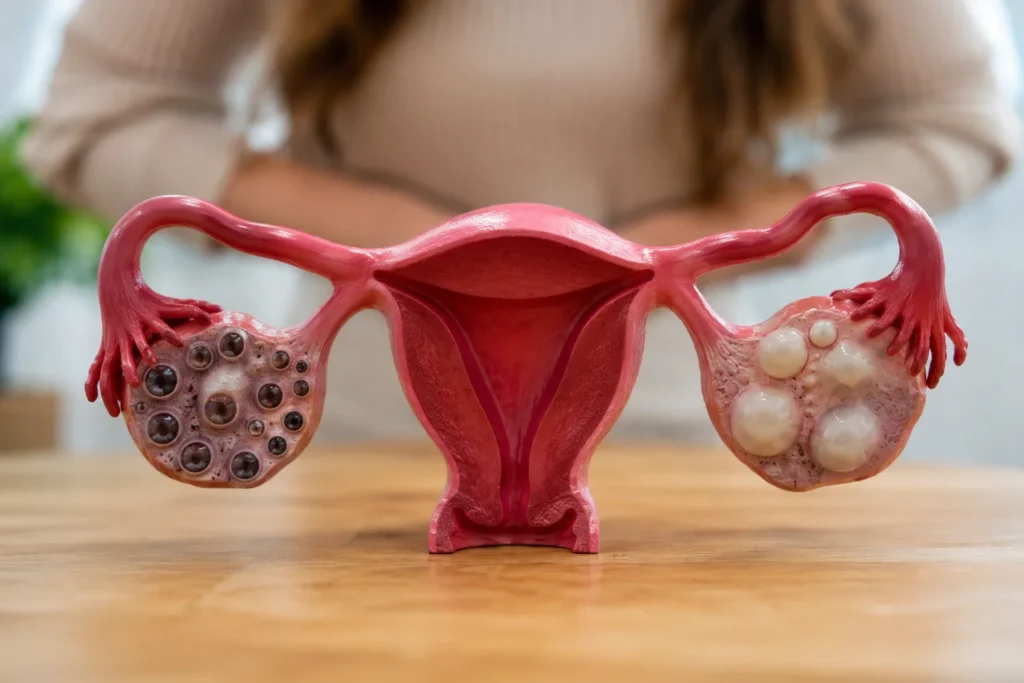
When thyroid disorders and PCOS occur together, they can influence each other and make symptoms more difficult to manage.
Although thyroid disease does not cause PCOS, untreated thyroid dysfunction can worsen several reproductive and metabolic problems associated with the condition.
Some of the ways thyroid disorders may affect women with PCOS include:
- Increased menstrual irregularities
- Reduced ovulation
- Greater difficulty conceiving
- Slower metabolism
- Weight gain
- Increased fatigue
- Higher cholesterol levels
- Reduced insulin sensitivity
Treating thyroid disease appropriately may improve overall hormonal balance and reduce the severity of some PCOS-related symptoms.
Can Thyroid Disorders Affect Fertility?
Yes.
Healthy thyroid function is essential for normal ovulation, implantation, and pregnancy.
When thyroid hormone levels are too low, ovulation may become irregular or stop altogether, reducing the chances of natural conception.
Untreated hypothyroidism may contribute to:
- Irregular menstrual cycles
- Reduced ovulation
- Infertility
- Early pregnancy loss
- Pregnancy complications
Women with both PCOS and thyroid disease may therefore face additional fertility challenges.
Fortunately, restoring normal thyroid hormone levels with appropriate treatment often improves menstrual regularity and reproductive outcomes.
Women planning pregnancy should discuss thyroid screening and treatment with their healthcare provider. (Alexander et al. 2017)
How Are Thyroid Problems Diagnosed in Women with PCOS?
Because PCOS and thyroid disorders share many symptoms, healthcare providers use a combination of clinical evaluation and laboratory tests to identify thyroid dysfunction.
Medical History
The healthcare provider may ask about:
- Menstrual cycle pattern
- Fatigue
- Weight changes
- Cold intolerance
- Constipation
- Hair loss
- Dry skin
- Fertility concerns
- Family history of thyroid disease
- Family history of autoimmune disorders
- Current medications
A detailed medical history helps distinguish symptoms related to PCOS from those caused by thyroid dysfunction.
Physical Examination
A physical examination may include assessment of:
- Body weight and BMI
- Blood pressure
- Heart rate
- Thyroid gland enlargement (goiter)
- Neck swelling
- Hair thinning
- Dry skin
- Reflexes
- Signs of hormonal imbalance
Doctors also evaluate for symptoms that may indicate hypothyroidism or other endocrine disorders.
Blood Tests
Blood tests are the most reliable method for assessing thyroid function.
Common tests include:
- Thyroid-Stimulating Hormone (TSH) – the primary screening test for thyroid dysfunction.
- Free Thyroxine (Free T4) – measures the active thyroid hormone available to the body.
- Free Triiodothyronine (Free T3) – sometimes performed when additional information is needed.
- Anti-Thyroid Peroxidase (Anti-TPO) Antibodies – helps identify Hashimoto’s thyroiditis.
- Anti-Thyroglobulin (Anti-Tg) Antibodies – may also be checked when autoimmune thyroid disease is suspected.
Additional blood tests may include blood glucose, HbA1c, lipid profile, and reproductive hormone testing, depending on the individual’s symptoms.
Thyroid Ultrasound
A thyroid ultrasound is not required for every woman with PCOS.
However, it may be recommended when:
- The thyroid gland feels enlarged
- A thyroid nodule is suspected
- Blood tests suggest autoimmune thyroid disease
- Structural abnormalities need further evaluation
Ultrasound provides detailed images of the thyroid gland and can help identify inflammation, nodules, or changes consistent with Hashimoto’s thyroiditis.
Can Treating Thyroid Disease Improve PCOS Symptoms?
Treating thyroid disease does not cure PCOS, but it can significantly improve symptoms that overlap between the two conditions.
When thyroid hormone levels return to normal, women may notice improvements in:
- Energy levels
- Menstrual regularity
- Ovulation
- Fertility
- Cholesterol levels
- Metabolism
- Mood
- Cold intolerance
- Constipation
Women with both PCOS and hypothyroidism often require management of both conditions to achieve the best long-term outcomes.
Treatment plans should be individualized and regularly reviewed by healthcare professionals.
Role of Physiotherapy in Women with PCOS and Thyroid Disorders
Physiotherapy cannot treat thyroid disease directly, but it plays an important role in improving overall physical health and addressing symptoms commonly associated with both PCOS and hypothyroidism.
Improving Physical Activity Levels
Women with hypothyroidism often experience fatigue and reduced exercise tolerance.
A physiotherapist can design a gradual, individualized exercise program that safely improves endurance, muscle strength, and overall fitness.
Supporting Weight Management
Regular physical activity increases energy expenditure and helps preserve lean muscle mass, making long-term weight management more achievable.
Maintaining a healthy weight may improve insulin sensitivity and support better hormonal regulation in women with PCOS.
Reducing Joint and Muscle Discomfort
Some women with hypothyroidism experience muscle weakness, stiffness, or joint discomfort.
Physiotherapy interventions such as stretching, strengthening exercises, posture correction, and mobility training may help reduce discomfort and improve functional movement.
Improving Cardiovascular Health
Both PCOS and hypothyroidism are associated with an increased risk of cardiovascular disease.
Regular aerobic exercise prescribed by a physiotherapist can help:
- Improve heart health
- Lower blood pressure
- Improve cholesterol levels
- Enhance physical endurance
- Reduce long-term cardiovascular risk
Enhancing Mental Well-being
Living with chronic hormonal conditions can affect emotional health.
Regular exercise has been shown to reduce stress, anxiety, and depressive symptoms while improving sleep quality, confidence, and overall quality of life.
Physiotherapists also encourage sustainable physical activity habits that support long-term management of both PCOS and thyroid disorders. (Szafarowska et al. 2024)
Managing PCOS and Thyroid Health Together
Women diagnosed with both Polycystic Ovary Syndrome (PCOS) and a thyroid disorder require a comprehensive treatment approach that addresses both conditions simultaneously.
Since PCOS and thyroid disease can influence menstrual health, metabolism, fertility, and overall well-being, managing one condition while neglecting the other may limit treatment success.
An effective management plan typically involves:
- Regular follow-up with a healthcare provider
- Routine monitoring of thyroid hormone levels
- Managing insulin resistance
- Maintaining a healthy weight
- Following prescribed medications
- Eating a balanced diet
- Staying physically active
- Managing stress
- Prioritizing good sleep
With appropriate care, many women successfully manage both conditions and improve their quality of life.
Lifestyle Changes That Support Both Conditions
Healthy lifestyle habits benefit women with both PCOS and thyroid disorders by improving metabolic health, supporting hormone balance, and reducing the risk of long-term complications.
Eat a Balanced Diet
A nutritious eating pattern supports thyroid function and helps improve insulin sensitivity.
Include foods such as:
- Fruits
- Vegetables
- Whole grains
- Lean protein
- Fish
- Nuts and seeds
- Legumes
- Healthy fats
- Dairy products (if tolerated)
Women should avoid highly processed foods, excessive added sugars, and trans fats, which may worsen metabolic health.
Exercise Regularly
Regular physical activity helps improve:
- Insulin sensitivity
- Cardiovascular fitness
- Muscle strength
- Weight management
- Energy levels
- Mood
Aim for at least 150 minutes of moderate-intensity exercise each week, along with strength training exercises on two or more days.
Maintain a Healthy Weight
Maintaining a healthy body weight can help:
- Improve menstrual regularity
- Support ovulation
- Enhance fertility
- Reduce insulin resistance
- Improve cholesterol levels
- Reduce inflammation
Even modest weight loss may provide meaningful health benefits for women who are overweight or obese.
Prioritize Sleep
Sleep plays an important role in regulating hormones and supporting metabolism.
Healthy sleep habits include:
- Sleeping 7–9 hours each night
- Maintaining a regular bedtime
- Limiting screen time before sleep
- Creating a quiet, comfortable sleeping environment
Calculate your ideal sleep timings here : “Sleep Calculator“
Take Medications as Prescribed
Women diagnosed with hypothyroidism should take thyroid hormone replacement exactly as directed by their healthcare provider.
Skipping doses or stopping medication without medical advice may cause thyroid hormone levels to become abnormal again, leading to worsening symptoms.
Similarly, medications prescribed for PCOS should be taken consistently unless otherwise advised. (Alexander et al. 2017)
Common Mistakes to Avoid
Managing both PCOS and thyroid disease requires long-term commitment.
Avoiding common mistakes can improve treatment outcomes.
Assuming Every Symptom Is Caused by PCOS
Fatigue, weight gain, constipation, cold intolerance, and depression may be related to thyroid disease rather than PCOS alone.
Persistent symptoms should always be evaluated by a healthcare professional.
Skipping Thyroid Testing
Some women assume thyroid testing is unnecessary once PCOS has been diagnosed.
However, because thyroid disorders are more common in women with PCOS, periodic thyroid evaluation may be appropriate based on symptoms and medical history.
Stopping Thyroid Medication Without Medical Advice
Thyroid hormone replacement therapy is usually a long-term treatment.
Stopping medication suddenly may result in the return of hypothyroidism symptoms and can negatively affect metabolism and reproductive health.
Relying Only on Supplements
Although certain vitamins and minerals may support overall health, supplements cannot replace evidence-based treatment for hypothyroidism or PCOS.
Always discuss supplements with a healthcare provider before starting them.
Ignoring Lifestyle Changes
Medications alone cannot address all aspects of PCOS and thyroid disease.
Healthy eating, regular exercise, stress management, and adequate sleep remain essential components of long-term management.
Myth vs Fact
| Myth | Fact |
|---|---|
| PCOS directly causes thyroid disease. | PCOS does not directly cause thyroid disease, but women with PCOS are at higher risk of developing thyroid disorders. |
| Every woman with PCOS has thyroid problems. | Many women with PCOS have completely normal thyroid function. |
| Treating hypothyroidism cures PCOS. | Treating thyroid disease improves thyroid function but does not cure PCOS. |
| Weight gain always means thyroid disease. | Weight gain may result from PCOS, thyroid disorders, lifestyle factors, or other medical conditions. |
| One normal thyroid test means future testing is unnecessary. | Thyroid function can change over time, and repeat testing may be needed if symptoms develop. |
Myths About PCOS and Thyroid Disorders
Myth 1: PCOS directly causes thyroid disease.
Fact: PCOS does not directly cause thyroid disease, but women with PCOS have a higher risk of developing thyroid disorders, particularly hypothyroidism and Hashimoto’s thyroiditis.
Myth 2: Every woman with PCOS has thyroid problems.
Fact: Many women with PCOS have completely normal thyroid function. Thyroid testing is recommended based on symptoms, clinical findings, and healthcare provider recommendations.
Myth 3: Treating hypothyroidism cures PCOS.
Fact: Treating hypothyroidism improves thyroid hormone levels and may reduce overlapping symptoms, but it does not cure PCOS.
Myth 4: Weight gain always means thyroid disease.
Fact: Weight gain may result from PCOS, thyroid disorders, lifestyle factors, medications, or several other health conditions. Proper medical evaluation is necessary to determine the cause.
Myth 5: If thyroid blood tests are normal once, they never need to be repeated.
Fact: Thyroid function can change over time. Women with persistent symptoms or autoimmune thyroid disease may require repeat testing as advised by their healthcare provider.
Final Thoughts
Although PCOS and thyroid disorders are distinct endocrine conditions, they frequently coexist and share many symptoms. Recognizing thyroid dysfunction early is essential because timely treatment can improve menstrual health, fertility, metabolism, and overall quality of life. Combining appropriate medical care with healthy lifestyle habits, regular exercise, and ongoing monitoring provides the best strategy for managing both conditions and supporting long-term hormonal health.
Conclusion
PCOS and thyroid disorders are separate endocrine conditions, but they frequently occur together and share several symptoms, including weight gain, fatigue, menstrual irregularities, and fertility challenges.
Recognizing this relationship is important because untreated thyroid disease can worsen metabolic and reproductive health in women with PCOS.
Early diagnosis, appropriate thyroid treatment, healthy lifestyle habits, regular physical activity, and ongoing medical follow-up can help women effectively manage both conditions.
A personalized approach that addresses hormonal, metabolic, and reproductive health offers the best opportunity for improving long-term well-being and quality of life. (Palomba et al. 2023)
Frequently Asked Questions (FAQs)
1. Does PCOS cause thyroid disease?
No. PCOS does not directly cause thyroid disease, but women with PCOS have a higher risk of developing conditions such as hypothyroidism and Hashimoto’s thyroiditis.
2. Should women with PCOS have their thyroid checked?
Thyroid testing may be recommended if symptoms suggest thyroid dysfunction or based on a healthcare provider’s assessment.
3. Can hypothyroidism make PCOS symptoms worse?
Yes. Untreated hypothyroidism may worsen fatigue, weight gain, menstrual irregularities, and fertility problems.
4. Can treating thyroid disease improve fertility?
Restoring normal thyroid hormone levels may improve ovulation, menstrual regularity, and fertility in women with thyroid dysfunction.
5. Are PCOS and thyroid disorders lifelong conditions?
Both conditions often require long-term management, but symptoms can usually be controlled effectively with appropriate treatment and lifestyle modifications.
6. Can exercise help women with both PCOS and thyroid disease?
Yes. Regular exercise supports weight management, insulin sensitivity, cardiovascular health, energy levels, and overall well-being.
Stay tuned with us for more health related topics.
Follow us on LinkedIn and Instagram for more.
More Read


Medical Disclaimer!
This article has been reviewed and written under the guidance of our Head Physiotherapist, Dr. Kruti Raj (PT, MUHS,CPT,CMPT). The information shared is intended for educational purposes only and should not be considered a substitute for personalized medical advice, diagnosis, or treatment.
Please consult us or any other qualified healthcare professional before beginning any exercise program, especially if you are experiencing pain, recovering from injury, or managing a medical condition.