A woman may finish a long day with an aching shoulder and wonder where the pain came from.
There may have been no fall, gym injury, or sudden movement.
The discomfort may simply appear after wearing a bra for several hours.
Quick Answer
Yes, a poorly fitting or inadequately supportive bra can sometimes contribute to shoulder discomfort. Tight straps, excessive pressure, inadequate support, breast weight, and repeated changes in posture may place additional stress on the neck, shoulders, and upper back. However, shoulder pain can also have other causes, so persistent or recurring symptoms should be assessed rather than automatically blamed on the bra.
Sometimes, the pain feels as though it is coming directly from the shoulder.
But the bra may be one of several factors contributing to the problem.
Strap pressure, breast weight, bra fit, posture, muscle fatigue, and daily activities can all influence how the neck, shoulders, and upper back feel.
Key Takeaways
How Can a Bra Affect the Shoulder?
The shoulder does not work by itself.
It is connected to the neck, shoulder blade, upper back, chest, and rib cage through a network of muscles and joints.
When the way these areas are loaded changes, the shoulder can respond with stiffness or discomfort.
A poorly fitting bra may create pressure in one particular area instead of distributing support comfortably.
The wearer may then unconsciously adjust her shoulders or upper-body position to feel more comfortable.
Doing this occasionally is unlikely to cause a problem.
But repeating the same pattern for several hours every day may contribute to muscular fatigue.
Can Tight Bra Straps Cause Shoulder Pain?
Bra straps are often the first thing women notice when shoulder pain develops.
A strap that is excessively tight can place pressure across the top of the shoulder.
This area contains muscles and other soft tissues that can become uncomfortable when subjected to repeated pressure.
Some women notice an indentation where the strap rests.
Others may experience a dull ache that gradually becomes more noticeable toward the end of the day.
The discomfort can sometimes extend toward the neck or shoulder blade.
However, simply loosening the straps is not always the complete solution.
If the bra provides insufficient support elsewhere, loosening the straps may cause the wearer to rely on other structures for support.
The entire bra needs to work together.
What Happens When Breast Weight Is Greater?
Breast weight can influence how the upper body feels during everyday activities.
This does not mean that larger breasts automatically cause shoulder pain.
Every woman’s experience is different.
However, research has reported associations between breast-related factors and musculoskeletal symptoms affecting areas such as the neck, shoulders, and upper back (Lotan et al., 2025).
For some women, appropriate support can make walking, exercising, working, and standing for long periods more comfortable.
For others, breast weight may be only one part of a larger problem involving posture or muscle endurance.
The important point is not to assume that breast size is automatically the cause.
The way an individual’s body responds to its daily physical demands matters more.
Could Your Bra Affect Your Posture?
A bra does not automatically create poor posture.
However, an uncomfortable bra can influence how someone holds her upper body.
Imagine wearing a bra that constantly feels as though it is pulling, pressing, or shifting.
You may repeatedly move your shoulders, adjust the straps, lift your chest, or change your sitting position.
These adjustments can happen without you consciously noticing them.
When combined with prolonged sitting or computer work, they may increase the demand on muscles around the neck and upper back.
Research on neck pain has identified factors such as prolonged or sustained postures and occupational demands as contributors to musculoskeletal symptoms (Côté et al., 2008).
So the bra may be one piece of the puzzle rather than the entire explanation.
What About the Bra Band?
The band provides a significant part of a bra’s overall support.
If it is excessively tight, it can create pressure around the rib cage and back.
Some women may notice discomfort around the sides of the chest or upper back.
A tight band may also make prolonged sitting feel uncomfortable.
On the other hand, a band that is too loose may not provide enough support.
The wearer may then rely more heavily on the straps.
This can increase pressure around the shoulders.
A comfortable fit therefore involves more than simply adjusting the straps.
Can the Wrong Cup Size Matter?
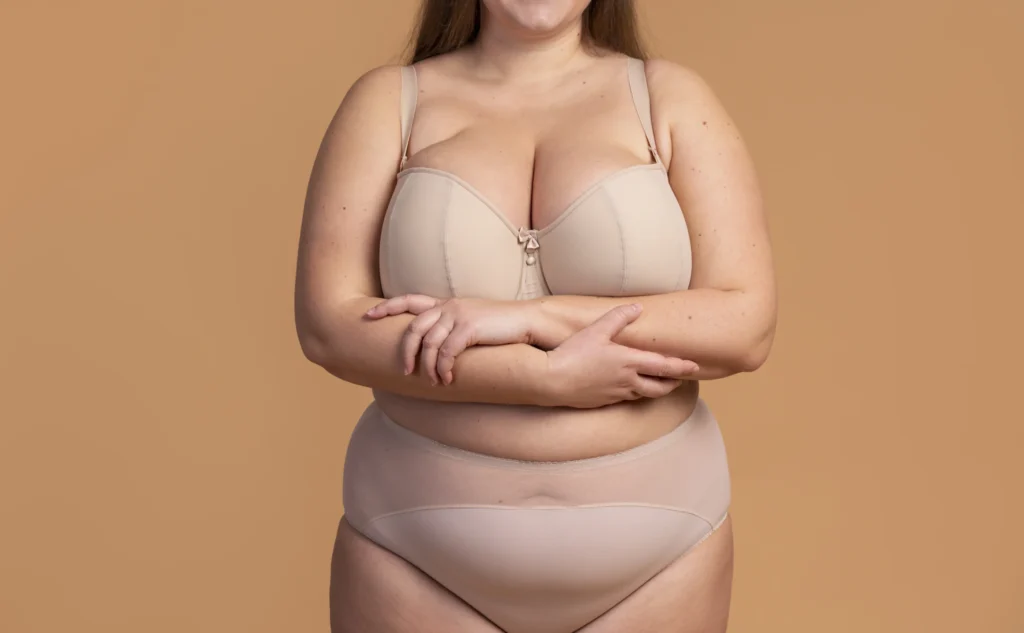
Cup fit can also influence comfort.
If the cups are too small, breast tissue may be compressed or pushed outward.
If they are too large, the breasts may not receive adequate support.
Either situation can lead to repeated adjustments throughout the day.
The result may be subtle.
A woman may not immediately think that her bra is causing shoulder pain.
Instead, she may simply notice that her shoulders feel tired or uncomfortable by evening.
Different breast shapes and bra designs also mean that the same labelled size can feel very different between brands.
Fit is therefore more important than relying only on the size printed on the label.
Can Bra Straps Affect the Trapezius Muscle?
The trapezius is a large muscle that extends from the neck across the upper back and toward the shoulder.
It helps control the shoulder blade and contributes to several upper-body movements.
The area where bra straps rest can overlap part of this region.
If the strap repeatedly creates pressure, or if the wearer constantly changes her shoulder position, the surrounding tissues may become uncomfortable.
The discomfort may feel like a tight or tired area near the base of the neck.
Some women may also notice upper-back discomfort.
However, not every painful trapezius muscle is caused by a bra.
Desk work, stress, exercise, sleep position, and repetitive arm movements can all affect the same area.
Does Breast Support Affect Movement?
Breast movement can become more noticeable during physical activity.
Running, jumping, and other repetitive movements create forces that are different from those experienced during normal daily activities.
Appropriate breast support can influence comfort and movement during exercise.
Research on breast biomechanics highlights the importance of breast support and how breast movement interacts with physical activity (McGhee & Steele, 2020).
This is particularly relevant for women who experience discomfort while running or participating in high-impact exercise.
An everyday bra may not provide the same level of support needed for these activities.
Can Exercise Make the Pain Worse?
It can.
Activities such as running, jumping, strength training, and certain sports create repeated movement of the breasts and upper body.
If the bra does not provide appropriate support, discomfort may become more noticeable.
Exercise can also fatigue the muscles around the shoulders and upper back.
Research examining breast support during running has found that support can influence breast movement and exercise-related biomechanics (Scurr et al., 2010).
This means that a sports bra may be more appropriate for higher-impact activities than an everyday bra.
The right level of support depends on the activity and the individual’s comfort.
What If the Pain Continues Without the Bra?
This is an important clue.
If the shoulder feels better after removing a particular bra but becomes uncomfortable again when wearing it, the bra may be contributing to the problem.
But if the pain continues on days when you are not wearing a bra, another cause may be involved.
Rotator cuff problems, neck-related pain, muscle strain, shoulder-blade dysfunction, and repetitive work activities can all cause shoulder symptoms.
In this situation, changing the bra alone is unlikely to resolve the underlying problem.
A proper assessment can help identify what is actually driving the pain.
How Does a Physiotherapist Assess It?
A physiotherapist will usually look beyond the bra itself.
The assessment may begin with questions about when the pain starts and how long it lasts.
The therapist may also ask whether removing the bra changes the symptoms.
Work habits, exercise, sleep position, lifting, carrying children, and other daily activities may also be discussed.
The shoulder can then be assessed for movement, strength, tenderness, and control.
The neck and upper back may also be examined because problems in these areas can contribute to shoulder pain.
The shoulder blade is particularly important.
It moves across the rib cage whenever the arm is raised, lowered, or rotated.
Changes in scapular movement can influence shoulder mechanics and may be associated with shoulder symptoms (Kibler et al., 2012).
The aim is to understand whether the bra is contributing to the symptoms or whether another musculoskeletal problem needs attention.
Can Physiotherapy Help?
Physiotherapy can be useful when the shoulder pain has a musculoskeletal component.
Treatment depends on what the assessment reveals.
If the upper back is stiff, gentle mobility exercises may be introduced.
If the shoulder muscles have reduced strength or endurance, strengthening may be appropriate.
If shoulder-blade control is contributing to the symptoms, exercises may focus on improving movement and coordination.
Sometimes, however, weakness is not the main issue.
Muscles may simply be sensitive because they have been exposed to repetitive loading or prolonged positions.
In that situation, modifying activities and gradually rebuilding tolerance may be more appropriate.
Clinical practice guidelines for neck and shoulder-related musculoskeletal conditions support an individualized approach that considers movement, exercise, education, and functional factors rather than relying on one treatment alone (Blanpied et al., 2017).
How Can You Tell If Your Bra Is Contributing?
Start by observing the pattern rather than repeatedly testing the painful area.
Notice whether the discomfort appears after several hours of wearing one particular bra.
Then compare how your shoulder feels when wearing another comfortable and supportive option.
Pay attention to whether the pain is worse during exercise or after prolonged sitting.
Also notice whether the discomfort improves after removing the bra.
These observations do not prove that the bra is the sole cause.
However, they can provide useful information about whether pressure, fit, or support may be contributing.
What Should a Comfortable Bra Feel Like?
A comfortable bra should provide support without creating persistent pressure.
The straps should not feel as though they are carrying the entire load.
The band should feel secure without causing significant discomfort.
The cups should comfortably contain the breast tissue without excessive compression or obvious gaps.
The bra should also remain reasonably comfortable when you move.
A bra that feels fine while standing still but becomes uncomfortable when you raise your arms may not be suitable for your daily activities.
Comfort should therefore be assessed during movement as well as when you are standing still.
Should You Stop Wearing a Bra?
Not necessarily.
The goal is not to avoid bras altogether.
The more useful question is whether a particular design, fit, or support level is contributing to your symptoms.
Some women may feel more comfortable with wider straps.
Others may prefer a different band construction or cup shape.
Women who exercise may need a bra designed specifically for higher-impact movement.
If pain continues regardless of what you wear, however, it is worth looking beyond the bra.
When Should Shoulder Pain Be Assessed?
Occasional mild discomfort after a long day may settle after changing the aggravating activity.
Pain that keeps returning deserves more attention.
Professional assessment is particularly important if the pain is accompanied by significant weakness, numbness, tingling, reduced shoulder movement, swelling, or pain following an injury.
Pain travelling from the neck into the arm may also indicate that the neck or nerves are contributing.
These symptoms should not simply be attributed to a bra.
Myth vs Fact
Myth: Tightening bra straps always provides better support.
Fact: The bra should distribute support across the band, cups, and straps. Overly tight straps can create unnecessary pressure around the shoulders.
Myth: All shoulder pain caused by a bra will disappear after changing the bra.
Fact: Posture, muscle fatigue, neck problems, shoulder conditions, exercise, and repetitive activities can also contribute to shoulder pain.
Myth: A larger breast size automatically means shoulder pain.
Fact: Breast size can influence physical loading, but shoulder symptoms depend on several individual factors, including support, posture, activity, strength, and existing musculoskeletal problems.
Lesser-Known Fact: The Shoulder Blade Is Part of the Picture
The shoulder blade rests over the rib cage rather than being fixed in one position.
It moves whenever you raise, lower, or rotate your arm.
Several muscles around the chest, neck, and upper back work together to control this movement.
This means that shoulder discomfort associated with wearing a bra may involve more than the strap itself.
The shoulder blade, upper back, and chest may all influence how the shoulder handles everyday loads.
This is one reason a physiotherapist may assess the entire upper body rather than focusing only on where the pain is felt.
Can You Prevent Bra-Related Shoulder Pain?
Start by paying attention to comfort rather than assuming that tighter means better support.
A bra should not require constant strap adjustment throughout the day.
Regular movement can also help.
If you work at a desk, avoid keeping your shoulders in one position for several hours.
Short movement breaks can help reduce prolonged loading around the neck and upper back.
If you carry a heavy handbag, laptop bag, or child, change positions when possible.
Strengthening the upper back and shoulder muscles can also improve the body’s ability to tolerate everyday activities.
For exercise, choose support appropriate to the intensity and type of movement.
Final Thoughts
Your bra can influence how comfortable your shoulders and upper back feel, particularly when the fit or support is not right.
But shoulder pain is rarely caused by one factor alone. Posture, exercise, muscle endurance, work habits, and existing neck or shoulder problems can also contribute.
If changing the bra does not improve persistent shoulder pain, consider getting the underlying musculoskeletal problem assessed rather than continuing to adjust the bra alone.
Conclusion
A bra can contribute to shoulder discomfort, particularly when the fit, support, or pressure distribution is not comfortable.
Tight straps, an unsuitable band, inadequate support, breast weight, and repeated adjustments can all play a role.
But shoulder pain is rarely explained by one factor alone.
Posture, desk work, exercise, muscle endurance, neck problems, and existing shoulder conditions can also contribute.
If the pain consistently appears after wearing a particular bra and improves when it is removed, the bra may be contributing to the symptoms.
If the pain continues regardless of what you wear, it is worth looking beyond the bra.
A physiotherapist can assess the shoulder, shoulder blade, neck, upper back, and movement patterns to identify the factors contributing to the discomfort.
The goal is not simply to find a different bra.
It is to understand why the shoulder is hurting and address the factors that are keeping the discomfort going.
Frequently Asked Questions
Can a bra cause shoulder pain?
A poorly fitting or inadequately supportive bra may contribute to shoulder discomfort in some women. Tight straps, pressure, breast weight, and repeated posture changes can all play a role.
Can tight bra straps cause shoulder pain?
Yes. Excessively tight straps can place pressure over the shoulders and may contribute to local discomfort, particularly when worn for several hours.
Can breast weight contribute to shoulder pain?
Breast weight can influence the physical load placed on the upper body. However, breast size is only one possible factor and does not automatically cause shoulder pain.
Should bra straps be very tight?
No. Straps should provide comfortable support without creating persistent pressure or deep indentations. The band and cups should also contribute to the overall support.
Can physiotherapy help bra-related shoulder pain?
Physiotherapy may help when the symptoms have a musculoskeletal component. Assessment can include the shoulder, shoulder blade, neck, upper back, posture, muscle strength, and movement patterns.
When should shoulder pain be assessed?
Persistent or recurring pain should be assessed, particularly when it is associated with weakness, numbness, tingling, reduced movement, swelling, or pain following an injury.
Stay tuned with us for more health related topics.
Follow us on LinkedIn and Instagram for more.
More Read


Medical Disclaimer
This article is intended for general educational purposes only and should not be considered a substitute for professional medical advice, diagnosis, or treatment. Shoulder pain can have several possible causes, and a bra may be only one contributing factor. If pain is persistent, severe, worsening, associated with weakness, numbness, tingling, swelling, reduced movement, or follows an injury, consult a qualified healthcare professional for an appropriate evaluation.