


Pain deep in the lower buttock that gets worse when sitting can make working, driving and exercising uncomfortable.
One possible cause is proximal hamstring tendinopathy, a condition affecting the tendons that attach the hamstring muscles to the sitting bone.
Quick Answer: Why Does Sitting Hurt Near Your Hip?
Proximal hamstring tendinopathy affects the tendons that attach the hamstring muscles to the sitting bone at the bottom of the pelvis. It can cause a deep ache in the lower buttock that becomes worse during prolonged sitting, running or deep hip movements.
Physiotherapy may help through activity modification, progressive strengthening and a gradual return to exercise. The programme should be tailored to the individual’s symptoms and functional goals.
Important: Sciatica, hip disorders and other conditions can cause similar pain. Persistent symptoms or sudden severe pain after an injury need medical assessment.
The pain is not always caused by a recent injury.
It can develop gradually, particularly when running loads, deep hip positions or prolonged sitting exceed the tendon’s tolerance.
Understanding the cause helps guide appropriate treatment and physiotherapy.
Key Takeaways
- Proximal hamstring tendinopathy affects the hamstring tendons where they attach to the sitting bone.
- Pain may increase during prolonged sitting, running, deep squats or other hip-flexion activities.
- Sciatica, ischial bursitis and hip or lower-back disorders can cause similar symptoms.
- A physiotherapist assesses symptoms, movement, strength and relevant alternative causes.
- Rehabilitation may include activity modification and progressive hamstring and gluteal strengthening.
- Recovery varies, and exercise intensity should increase according to symptoms and functional progress.
What Is Proximal Hamstring Tendinopathy?
The hamstrings are a group of muscles at the back of the thigh that help bend the knee and extend the hip.
Their tendons attach near the ischial tuberosity, the bony area at the bottom of the pelvis that supports the body when sitting.
Proximal hamstring tendinopathy occurs when these upper hamstring tendons become painful and less tolerant of loading.
It often develops gradually, without a single memorable injury, although symptoms can also follow a change in activity.
The condition affects both athletes and people who are less physically active.
Runners may notice pain during faster running or uphill training, while others mainly experience discomfort when sitting for extended periods.
It is important to distinguish tendinopathy from an acute hamstring strain or tendon tear because the assessment and rehabilitation approach may differ. (Goom et al., 2016)
Why Does Sitting Hurt Near Your Hip?
The upper hamstring tendon sits close to the sitting bone.
When the hip bends during sitting, the tendon can be compressed against the underlying bone.
Sitting on a hard surface also places direct pressure on the surrounding area.
When the tendon is sensitive, this combination of pressure and hip position may trigger pain.
Discomfort can increase after a long meeting, a drive or a period of desk work.
Other activities may aggravate the same area, including:
- Bending forward with the hips deeply flexed.
- Performing deep squats or lunges.
- Running uphill or accelerating during a sprint.
- Stretching the hamstrings forcefully.
- Repeatedly moving between sitting and standing.
Sitting pain does not automatically mean tendon damage. Other conditions affecting the hip, lower back, nerves or nearby soft tissues can cause similar symptoms.
What Causes Proximal Hamstring Tendinopathy?
Sudden changes in exercise
Increasing running distance, speed, hills or sprint sessions too quickly can place greater demands on the hamstring tendons.
A sudden return to intense training after a break may have a similar effect.
Repeated compression at the hip
Deep squats, lunges and some hamstring stretches place the hip in greater flexion.
These positions can increase compression around the proximal tendon and aggravate symptoms in susceptible individuals.
Changes in activity levels
Both a sudden increase in loading and a period of reduced activity followed by demanding exercise may contribute to reduced tolerance.
The important factor is the relationship between the workload and the person’s current capacity.
Previous hamstring injury
A previous strain or tendon injury may influence how symptoms develop.
Sudden pain during exercise, marked weakness or bruising should raise concern for an acute injury rather than being assumed to represent chronic tendinopathy.
What Are the Symptoms?
Proximal hamstring tendinopathy commonly causes pain near the lower buttock, close to the sitting bone.
Typical symptoms include:
- Pain during sitting: Discomfort increases with prolonged sitting, particularly on hard surfaces.
- Pain during running: Faster running, acceleration and uphill activity may be difficult.
- Pain with bending: Deep hip flexion, squatting or lunging may reproduce symptoms.
- Local tenderness: The area around the tendon attachment may feel sore when examined.
- Stiffness after sitting: Pain may be noticeable when standing up after remaining seated.
- Reduced activity tolerance: Exercise, driving or desk work may become harder to manage.
Pain can extend into the back of the thigh.
However, tingling, numbness, pain extending below the knee or associated lower-back symptoms may suggest nerve involvement and warrant further assessment.
Proximal Hamstring Tendinopathy vs Sciatica
These conditions can both cause buttock and posterior thigh pain, but they involve different structures.
| Feature | Proximal hamstring tendinopathy | Sciatica or nerve-related pain |
|---|---|---|
| Typical location | Lower buttock near the sitting bone | Buttock, sometimes extending down the leg |
| Sitting | May aggravate local tendon pain | May aggravate nerve-related symptoms |
| Running or hamstring loading | Can reproduce local pain | Effects depend on the underlying cause |
| Tingling or numbness | Not typical of isolated tendinopathy | May occur |
| Lower-back symptoms | Not required | May be present, but are not always present |
Other possible causes include ischial bursitis, hip joint disorders, deep gluteal syndrome and referred pain from the lumbar spine.
A clinical assessment is needed because symptoms can overlap. (Degen et al., 2019)
How Is Proximal Hamstring Tendinopathy Diagnosed?
Physiotherapy assessment
A physiotherapist will ask where the pain occurs, when it started, how sitting affects it and whether exercise intensity has changed recently.
The assessment may include:
- Checking tenderness around the sitting bone.
- Assessing hip and knee movement.
- Testing hamstring strength and load tolerance.
- Observing relevant functional movements.
- Screening the lower back and nervous system when indicated.
No single test confirms every case.
The clinician considers the overall pattern of symptoms and examination findings while checking for alternative causes.
When are ultrasound or MRI needed?
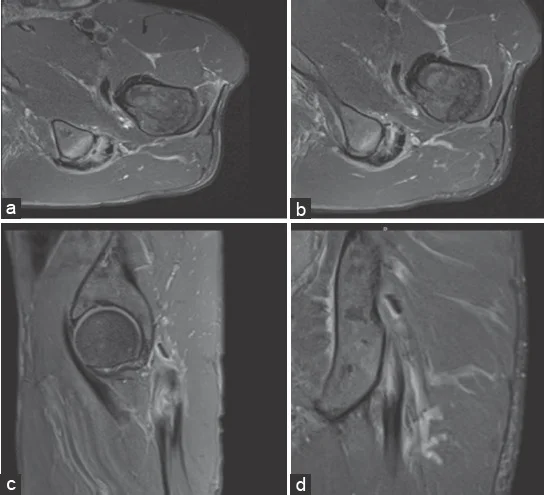
Imaging may be appropriate when the diagnosis remains uncertain, symptoms persist despite treatment or a significant tendon injury is suspected.
A scan can show tendon changes, but these findings do not always explain a person’s symptoms.
Imaging should be interpreted alongside the history and physical assessment rather than used as the only basis for diagnosis. (Grimaldi et al., 2024)
Physiotherapy Treatment for Proximal Hamstring Tendinopathy
The main goals of physiotherapy are to manage aggravating loads, improve hamstring strength and restore comfortable participation in everyday activities.
Treatment should be individualized according to symptoms, current capacity and personal goals.
1. Make sitting more comfortable
Try alternating between sitting and standing, taking short movement breaks and using a comfortable cushion if it reduces pressure.
Adjusting the chair or sitting position may also help.
The aim is not to avoid sitting indefinitely. It is to make sitting manageable while the underlying problem is addressed.
2. Modify painful activities
Temporarily reduce activities that consistently aggravate symptoms, such as sprinting, steep uphill running or deep lunges. Avoid forcing hamstring stretches if they reproduce pain near the sitting bone.
Complete rest is not usually the long-term goal. Maintaining tolerable activity can help prevent unnecessary loss of strength and conditioning.
3. Build strength progressively
A physiotherapist may begin with controlled hamstring contractions or strengthening exercises that place less compression on the proximal tendon.
As tolerance improves, the program can progress to greater resistance and more demanding hip positions.
Rehabilitation may also include gluteal strengthening, trunk control and exercises tailored to running or other sport-specific requirements.
Exercise intensity and range should progress according to symptoms and function.
Pain that repeatedly worsens later in the day or the following morning may indicate that the current workload needs adjustment.
4. Return to running and sport gradually
A return to sport should account for running speed, distance, hills, acceleration and recovery between sessions. Increasing all these demands at once may provoke a flare-up.
A physiotherapist can help determine when to progress from basic strengthening to faster running and more demanding activities.
A 2025 randomized controlled trial involving 100 people compared an individualized physiotherapy program with shockwave therapy.
Both groups improved over follow-up, and researchers found no significant difference between the treatments in the main measures of overall improvement and function.
The findings support individualized care but do not establish one universally superior treatment. (Rich et al., 2025)
Can Hamstring Stretching Make the Pain Worse?
Yes, it can in some cases. Stretching places the hamstring tendon under tension, and positions involving substantial hip flexion can also increase compression around its attachment.
If a stretch reproduces the familiar pain near the sitting bone, reduce its intensity or stop that particular movement for now.
This does not mean stretching is always harmful; it means the exercise should suit the condition and the person’s current tolerance.
For proximal hamstring tendinopathy, progressive strengthening and appropriate load management are generally more central to rehabilitation than repeatedly trying to stretch away the pain. (Rich et al., 2025)
How Long Does Recovery Take?
Recovery depends on symptom severity, how long the problem has been present, activity demands and the response to rehabilitation.
Persistent tendinopathy can take several months to improve, and there is no single timeline that applies to everyone.
Useful signs of progress include:
- Sitting comfortably for longer.
- Less pain when standing up after sitting.
- Improved tolerance of walking and exercise.
- Gradual return to running or strength training.
- Fewer symptom flare-ups after activity.
If symptoms remain unchanged, repeatedly return or worsen, seek reassessment rather than continuing the same exercise plan indefinitely.
Common Mistakes That Can Delay Recovery
Several approaches may make symptoms harder to manage:
- Continuing intense running despite worsening pain.
- Forcing deep hamstring stretches that reproduce symptoms.
- Increasing resistance or training volume too quickly.
- Avoiding all physical activity for a prolonged period without a plan.
- Assuming every type of buttock pain comes from the hamstring tendon.
A more effective approach is to find a manageable level of activity and build capacity gradually, adjusting the program according to symptoms and function.
Proximal Hamstring Tendinopathy: Myth vs Fact
Myth: Pain while sitting always means hamstring tendinopathy.
Fact: Sciatica, hip joint disorders, ischial bursitis and other conditions can cause pain near the sitting bone.
Myth: Stretching harder will make the tendon heal faster.
Fact: Deep hip-flexion stretches may aggravate some cases. Exercise selection should reflect symptoms and current load tolerance.
Myth: Complete rest is always the best treatment.
Fact: Reducing aggravating loads may help, but an individualised rehabilitation plan can support a gradual return to normal activity.
Myth: An abnormal tendon scan always explains the pain.
Fact: Imaging findings must be interpreted alongside symptoms and examination findings because tendon changes can also occur without pain.
When Should You Seek Medical Attention?
Arrange an assessment if pain persists, interferes with sitting or exercise, or fails to improve with appropriate activity modification.
Seek prompt medical attention if you develop sudden severe pain with significant bruising or weakness after an injury, particularly if walking becomes difficult.
These symptoms can indicate a substantial hamstring injury or tendon avulsion.
New numbness around the groin or saddle area, difficulty controlling bladder or bowel function, or rapidly progressing leg weakness requires emergency assessment.
A Lesser-Known Fact About Proximal Hamstring Tendinopathy
The tendon can be affected by both tensile loading and compression.
This helps explain why an exercise that strengthens the hamstrings in one position may be comfortable, while a similar movement performed with the hip deeply bent may aggravate symptoms.
Rehabilitation therefore needs to consider not just how much force the tendon experiences, but also the position of the hip and the person’s current load tolerance.
As symptoms improve, these positions can be reintroduced progressively rather than avoided forever. (Dizon et al., 2023)
Final Thoughts: Make Sitting Comfortable Again
Pain near the sitting bone can interfere with work, driving, exercise and everyday comfort. Proximal hamstring tendinopathy is one possible cause, but an accurate assessment helps distinguish it from nerve-related and other hip conditions.
With suitable activity modification and progressive rehabilitation, many people can work towards better sitting tolerance and a gradual return to exercise. The aim is to build capacity over time rather than repeatedly pushing through pain.
Conclusion
Pain near the sitting bone that worsens during prolonged sitting may be caused by proximal hamstring tendinopathy, but other hip, back and nerve-related conditions can produce similar symptoms.
A physiotherapy assessment can help identify the likely source of pain and guide a rehabilitation plan based on activity modification, progressive strengthening and a gradual return to normal function.
The goal is not simply to make sitting more comfortable.
It is to improve the tendon’s capacity to tolerate daily activities and exercise over time.
Frequently Asked Questions
1. Why does proximal hamstring tendinopathy hurt when sitting?
The upper hamstring tendon lies close to the sitting bone. Sitting with the hip bent can compress the tendon against the bone, and direct pressure may aggravate an already sensitive area.
2. Can proximal hamstring tendinopathy feel like sciatica?
Yes. Both can cause buttock or posterior thigh pain. Tingling, numbness or symptoms extending down the leg may suggest nerve involvement and warrant further assessment.
3. Can physiotherapy help proximal hamstring tendinopathy?
Physiotherapy may help improve strength and activity tolerance through appropriate load management and progressive strengthening tailored to the individual’s symptoms and goals.
4. Should I stretch my hamstrings if sitting hurts?
Not necessarily. Deep hip-flexion stretches can aggravate some cases. If stretching reproduces pain near the sitting bone, reduce the intensity and seek guidance on suitable alternatives.
5. How long does proximal hamstring tendinopathy take to recover?
Recovery varies with symptom severity, activity demands and response to rehabilitation. Persistent cases may take several months to improve, and there is no single timeline for everyone.
6. When should I see a doctor for pain near the sitting bone?
Seek assessment for persistent or worsening pain. Sudden severe pain with significant bruising or weakness after an injury needs prompt medical evaluation. New saddle-area numbness or bladder or bowel control problems require emergency assessment.
Stay tuned with us for more health related topics.
Follow us on LinkedIn and Instagram for more.
More Read


Medical Disclaimer
This article is for general educational purposes only and does not replace professional medical advice, diagnosis or treatment. Pain near the sitting bone can have several causes, and not all cases are due to proximal hamstring tendinopathy. Consult a qualified healthcare professional for an appropriate assessment. Seek prompt medical care for sudden severe pain or significant weakness after an injury. New saddle-area numbness or problems controlling bladder or bowel function require emergency assessment. Do not delay medical care because of information read online.


