


Understanding Best Sleeping Position for Neck Pain!
Neck pain is one of the most common musculoskeletal problems affecting adults worldwide. Many people assume neck discomfort develops only because of poor daytime posture or long hours of computer use.
However, one important factor that is often overlooked is sleep posture.
As physiotherapists, we frequently see patients who wake up with neck stiffness, headaches, or shoulder discomfort despite having no obvious injury.
In many cases, the cause is simply poor sleeping position or inadequate pillow support.
Sleep occupies nearly one-third of our lives, and during this time the muscles supporting the neck relax.
If the head and neck are not properly supported, the cervical spine may remain in a strained position for several hours.
Research shows that sleep posture can significantly influence spinal symptoms. A study examining sleep behavior found that individuals with spinal pain often spend more time in provocative sleep positions that place stress on the neck and spine (Cary et al., 2021).
Understanding the best sleeping position for neck pain can help reduce strain on the cervical spine and improve overall sleep quality.
Read about Complete Neck Pain Guide : Causes, Symptoms, Exercises and Treatment
Why Sleeping Position Matters for Neck Pain

During sleep, the muscles around the cervical spine relax. Because of this, the alignment of the head, neck, and pillow becomes critical in maintaining spinal health.
If the neck bends excessively forward, backward, or sideways during sleep, it may cause:
- muscle strain
- ligament stress
- joint stiffness
- nerve irritation
Biomechanical research shows that pillow height and sleep posture can directly influence cervical spine alignment and pressure distribution in the neck region (Ren et al., 2016).
Maintaining proper alignment during sleep helps prevent abnormal loading on spinal discs and surrounding soft tissues.
Read about : 15 Common Causes of Neck Pain You Should Know
Understanding Neutral Cervical Spine Alignment
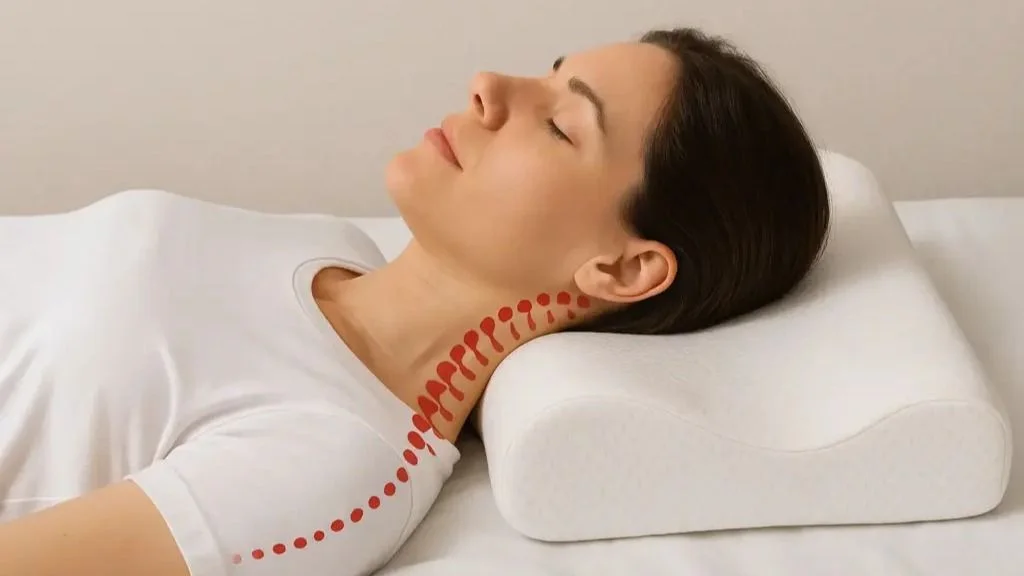
The cervical spine normally has a gentle inward curve called cervical lordosis.
A neutral sleeping posture maintains this natural curve while keeping the head aligned with the spine.
In this position:
- muscles remain relaxed
- joint stress is minimized
- spinal discs experience balanced pressure
Clinical research emphasizes that maintaining cervical alignment during sleep is important for reducing neck pain and improving sleep comfort (Gordon et al., 2021).
Read About: Managing Neck Pain in Women: Home Exercises and Advice
Best Sleeping Positions for Neck Pain
Not all sleeping positions affect the cervical spine in the same way. Some positions maintain proper alignment, while others place excessive stress on neck structures.
Back Sleeping (Supine Position)

Sleeping on the back is often considered one of the best positions for spinal health.
This posture allows the spine to remain in a neutral alignment while distributing body weight evenly.
Medical experts frequently recommend back sleeping because it helps maintain natural spinal curvature when supported with an appropriate pillow. (Hartfordhealthcare)
Physiotherapist Tips for Back Sleepers
- Use a pillow that supports the natural curve of the neck
- Avoid pillows that push the head too far forward
- Place a small pillow under the knees to reduce lower-back strain
Some physiotherapists also suggest placing a rolled towel under the neck for additional support.
Side Sleeping

Side sleeping is another excellent option for people with neck pain.
When performed correctly, it helps maintain spinal alignment from the head to the pelvis.
However, proper pillow height is essential. The pillow should fill the space between the shoulder and the mattress so that the ear remains aligned with the shoulder.
Maintaining this alignment prevents excessive bending of the cervical spine.
Physiotherapist Tips for Side Sleepers
- Choose a medium-firm pillow
- Keep the neck aligned with the spine
- Place a pillow between the knees to support pelvic alignment
These adjustments help reduce tension in the neck, shoulders, and upper back.
Read about: Which Is The Best Sitting Posture To Avoid Neck Pain And How To Achieve It
Sleeping Position to Avoid With Neck Pain
Stomach Sleeping

Sleeping on the stomach is generally considered the least favorable position for the neck.
In this posture, the neck must rotate to one side for breathing, which places the cervical spine in a twisted position for several hours.
Sleep medicine experts note that stomach sleeping may increase strain on the neck and spine. (Sleepfoundation)
Over time, this position can contribute to:
- chronic neck stiffness
- headaches
- cervical muscle strain
For people who habitually sleep on their stomach, gradually transitioning to side sleeping is often recommended.
The Important Role of Pillows in Neck Pain
Read in detail about: How to Choose the Right and Best Pillow for Neck Pain
Pillows play a crucial role in maintaining cervical alignment during sleep.
A pillow that is too high or too low can force the neck into an unnatural position for several hours.
Research examining pillow height found that different pillow heights significantly affect neck muscle activity and cervical spine curvature (Ren et al., 2016).
Some studies also suggest that ergonomic cervical pillows may help reduce waking neck pain and improve sleep quality (Gordon et al., 2021).
Read more: Cervical Vertigo Explained: Why Neck Pain Make You Feel Dizzy
Common Sleeping Position Mistakes That Cause Neck Pain
Even when people try to improve their sleeping posture, certain habits can unintentionally place strain on the cervical spine.
As physiotherapists, we often see patients whose neck pain is caused not by injury but by small posture mistakes repeated every night.
Identifying and correcting these habits can significantly reduce neck discomfort and improve sleep quality.
Using a Pillow That Is Too High
One of the most common causes of neck pain during sleep is using a pillow that elevates the head too much.
When the pillow is too high, the neck bends forward for several hours, placing continuous stress on the cervical muscles and ligaments.
Biomechanical research shows that excessive pillow height can alter cervical spine curvature and increase pressure on neck tissues (PMC).
This may lead to morning symptoms such as:
- neck stiffness
- headaches
- shoulder tightness
Sleeping With Multiple Pillows
Some people stack two or three pillows to feel more comfortable. However, this can create an exaggerated neck angle and disrupt normal spinal alignment.
Physiotherapists typically recommend using a single supportive pillow that maintains the natural cervical curve rather than multiple pillows.
Allowing the Neck to Bend During Side Sleeping
Side sleeping can be beneficial for the neck, but incorrect pillow support can still create problems.
If the pillow is too thin, the neck tilts downward toward the mattress.
If it is too thick, the neck bends upward.
Both situations place uneven stress on the cervical joints.
Sleep ergonomics research highlights that maintaining neutral head and neck alignment during sleep is essential to prevent cervical discomfort (Sciencedirect).
Sleeping With the Arm Under the Pillow
Another common habit is placing the arm under the pillow or under the head.
This position may compress the shoulder and tilt the neck sideways for several hours.
Over time, it can lead to:
- shoulder pain
- arm numbness
- neck muscle tightness
Keeping the arms relaxed at the sides or hugging a pillow is generally a better option.
Twisting the Neck During Stomach Sleeping
Sleeping on the stomach forces the neck to rotate to one side in order to breathe.
Maintaining this position for long periods can strain cervical joints and muscles.
Sleep health experts widely consider stomach sleeping to be one of the least favorable positions for neck and spine health. (Sleepfoundation)
If stomach sleeping is habitual, gradually transitioning to side sleeping can help reduce strain.
Using a Mattress That Is Too Soft
Although pillows receive most of the attention, the mattress also plays a role in sleep posture.
A mattress that is excessively soft can cause the body to sink unevenly, which may misalign the spine and increase neck strain.
Studies examining sleep ergonomics suggest that proper mattress support is important for maintaining spinal alignment during sleep. ( NCBI)
Learn how posture affects neck pain and correction exercises in our article on Simple Posture Correction Exercises for Forward Head Posture
Why Correcting These Mistakes Matters
Neck pain often develops gradually due to repeated strain rather than a single event.
Small posture errors that occur every night can accumulate over time and lead to persistent symptoms.
By correcting these sleeping posture mistakes and maintaining proper spinal alignment, many people can significantly reduce neck discomfort and improve sleep quality.
Read in detail: Best Desk Setup to Reduce Neck and Back Pain
Physiotherapist Pillow Height Guide for Neck Pain
Many people focus on pillow material, but research suggests that pillow height is one of the most important factors affecting cervical spine alignment.
Back Sleepers
Recommended pillow height:
Approximately 7-11 cm
This supports the natural cervical curve without pushing the head forward.
Side Sleepers
Recommended pillow height:
Approximately 10-15 cm
This helps keep the ear aligned with the shoulder.
Recent research suggests that adjusting pillow height based on individual body shape and sleeping position may significantly improve neck pain symptoms (Chen et al., 2023).
Read about: Effective Neck Pain Exercises At Home: A Complete Guide to Relief and Improved Mobility
Physiotherapist Recommended Exercises Before Sleep
Gentle movement and stretching before bedtime can help relax tight muscles around the neck and shoulders, making it easier to maintain a comfortable sleeping posture throughout the night.
Many people accumulate muscle tension during the day due to desk work, smartphone use, or poor posture. Performing light exercises before sleep helps release this tension and prepares the cervical spine for rest.
Research suggests that targeted neck exercises and mobility routines can significantly reduce neck pain intensity and improve function in individuals with chronic neck discomfort (Falla et al., 2007).
The following physiotherapist-recommended exercises are simple, safe, and effective when performed slowly before bedtime.
Cervical Rotation Stretch

This gentle mobility exercise helps release stiffness in the cervical joints and surrounding muscles.
Many people develop restricted neck rotation due to prolonged screen use or stress-related muscle tightness. Improving rotational mobility helps reduce joint stiffness and allows the neck to relax during sleep.
How to perform
- Sit comfortably with your back straight.
- Slowly turn your head to the right as far as comfortable.
- Hold the position for 5-10 seconds.
- Return to the center position.
- Repeat on the left side.
Perform 8–10 repetitions on each side.
This movement improves flexibility of the cervical spine and reduces joint stiffness accumulated during the day.
Levator Scapulae Stretch

The levator scapulae muscle connects the upper shoulder blade to the neck and is commonly tight in people who experience neck pain.
Tension in this muscle often contributes to morning neck stiffness and limited neck mobility.
How to perform
- Sit upright in a chair.
- Turn your head about 45 degrees to one side.
- Gently look downward toward your armpit.
- Place your hand on the back of your head and apply light pressure.
- Hold the stretch for 15-20 seconds.
Repeat 3 times on each side.
Stretching this muscle can reduce tension around the shoulder blades and neck before sleep.
Neck Extension Relaxation Stretch

After spending many hours looking down at phones or computers, the neck often remains in a forward-flexed position throughout the day.
This gentle stretch helps restore balance by relaxing the muscles in the front of the neck.
How to perform
- Sit comfortably with your shoulders relaxed.
- Slowly tilt your head backward while looking toward the ceiling.
- Keep the movement slow and controlled.
- Hold for 5–8 seconds, then return to neutral.
Repeat 6–8 times.
This exercise helps counteract forward head posture accumulated during daily activities.
Thoracic Spine Opening Stretch

The upper back (thoracic spine) plays an important role in supporting neck posture. When the thoracic spine becomes stiff, the neck often compensates by moving excessively.
Improving upper-back mobility can therefore reduce stress on the cervical spine.
How to perform
- Sit upright on a chair.
- Place your hands behind your head.
- Gently open your elbows outward and lift your chest upward.
- Hold the stretch for 10 seconds.
Repeat 8-10 times.
This exercise helps improve thoracic extension and reduces strain transferred to the neck.
Diaphragmatic Breathing With Neck Relaxation

Stress and muscle tension can worsen neck pain and disturb sleep quality.
Controlled breathing exercises can help relax the nervous system and reduce muscle tension around the neck and shoulders.
How to perform
- Lie comfortably on your back.
- Place one hand on your abdomen.
- Take a slow deep breath through your nose.
- Allow your abdomen to rise as you inhale.
- Slowly exhale through your mouth.
Practice for 2–3 minutes before sleep.
Research shows that relaxation techniques and diaphragmatic breathing can help reduce musculoskeletal pain and improve sleep quality (Jerath et al., 2015).
Read in detail about: How to Fix Upper Crossed Syndrome Naturally
Important Exercise Tips
For safe and effective results:
- Perform exercises slowly and gently.
- Avoid movements that cause sharp pain.
- Focus on controlled breathing during stretches.
- Stop if symptoms worsen.
Consistency is more important than intensity.
Performing these exercises regularly before bedtime can help relax tight muscles and support better cervical alignment during sleep.
Also read: How to Relieve Neck Tightness Without Equipment
Emerging Research on Sleep Posture and Neck Pain
Sleep ergonomics research continues to evolve.
Recent developments include:
Adjustable Pillow Systems
Studies suggest that individualized pillow height adjustments may improve neck pain and sleep quality.
Smart Sleep Monitoring
Wearable devices are being developed to monitor posture during sleep and help maintain optimal spinal alignment.
These technologies may become important tools in future physiotherapy and sleep medicine.
Learn About: The Ultimate Neck Stretch Routine for Desk Workers in 2026
Warning Signs Your Sleep Position Is Causing Neck Pain
You may need to adjust your sleep posture if you experience:
- morning neck stiffness
- headaches upon waking
- shoulder pain during sleep
- numbness or tingling in the arms
These symptoms often indicate poor cervical alignment during sleep.
Read about: Standing Desk Exercises For Healthy Back And Reduced Pain
When to See a Physiotherapist
Consult a physiotherapist if neck pain:
- lasts longer than two weeks
- radiates into the arms
- causes numbness or weakness
- interferes with sleep
A physiotherapist can evaluate posture habits, muscle imbalances, and sleep ergonomics to develop an individualized treatment plan.
Read in detail: Neck Pain from Phone Use? Here’s How to Treat Text Neck Syndrome
Conclusion
The best sleeping position for neck pain is one that maintains neutral alignment of the head, neck, and spine.
Back sleeping and side sleeping are generally the most supportive positions, while stomach sleeping should be avoided.
Choosing the correct pillow height, maintaining proper spinal alignment, and performing simple neck exercises can significantly reduce neck strain and improve sleep comfort.
With the right sleep posture and physiotherapy guidance, many individuals can prevent chronic neck pain and wake up feeling more refreshed.
Read about: Top 5 Posture Mistakes Causing Back Pain and How to Fix Them
Frequently Asked Questions
1. What is the best sleeping position for neck pain?
The best sleeping positions for neck pain are sleeping on your back or on your side with proper pillow support. These positions help maintain neutral alignment of the cervical spine and reduce strain on neck muscles.
2. Is side sleeping good for neck pain?
Yes. Side sleeping can be beneficial for neck pain if the pillow height keeps the head aligned with the spine. The pillow should fill the space between the shoulder and the mattress to maintain proper cervical alignment.
3. Why does my neck hurt when I wake up?
Morning neck pain is often caused by poor sleeping posture, incorrect pillow height, or muscle tension that develops during sleep. Improper neck support can strain the cervical spine overnight.
4. What pillow is best for neck pain?
A pillow that supports the natural curve of the neck while keeping the head aligned with the spine is generally recommended. Cervical contour pillows or medium-firm pillows are commonly recommended for people with neck pain.
5. Is stomach sleeping bad for neck pain?
Yes. Stomach sleeping forces the neck to rotate to one side for several hours, which can strain cervical joints and muscles. Physiotherapists usually recommend back or side sleeping instead.
6. Can exercises help reduce neck pain caused by sleeping?
Yes. Gentle neck mobility exercises and stretching before bedtime can relax tight muscles and improve cervical alignment during sleep, helping reduce morning neck stiffness.
Stay tuned with us for more health related topics.
Follow us on LinkedIn and Instagram for more.
More Read


Medical Disclaimer!
This article has been reviewed and written under the guidance of our Head Physiotherapist, Dr. Kruti Raj (PT, MUHS,CPT,CMPT). The information shared is intended for educational purposes only and should not be considered a substitute for personalized medical advice, diagnosis, or treatment.
Please consult us or any other qualified healthcare professional before beginning any exercise program, especially if you are experiencing pain, recovering from injury, or managing a medical condition.


