


Yoga is widely regarded as a therapeutic practice that improves flexibility, posture, and musculoskeletal health. Interestingly, scientific evidence also shows that yoga itself can reduce chronic neck pain when practiced appropriately.
A systematic review of multiple clinical trials reported improvements in pain intensity, cervical mobility, and quality of life among people practicing yoga for neck pain rehabilitation. (PubMed)
However, in clinical physiotherapy practice, I frequently see yoga practitioners who develop neck pain due to incorrect technique, excessive cervical loading, or repetitive strain during advanced poses.
Paradoxically, the same practice that can heal the spine may also injure it when biomechanics are ignored.
Yoga involves sustained postures, deep spinal extension, cervical flexion, and inversion poses that place unique stresses on the cervical spine.
When performed without proper alignment or muscle control, these movements may overload cervical discs, ligaments, and deep stabilizing muscles.
Understanding why neck pain occurs in yoga practitioners is essential to prevent injury while continuing to benefit from yoga practice.
Read about our Complete Neck Pain Guide : Causes, Symptoms, Exercises and Treatment
This guide explains:
- Why yoga practitioners develop neck pain
- The biomechanics of cervical strain during yoga poses
- Symptoms yoga practitioners commonly experience
- Evidence-based physiotherapy treatment strategies
- Yoga-specific rehabilitation exercises
- Prevention strategies for long-term neck health
Read About: Managing Neck Pain in Women: Home Exercises and Advice
Neck pain in yoga practitioners usually occurs due to incorrect alignment, excessive cervical loading during inversion poses, muscle imbalance, and weak deep neck stabilizers. Poses like shoulder stand, plow pose, and deep backbends can place significant stress on the cervical spine when performed without proper support. Physiotherapy treatment focuses on improving neck stability, strengthening deep cervical muscles, correcting posture, and modifying yoga poses to reduce cervical strain.
- Yoga practitioners may develop neck pain due to repeated cervical loading in inversions and backbends.
- Weak shoulder stabilizers and poor posture increase strain on neck muscles.
- Thoracic stiffness often causes the neck to compensate during yoga movements.
- Physiotherapy exercises like chin tucks, scapular strengthening, and thoracic mobility drills help relieve symptoms.
- Warm-up routines before yoga can significantly reduce cervical strain.
- Inversions and extreme neck extension poses should be modified or avoided during active neck pain.
Read about : 15 Common Causes of Neck Pain You Should Know
Causes of Neck Pain in Yoga Practitioners

Neck pain in yoga practitioners usually occurs due to biomechanical stress, muscle imbalance, or excessive cervical loading.
1. Incorrect Alignment During Yoga Poses
Alignment is the foundation of safe yoga practice. When the head position is incorrect, the cervical spine may experience abnormal stress.
Common alignment mistakes include:
- Forward head posture during standing poses
- Hyperextension of the neck in backbends
- Excessive cervical flexion in forward folds
- Compression during inversion poses
In yoga classes, practitioners sometimes focus on achieving the final pose instead of maintaining spinal neutrality, which increases the risk of injury.
2. Excessive Weight Bearing on the Cervical Spine
Certain yoga poses place body weight directly on the neck.
Examples include:
- Shoulder stand (Sarvangasana)
- Plow pose (Halasana)
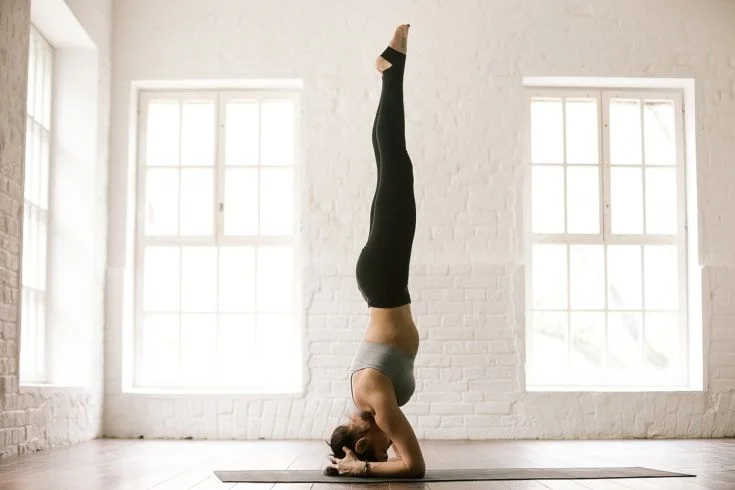
- Headstand (Sirsasana)
These poses may transmit significant axial compression forces through the cervical vertebrae, especially when shoulder support is inadequate.
In clinical practice, I often see yoga practitioners develop facet joint irritation or cervical muscle strain after repeatedly performing these poses without adequate shoulder stability.
Rarely, extreme cervical stress during yoga may even contribute to serious vascular or spinal complications, although such cases are uncommon. (Nature)
3. Weak Deep Neck Stabilizing Muscles
Many yoga practitioners develop excellent flexibility but lack deep cervical stability.
Important stabilizing muscles include:
- Longus colli
- Longus capitis
- Deep cervical extensors
When these muscles are weak, larger superficial muscles such as the upper trapezius and levator scapulae become overactive, leading to muscle fatigue and pain.
4. Hypermobile Cervical Joints
Yoga improves flexibility, but excessive flexibility without muscular control can create joint instability.
This condition is common in:
- Advanced yoga practitioners
- People with naturally hypermobile joints
- Those practicing deep backbends frequently
Joint hypermobility increases strain on:
- Cervical ligaments
- Facet joints
- Intervertebral discs
5. Repetitive Cervical Extension in Backbends
Backbending poses such as:
- Upward Dog
- Wheel Pose
- Camel Pose
often involve repeated cervical extension.
If the thoracic spine lacks mobility, the cervical spine compensates by bending excessively.
This results in:
- Posterior facet compression
- Cervical muscle strain
- Nerve irritation
6. Poor Shoulder Stability
The shoulder girdle and cervical spine are biomechanically connected.
Weakness in muscles like:
- Serratus anterior
- Lower trapezius
- Rotator cuff
can cause excessive cervical loading during poses such as:
- Downward dog
- Plank
- Arm balances
Read about: Cervical Ligament Injury or Neck Ligament Tear
Mechanism of Neck Pain in Yoga Practitioners
To understand yoga-related neck pain, we must examine the biomechanics of the cervical spine.
The cervical spine supports the head, which weighs about 4-5 kg. During certain yoga poses, mechanical forces increase dramatically.
Three key mechanisms cause pain.
1. Cervical Compression
Inversion poses may compress:
- Cervical discs
- Facet joints
- Vertebral arteries
Repeated compression may lead to:
- Joint inflammation
- Disc irritation
- Local muscle spasm
2. Muscle Overuse and Fatigue
When stabilizing muscles fatigue:
- Upper trapezius becomes dominant
- Neck muscles remain constantly contracted
- Blood flow decreases
This leads to muscle trigger points and stiffness.
3. Fascial Tightness
Research shows that dysfunction of the deep cervical fascia can contribute to neck pain and restricted movement. (PubMed)
Yoga practitioners who perform repetitive neck movements may develop fascial densification, limiting cervical mobility.
Read in detail about: Cervical Radiculopathy: Why Neck Nerve Pain Travels to the Arm
Symptoms of Neck Pain in Yoga Practitioners
Yoga-related neck pain typically develops gradually.
Common symptoms include:
Early Symptoms
- Neck stiffness after yoga sessions
- Mild soreness around the base of the skull
- Reduced neck mobility
- Muscle tightness in shoulders
Also read: How to Relieve Neck Tightness Without Equipment
Moderate Symptoms
- Pain during specific yoga poses
- Difficulty turning the head
- Muscle spasm
- Shoulder or upper back discomfort
Severe Symptoms
- Headaches originating from the neck
- Tingling or numbness in arms
- Radiating pain toward shoulders
- Dizziness during inversions
These symptoms may indicate nerve involvement or cervical joint irritation.
Read about: Simple Posture Correction Exercises for Forward Head Posture
Lesser-Known Scientific Facts About Yoga and the Cervical Spine
Yoga is widely recognized for improving flexibility, posture, and spinal health. However, research shows that the cervical spine responds to yoga movements in complex ways.
Understanding a few lesser-known scientific facts can help yoga practitioners protect their neck while continuing their practice safely.
Experienced Practitioners May Have Higher Injury Risk
Interestingly, neck injuries in yoga are not limited to beginners.
Experienced practitioners may sometimes face a higher risk because they are more likely to practice advanced poses such as inversions, deep backbends, and arm balances.
These poses place greater mechanical load on the cervical spine, especially when held for long durations.
Cervical Compression Can Increase During Inversions
Biomechanical research shows that inversion poses such as headstand can transmit significant compressive forces through the cervical spine.
The load is often highest during entry and exit phases of the pose, particularly when practitioners kick up into the position.
This is why physiotherapists recommend controlled transitions and strong shoulder engagement during inversions. (Hector & Jensen, 2015)
The Cervical Spine Is Highly Mobile but Less Stable
The cervical spine is designed primarily for mobility rather than stability.
It allows movements such as flexion, extension, rotation, and side bending.
Because of this high mobility, the neck is more vulnerable to strain when excessive load or extreme movement occurs during yoga poses. (Campos et al., 2017)
Shoulder Strength Plays a Major Role in Neck Protection
Many yoga practitioners focus heavily on spinal flexibility but overlook shoulder strength.
Weakness in muscles such as the serratus anterior, rotator cuff, and lower trapezius can increase cervical strain during poses like downward dog, plank, and inversions.
Strengthening these muscles helps reduce the load placed on the neck. (Raja et al., 2023)
Thoracic Stiffness Can Force the Neck to Compensate
Limited mobility in the upper back (thoracic spine) often causes the cervical spine to compensate during backbends.
When thoracic extension is restricted, the neck may hyperextend in poses such as camel pose, wheel pose, or upward dog.
Improving thoracic mobility can therefore significantly reduce cervical stress during yoga practice.
Yoga Can Also Help Treat Chronic Neck Pain
Despite these risks, research also shows that structured yoga programs can help reduce chronic neck pain by improving muscle strength, posture awareness, and relaxation.
When practiced with correct alignment and adequate muscular control, yoga can become an effective part of a physiotherapy rehabilitation program. (Li et al., 2019; Cramer et al., 2017)
Read about: The Best Physiotherapy Exercises for Cervical Spondylosis Relief
Physiotherapy Assessment for Yoga Practitioners
A physiotherapist evaluates several factors.
Posture analysis
Forward head posture is common even in yoga practitioners.
Cervical mobility
Restricted rotation or extension often indicates joint irritation.
Muscle balance
Testing includes:
- Deep neck flexor endurance test
- Scapular muscle strength
Movement analysis
A physiotherapist may also observe specific yoga poses to identify faulty mechanics.
Read in detail: Physiotherapy for Cervical Disc Degeneration: What Actually Works
Physiotherapy Approach for Yoga Practitioners
Treatment focuses on restoring stability, improving alignment, and reducing cervical load.
1. Pain Relief and Muscle Relaxation
Initial treatment may include:
- Manual therapy
- Soft tissue release
- Trigger point therapy
- Heat therapy
These interventions help reduce muscle spasm and improve circulation.
2. Cervical Joint Mobilization
Gentle mobilization techniques help restore normal joint movement.
Benefits include:
- Reduced stiffness
- Improved neck rotation
- Decreased pain
3. Deep Cervical Stabilization Training
Strengthening the deep neck muscles is crucial. Eg. Chin Tuck Exercise activates deep cervical flexors, improving neck stability.
4. Scapular Stabilization Exercises
Strong shoulder muscles reduce neck strain.
Important exercises include:
Scapular Retraction
Serratus Anterior Activation- Strong serratus anterior improves shoulder mechanics in poses like downward dog.
5. Thoracic Mobility Exercises
Limited thoracic mobility forces the neck to compensate.
Recommended exercises include:
- Thoracic extension over foam roller
- Cat-cow spinal mobility
- Seated thoracic rotations
Improving thoracic mobility reduces cervical overload.
6. Yoga Pose Modification
Physiotherapists often modify poses to protect the cervical spine.
Read about: Effective Neck Pain Exercises At Home: A Complete Guide to Relief and Improved Mobility
Exercises for Yoga Practitioners With Neck Pain
One of the biggest clinical mistakes I observe among yoga practitioners is overemphasis on flexibility and undertraining of cervical stability.
Advanced research shows that targeted cervical strengthening, mobility training, and scapular stabilization significantly reduce neck pain and improve cervical range of motion. (PubMed)
These exercises are specifically chosen because they improve spinal control during yoga poses such as inversions, arm balances, and backbends.
1. Chin Tuck With Lift
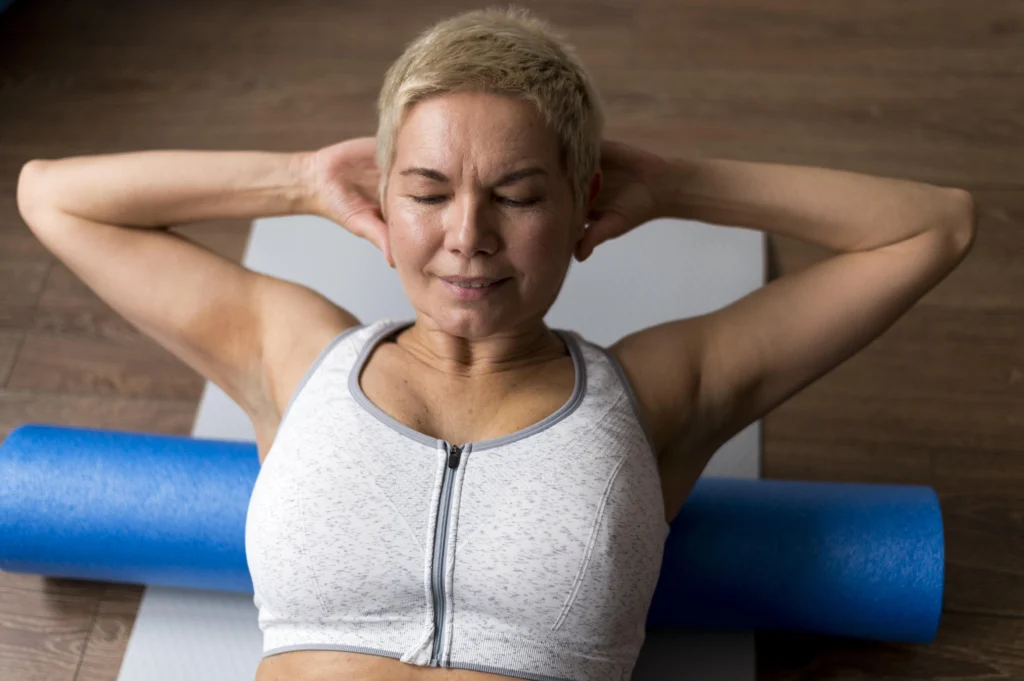
This is one of the most evidence-supported physiotherapy exercises for cervical stability.
Why this exercise matters for yoga practitioners
Weak deep neck flexors cause:
- Forward head posture
- Upper trapezius overactivity
- Cervical instability during yoga inversions
How to perform
- Lie on your back with knees bent.
- Gently tuck your chin toward your throat.
- Lift the head slightly (2-3 cm).
- Hold for 5-10 seconds.
- Repeat 10 repetitions.
Physiotherapy tip
The movement should feel subtle. Avoid pushing the head forcefully into the floor.
Learn: How to do Chin Tucks for Neck Pain Relief and Posture Correction
2. Isometric Stabilization Exercise
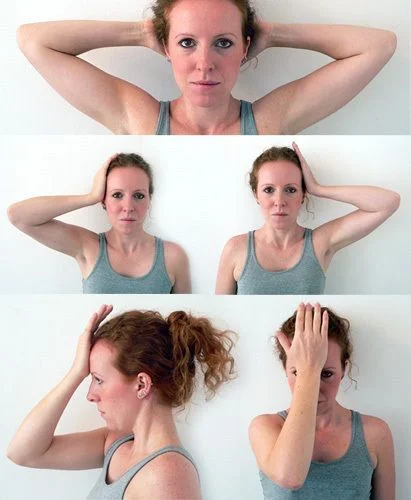
This exercise strengthens neck muscles without excessive movement, making it ideal for yoga practitioners with pain.
Steps
- Sit upright.
- Place your hand on the forehead.
- Push the head gently into the hand.
- Hold for 5 seconds.
Repeat for:
- Flexion
- Extension
- Side bending
- Rotation
Perform 10 repetitions each direction.
3. Scapular Retraction Strengthening
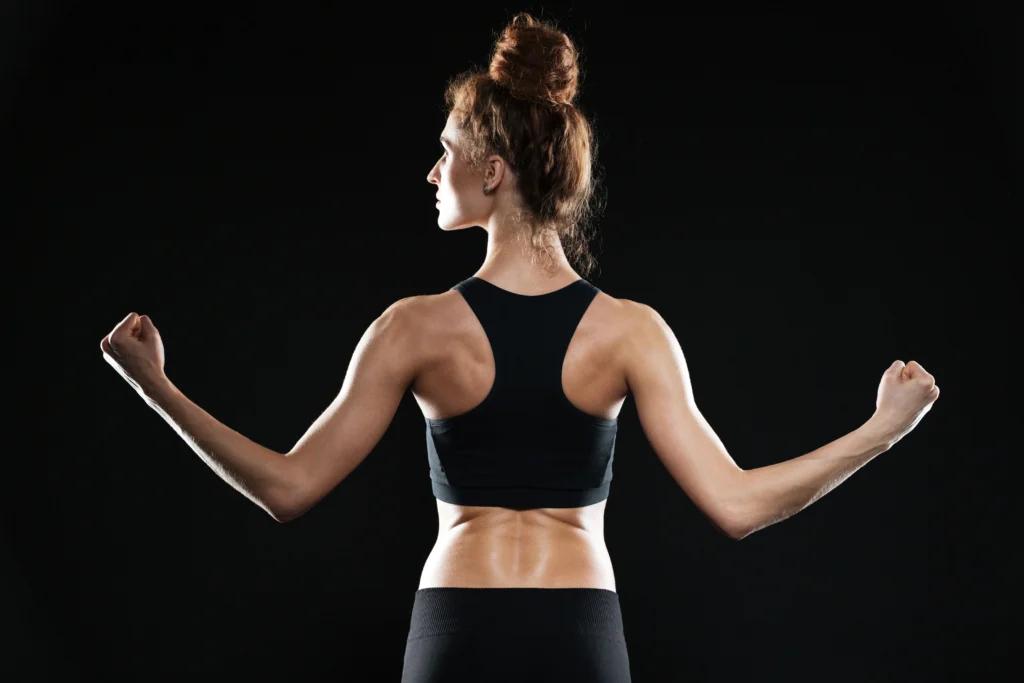
Shoulder stability is essential for poses like:
- Downward dog
- Plank
- Arm balances
- Headstand preparation
Weak scapular muscles cause neck overcompensation.
Exercise
- Sit or stand upright.
- Pull shoulder blades back and down.
- Hold for 5 seconds.
Repeat 12-15 times.
4. Serratus Anterior Wall Slides
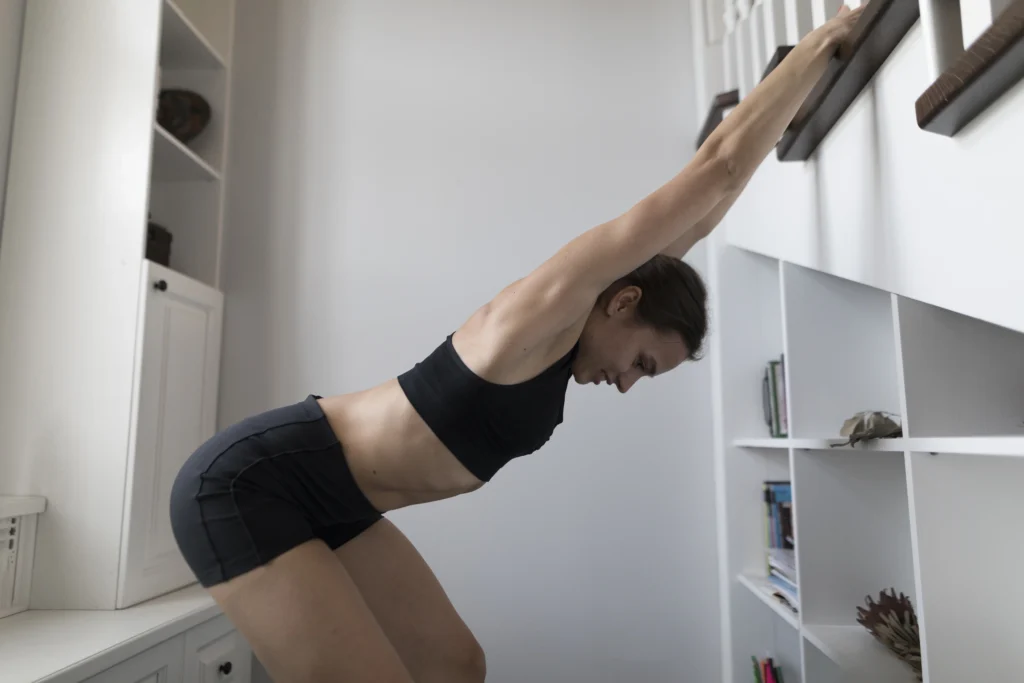
This muscle stabilizes the shoulder blade during weight-bearing poses.
Steps
- Stand facing a wall.
- Place forearms on the wall.
- Slide arms upward while maintaining shoulder engagement.
- Keep neck relaxed.
Perform 12 repetitions.
5. Thoracic Extension Over Foam Roller
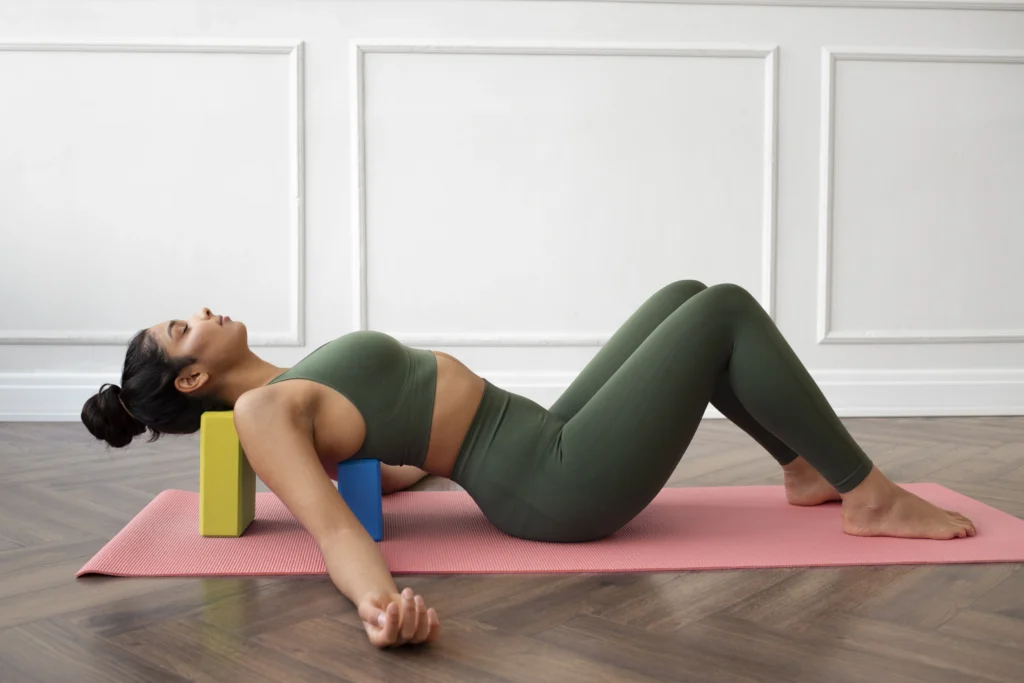
Limited thoracic mobility forces the cervical spine to compensate during backbends.
Steps
- Place a foam roller across the upper back.
- Support the head with hands.
- Gently extend the thoracic spine backward.
Repeat 10 slow movements.
6. Upper Trapezius Stretch
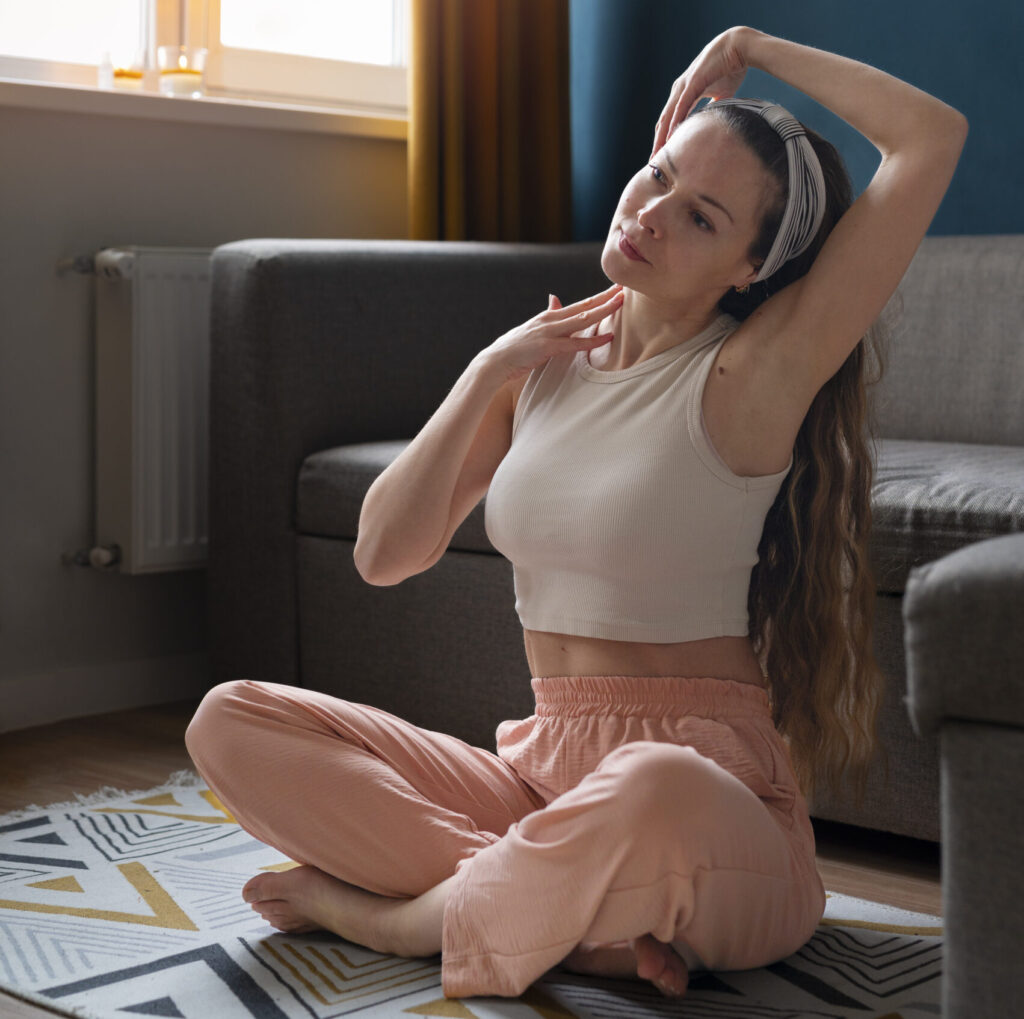
Yoga practitioners often develop tight upper trapezius muscles due to repetitive neck stabilization.
Steps
- Sit upright.
- Tilt the head to one side.
- Hold for 20 seconds.
Repeat 3 times each side.
7. Levator Scapulae Stretch
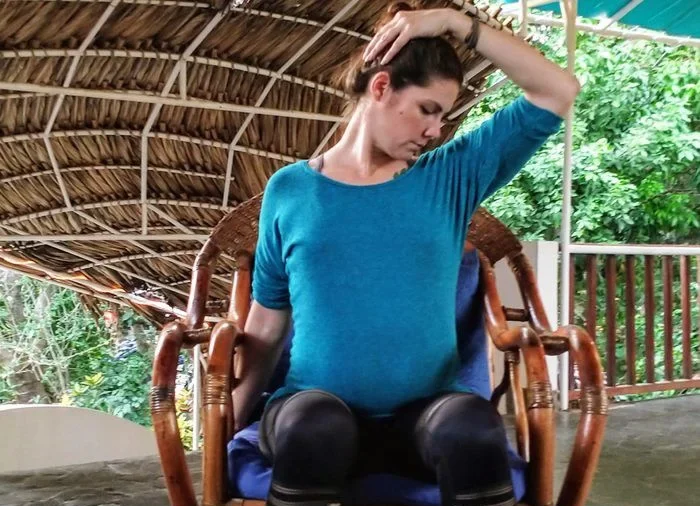
This muscle is commonly tight in yoga practitioners who hold prolonged poses.
Steps
- Turn head 45° to one side.
- Look downward.
- Gently pull the head forward.
Hold 20 seconds.
8. Cervical Rotation Mobility Exercise
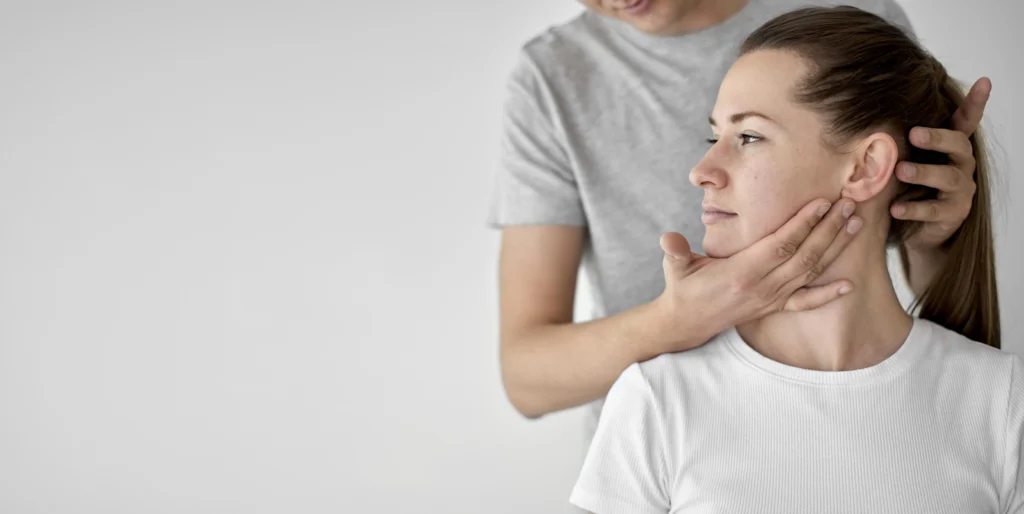
Controlled neck mobility improves alignment during yoga.
Steps
- Sit upright.
- Slowly rotate the head to the right.
- Return to center.
- Rotate to the left.
Perform 10 repetitions each side.
Research involving yogic neck movements (flexion, extension, lateral flexion, rotation) has shown significant reductions in neck pain after structured exercise programs. (ScienceDirect)
Learn About: The Ultimate Neck Stretch Routine for Desk Workers in 2026
Pre-Yoga Neck Warm-Up Routine
(Highly Recommended)
One of the most overlooked injury-prevention strategies in yoga is neck-specific warm-up exercises.
Many practitioners directly begin with sun salutations or advanced poses without preparing the cervical spine.
A 5-7 minute cervical warm-up routine can significantly reduce neck strain.
1. Cervical Mobility Flow
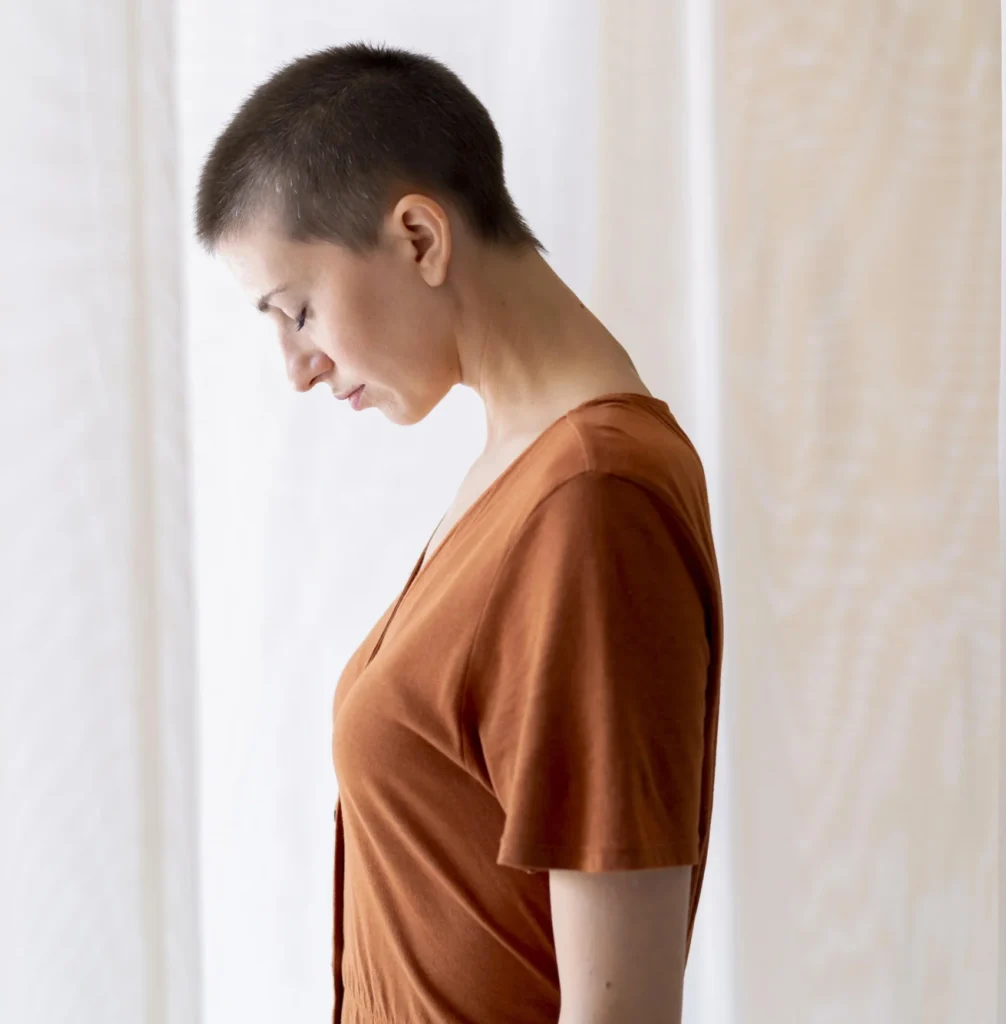
Perform slowly.
Sequence:
- Neck flexion
- Neck extension
- Side bending
- Rotation
Repeat each movement 8-10 times.
This improves joint lubrication and reduces stiffness.
2. Shoulder Rolls
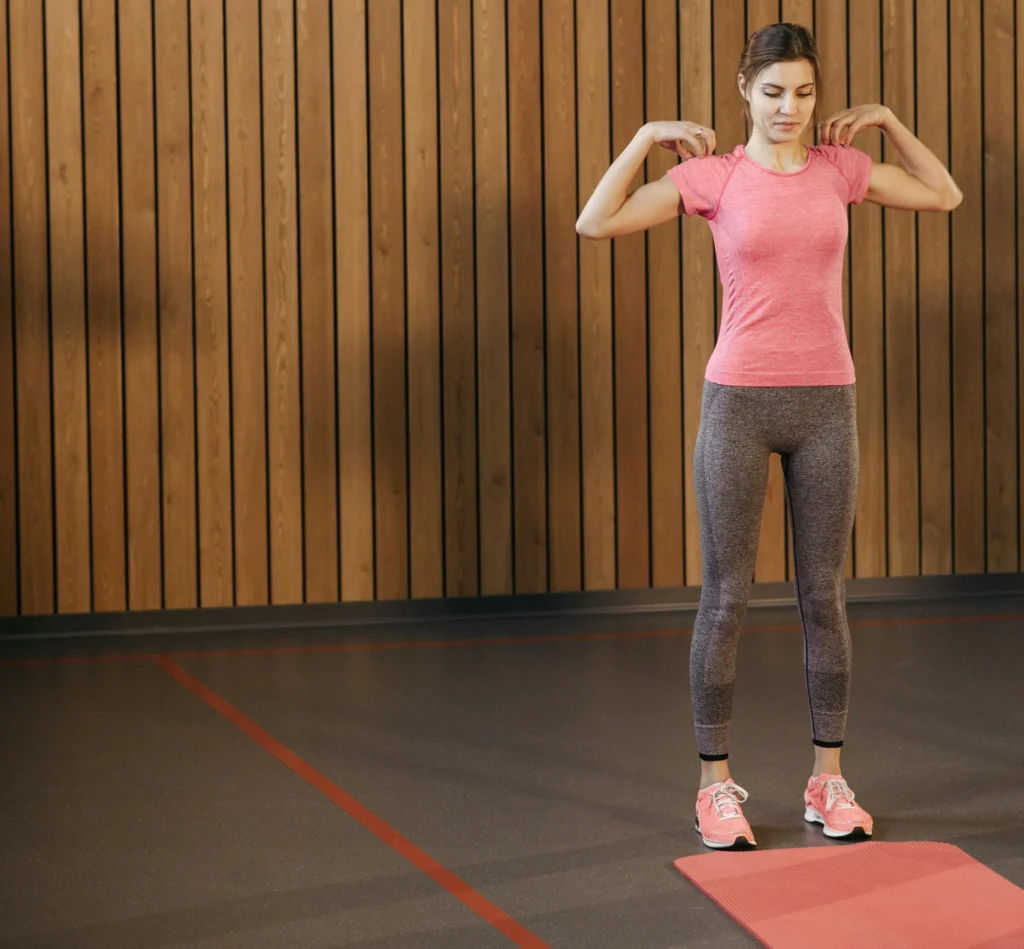
- Roll shoulders forward 10 times.
- Roll shoulders backward 10 times.
This activates upper back muscles and reduces cervical load.
3. Cat-Cow Pose (Marjariasana-Bitilasana)
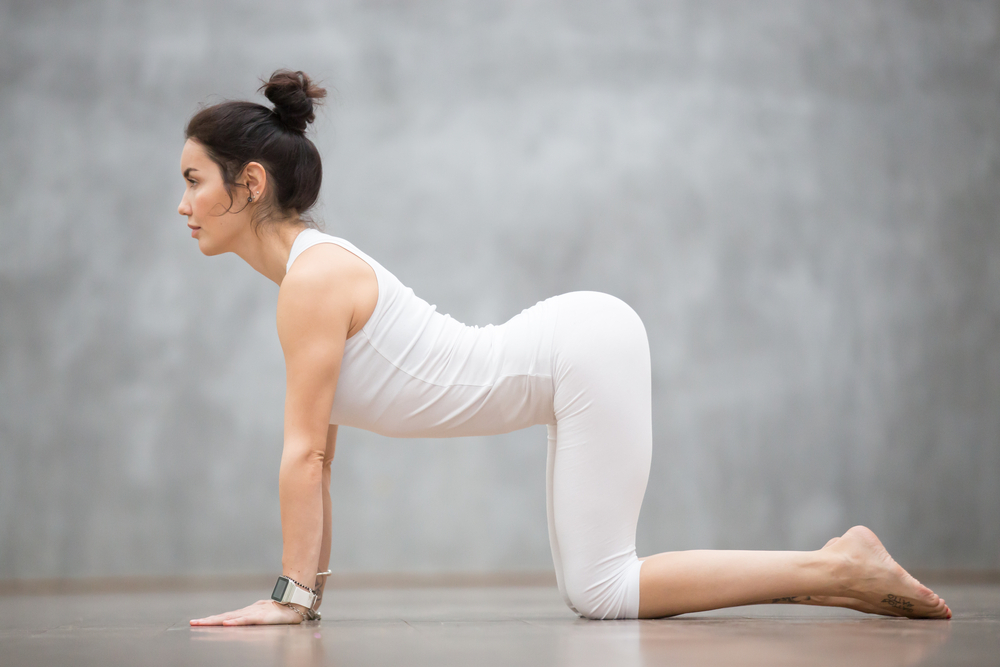
This movement improves spinal mobility.
Steps:
- Inhale and arch the back.
- Exhale and round the spine.
Perform 10 slow repetitions.
Read more: Cat Cow Stretch Benefits for Back Pain- A Complete Guide
4. Scapular Push-Ups

Ideal before arm-weight bearing poses.
- Start in plank position.
- Push shoulder blades apart.
- Bring them together.
Repeat 10-12 times.
5. Dolphin Pose Preparation
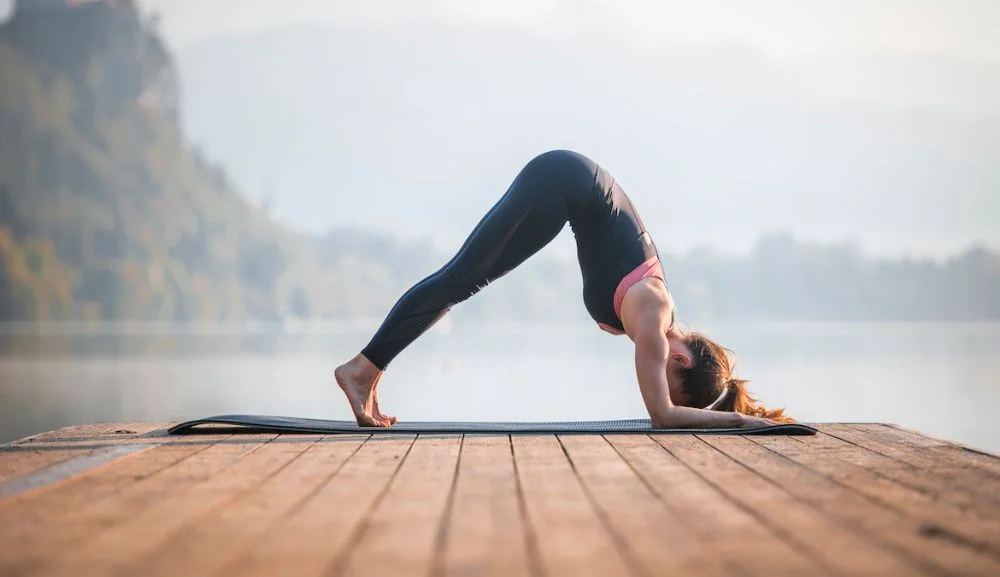
This pose strengthens shoulders without loading the neck.
- Place forearms on the floor.
- Lift hips upward.
- Keep neck neutral.
Hold for 20 seconds.
Read About: How to Choose the Right and Best Pillow for Neck Pain
Yoga Poses To Be Avoided With Neck Pain
Certain yoga poses place high compressive loads on the cervical spine.
Biomechanical studies of headstand postures show measurable forces transmitted through the head and neck, particularly during entry and balance phases. (ScienceDirect)
Therefore, these poses should be avoided during active neck pain.
1. Headstand (Sirsasana)
Why it is risky
- Direct cervical compression
- Requires strong shoulder stabilization
- Risk of ligament strain
Physiotherapy advice
Avoid until neck pain resolves.
Alternative pose
Dolphin Pose.
2. Shoulder Stand (Sarvangasana)

Risk
Body weight compresses cervical vertebrae.
Modification
Use two folded blankets under shoulders to reduce neck angle.
3. Plow Pose (Halasana)

This pose places the neck in deep flexion, which can strain cervical discs. (medshun.com)
Safer alternative
Half plow pose with legs vertical.
4. Wheel Pose (Urdhva Dhanurasana)

This deep backbend forces the neck into extreme extension.
Modification
Bridge pose instead.
5. Camel Pose (Ustrasana)

Dropping the head backward can compress the cervical spine.
Modification
Keep chin slightly tucked.
Read About: Best Sleeping Position for Neck Pain: A Physiotherapist’s Complete Guide
How Yoga Practitioners Can Perform Risky Poses Safely
Many yoga practitioners do not want to eliminate advanced poses entirely.
Physiotherapy focuses on safe modifications rather than complete restriction.
Headstand Safety Principles
- Weight should be distributed through forearms.
- Neck should remain neutral.
- Avoid kicking up into the pose.
A biomechanical study suggests that entry technique significantly affects cervical loading, with controlled symmetrical entry producing lower forces. (ScienceDirect)
Backbend Safety Principles
For poses like:
- Wheel
- Camel
- Upward Dog
Focus on:
- Thoracic extension
- Core engagement
- Shoulder opening
Avoid excessive cervical extension.
Shoulder Stand Safety Tips
- Use blankets under shoulders
- Avoid turning the head
- Engage shoulders and upper back
Read in detail: Best Desk Setup to Reduce Neck and Back Pain
Sample Yoga Routine for Neck Pain
This routine is safe for most yoga practitioners recovering from neck pain.
Warm-up (5 minutes)
- Neck mobility flow
- Shoulder rolls
- Cat-Cow
Strength phase
- Chin tucks- 10 reps
- Scapular retractions- 12 reps
- Serratus wall slides- 12 reps
Yoga practice
Safe poses include:
- Mountain Pose
- Child’s Pose
- Cat-Cow
- Bridge Pose
- Thread the Needle
- Cobra (with neutral neck)
Cool-down
- Levator scapula stretch
- Upper trapezius stretch
- Diaphragmatic breathing
Read about: Which Is The Best Sitting Posture To Avoid Neck Pain And How To Achieve It
Evidence Supporting Yoga-Based Rehabilitation
Scientific evidence suggests that combining physiotherapy and yoga can significantly reduce neck pain and improve function.
A randomized clinical study found that combining fascial manipulation with sequential yoga poses improved pain scores, range of motion, and fear-avoidance behavior in individuals with mechanical neck pain. (PubMed)
Another systematic review involving thousands of participants showed that yoga interventions improve neck mobility and reduce pain intensity in people with chronic neck pain. (NCCIH)
Read in detail about: How to Fix Upper Crossed Syndrome Naturally
Preventing Neck Pain in Yoga Practitioners
1. Prioritize Alignment Over Flexibility
Always maintain neutral spinal alignment.
Avoid forcing extreme cervical movement.
2. Strengthen Before Attempting Advanced Poses
Advanced poses should only be attempted after building:
- core strength
- scapular stability
- cervical control
3. Avoid Excessive Inversions
Limit frequent practice of:
- headstand
- shoulder stand
- plow pose
Especially if neck pain already exists.
4. Warm Up the Neck and Shoulders
Before yoga practice:
- neck rotations
- shoulder rolls
- thoracic mobility exercises
These prepare muscles and reduce injury risk.
5. Listen to Pain Signals
Pain during yoga is not normal.
Stop poses that cause:
- sharp neck pain
- radiating symptoms
- dizziness
Read more: Cervical Vertigo Explained: Why Neck Pain Make You Feel Dizzy
Clinical Insight
In my physiotherapy practice, yoga practitioners often present with neck pain caused not by yoga itself, but by excessive flexibility combined with insufficient stability.
The cervical spine requires balance between mobility and muscular control.
When flexibility exceeds stability, joints become overloaded and painful.
Yoga should therefore be practiced with strength, control, and alignment rather than extreme range of motion.
Read about: What Is Cervical Myofascial Pain Syndrome And How To Relieve Trigger Points
Red Flags
Seek medical evaluation if you experience:
- Severe neck pain after yoga
- Arm numbness or weakness
- Persistent headaches
- Balance problems
- Sudden dizziness during poses
Read in detail: Neck Pain from Phone Use? Here’s How to Treat Text Neck Syndrome
Myth vs Fact
Myth: Yoga always prevents neck pain.
Fact: Yoga improves spinal health when performed correctly, but poor technique or excessive cervical loading can still cause injury.
Also read: Why Neck Pain in Swimmers Develop and How to Prevent It
Frequently Asked Questions
1. Can yoga cause neck pain?
Yes. Neck pain may occur if yoga poses place excessive stress on the cervical spine or if alignment is incorrect during practice.
2. Which yoga poses are most likely to cause neck pain?
Headstand, shoulder stand, plow pose, and deep backbends may increase cervical loading and cause neck discomfort if performed incorrectly.
3. Should I stop yoga if I have neck pain?
You do not always need to stop yoga. Instead, modify poses, avoid neck-loading inversions, and perform strengthening exercises under guidance.
4. Can physiotherapy help yoga practitioners with neck pain?
Yes. Physiotherapy improves cervical stability, corrects movement patterns, and helps practitioners return safely to yoga practice.
5. How long does yoga-related neck pain take to recover?
Mild neck pain may improve within a few weeks with physiotherapy exercises and pose modifications.
Read about: Neck Pain in Cyclists: Hidden Causes and Physiotherapy Fixes
Final Word
Yoga is one of the most powerful tools for maintaining spinal health, but like any physical activity, it must be practiced with biomechanical awareness.
When yoga practitioners combine proper alignment, strength training, and physiotherapy principles, they can enjoy the benefits of yoga while protecting their cervical spine.
The goal is not just flexibility, but stable and pain-free movement.
Stay tuned with us for more health related topics.
Follow us on LinkedIn and Instagram for more.
More Read


Medical Disclaimer!
This article has been reviewed and written under the guidance of our Head Physiotherapist, Dr. Kruti Raj (PT, MUHS,CPT,CMPT). The information shared is intended for educational purposes only and should not be considered a substitute for personalized medical advice, diagnosis, or treatment.
Please consult us or any other qualified healthcare professional before beginning any exercise program, especially if you are experiencing pain, recovering from injury, or managing a medical condition.


