Neck pain has become one of the most common musculoskeletal complaints in modern society.
Increased smartphone usage, long hours of desk work, and poor posture place significant stress on the cervical spine.
Studies estimate that up to seventy percent of adults experience neck pain at some point in their lives, and many develop recurrent or chronic symptoms that affect daily activities and work productivity. Côté et al. (2008)
As a physiotherapist, I frequently see patients who rely only on medication or rest when neck pain develops.
However, long term recovery usually requires movement therapy, posture correction, and strengthening exercises.
Yoga has gained strong attention as a therapeutic approach because it combines stretching, muscle activation, breathing techniques, and relaxation practices.
This combination addresses both physical and psychological factors involved in chronic neck pain.
Clinical trials have shown that yoga based exercise programs can significantly reduce neck pain intensity and disability. Cramer et al. (2013)
Read about our Complete Neck Pain Guide : Causes, Symptoms, Exercises and Treatment
Quick Answer
Yoga can help relieve and prevent neck pain by improving spinal mobility, strengthening the muscles that support the cervical spine, and correcting poor posture. Regular practice of gentle poses such as Cat Cow, Child’s Pose, Cobra Pose, and Seated Neck Stretch can reduce muscle tension and improve flexibility.
Research suggests that yoga based exercises can significantly reduce neck pain intensity and improve cervical range of motion when practiced consistently. Yoga is particularly helpful for neck pain caused by prolonged sitting, smartphone use, and poor posture.
Read about: The Complete Guide to Neck Pain in Yoga Practitioners
How Yoga Helps Reduce Neck Pain
Yoga improves neck pain through several physiological mechanisms that are highly relevant in rehabilitation.
Improves Muscle Balance
Many people with chronic neck pain have weak deep cervical flexor muscles and tight upper trapezius muscles.
This imbalance increases stress on cervical joints.
Yoga strengthens stabilizing muscles while relaxing tight muscles.
Improves Spinal Mobility
Stiffness in the thoracic spine often forces the neck to compensate during movement.
Yoga improves mobility in the upper back and shoulders, reducing strain on the cervical spine.
Reduces Stress Related Muscle Tension
Psychological stress increases muscle tension in the neck and shoulders.
Yoga breathing exercises activate the parasympathetic nervous system, which helps muscles relax.
Research confirms that yoga based interventions can improve cervical range of motion and reduce pain intensity. Li et al. (2019)
Also read: How to Relieve Neck Tightness Without Equipment
10 Yoga Poses for Neck Pain Relief
These poses are commonly used in physiotherapy rehabilitation because they improve spinal mobility and reduce muscle tension.
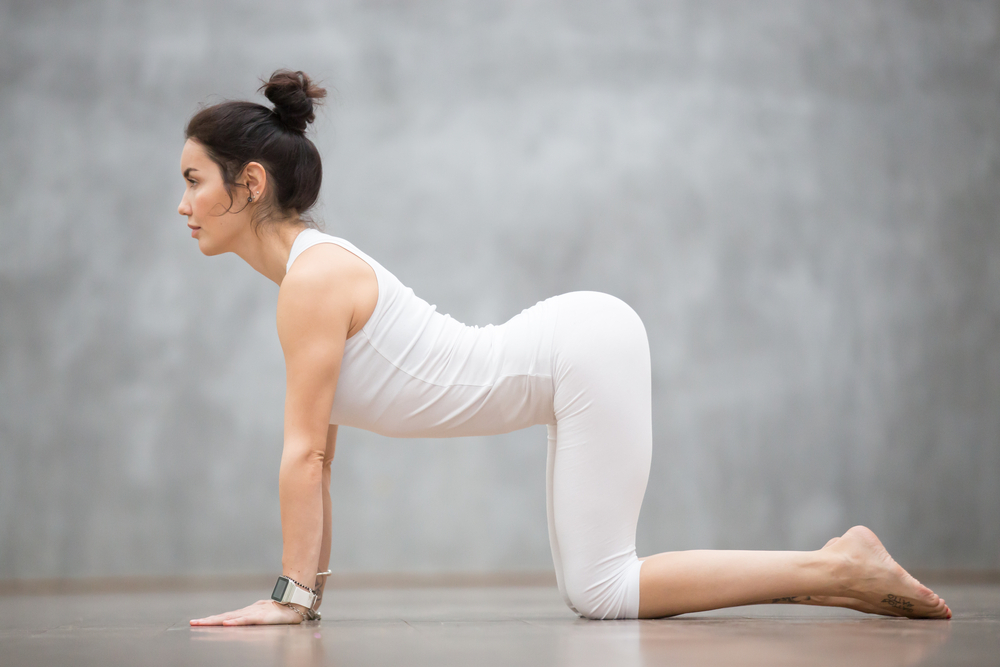
Cat Cow Pose (Marjariasana Bitilasana)
Benefits
This pose gently mobilizes the entire spine and improves circulation to neck muscles.
How to perform
- Begin on hands and knees.
- Inhale and arch your back while lifting your chest and head.
- Exhale and round the spine while bringing the chin toward the chest.
- Repeat slowly for ten repetitions.
This movement restores normal spinal mobility and reduces stiffness.
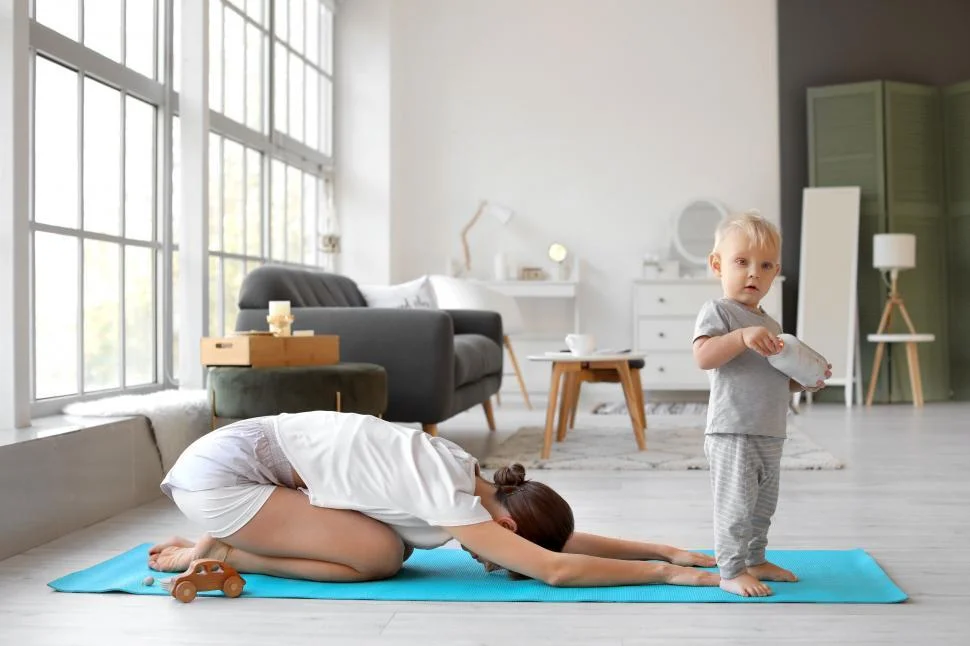
Child’s Pose (Balasana)
Benefits
Child’s pose relaxes the neck and shoulder muscles while stretching the spine.
How to perform
- Sit back on your heels.
- Stretch your arms forward on the mat.
- Rest your forehead on the floor.
- Hold for thirty to sixty seconds.
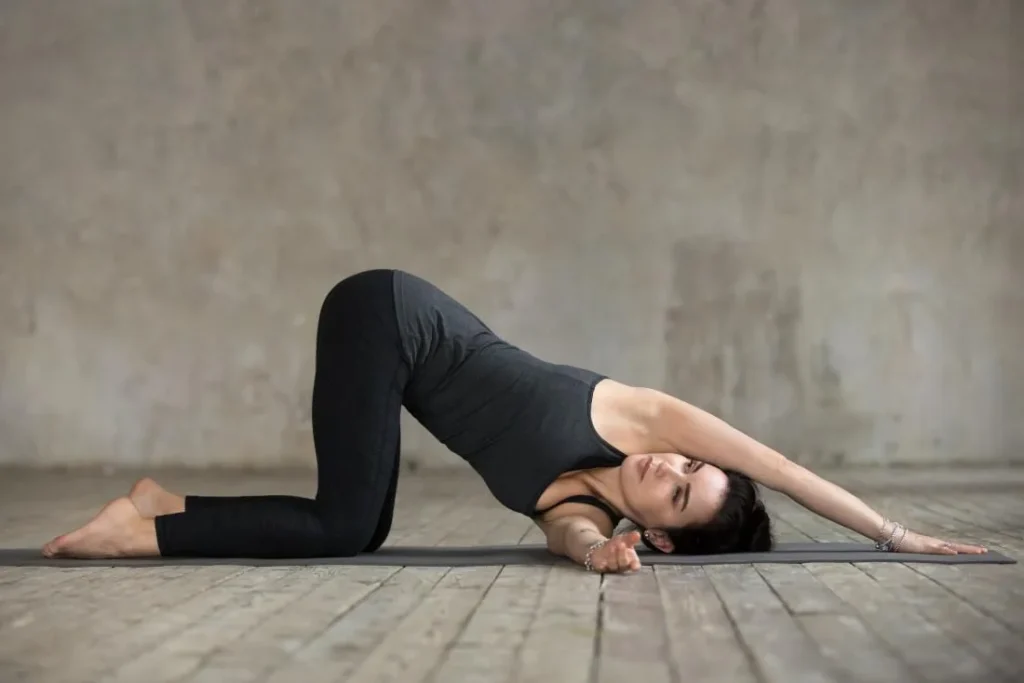
Thread the Needle Pose
Benefits
This pose stretches the upper back and shoulder muscles that often contribute to neck pain.
How to perform
- Begin on hands and knees.
- Slide your right arm underneath the left arm.
- Rest your shoulder and head on the floor.
- Hold for twenty seconds and repeat on the other side.
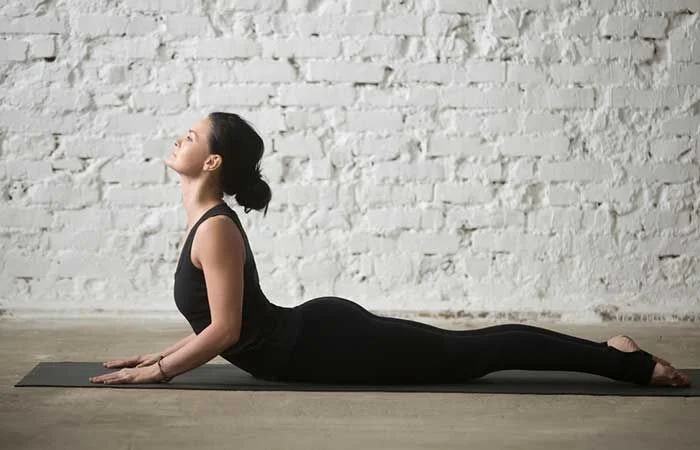
Cobra Pose (Bhujangasana)
Benefits
Cobra pose strengthens the back muscles and improves posture.
How to perform
- Lie on your stomach.
- Place your palms beside the shoulders.
- Slowly lift your chest upward while keeping elbows slightly bent.
- Hold for ten to fifteen seconds.
This pose helps reverse forward head posture.
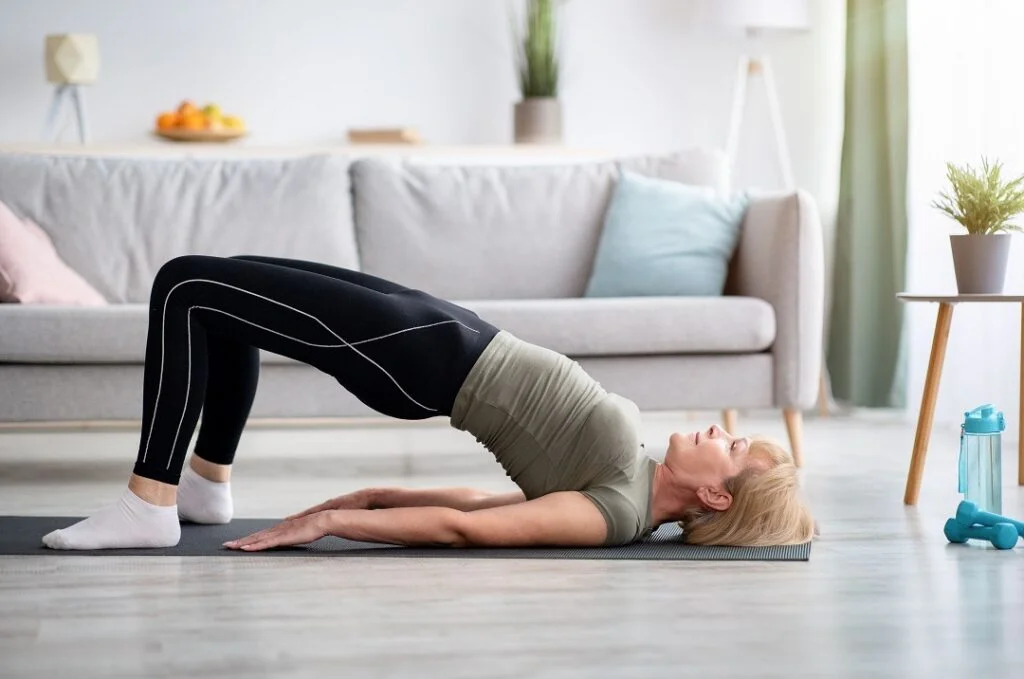
Bridge Pose (Setu Bandhasana)
Benefits
Bridge pose strengthens the muscles of the back and improves spinal alignment.
How to perform
- Lie on your back with knees bent.
- Press the feet into the floor and lift your hips upward.
- Hold for fifteen seconds.
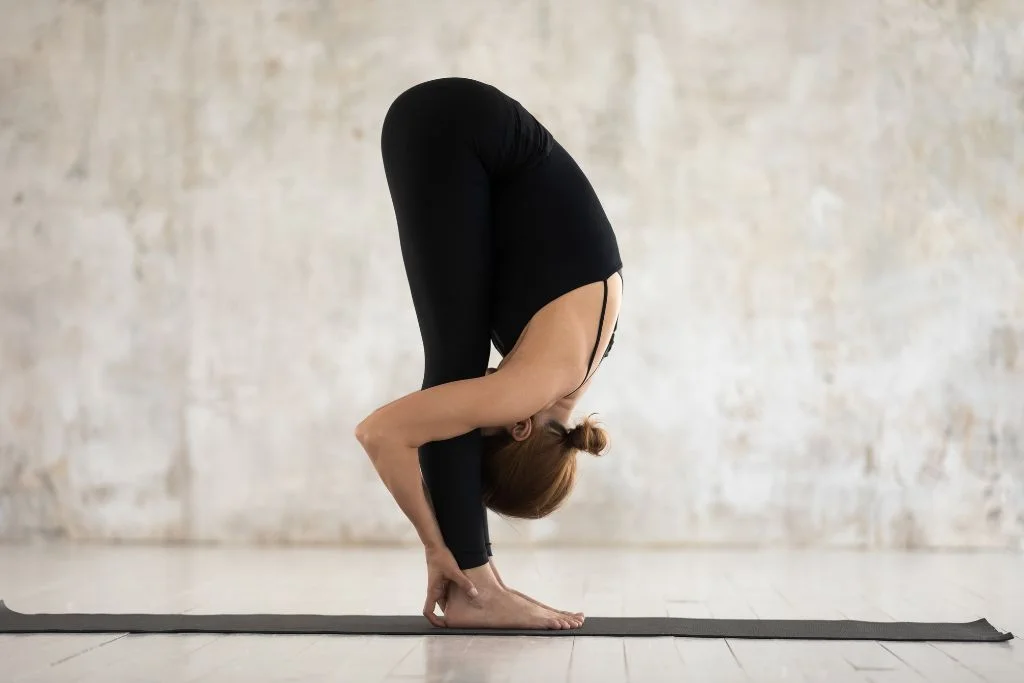
Standing Forward Bend (Uttanasana)
Benefits
This pose allows neck muscles to relax completely and reduces upper back tension.
How to perform
- Stand upright.
- Bend forward slowly from the hips.
- Let your head hang freely.
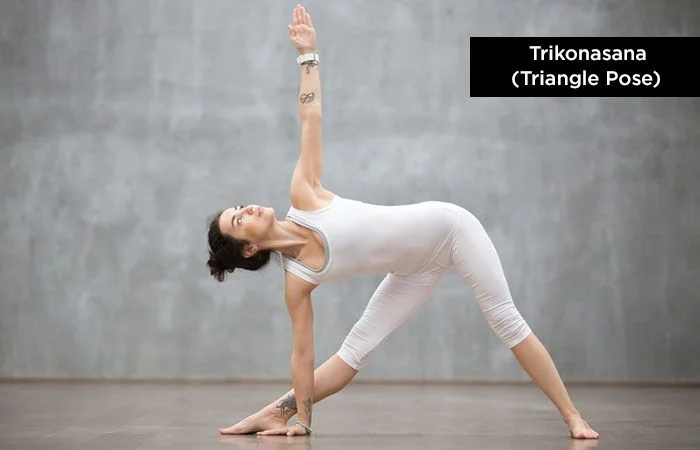
Triangle Pose (Trikonasana)
Benefits
Triangle pose improves posture and strengthens stabilizing muscles around the shoulders and neck.
How to perform
- Stand with legs wide apart.
- Extend one arm toward the floor and the other upward.
- Look toward the raised hand.
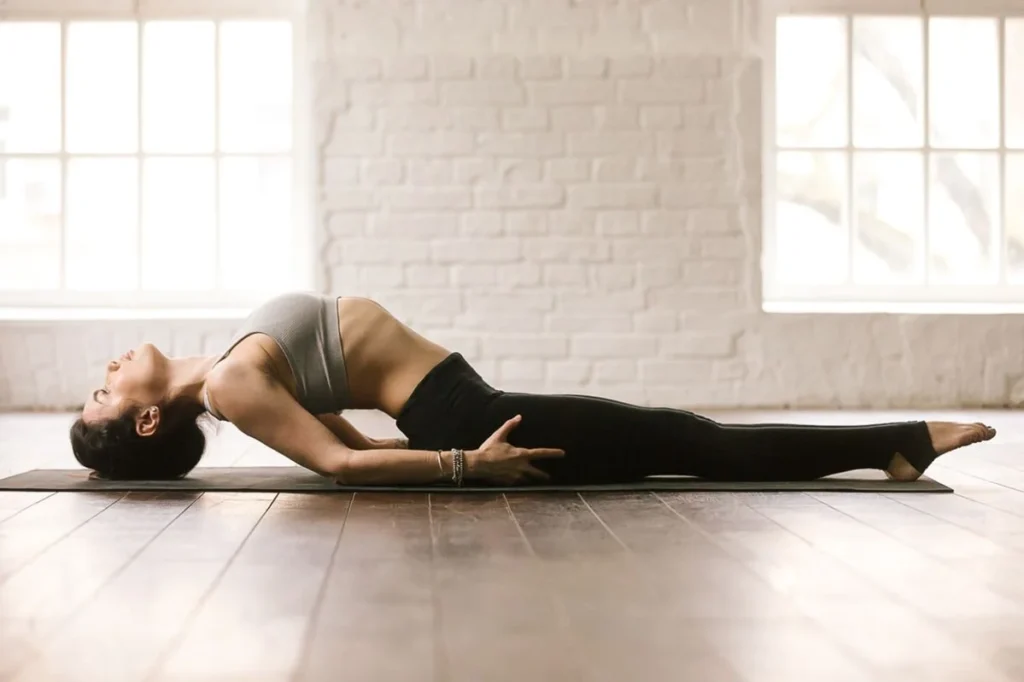
Fish Pose (Matsyasana)
Benefits
Fish pose stretches the front neck muscles and opens the chest.
How to perform
- Lie on your back.
- Lift the chest upward while gently tilting the head backward.
- Hold for ten seconds.
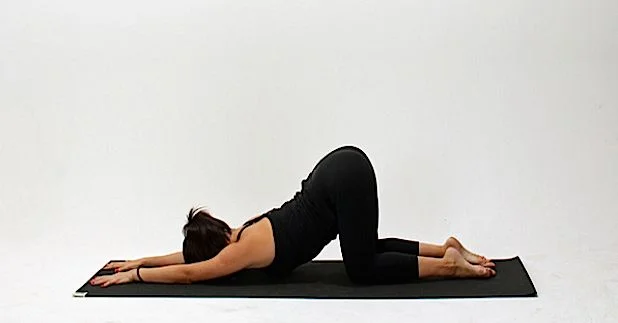
Puppy Pose (Uttana Shishosana)
Benefits
This pose stretches the shoulders and upper back, helping reduce cervical tension.
How to perform
- Begin on hands and knees.
- Walk your hands forward while keeping hips above knees.
- Lower the chest toward the floor.
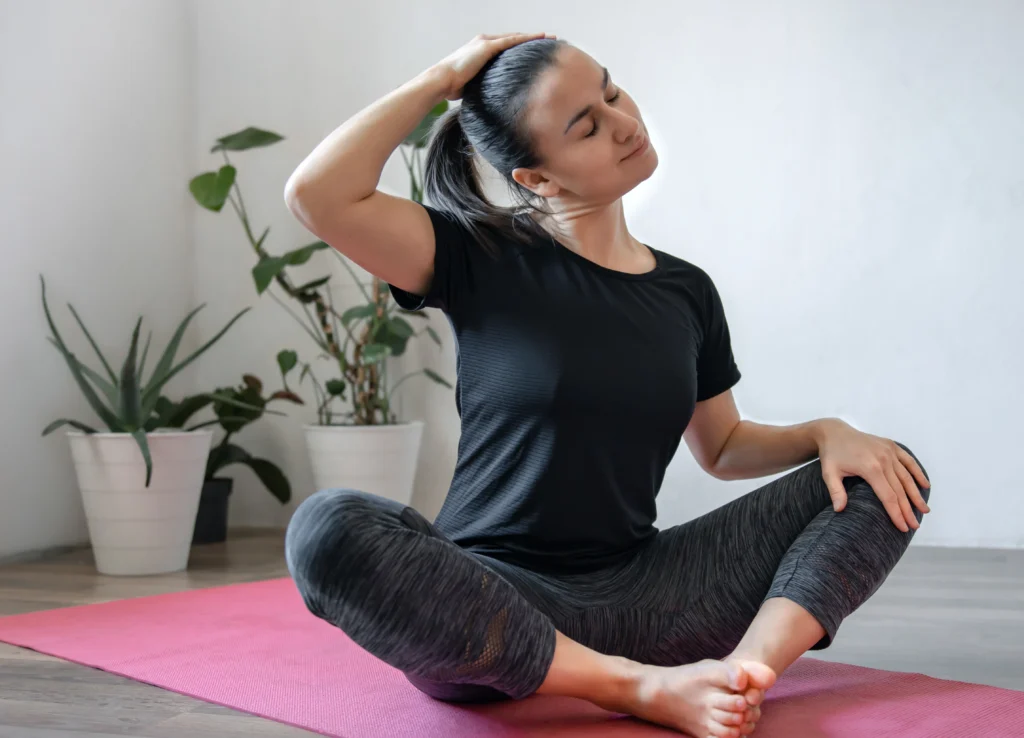
Seated Neck Stretch
Benefits
This stretch directly targets tight neck muscles.
How to perform
- Sit upright in a chair.
- Tilt your head toward one shoulder.
- Hold for twenty seconds and repeat on the opposite side.
Read in detail: Neck Pain from Phone Use? Here’s How to Treat Text Neck Syndrome
Yoga for Text Neck Syndrome

One of the fastest growing causes of neck pain today is text neck syndrome, a condition linked to prolonged smartphone and tablet use.
Many people spend several hours each day looking down at their devices while texting, scrolling, or watching videos. Over time, this habit places excessive strain on the cervical spine and surrounding muscles.
When the head moves forward from its neutral position, the load on the cervical spine increases dramatically.
In a neutral posture, the head weighs about four to five kilograms. However, when the head tilts forward while looking at a phone, the effective force on the neck rises significantly.
Research has shown that a forward head posture of sixty degrees can place nearly twenty seven kilograms of force on the cervical spine. Hansraj (2014)
Read about: Simple Posture Correction Exercises for Forward Head Posture
This increased load places continuous stress on the cervical vertebrae, intervertebral discs, ligaments, and muscles.
Over time, it can lead to symptoms such as neck stiffness, muscle fatigue, headaches, shoulder tension, and reduced mobility.
Text neck is particularly common among students, office workers, and individuals who frequently use smartphones for communication or entertainment.
From a physiotherapy perspective, the primary problem in text neck syndrome is forward head posture combined with rounded shoulders.
This posture shortens the muscles at the front of the neck and chest while overstretching the muscles at the back of the neck.
Read about: Effective Neck Pain Exercises At Home: A Complete Guide to Relief and Improved Mobility
Poses that helps
Yoga can be extremely helpful in correcting these imbalances because many yoga poses focus on opening the chest, strengthening the upper back, and restoring proper spinal alignment.
Poses such as Cobra Pose, Bridge Pose, Cat Cow Pose, and Puppy Pose encourage extension of the upper spine and help counteract the forward bending posture associated with smartphone use.
In addition to practicing yoga poses, people with text neck should try to hold their phones closer to eye level rather than looking down at the device.
Taking short breaks from phone use and performing gentle neck stretches throughout the day can also help prevent stiffness and discomfort.
When practiced regularly, yoga not only relieves symptoms of text neck but also improves posture awareness, which helps prevent the problem from returning.
Read about: How to Relieve Morning Neck Stiffness Naturally
5 Minute Morning Yoga Routine for Neck Pain

Many people wake up with neck stiffness due to poor sleeping posture, prolonged screen use the previous day, or lack of physical activity.
A short morning routine can help loosen stiff muscles, improve circulation, and prepare the cervical spine for daily activities.
This simple five minute yoga routine can be performed at home and does not require any equipment.
Step 1- Cat Cow Pose
Begin with Cat Cow Pose to gently warm up the spine. Start on your hands and knees with your back in a neutral position.
This movement improves spinal mobility and increases circulation in the muscles that support the neck.
Perform 10 slow repetitions while coordinating the movement with your breathing.
Read more: Cat Cow Stretch Benefits- A Complete Guide
Step 2- Child’s Pose
Next, move into Child’s Pose to relax the neck and upper back muscles.
This position gently stretches the spine and reduces tension in the neck and shoulders.
Hold this pose for about 30 seconds.
Read more: Child’s Pose Exercise for Pain Relief- A Complete Guide
Step 3- Cobra Pose
After relaxing the muscles, Cobra Pose helps strengthen the back and improve posture.
Avoid excessive bending of the neck and focus on lengthening the spine.
Hold the position for about 10 seconds and repeat once or twice.
Step 4- Seated Neck Stretch
This stretch helps release tension in the upper trapezius muscles, which are commonly tight in people with neck pain.
Step 5- Deep Breathing
Finish the routine with one minute of slow diaphragmatic breathing.
Sit comfortably with your spine upright. Inhale slowly through the nose and allow your abdomen to expand.
Exhale gently while relaxing the shoulders and neck.
Deep breathing helps relax the nervous system and reduces muscle tension in the neck and shoulders.
Performing this five minute routine every morning can help reduce stiffness, improve flexibility, and promote better posture throughout the day.
Consistency is important, and even a short daily practice can make a noticeable difference in neck comfort and mobility.
Read About : Manual Therapy for Neck Pain: A Physiotherapist’s Evidence Based Guide
Yoga vs Physiotherapy for Neck Pain
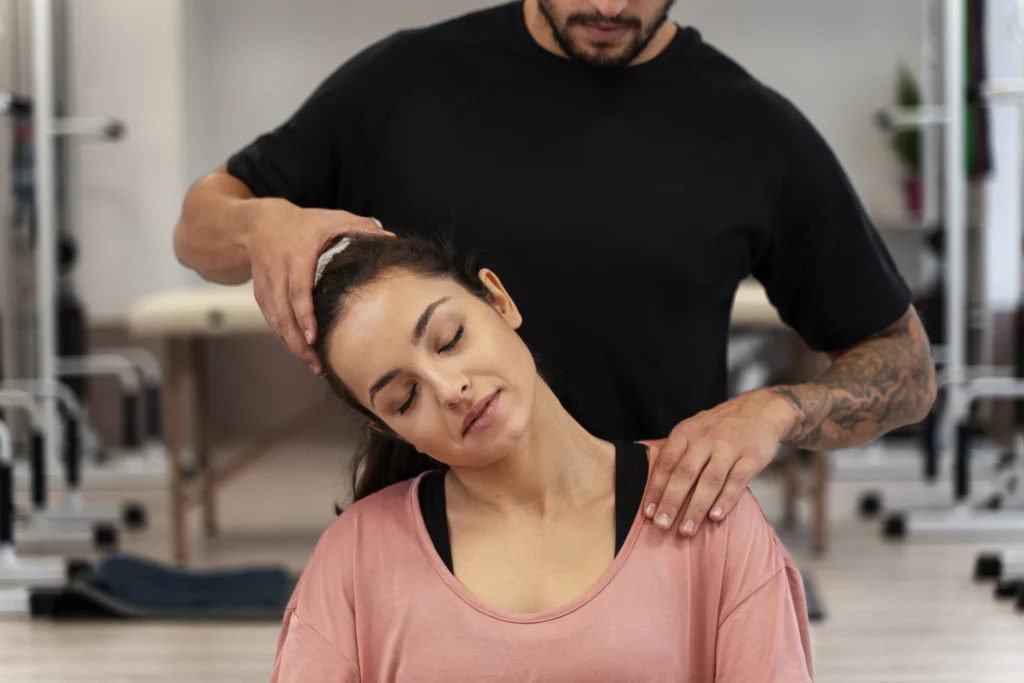
Many people ask whether yoga or physiotherapy is better for neck pain.
Both approaches are valuable and often work best together.
Physiotherapy focuses on targeted strengthening exercises, posture correction, and manual therapy.
Yoga focuses on flexibility, relaxation, breathing control, and whole body alignment.
Research suggests that combining yoga with conventional rehabilitation programs can improve outcomes in chronic neck pain patients. Michalsen et al. (2012)
Physiotherapist Tips to Prevent Neck Pain
Preventing neck pain is often easier than treating it.
From a physiotherapy perspective, most chronic neck problems develop due to poor posture, prolonged sitting, repetitive movements, and weak supporting muscles.
Small changes in daily habits can significantly reduce the risk of cervical strain and long term spine problems.
Below are practical strategies that physiotherapists commonly recommend to maintain a healthy cervical spine.
Read about: Which Is The Best Sitting Posture To Avoid Neck Pain And How To Achieve It
Maintain Good Posture
Posture plays a crucial role in neck health.
Many people unknowingly develop a forward head posture, especially while using phones or computers.
When the head moves forward from its neutral position, the cervical spine experiences increased mechanical stress.
Ideally, the ears should remain aligned with the shoulders and the shoulders should stay relaxed.
This alignment allows the spine to distribute body weight efficiently and reduces strain on the neck muscles.
When sitting, keep the back supported by the chair and avoid slouching.
The chin should remain slightly tucked instead of jutting forward.
This position helps maintain the natural curve of the cervical spine.
Regularly checking your posture throughout the day can prevent excessive stress on cervical joints and muscles.
Adjust Your Workstation
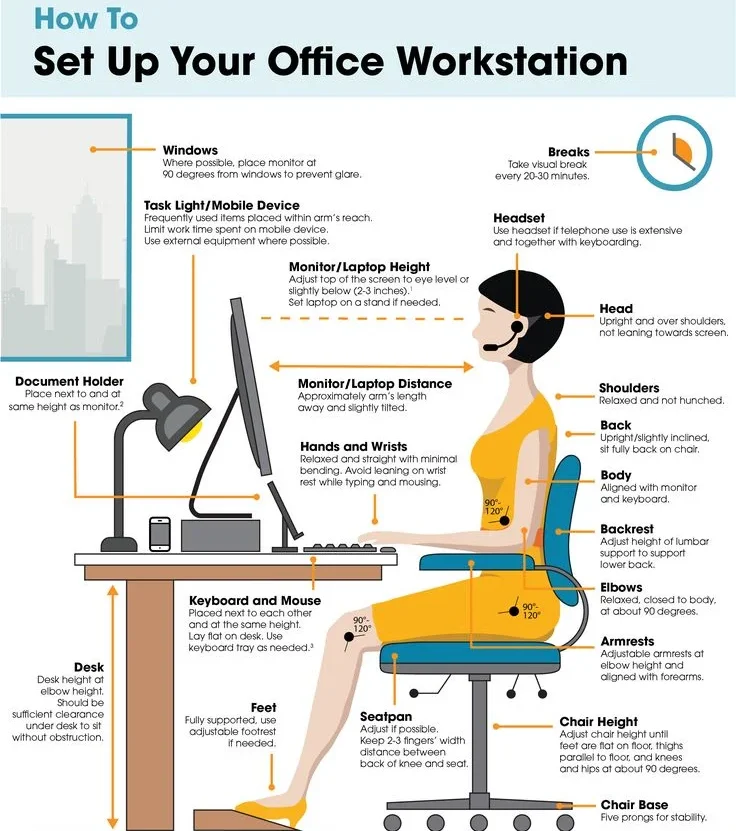
Poor workstation ergonomics is one of the leading causes of neck pain, especially for people who work long hours at a computer.
The computer monitor should be positioned at eye level, so that the neck does not bend forward or downward while viewing the screen.
The screen should also be placed about an arm’s length away from the eyes.
The keyboard and mouse should allow the elbows to remain close to the body at approximately ninety degrees.
This position reduces tension in the shoulders and neck.
If you frequently use a laptop, consider using an external keyboard and raising the laptop screen to eye level. This simple adjustment can dramatically reduce cervical strain.
Read in detail: Best Desk Setup to Reduce Neck and Back Pain
Take Frequent Breaks
Prolonged sitting is harmful for spinal health. Remaining in one position for long periods causes muscles to become stiff and reduces blood circulation.
A helpful strategy is the twenty to thirty minute rule. After every twenty to thirty minutes of sitting, stand up, stretch, or walk around briefly.
Even a one minute break can relax the muscles and restore circulation.
Simple movements such as shoulder rolls, neck rotations, and gentle stretching can prevent stiffness from building up throughout the day.
Frequent movement also helps reduce fatigue in the muscles that support the cervical spine.
Stay Physically Active
Regular physical activity is essential for maintaining a healthy spine.
Exercise improves muscle strength, joint mobility, and blood circulation, all of which contribute to spinal health.
Strengthening exercises for the upper back and shoulders are particularly important because these muscles support proper neck alignment.
Activities such as yoga, swimming, walking, and light strength training can help maintain spinal flexibility and muscle balance.
Physical activity also reduces stress levels, which indirectly helps prevent neck muscle tension.
Read in detail about: How to Fix Upper Crossed Syndrome Naturally
Strengthen Neck and Upper Back Muscles
Weak muscles around the neck and shoulders often contribute to poor posture and spinal instability.
Strengthening these muscles can provide better support to the cervical spine.
Exercises that target the deep neck flexors, scapular stabilizers, and upper back muscles help maintain proper alignment and reduce strain on cervical joints.
A physiotherapist can recommend specific strengthening exercises tailored to individual needs and pain levels.
Limit Excessive Smartphone Use
Frequent smartphone use often encourages people to bend their neck forward for long periods.
This position significantly increases the load on cervical vertebrae.
Holding the phone closer to eye level rather than looking down at it can help reduce strain on the neck.
Taking regular breaks from phone use and performing gentle neck stretches can also prevent stiffness and discomfort.
Read About: Best Sleeping Position for Neck Pain: A Physiotherapist’s Complete Guide
Use Proper Sleeping Posture
Sleeping posture can also affect neck health.
A pillow that is too high or too low can place the cervical spine in an awkward position throughout the night.
A supportive pillow that keeps the neck aligned with the rest of the spine is ideal.
Sleeping on the back or side is generally better for neck health than sleeping on the stomach, which often forces the neck into prolonged rotation.
Read About: How to Choose the Right and Best Pillow for Neck Pain
Manage Stress and Muscle Tension
Stress often leads to unconscious tightening of the neck and shoulder muscles. Over time, this tension can lead to persistent pain and stiffness.
Relaxation techniques such as yoga, meditation, breathing exercises, and regular physical activity can help reduce stress related muscle tension.
Maintaining mental wellbeing is therefore an important part of preventing chronic neck pain.
Read about: The Most Effective McKenzie Exercises For Neck Pain
Key Takeaways
- Neck pain is commonly caused by poor posture, prolonged smartphone use, and long hours of desk work.
- Yoga helps reduce neck pain by improving spinal flexibility, strengthening supportive muscles, and reducing muscle tension.
- Effective yoga poses for neck pain include Cat Cow Pose, Child’s Pose, Cobra Pose, Bridge Pose, and Seated Neck Stretch.
- Text neck syndrome occurs when prolonged forward head posture increases stress on the cervical spine.
- A short five minute morning yoga routine can help reduce stiffness and improve neck mobility.
- Combining yoga with proper workstation ergonomics and regular movement breaks helps prevent recurring neck pain.
- Consistent practice of gentle stretching and strengthening exercises is essential for long term cervical spine health.
Also Read: Ultimate 6 Weeks Neck Rehabilitation Exercises For Pain Relief
Conclusion
Neck pain is becoming increasingly common due to modern lifestyle habits such as prolonged sitting and excessive smartphone use.
Yoga provides a safe and effective method to improve spinal mobility, strengthen muscles that support the cervical spine, and reduce stress related muscle tension.
Regular practice of these yoga poses, combined with proper posture and ergonomic habits, can significantly improve neck health and reduce the risk of recurring pain.
Learn About: The Ultimate Neck Stretch Routine for Desk Workers in 2026
Frequently Asked Questions
1. Can yoga help relieve neck pain?
Yes. Yoga can help relieve neck pain by improving flexibility, strengthening neck and shoulder muscles, and correcting poor posture. Regular practice of gentle poses such as Cat Cow, Child’s Pose, and Cobra Pose can reduce stiffness and improve cervical spine mobility.
2. Which yoga pose is best for neck pain?
Some of the most effective yoga poses for neck pain include Cat Cow Pose, Child’s Pose, Cobra Pose, Bridge Pose, and Seated Neck Stretch. These poses improve spinal mobility and reduce muscle tension.
3. Is yoga safe for cervical spondylosis?
Yes, yoga can be beneficial for cervical spondylosis when performed carefully. Gentle stretches and strengthening exercises can improve neck mobility and reduce stiffness. However, it is advisable to practice under guidance if pain is severe.
4. How often should I practice yoga for neck pain?
Practicing yoga four to five times per week for ten to twenty minutes can help improve flexibility and reduce neck pain over time. Consistency is more important than intensity.
5. Can yoga correct text neck syndrome?
Yes. Yoga poses that strengthen the upper back and open the chest can help correct forward head posture caused by smartphone use. Regular stretching can reduce tension and improve spinal alignment.
6. How long does it take for yoga to reduce neck pain?
Many people begin to notice improvement within three to four weeks of consistent practice. The time required may vary depending on the severity of the condition.
7. Can I do yoga if I have severe neck pain?
If neck pain is severe or accompanied by numbness, weakness, or radiating pain into the arms, it is important to consult a healthcare professional before starting yoga exercises.
8. What lifestyle habits help prevent neck pain?
Maintaining good posture, adjusting your workstation ergonomics, taking regular movement breaks, limiting smartphone use, and staying physically active can help prevent neck pain.
Stay tuned with us for more health related topics.
Follow us on LinkedIn and Instagram for more.
More Read






Medical Disclaimer!
This article has been reviewed and written under the guidance of our Head Physiotherapist, Dr. Kruti Raj (PT, MUHS,CPT,CMPT). The information shared is intended for educational purposes only and should not be considered a substitute for personalized medical advice, diagnosis, or treatment.
Please consult us or any other qualified healthcare professional before beginning any exercise program, especially if you are experiencing pain, recovering from injury, or managing a medical condition.