


Neck pain is extremely common, but when that pain begins to travel down the arm with numbness, tingling, or weakness, the problem may be more than simple muscle strain. In many such cases, the underlying issue is cervical radiculopathy, a condition where a spinal nerve root in the neck becomes compressed or irritated.
Patients often describe the sensation as a burning or electric shock-like pain shooting from the neck into the shoulder, arm, or fingers. For some individuals, the arm pain can even feel more severe than the neck pain itself.
From a physiotherapy perspective, cervical radiculopathy is one of the most important conditions to recognize early because timely conservative treatment can significantly reduce symptoms and prevent long-term nerve damage.
Encouragingly, research consistently shows that most patients recover successfully with non-surgical care such as physiotherapy, posture correction, and therapeutic exercise.
Read our Complete Guide to Neck Pain: Causes, Symptoms, Exercises and Treatment
What Is Cervical Radiculopathy?
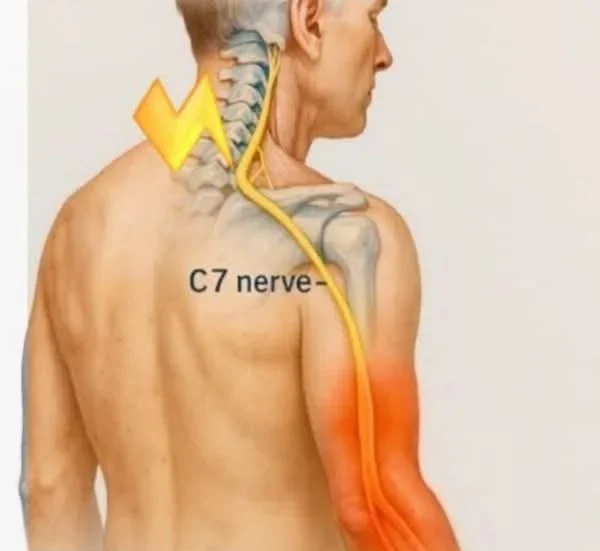
Cervical radiculopathy occurs when a nerve root in the cervical spine becomes compressed, inflamed, or irritated as it exits the spinal canal.
The cervical spine consists of seven vertebrae labeled C1 to C7. Between these vertebrae lie intervertebral discs that act as cushions and allow movement. At each spinal level, nerves exit through small openings called intervertebral foramina.
These nerves carry signals responsible for:
- muscle strength in the shoulder and arm
- sensation in the skin of the upper limb
- reflex responses
When a nerve root becomes compressed, symptoms appear along the pathway of that nerve. This distribution is known as a dermatomal pattern, which helps clinicians identify the affected level.
How Common Is Cervical Radiculopathy?
Although neck pain affects millions of people worldwide, cervical radiculopathy is less common but still significant.
Epidemiological studies estimate the annual incidence at approximately 85 cases per 100,000 individuals.
The condition most frequently affects adults between 40 and 60 years of age, although younger individuals can also develop it, especially those with prolonged screen exposure and sedentary lifestyles.
Occupations with higher risk include:
- desk workers
- information technology professionals
- drivers
- dentists and surgeons
- individuals performing repetitive neck movements
Modern lifestyle factors such as extended smartphone use and prolonged computer work have significantly increased cervical spine stress.
The Cervical Nerve Roots and Their Symptoms
One of the most fascinating aspects of cervical radiculopathy is that each nerve root produces a unique symptom pattern.
Understanding these patterns helps physiotherapists identify the affected nerve level.
C5 Nerve Root
Symptoms may include:
- shoulder pain
- weakness when lifting the arm
- difficulty with overhead activities
C6 Nerve Root
This is one of the most commonly affected levels.
Typical symptoms include:
- pain traveling down the arm
- numbness in the thumb
- reduced biceps reflex
C7 Nerve Root
Another commonly involved nerve root.
Symptoms may include:
- pain radiating into the middle finger
- triceps weakness
- reduced triceps reflex
C8 Nerve Root
Less common but still important.
Symptoms may include:
- numbness in the little finger
- difficulty gripping objects
- hand weakness
These dermatomal patterns are extremely helpful during clinical assessment.
Read about : 15 Common Causes of Neck Pain You Should Know
Causes of Cervical Radiculopathy
Several conditions can lead to nerve root compression in the cervical spine.
Cervical Disc Herniation
A disc herniation occurs when the soft inner portion of the intervertebral disc bulges outward and presses on a nearby nerve.
Disc herniation is a common cause in younger adults aged 30–45 years.
Cervical Spondylosis
Read in detail about: What is Cervical Spondylosis? The Truth Behind Chronic Neck Pain
Age-related degeneration of the spine can lead to:
- bone spur formation
- disc thinning
- joint thickening
These changes narrow the nerve exit spaces and compress the nerve roots.
Read about: The Best Physiotherapy Exercises for Cervical Spondylosis Relief
Foraminal Stenosis
The intervertebral foramen may become narrowed due to degenerative changes.
This narrowing restricts nerve movement and causes irritation.
Degenerative Disc Disease
Read in detail about: Cervical Disc Degeneration: The Hidden Cause of your Neck Pain
Over time, discs lose hydration and height. Reduced disc height decreases space between vertebrae and increases pressure on nerves.
Read about: Cervical Disc Degeneration: The Hidden Cause of your Neck Pain
Trauma or Sudden Injury
Whiplash injuries, falls, and sports accidents may damage cervical structures and compress spinal nerves.
Lesser Known Risk Factors
While aging and disc degeneration are common causes, several lesser-known factors may increase the risk of cervical radiculopathy.
Smartphone Overuse
Research shows that bending the neck forward while using a phone can increase cervical spine load dramatically.
When the head tilts forward about sixty degrees, the neck may experience forces equivalent to more than twenty kilograms.
Smoking
Smoking reduces blood flow to spinal discs, accelerating degeneration and increasing risk of disc herniation.
Poor Sleep Position
Sleeping with excessive pillows or twisted neck positions may irritate cervical nerves overnight.
Weak Upper Back Muscles
Weak scapular stabilizers reduce spinal support and increase cervical strain.
Symptoms of Cervical Radiculopathy
Symptoms can vary depending on the affected nerve root, but common features include:
Radiating Arm Pain
Patients often describe the pain as:
- burning
- sharp
- electric shock-like
Unlike muscular pain, radicular pain follows the nerve pathway.
Interestingly, many patients report that arm pain is more intense than neck pain.
Tingling and Numbness
Pins and needles sensation in specific fingers often indicate nerve involvement.
Muscle Weakness
Patients may experience difficulty with:
- gripping objects
- lifting items
- pushing movements
Reduced Reflexes
Neurological examination may reveal reduced tendon reflexes.
Recent diagnostic research shows that reflex changes are one of the most specific clinical findings for cervical radiculopathy.
Psychological Factors and Pain Perception
Recent research highlights that cervical radiculopathy does not only affect physical health.
Patients frequently experience:
- anxiety
- fear of movement
- sleep disturbance
- reduced work productivity
Fear of movement can lead to excessive muscle guarding, which increases neck stiffness and prolongs recovery.
Addressing these psychological factors is an important part of modern physiotherapy rehabilitation.
How Cervical Radiculopathy Is Diagnosed
Diagnosis typically involves a combination of clinical assessment and imaging.
Clinical Examination
Physiotherapists and physicians evaluate:
- muscle strength
- sensation
- reflexes
- pain patterns
A commonly used test is Spurling’s test, which gently compresses the cervical spine while the head is tilted.
Reproduction of arm pain during the test may indicate nerve compression.
Imaging Tests
Imaging may include:
- MRI
- CT scan
- X-ray
MRI is particularly useful because it shows soft tissues such as discs and nerves.
Physiotherapy Treatment for Cervical Radiculopathy
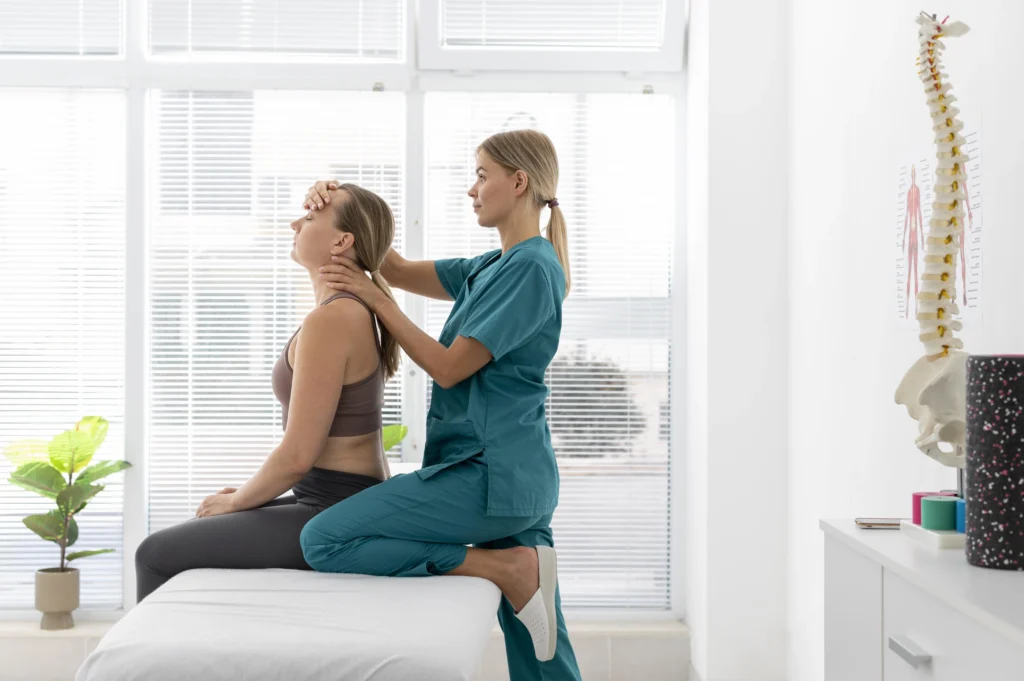
The majority of patients improve with conservative treatment.
Physiotherapy focuses on:
- relieving nerve pressure
- restoring mobility
- strengthening supportive muscles
Cervical Traction
Cervical traction gently separates the vertebrae and increases the space around compressed nerves.
Many patients experience immediate symptom relief during traction sessions.
Neural Mobilization
Also known as nerve gliding, this technique helps restore the natural sliding movement of nerves.
Recent research shows neural mobilization significantly improves nerve function and pain levels.
Manual Therapy
Manual therapy techniques include:
- joint mobilization
- soft tissue release
- muscle stretching
These approaches help reduce muscle guarding and improve spinal mobility.
Deep Neck Flexor Strengthening
Deep cervical flexor muscles play a critical role in spinal stability.
Weakness in these muscles is associated with chronic neck pain and cervical radiculopathy.
Training these muscles improves spinal control and reduces stress on cervical discs.
Breathing Training in Rehabilitation
A fascinating recent development in physiotherapy research involves breathing re-education.
Deep diaphragmatic breathing has been shown to improve endurance of neck stabilizing muscles and reduce excessive accessory muscle tension.
This technique is becoming an important component of modern cervical rehabilitation programs.
Evidence-Based Exercises for Cervical Radiculopathy
These exercises are commonly prescribed by physiotherapists.
Chin Tucks
This exercise strengthens deep neck stabilizers.
Steps
1 Sit upright
2 Gently pull your chin inward
3 Hold for five seconds
4 Repeat ten times
Cervical Retraction
This exercise reduces forward head posture.
Steps
1 Sit upright
2 Pull your head straight backward
3 Hold briefly and relax
Scapular Retraction
Strengthening shoulder blade muscles improves neck alignment.
Steps
1 Sit upright
2 Squeeze shoulder blades together
3 Hold five seconds
Nerve Gliding Exercise
Steps
1 Extend your arm sideways
2 Tilt head gently to the opposite side
3 Slowly move wrist up and down
This improves nerve mobility.
Emerging Treatments and Future Directions
Medical research continues to develop new approaches for cervical radiculopathy.
Minimally Invasive Spine Surgery
Procedures such as endoscopic cervical foraminotomy allow surgeons to decompress nerves with minimal tissue damage.
Shockwave Therapy
Some early studies suggest extracorporeal shockwave therapy may help reduce chronic nerve pain.
Artificial Intelligence in Spine Diagnosis
New AI-assisted imaging technologies can automatically analyze MRI scans to detect spinal degeneration and nerve compression.
These tools may significantly improve early diagnosis in the future.
Prevention Strategies
Preventing cervical radiculopathy involves protecting the cervical spine from excessive strain.
Important habits include:
Maintain upright posture while sitting
Position computer screens at eye level
Take movement breaks every thirty to forty minutes
Strengthen neck and upper back muscles regularly
Avoid prolonged smartphone use with the head bent forward
Sleep with a supportive pillow that keeps the neck neutral
Red Flags: When to Seek Immediate Medical Help
Although most cases improve with conservative treatment, urgent medical attention is required if you experience:
- progressive arm weakness
- loss of coordination
- severe numbness
- difficulty walking
- bladder or bowel dysfunction
These symptoms may indicate serious nerve or spinal cord compression.
Clinical Insight
In clinical practice, one of the most common mistakes patients make is focusing only on the neck.
However, the cervical spine is strongly influenced by the thoracic spine and shoulder blade muscles.
Many patients with cervical radiculopathy have:
- stiff upper back
- weak scapular stabilizers
- poor breathing patterns
When physiotherapy addresses these areas together, recovery is often faster and more sustainable.
Physio Prescription
Daily routine for cervical radiculopathy recovery
Morning
Chin tucks ten repetitions
Scapular squeezes ten repetitions
Afternoon
Posture correction every thirty minutes
Thoracic extension stretch
Evening
Neck mobility exercises
Nerve gliding exercise
Consistency matters more than intensity.
Myth vs Fact
Myth
Complete rest is the best treatment for cervical radiculopathy.
Fact
Prolonged inactivity can worsen stiffness and delay healing. Controlled movement and therapeutic exercise are essential.
Final Word
Cervical radiculopathy can feel alarming because of the nerve pain and arm symptoms it produces. However, with early diagnosis and appropriate physiotherapy treatment, the majority of patients recover without surgery.
Understanding the role of posture, muscle strength, nerve mobility, and lifestyle habits is essential for long-term spinal health.
With the right rehabilitation approach, it is entirely possible to regain comfort, restore movement, and return to normal daily activities.
Frequently Asked Questions (FAQs)
The most common causes of cervical radiculopathy are herniated cervical discs and age-related degenerative changes in the spine.
Yes. In most cases, cervical radiculopathy improves with conservative treatments such as physiotherapy, posture correction, cervical traction, and strengthening exercises.
The pain is often described as sharp, burning, or electric shock-like, radiating from the neck into the shoulder, arm, or fingers. Some people may also experience tingling, numbness, or muscle weakness in the affected arm.
Common physiotherapy exercises include chin tucks, cervical retraction, scapular strengthening, and nerve gliding exercises. These movements reduce pressure on irritated nerves and improve mobility.
Recovery time varies depending on the severity of nerve compression. Many patients begin to improve within 4 to 6 weeks of physiotherapy, while full recovery may take 8 to 12 weeks or longer in some cases.
Yes. Forward head posture, prolonged computer use, and excessive smartphone use can increase stress on the cervical spine and contribute to nerve irritation over time.
Stay tuned with us for more health related topics.
Follow us on LinkedIn and Instagram for more.
More Read


Medical Disclaimer!
This article has been reviewed and written under the guidance of our Head Physiotherapist, Dr. Kruti Raj (PT, MUHS,CPT,CMPT). The information shared is intended for educational purposes only and should not be considered a substitute for personalized medical advice, diagnosis, or treatment.
Please consult us or any other qualified healthcare professional before beginning any exercise program, especially if you are experiencing pain, recovering from injury, or managing a medical condition.


