


Understanding Neck Pain Before Choosing Heat or Cold
As a physiotherapist, I always tell my patients this first: you cannot choose the right therapy unless you understand your pain type.
Neck pain is not one single condition, it is a spectrum. The source determines the correct treatment.
Common Causes of Neck Pain
- Muscle strain (poor posture, long screen time)
- Cervical spondylosis (age-related degeneration)
- Facet joint irritation
- Whiplash injury
- Nerve compression (cervical radiculopathy)
- Stress-induced muscle guarding
- Sleeping in awkward positions
Symptoms You May Experience
- Local stiffness or tightness
- Sharp pain on movement
- Radiating pain to shoulder/arm
- Headaches (cervicogenic)
- Reduced range of motion
- Muscle spasms
Why Neck Pain Occurs (Mechanism)
From a physiological perspective:
- Acute injury → inflammation → swelling → pain signals
- Chronic strain → muscle tightness → reduced circulation → stiffness
- Nerve involvement → hypersensitivity → radiating symptoms
This distinction is the foundation of heat vs cold therapy selection.
Read about our Complete Neck Pain Guide : Causes, Symptoms, Exercises and Treatment
Quick Answer
Use cold therapy for sudden neck pain, swelling, or injury within the first 48-72 hours. Switch to heat therapy for ongoing stiffness, tight muscles, or chronic neck pain. Both therapies are effective when used at the correct stage.
Read about : 15 Common Causes of Neck Pain You Should Know
The Core Principle
Timing Matters More Than Modality
One of the most important clinical insights:
Heat and cold are both effective, but only when used at the right stage.
A randomized controlled trial comparing heat and cold for neck strain found both provided similar short-term pain relief, reinforcing that selection depends on the condition rather than superiority (PubMed).
Also read: How to Relieve Neck Tightness Without Equipment
Cold Therapy (Cryotherapy)
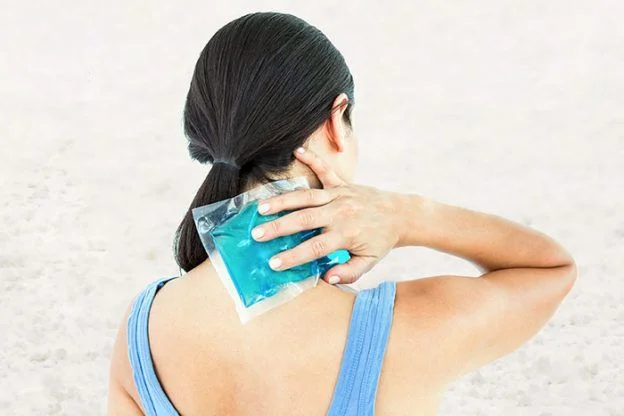
What Cold Therapy Does
Cold therapy works through:
- Vasoconstriction (reduces blood flow)
- Decreased inflammation
- Slowing nerve conduction (pain numbing)
- Reducing muscle spasm reflex
When Cold Therapy is BEST for Neck Pain
Use cold therapy if your pain is:
- Sudden onset (e.g., woke up with pain)
- Due to acute strain or injury
- Associated with swelling or tenderness
- Following physical activity or gym strain
- Within the first 24-72 hours
Research consistently supports cryotherapy for acute inflammatory phases, helping reduce tissue damage and pain perception (mantechpublications).
Read about: The Best Physiotherapy Exercises for Cervical Spondylosis Relief
Clinical Tip
If your neck feels:
- Hot
- Inflamed
- Painful even at rest
Cold is your first line of treatment
Read about: Cervical Ligament Injury or Neck Ligament Tear
How to Apply Cold Therapy Correctly
- Wrap ice pack in a thin towel
- Apply for 10-15 minutes
- Repeat every 2-3 hours
- Avoid direct skin contact
Read about- Simple Posture Correction Exercises for Forward Head Posture
Lesser-Known Fact
Recent discussions in sports medicine suggest that excessive or prolonged icing may delay tissue adaptation and healing in some cases (especially in athletes) (The Guardian).
What this means for you:
Use ice for short-term control, not long-term dependency.
Read in detail: Whiplash Injury After An Accident? Here’s Treatment And Expert Rehab Guide
Heat Therapy (Thermotherapy)

What Heat Therapy Does
Heat works by:
- Vasodilation (increases blood flow)
- Enhancing oxygen and nutrient delivery
- Reducing muscle stiffness
- Improving tissue elasticity
When Heat Therapy is BEST for Neck Pain
Use heat when:
- Pain is chronic (lasting >1 week)
- There is stiffness without swelling
- Muscles feel tight or “knotted”
- You have postural neck pain
- You are preparing for exercise or stretching
Evidence shows heat improves circulation and muscle flexibility, making it ideal for chronic musculoskeletal pain (Healthline).
Read in detail about: Cervical Disc Degeneration: The Hidden Cause of your Neck Pain
Advanced Research Insight
A 2024 meta-analysis on recovery therapies found heat-based treatments improved muscle recovery markers and reduced pain more effectively than cold therapy in some conditions (SpringerLink).
Read about : What is Cervical Facet Joint Pain, how it causes cervicogenic headaches and how to correct it naturally
Clinical Tip
If your neck feels:
- Tight
- Stiff
- Heavy
- Worse after sitting
Heat will help you more than ice
Read about: What Is Cervical Myofascial Pain Syndrome And How To Relieve Trigger Points
How to Apply Heat Therapy Correctly
- Use warm (not hot) packs
- Apply for 15-20 minutes
- Best used before stretching
- Maintain a protective layer (towel)
Read in detail: Physiotherapy for Cervical Disc Degeneration: What Actually Works
Contrast Therapy: The Advanced Approach
Alternating heat and cold is called contrast therapy.
When to Use It
- Subacute phase (after 3-5 days)
- Mixed symptoms (pain + stiffness)
- Recovery phase of injury
How to Do It
- Cold: 5 minutes
- Heat: 10-15 minutes
- Repeat 2-3 cycles
This approach enhances:
- Circulation pumping effect
- Faster recovery
- Pain modulation
Read more: Cervical Myelopathy: The Hidden Neck Condition Affecting Your Walking
When To Apply What
Use Cold Therapy If:
- Pain started suddenly
- Swelling is present
- Pain is sharp
- Injury is recent
Use Heat Therapy If:
- Pain is long-standing
- No swelling present
- Stiffness dominates
- Pain improves with movement
Read about: What Is Military Neck Or Cervical Kyphosis And How To Treat It
Physiotherapy Perspective
Many patients:
- Use heat immediately after injury- worsens swelling
- Use ice for weeks- delays mobility
- Apply for too long- causes tissue damage
Correct timing is everything.
Read about: Effective Neck Pain Exercises At Home: A Complete Guide to Relief and Improved Mobility
Integrating Heat & Cold with Physiotherapy

Temperature therapy alone is NOT enough.
Combine With:
- Gentle neck mobility exercises
- Postural correction
- Ergonomic changes
- Strengthening (deep neck flexors)
- Breathing techniques
Read about: Yoga for Neck Pain: Poses That Actually Work
Advanced Clinical Insight: Pain vs Healing
Here’s something most people don’t know:
- Cold = better for pain control
- Heat = better for tissue healing (in later stages)
This is why both are essential, but at different times.
Read more on : Manual Therapy for Neck Pain: A Physiotherapist’s Evidence Based Guide
Precautionary Measures
Cold Therapy Safety
- Never apply directly on skin
- Limit to 15-20 minutes
- Avoid in poor circulation conditions
- Stop if numbness or discoloration occurs
Heat Therapy Safety
- Never use on swollen areas
- Avoid sleeping with heating pad
- Use moderate temperature only
- Always use cloth barrier
Read about: The Most Effective McKenzie Exercises For Neck Pain
What If a Burn Occurs from Heat Therapy?
Immediate First Aid Steps
- Remove heat source immediately
- Cool the area with running water (10-15 min)
- Do NOT apply ice directly
- Cover with sterile gauze
- Avoid creams initially
- Seek medical care if blistering occurs
Physiotherapist Advice
Even mild burns can delay recovery, be cautious, not aggressive with heat.
Read more: Is Cervical Traction For Neck Pain Really Effective
Red Flags: When NOT to Use Heat or Cold
Avoid both if:
- Severe trauma suspected
- Fracture possibility
- Infection
- Skin sensitivity disorders
- Unexplained neurological symptoms
Also Read: Ultimate 6 Weeks Neck Rehabilitation Exercises For Pain Relief
Frequently Asked Questions
1. Should I use heat or ice for neck pain?
Use ice for acute pain and swelling, and heat for chronic stiffness.
2. How long should I apply heat or cold?
Apply for 15–20 minutes at a time with breaks in between.
3. Can I alternate heat and cold?
Yes, especially in the recovery phase after inflammation reduces.
4. Is heat bad for neck pain?
Heat can worsen pain if used during inflammation.
5. Is heat or cold better overall?
Neither is superior. Both are effective when used correctly based on the stage of injury (PubMed).
6. When should I see a physiotherapist?
If pain persists beyond a week or radiates to arms.
Also Read : Neck Cracking: Benefits, Risks, and the Truth About Stroke
Key Takeaways
- Cold therapy is best for acute neck pain, swelling, and inflammation.
- Heat therapy works better for chronic stiffness and muscle tightness.
- Timing matters more than choosing heat or cold.
- Use ice for the first 48–72 hours, then switch to heat if stiffness persists.
- Contrast therapy can enhance recovery in later stages.
- Never apply heat to a swollen or freshly injured neck.
- Improper use of heat can cause burns—always use a protective layer.
Stay tuned with us for more health related topics.
Follow us on LinkedIn and Instagram for more.
More Read


Medical Disclaimer!
This article has been reviewed and written under the guidance of our Head Physiotherapist, Dr. Kruti Raj (PT, MUHS,CPT,CMPT). The information shared is intended for educational purposes only and should not be considered a substitute for personalized medical advice, diagnosis, or treatment.
Please consult us or any other qualified healthcare professional before beginning any exercise program, especially if you are experiencing pain, recovering from injury, or managing a medical condition.


