


Pain in the back side of the neck, also called posterior neck pain, is one of the most common musculoskeletal complaints seen in physiotherapy practice.
It is usually mechanical in nature, meaning it is influenced by posture, movement patterns, muscle function, and lifestyle habits rather than internal disease.
The region includes the cervical spine, surrounding muscles, ligaments, joints, and neural structures. Pain can arise when these tissues are overloaded, poorly coordinated, or fatigued over time.
Global data suggests that neck pain is one of the leading causes of disability, with recurrence rates as high as 50 to 85 percent across a lifetime. (Hoy et al., 2014)
What is important to understand is that most posterior neck pain is not dangerous but becomes persistent due to poor movement habits and lack of targeted rehabilitation.
Read about: Early Signs of Cervical Spine Damage You Should Never Ignore
Quick Answer
Pain in the back side of the neck is most commonly caused by poor posture, prolonged screen use, muscle imbalance, and weak deep neck stabilizing muscles. It is usually mechanical and responds well to physiotherapy, including targeted exercises, motor control training, and ergonomic correction. Early treatment and consistent movement can prevent chronic pain.
Read about our Complete Neck Pain Guide : Causes, Symptoms, Exercises and Treatment
Key Takeaways
- Posterior neck pain is commonly linked to posture and movement dysfunction.
- Weak deep cervical muscles are a hidden but important cause.
- Exercise therapy is the most effective long term solution.
- Motor control training improves coordination and reduces recurrence.
- Manual therapy helps in short term pain relief but is not sufficient alone.
- Pain can persist due to nervous system sensitization, not just tissue damage.
- Frequent breaks and ergonomic changes are essential for prevention.
- Early physiotherapy can stop neck pain from becoming chronic.
Read : A Complete Guide To Neck Arthritis
Anatomy Explained in a Simple Way
To truly understand your pain, you need a basic idea of what lies at the back of your neck.
Muscles Involved
- Upper trapezius
- Levator scapulae
- Splenius capitis
- Deep cervical extensors
Joints
Facet joints guide neck movement and can become irritated with repetitive strain.
Intervertebral Discs
These act as shock absorbers between vertebrae.
Nerves
Cervical nerve roots exit from the spine and can refer pain to shoulders and arms.
Important Clinical Insight
Research shows that pain is often not due to tight muscles alone but due to poor activation of deep stabilizing muscles. (Jull et al., 2008)
This imbalance causes superficial muscles to overwork, leading to fatigue and pain.
Read about : 15 Common Causes of Neck Pain You Should Know
The Real Causes of Posterior Neck Pain

1. Postural Overload and Tech Neck
Modern lifestyle is the biggest contributor.
Forward head posture increases load on the cervical spine significantly. Even a small forward tilt multiplies stress on neck structures. (Nejati et al., 2015)
Sustained posture leads to:
- Muscle fatigue
- Joint compression
- Reduced circulation
2. Movement Control Dysfunction
This is a lesser known but critical cause.
Neck pain is not just about stiffness. It is often about poor coordination between deep and superficial muscles.
When deep stabilizers fail:
- Superficial muscles compensate
- Movement becomes inefficient
- Pain develops over time (Falla et al., 2004)
3. Scapular Weakness and Upper Back Dysfunction
Your neck does not work alone. It depends on shoulder blade stability.
Weak scapular muscles increase load on the neck, especially during desk work. (Struyf et al., 2013)
4. Stress and Muscle Tension
Emotional stress increases muscle tone, especially in the upper trapezius.
This leads to:
- Persistent tightness
- Reduced relaxation
- Increased pain sensitivity
5. Sedentary Lifestyle
Lack of movement reduces:
- Muscle endurance
- Blood circulation
- Tissue adaptability
This makes the neck more vulnerable to strain.
6. Fascial Stiffness
Recent research highlights the role of fascia, the connective tissue surrounding muscles.
Fascial restriction can:
- Limit movement
- Increase stiffness
- Contribute to chronic pain (Wilke et al., 2018)
Read about: Cervical Ligament Injury or Neck Ligament Tear
Symptoms You May Experience
Common Symptoms
- Dull aching pain at the back of the neck
- Stiffness
- Pain during movement
Associated Symptoms
- Headache at the base of the skull
- Shoulder tightness
- Reduced neck mobility
Red Flag Symptoms
Seek medical attention if you notice:
- Numbness or tingling
- Weakness in arms
- Severe trauma history
Read more: Cervical Disc Bulge: Causes, symptoms and treatment
Lesser Known Facts About Posterior Neck Pain
Pain Does Not Always Mean Damage
Pain is influenced by the nervous system, not just tissues.
Education about pain reduces fear and improves outcomes. (Palahí Calsina et al., 2024)
The Brain Can Amplify Pain
Chronic neck pain involves changes in how the brain processes signals.
This explains why pain may persist even after tissue healing.
The 30 Minute Fatigue Rule
Studies show that muscle fatigue begins within 30 minutes of sustained posture, especially during smartphone use.
This is why short breaks are essential.
Exercise Quality Matters More Than Quantity
Doing the right exercise correctly is more effective than doing many repetitions incorrectly.
Guided exercise programs show better outcomes. (Muñoz Lazcano et al., 2024)
Read in detail about: What is Cervical Spondylosis? The Truth Behind Chronic Neck Pain
Physiotherapy Assessment
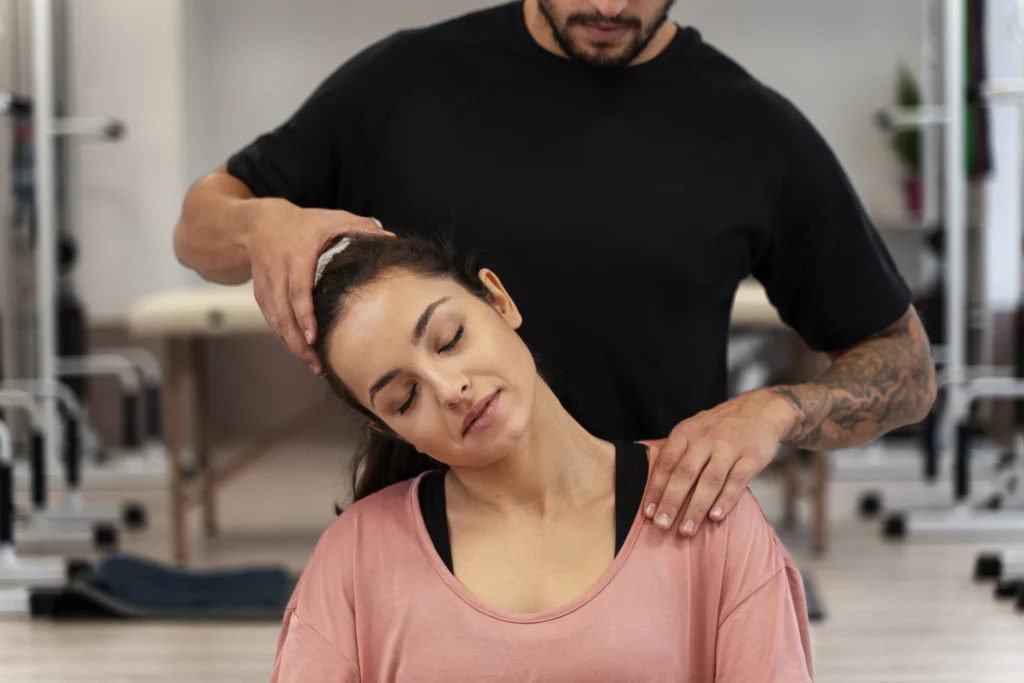
A physiotherapist evaluates more than just pain.
Assessment Includes
- Posture analysis
- Muscle strength
- Movement patterns
- Ergonomic habits
This helps identify the root cause rather than just treating symptoms.
Read in detail: Physiotherapy for Cervical Disc Degeneration: What Actually Works
Evidence Based Physiotherapy Treatment
Effective management of posterior neck pain requires a multidimensional approach, not just symptom relief.
As a physiotherapist, I focus on correcting the underlying dysfunction, improving movement quality, and restoring long term resilience.
Also Read: Ultimate 6 Weeks Neck Rehabilitation Exercises For Pain Relief
1. Exercise Therapy
Exercise therapy remains the gold standard treatment for both acute and chronic neck pain.
However, it is not just about doing exercises, it is about doing the right exercises with proper control.
Key Focus Areas
Deep Cervical Flexor Activation
These are small stabilizing muscles located deep in the front of the neck.
They play a critical role in maintaining spinal alignment.
In patients with neck pain:
- These muscles are often weak or delayed in activation
- Superficial muscles compensate, leading to overload
Specific low-load exercises such as chin nods help restore this balance.
Learn: How to do Chin Tucks for Neck Pain Relief and Posture Correction
The neck and shoulder blade function as a unit. Weak scapular muscles increase strain on the cervical spine.
Exercises focus on:
- Middle trapezius
- Lower trapezius
- Serratus anterior
Improving scapular control reduces neck muscle overactivity.
Mobility and Flexibility Exercises
Restricted movement in the cervical and thoracic spine contributes to pain.
Target areas include:
- Upper trapezius
- Levator scapulae
- Thoracic spine mobility
Clinical Insight
Exercise is not just about strength. It improves:
- Blood flow
- Tissue tolerance
- Neural control
Strong evidence supports exercise therapy in reducing pain intensity and disability. (Gross et al., 2015)
Read about: How to Relieve Morning Neck Stiffness Naturally
2. Motor Control Training
This is one of the most important yet often overlooked aspects of rehabilitation.
Motor control training focuses on how muscles work together, not just how strong they are.
In neck pain patients:
- Movement patterns become inefficient
- Timing and coordination are altered
- Muscles activate in the wrong sequence
What This Training Improves
- Stability by activating deep stabilizers first
- Movement efficiency by reducing unnecessary muscle activity
- Pain control by minimizing overload on sensitive structures
Example Approach
- Low load precision exercises
- Slow, controlled movements
- Feedback based training using mirrors or therapist guidance
Why It Matters
Research shows that retraining motor control leads to better long term outcomes compared to general exercise alone. (Falla et al., 2004)
Read more on : Manual Therapy for Neck Pain: A Physiotherapist’s Evidence Based Guide
3. Manual Therapy
Manual therapy is used as a supportive treatment, especially in the early stages when pain and stiffness limit movement.
Techniques Used
Joint Mobilization
Gentle oscillatory movements applied to cervical or thoracic joints to:
- Reduce stiffness
- Improve joint nutrition
- Restore movement
Soft Tissue Techniques
Includes:
- Myofascial release
- Trigger point therapy
- Muscle relaxation techniques
Read: Trigger Point Injections for Neck Pain: Do They Really Work
These help in reducing muscle tension and improving circulation.
Clinical Role
Manual therapy provides:
- Short term pain relief
- Improved range of motion
- Better readiness for exercise
It is most effective when combined with active rehabilitation rather than used alone.
Read about: What Is Cervical Myofascial Pain Syndrome And How To Relieve Trigger Points
4. Pain Education
One of the most powerful tools in physiotherapy is educating the patient about pain.
Many individuals believe that pain equals damage, which leads to:
- Fear of movement
- Avoidance behavior
- Chronic pain cycle
What Patients Learn
- Pain is influenced by the nervous system
- Tissue healing and pain are not always directly related
- Movement is safe and necessary
Read: 10 Proven Home Remedies for Neck Pain from Anxiety
Clinical Impact
Pain education helps:
- Reduce fear and anxiety
- Improve confidence in movement
- Increase adherence to exercise programs
Modern pain science shows that understanding pain can significantly improve outcomes in chronic musculoskeletal conditions. (Palahí Calsina et al., 2024)
Read: Simple Posture Correction Exercises for Forward Head Posture
5. Postural Correction and Ergonomic Training
Posture is not just about sitting straight. It is about maintaining dynamic alignment throughout the day.
Common Issues Identified
- Forward head posture
- Rounded shoulders
- Poor workstation setup
What We Correct
Workstation Ergonomics
- Screen at eye level
- Chair supporting lower back
- Keyboard at elbow height
Read in detail: Best Desk Setup to Reduce Neck and Back Pain
Movement Habits
- Frequent posture changes
- Micro breaks every 30 to 40 minutes
Clinical Insight
Sustained static posture is more harmful than poor posture itself. Even a good posture held too long can lead to fatigue.
Correcting ergonomics reduces repeated stress on cervical structures and prevents recurrence.
Learn About: The Ultimate Neck Stretch Routine for Desk Workers in 2026
Final Clinical Perspective
The most successful outcomes occur when:
- Exercise therapy builds strength and endurance
- Motor control training restores coordination
- Manual therapy reduces initial pain barriers
- Education improves confidence and compliance
- Ergonomics prevents recurrence
This integrated approach ensures that treatment is not just temporary relief, but a long term solution for neck health.
Read about: Which Is The Best Sitting Posture To Avoid Neck Pain And How To Achieve It
Home Advice from a Physiotherapist
Daily Habits
- Keep screen at eye level
- Take breaks every 30 to 40 minutes
- Avoid prolonged static posture
Simple Exercises
- Chin tucks
- Shoulder blade squeezes
- Neck mobility exercises
Read About: Best Sleeping Position for Neck Pain: A Physiotherapist’s Complete Guide
Sleep Advice
- Use a medium height pillow
- Avoid sleeping on the stomach
Read About: How to Choose the Right and Best Pillow for Neck Pain
When Should You Seek Help
Consult a physiotherapist if:
- Pain lasts more than 1 to 2 weeks
- Pain keeps recurring
- Daily activities are affected
Early intervention prevents chronic problems.
Read about: Neck And Jaw Pain Together? Here’s The Full Clinical Picture
Prevention Strategy
Long Term Tips
- Strengthen neck and upper back
- Maintain proper posture
- Stay physically active
- Manage stress
Read: How To Use Cervical Collar for Neck Support: Benefits & Hidden Risks
Conclusion
Pain in the back side of the neck is not just a muscle issue. It is a combination of posture, movement control, muscle balance, and nervous system involvement.
The encouraging part is that with the right physiotherapy approach, most cases are highly manageable and often reversible.
Consistency in exercise, awareness of posture, and early intervention are the keys to long term relief.
Also read: How to Relieve Neck Tightness Without Equipment
Frequently Asked Question
1. What causes pain in the back side of the neck?
Pain in the back side of the neck is commonly caused by poor posture, prolonged screen use, muscle imbalance, and weak deep neck stabilizing muscles.
2. Can weak deep neck muscles lead to neck pain?
Yes, weak deep cervical flexor muscles cause overactivation of superficial muscles, leading to fatigue, strain, and pain.
3. Is posterior neck pain related to posture?
Yes, forward head posture and prolonged sitting increase stress on the cervical spine and are major contributors to neck pain.
4. How does physiotherapy help in neck pain?
Physiotherapy helps by improving muscle strength, correcting posture, retraining movement patterns, and reducing pain through targeted treatment.
5. Should I rest or stay active with neck pain?
Staying active with controlled exercises is better than rest, as movement helps improve circulation and reduce stiffness.
6. Can stress cause pain in the back of the neck?
Yes, stress increases muscle tension in the neck and shoulders, leading to stiffness and discomfort.
7. How long does it take for neck pain to recover?
Mild neck pain may improve within a few days, while chronic cases can take several weeks with consistent physiotherapy.
8. When should I see a physiotherapist for neck pain?
If your pain lasts more than 1 to 2 weeks, keeps recurring, or affects your daily activities, you should consult a physiotherapist.
Stay tuned with us for more health related topics.
Follow us on LinkedIn and Instagram for more.
More Read


Medical Disclaimer!
This article has been reviewed and written under the guidance of our Head Physiotherapist, Dr. Kruti Raj (PT, MUHS,CPT,CMPT). The information shared is intended for educational purposes only and should not be considered a substitute for personalized medical advice, diagnosis, or treatment.
Please consult us or any other qualified healthcare professional before beginning any exercise program, especially if you are experiencing pain, recovering from injury, or managing a medical condition.


