


If your head feels heavy, tight, or full but not painful, it can be confusing, often described as pressure in head but no headache.
Most people expect a headache to hurt, but this feels different.
It is not sharp, not throbbing, not unbearable. Still, it is uncomfortable enough to bother you throughout the day.
In clinic, I hear this very often:
“My head feels heavy but not painful”
“There is pressure but no headache”
“It feels like something is pushing from inside”
This is not something to ignore.
But it is also not something to panic about.
In most cases, Pressure in head but no headache is your body reacting to mechanical stress, posture, or nervous system overload rather than a serious disease.
Quick Answer
Head pressure without pain is usually not serious. It is commonly caused by neck tension, poor posture, stress, or breathing patterns rather than a true headache.
In most cases, it improves with simple changes like posture correction, neck relaxation, hydration, and regular breaks from screens.
Key Takeaways
- Head pressure without pain is usually linked to neck tension and posture.
- It feels like heaviness or tightness, not sharp or throbbing pain.
- Long screen time and forward head posture are major triggers.
- Stress and shallow breathing can increase pressure sensation.
- Simple exercises and posture correction can significantly reduce symptoms.
- Hydration and regular breaks play a bigger role than most people realize.
- Persistent or worsening symptoms should be evaluated by a professional.
What Does Head Pressure Without Pain Actually Feel Like
People describe this sensation in very specific ways:
- Tight band around the head
- Heaviness or dull fullness
- Pressure behind eyes
- Foggy or cloudy feeling
- Tightness at the back of the head
This gives us an important clue.
This is usually not a pain problem. It is a pressure perception issue.
Your brain is receiving signals from muscles, joints, and nerves and interpreting them as pressure.
How Do You Know It’s Not a Headache
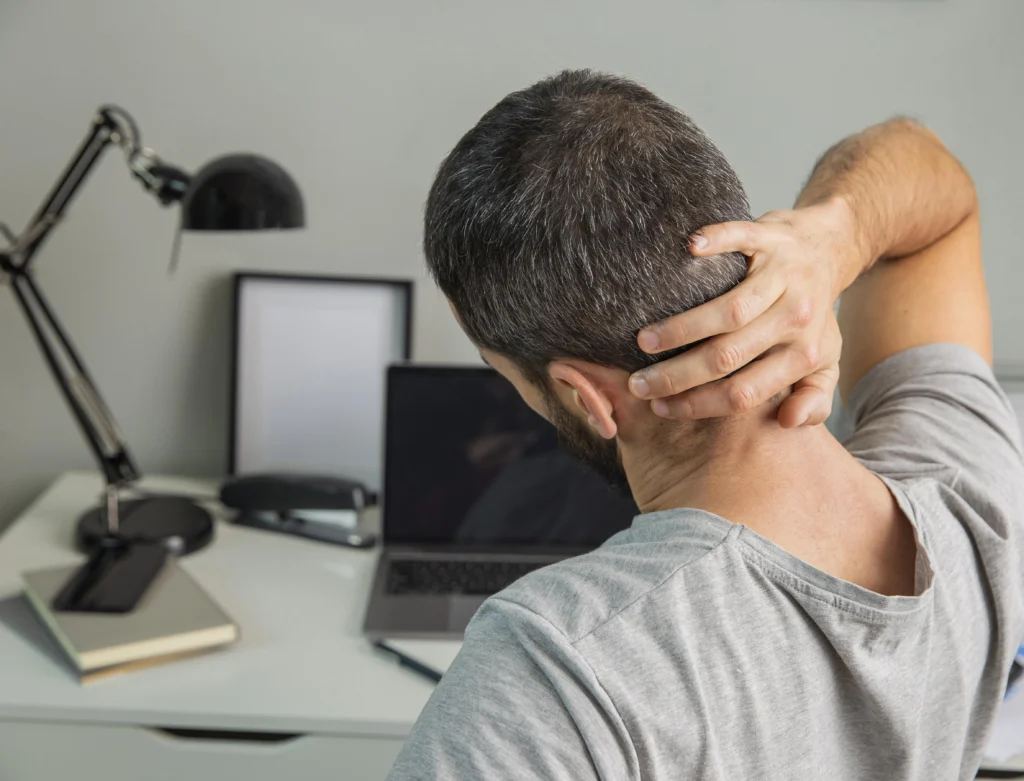
Let’s make this simple.
Head pressure and headache are not the same.
Here’s how patients usually tell the difference:
- No throbbing or pulsing
- No sharp or stabbing pain
- More heaviness than pain
- Feels constant, not waves
- Often improves with movement
A headache demands attention.
Pressure just sits there quietly and annoys you.
If you’re unsure, think of this:
Pain makes you stop. Pressure makes you uncomfortable
Why This Happens in the Body
Instead of one single cause, this usually comes from a combination of:
- Neck muscle tension
- Joint stiffness in the cervical spine
- Altered breathing patterns
- Mild circulation changes
- Nervous system fatigue
When these stack together, you feel pressure instead of pain.
The Most Common Cause: Your Neck
This is the biggest one.
Your neck and head are directly connected through shared nerve pathways.
There is an area in the brainstem called the trigeminocervical complex where signals from the neck and head meet.
When your neck is stiff or overloaded, the brain often “projects” that sensation into the head. Pareek et al. (2024)
This study highlights how cervical dysfunction can create head sensations even when there is no clear headache.
In simple terms, your head feels the problem, but your neck is often the source.
Real-Life Triggers I See in Patients
This is what I notice again and again in clinic:
- Working on laptop with head forward for hours
- Using phone in bed with neck bent
- Long meetings without moving
- Stress but not realizing it
- Skipping water during the day
Many people say:
“I didn’t do anything unusual”
But these small habits add up quietly.
Muscle Compression, Not Just Tightness
Small muscles at the base of your skull can become overactive.
These include the suboccipital muscles.
When they tighten, they can:
- Compress small nerves
- Affect local blood flow
- Increase pressure sensation
You may not feel pain, but you will feel:
- Heaviness
- Tightness
- A strange internal pressure
This is very common in people who sit for long hours or use screens continuously.
Posture Plays a Bigger Role Than You Think
When your head moves forward even slightly, your neck muscles work much harder.
Over time:
- Deep stabilizing muscles become weak
- Superficial muscles overwork
- Joint stress increases
This creates constant low-level signals to the brain, which are perceived as pressure.
Recent clinical trends show a rise in cervicogenic symptoms due to prolonged screen exposure in younger adults. Gonzalez et al. (2025)
Stress and Nervous System Overload
This is not always obvious stress.
It can be:
- Mental fatigue
- Continuous low-level pressure
- Poor recovery
When your nervous system stays in a high-alert state:
- Muscles remain slightly tight
- Breathing becomes shallow
- Sensory perception changes
You may not feel anxious, but your body is behaving like it is under stress. McEwen (2017)
Chronic stress changes how the brain processes physical sensations, including pressure.
Breathing Patterns Matter More Than You Realize
Most people with head pressure breathe from the chest instead of the diaphragm.
This leads to:
- Reduced oxygen efficiency
- Mild carbon dioxide imbalance
- Changes in blood flow to the brain
Instead of pain, you feel:
- Heaviness
- Fog
- Pressure
This is often missed because breathing is automatic, but dysfunctional breathing is very common.
Sinus Pressure Without Infection
You do not need a sinus infection to feel pressure.
Mild congestion or poor drainage can create:
- Pressure in the forehead
- Heaviness behind the eyes
- Full head sensation
A simple clue is this:
If the pressure increases when you bend forward, sinuses may be involved. Patel and Hwang (2015)
Other Lesser Known Causes
These are commonly missed in general advice:
- Jaw tension or clenching leading to temple pressure
- Eye strain from screens causing forehead heaviness
- Poor sleep quality leading to morning pressure
- Vitamin B12 deficiency affecting nerve signals
- Mild vestibular imbalance causing pressure with lightheadedness
These do not always cause pain, but they affect how your head feels.
Why It Feels Worse at Certain Times
You may notice the pressure is not constant.
It shows up more:
- By evening after long screen time
- After stressful days
- When you wake up with poor sleep
- After long travel or sitting
This pattern is important.
It tells us the issue is functional, not structural.
Your body is reacting to load, not damage.
When You Should Not Ignore It
Most cases are harmless, but watch for:
- Sudden severe pressure
- Vision problems
- Loss of balance
- Numbness or weakness
- Persistent vomiting
If these are present, seek medical attention.
A Simple Self Check You Can Try Right Now
Try this quick test:
- Sit straight
- Gently tuck your chin in
- Hold for 10 seconds
Now ask yourself:
Did the pressure reduce slightly?
If yes, your neck is likely involved.
Another one:
- Take 5 slow deep breaths
If pressure reduces:
Your breathing pattern is part of the problem.
What Actually Helps: Practical Physiotherapy Approach
You don’t need complicated routines.
Most people improve with small, consistent changes done correctly.
Let’s break it down in a way you can actually follow.
1. Reset Your Neck
Your neck needs movement, not stiffness.
Try these slowly, not forcefully:
- Chin tucks
Sit straight. Gently pull your chin back like you’re making a double chin.
Hold for 5 seconds. Repeat 8 to 10 times.
You should feel length at the back of your neck, not strain. - Slow neck rotations
Turn your head left and right slowly.
Do not push into pain. Just move within comfort. - Side bending
Bring your ear toward your shoulder gently.
Hold for 5 seconds each side.
Do this 2 to 3 times a day, especially if you sit a lot.
These movements:
- reduce stiffness
- improve blood flow
- calm down pressure signals coming from the neck
2. Fix Your Sitting Posture
This is where most people go wrong.
You don’t need perfect posture. You need less bad posture.
Focus on these:
- Screen at eye level
If your screen is low, your head automatically moves forward. - Back supported
Sit all the way back in your chair. Don’t hover. - Feet flat on the ground
This stabilizes your whole posture. - Relax your shoulders
They should not be lifted or tight.
Quick check:
If your ears are far ahead of your shoulders, you’re straining your neck.
Even fixing this for a few hours a day can reduce that pressure feeling.
3. Release Tight Muscles
This is one of my favorite quick fixes.
Tennis ball release:
- Take two tennis balls and place them in a sock
- Lie down and position them under the base of your skull
- Let your head rest there
- Stay for 60 to 90 seconds
Do not move much. Just relax into it.
You might feel:
- slight discomfort initially
- then a melting or light feeling
This helps release the small muscles that often cause head pressure.
You can also try:
- gentle self-massage around neck and shoulders
- warm compress for 10 minutes
4. Improve Your Breathing
Most people breathe fast and shallow without realizing it.
This keeps your body in a slightly tense state.
Try this simple reset:
- Inhale through your nose for 4 seconds
- Let your belly expand, not your chest
- Exhale slowly through your nose or mouth for 6 seconds
Do this for 2 to 3 minutes.
You should feel:
- shoulders relaxing
- mind slowing down
- pressure easing slightly
This works because it calms your nervous system.
5. Hydration and Breaks
This sounds basic, but it matters more than people think.
- Drink water regularly, not all at once
- Reduce excess caffeine if you’re having a lot
Dehydration can make your head feel heavy and dull.
Now about breaks:
- Every 30 to 40 minutes, pause
- Stand up, stretch, or just walk for a minute
Even a short break:
- resets your posture
- reduces muscle load
- improves circulation
6. Add One Small Habit That Makes a Big Difference
If you want one extra thing that helps a lot:
Lie down flat for 5 minutes in the evening
No phone. No pillow or a very thin one.
Let your neck and spine relax completely.
Many people notice:
- reduced pressure
- clearer head
- less fatigue
A Simple Daily Routine You Can Follow
Keep it realistic:
Morning:
- Gentle neck movements for 2 minutes
During work:
- Break every 30 to 40 minutes
- Fix sitting posture
Evening:
- 2 minutes breathing exercise
- Neck release using tennis balls
That’s it.
No complicated routine needed.
Common Mistakes That Make It Worse
Small mistakes can keep the pressure going:
- Ignoring posture all day
- Constant phone use without breaks
- Overthinking symptoms
- Drinking more caffeine instead of water
- Doing aggressive neck exercises
More effort is not always better.
The goal is relaxation and balance, not force.
How Long Does It Take to Improve
This depends on the cause.
But generally:
- Mild cases improve in a few days
- Posture-related issues take 1 to 2 weeks
- Chronic tension may take a few weeks
The key is consistency. Not intensity.
The Real Takeaway
Head pressure without pain is usually not random.
It is often linked to:
- Neck dysfunction
- Posture habits
- Nervous system overload
It is not dangerous in most cases.
But it is your body asking you to make adjustments.
When Physiotherapy Helps the Most
You should consider physiotherapy if:
- Pressure keeps coming back
- Neck feels stiff regularly
- You sit long hours daily
- Exercises give temporary relief only
A physiotherapist looks at:
- posture
- movement patterns
- muscle imbalance
Not just symptoms.
Final Thoughts
In the end, experiencing pressure in head but no headache is your body’s subtle way of signaling imbalance rather than pain.
Instead of ignoring it, understanding the cause, whether it’s posture, sinus pressure, or stress, can help you manage it early and prevent it from progressing into something more uncomfortable.
Frequently Asked Questions
1. Why does my head feel heavy but not painful?
This is usually due to neck tension, posture issues, or stress rather than a true headache.
2. Can neck problems cause head pressure?
Yes, stiffness or muscle tension in the neck can refer pressure sensations to the head.
3. Is head pressure related to stress?
Yes, stress can increase muscle tension and affect breathing, leading to a pressure feeling.
4. Can poor posture cause head heaviness?
Yes, forward head posture puts extra strain on neck muscles and can cause pressure.
5. How can I relieve head pressure quickly?
Simple steps like neck relaxation, posture correction, and slow breathing can help.
6. Should I worry about daily head pressure?
If it happens often, it is best to review your posture, lifestyle, and consult a physiotherapist.
7. Can dehydration cause head pressure?
Yes, low hydration can reduce circulation and lead to a heavy head feeling.
8. Is head pressure the same as a headache?
No, it is a non-painful sensation and usually has different causes.
Stay tuned with us for more health related topics.
Follow us on LinkedIn and Instagram for more.
More Read


Medical Disclaimer!
This article has been reviewed and written under the guidance of our Head Physiotherapist, Dr. Kruti Raj (PT, MUHS,CPT,CMPT). The information shared is intended for educational purposes only and should not be considered a substitute for personalized medical advice, diagnosis, or treatment.
Please consult us or any other qualified healthcare professional before beginning any exercise program, especially if you are experiencing pain, recovering from injury, or managing a medical condition.


