
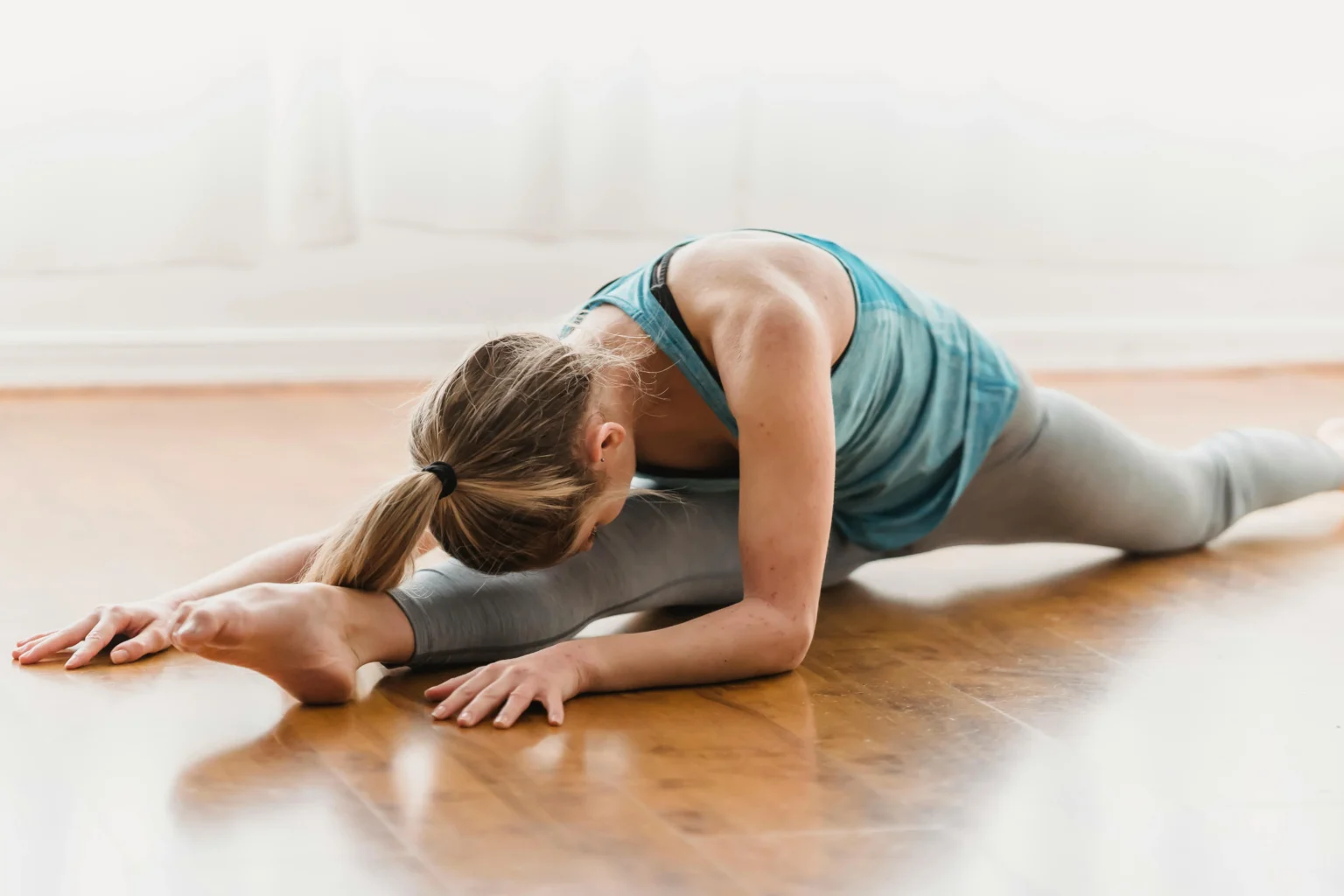

Knee pain is one of the most common musculoskeletal complaints in the world. Whether it arises from everyday activities, sports participation, or age-related changes, knee discomfort can limit mobility, hinder performance, and reduce quality of life. Fortunately, targeted thigh stretching exercises for knee pain can significantly reduce this stress by improving flexibility, balancing muscle tension, and enhancing knee tracking during movement.
Notably, one of the key contributors to knee stress is tightness in the muscles surrounding the knee, especially the quadriceps (front of the thigh) and hamstrings (back of the thigh).
When these muscles are tight, they pull on the knee joint in ways that increase friction and overload the joint surfaces, leading to irritation and discomfort.
In this article, you will learn why thigh stretches matter for knee pain prevention, how to do them correctly, which stretches are most effective, what new research suggests, and how to integrate them into your daily routine for long-term knee health.
Also Read: 10 Minute Gentle Shoulder Mobility Routine at Home for Stiff and Painful Shoulders
Why Thigh Flexibility Matters for Knee Pain Prevention
The knee functions as a hinge joint between the femur (thigh bone) and tibia (shin bone), supported by muscles, tendons, and ligaments.
Unlike the hip, which has a wide range of motion, the knee primarily moves in one plane: bending (flexion) and straightening (extension).
Because of this limited range, knee health depends heavily on balanced tension in the muscles that control leg motion, most importantly, the quadriceps and hamstrings.
When the quadriceps are tight, they exert increased pull on the patella (kneecap) and its tendon, which can contribute to conditions such as patellofemoral pain syndrome, runner’s knee, and anterior knee pain.
Similarly, tight hamstrings restrict knee extension, leading to compensatory movements and increased strain on the joint during walking, running, or climbing stairs.
Therefore, stretching these muscle groups not only improves flexibility but also supports smoother joint mechanics and reduces pain risk.
Also Read: 10 Best Daily Stretches for Back Pain Relief at Home
How Stretching Affects Joint Health
In clinical studies, flexibility work has been shown to reduce muscle tightness and improve functional outcomes in people with knee discomfort.
For example, rehabilitation programs that combine stretching with strengthening exercises result in greater improvements in pain and movement compared with strengthening alone.
This supports the concept that flexibility prepares muscles to perform more effectively, reducing aberrant forces that contribute to knee strain.
Moreover, some mobility research suggests that limited quadriceps and hamstring length correlates with decreased balance and altered gait patterns, which are recognized risk factors for knee pain during daily activity.
By addressing thigh tightness, one enhances not just passive flexibility but also active movement quality.
While stretching is often paired with strengthening and movement retraining in therapeutic settings, the value of dedicated flexibility work should not be underestimated, especially for individuals seeking to prevent knee discomfort before it begins.
Also Read: 15 Minute Full-Body Stretch To Relieve Your Stress- Proven Ways
Fundamental Thigh Stretching Exercises
Below are proven and highly effective thigh stretches designed to target major muscle groups that influence knee mechanics. Each stretch includes step-by-step instructions, benefits, and safety information.
1. Static Quadriceps Stretch

Why it matters: Tight quadriceps pull the kneecap forward, which can increase compressive forces within the knee joint. Stretching these muscles reduces tension and promotes smoother knee tracking.
How to perform:
- Stand tall near a wall or chair for balance.
- Bend your right knee and reach back with your right hand to grasp your ankle.
- Gently pull your ankle toward your glutes while keeping hips aligned.
- Hold for 30 seconds, then switch sides.
- Repeat 2–3 times per leg.
Key tip: Avoid arching your lower back; keep your pelvis tucked slightly under to focus the stretch on the thigh.
2. Hamstring Stretch on Floor
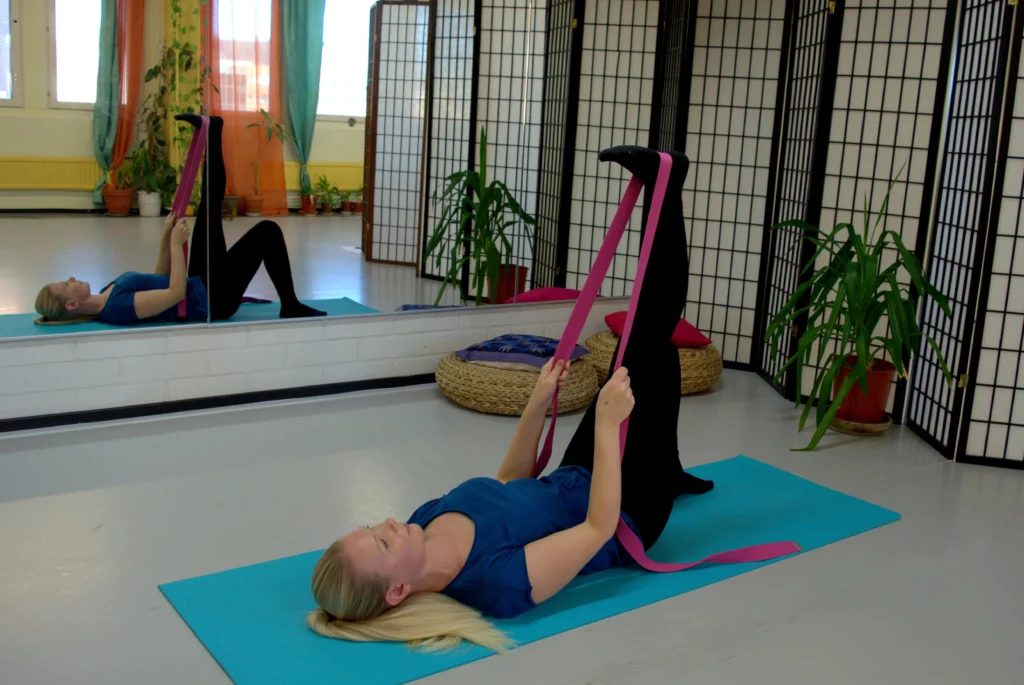
Why it matters: Tight hamstrings can limit knee extension and alter gait mechanics, increasing stress on the knee joint during everyday activities.
How to perform:
- Lie on your back with one leg extended toward the ceiling.
- Loop a strap, towel, or belt around your foot if needed for assist.
- Gently pull your leg toward you until you feel a comfortable stretch along the back of the thigh.
- Hold for 20–30 seconds, then switch sides.
- Repeat 2–3 sets per leg.
Key tip: Keep the opposite leg relaxed flat on the floor to avoid hip compensation.
3. Standing Hamstring Stretch
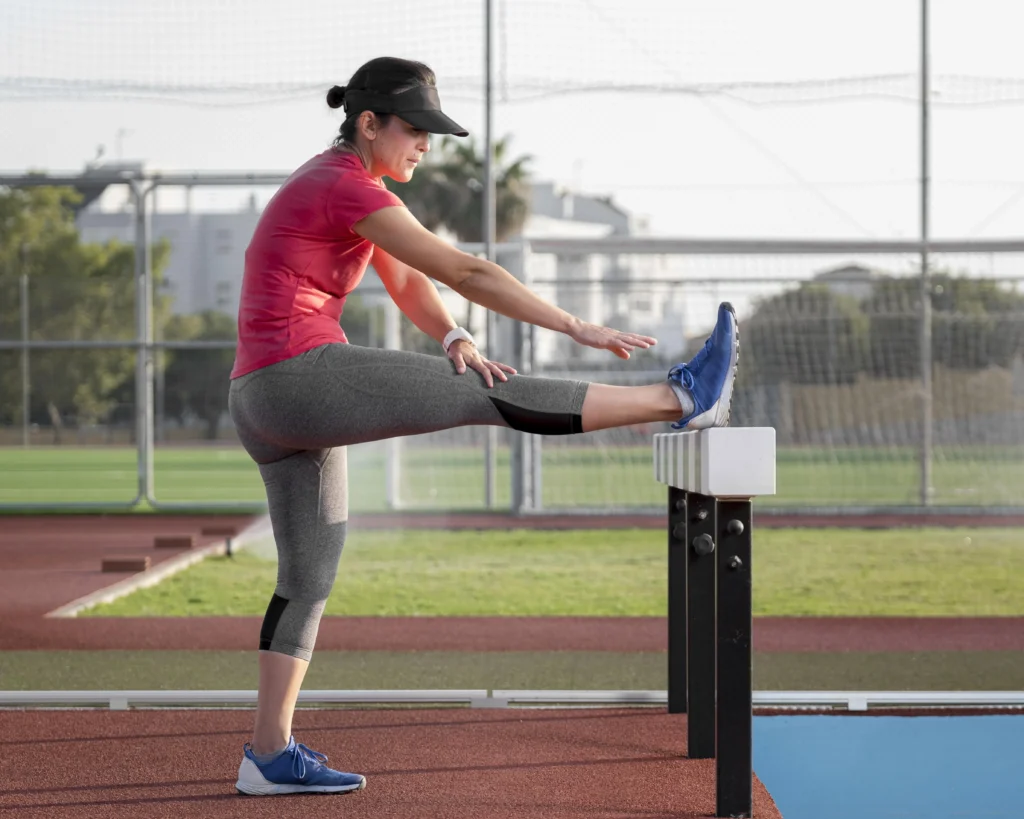
Why it matters: This stretch is especially useful for people who sit for long periods, since prolonged sitting contributes to hamstring tightness.
How to perform:
- Stand tall and place your heel on a stable surface slightly below hip level.
- Keep your knee straight and hinge forward gently from the hips.
- Hold for 20–30 seconds, then repeat on the other side.
- Complete 2–3 sets.
Key tip: Maintain length in your spine rather than rounding your back.
4. Butterfly Stretch
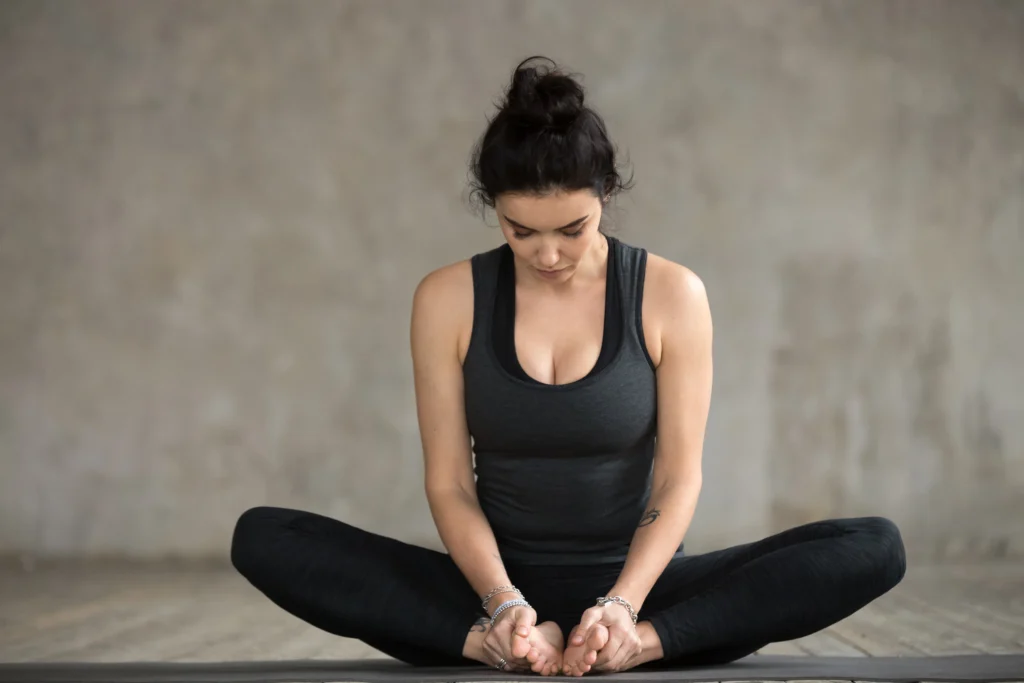
Why it matters: While this stretch primarily targets inner thigh muscles (adductors), improving adductor flexibility contributes to balanced thigh muscle function and knee alignment.
How to perform:
- Sit on the floor with the soles of your feet together.
- Hold your feet with your hands.
- Gently press your knees toward the ground with your elbows.
- Hold for 30 seconds and repeat 2–3 times.
Key tip: Breathe into the stretch to promote relaxation of the muscles.
5. Iliotibial Band and Lateral Thigh Stretch
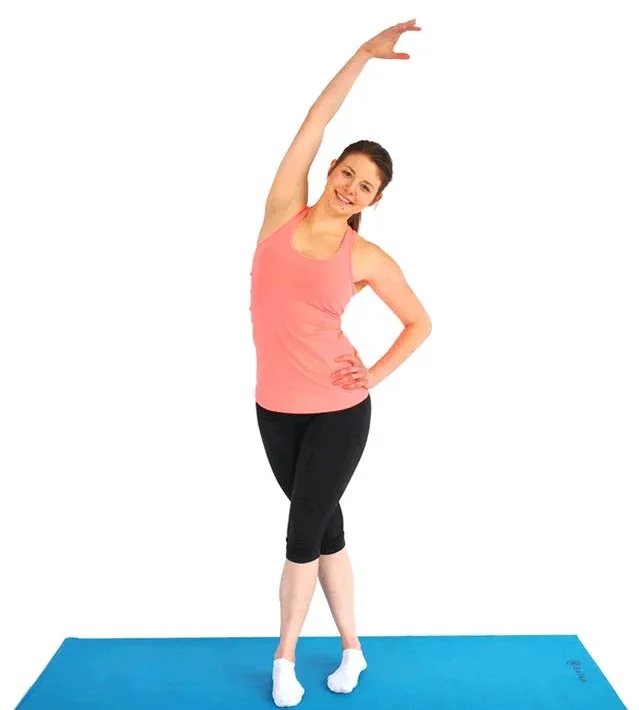
Why it matters: The iliotibial (IT) band runs along the outer thigh and can contribute to lateral knee tension when tight.
How to perform:
- Stand and cross your right leg behind your left.
- Lean slightly toward your left side while reaching your right arm overhead.
- Hold for 20–30 seconds, then switch sides.
- Repeat 2–3 times each side.
Key tip: Focus on controlled breathing rather than forcing range.
Also Read: Knee-to-Chest Stretch for Bach Pain Relief and Spinal Flexibility- A Complete Guide
Safe Stretching Practices
Stretching can be highly beneficial, but certain practices help you maximize effect and minimize risk:
- Warm up briefly (5 minutes of walking or cycling) before static stretches
- Move into each stretch gradually until you feel tension, not pain
- Hold stretches steadily rather than bouncing (static stretch)
- Perform stretches consistently, at least 4–5 times per week
- Pair stretching with muscle strengthening for durable joint health
By following these guidelines, you support flexibility gains without overstressing tissues.
Also Read: Cat Cow Stretch Benefits for Back Pain- A Complete Guide
New Research and Emerging Strategies
Recent investigations into thigh flexibility and knee pain prevention have added nuance to traditional stretching approaches:
Combined Mobility and Strength Programs Work Best
A 2025 review found that combined mobility (stretching) and strength training produced better long-term functional outcomes for people at risk of knee pain compared with stretching or strengthening alone.
This supports integrated routines where flexibility and muscle power are developed concurrently.
Dynamic Warm-Up Enhances Performance
Dynamic movements that include active leg swings and controlled knee lifts prior to static stretching can improve muscle responsiveness and joint readiness, which may reduce injury risk in athletes and active individuals.
Neuromuscular Coordination Matters
Beyond muscle length, improving the timing of muscle activation, how well muscles coordinate during movement, is shown to reduce stress on the knee during dynamic tasks such as walking or stair climbing.
Dynamic mobility exercises that include coordination patterns help train this neural component.
These findings add depth to traditional stretching advice and help explain why integrated movement programs are increasingly recommended.
Also Read: Bird Dog Exercises for Back Pain Relief and Core Strengthening
Lesser-Known Tips for Thigh and Knee Health
In addition to the stretches above, these practical insights can further enhance knee pain prevention:
1. Hip Flexor Mobility Supports Knee Function
Tight hip flexors can tilt the pelvis forward and alter knee mechanics. Integrating hip flexor stretches supports balanced thigh mechanics and reduces abnormal knee stress.
2. Hydration Affects Tissue Elasticity
Muscle tissues change elasticity based on hydration. Adequate water intake supports flexibility and reduces stiffness, a factor often ignored in mobility programs.
3. Daily Movement Beats Occasional Long Sessions
Consistent daily gentle stretching is more effective than infrequent long stretching sessions. Short, daily engagements help maintain muscle length and joint range over time.
4. Mind-Body Approaches Reduce Protective Guarding
Practices like mindful breathing and gentle yoga align nervous system regulation with physical movement, reducing protective muscle guarding that can limit stretch effectiveness.
Each of these lesser-known strategies can amplify the benefits of traditional stretching routines.
Also Read: Ultimate Guide to Home Physiotherapy for Back Pain
Frequently Asked Questions (FAQ)
1. How often should I stretch my thighs to prevent knee pain?
Aim for 4–5 sessions per week, holding each stretch for 20–30 seconds and repeating 2–3 times.
2. Can thigh stretching exercises alone prevent knee pain?
Stretching is essential, but combining it with strengthening and balance work produces the best prevention results.
3. Is stretching safe if I already have knee pain?
Yes, when performed gently and without sharp pain. If pain increases, modify the stretch or consult a clinician.
4. Does stretching improve knee stability?
While stretching alone does not stabilize knees, improved flexibility supports better movement patterns that reduce undue stress.
5. Should I stretch before or after workouts?
Dynamic mobility should be done before activity, while static stretches are most effective after exercise or as part of a cool-down.
6. Can thigh stretching reduce swelling around the knee?
Stretching enhances circulation, which can help reduce muscle tightness but is only one part of swelling management.
7. Are there stretches better suited for seniors?
Yes, seated or supported versions of these stretches make them accessible for older adults.
8. How soon will I see benefits?
Many people notice improved comfort within 2–3 weeks of consistent practice.
9. Are thigh muscles linked to balance?
Yes, thigh flexibility influences gait mechanics and balance, especially during stepping and stair climbing.
10. Do I need equipment for these stretches?
Most stretches require no equipment, though straps and supportive chairs can help beginners.
Also Read: Child’s Pose Exercise for Back Pain Relief- A Complete Guide
From My Physiotherapy Practice to You
In my experience working with people of all ages and activity levels, tight thigh muscles are rarely a root problem by themselves, but they contribute significantly to knee stress when left unaddressed.
Most individuals benefit greatly simply by adding targeted thigh stretching to their routine, especially when these stretches are done consistently and with mindful technique.
What many people don’t realize is that flexibility isn’t just about reaching farther, it’s about coordinated muscle engagement, balanced movement, and preparing the body to respond to stress in a controlled way.
That means stretching doesn’t just feel good, it supports long-term joint health, reduces compensatory strain elsewhere, and helps keep pain at bay.
As you practice these exercises regularly, focus on how your body moves, how your muscles relax, and how your joints feel. It is this ongoing dialogue between movement and awareness that leads to lasting improvement.
Also Read: Unlocking Knee Pain Relief: How Physiotherapy Can Change Your Life!
What I Would Advise You to Do This Week
Start with a simple daily routine of thigh stretching exercises for knee pain, especially after periods of sitting. Pay special attention to postural alignment, breathe deeply into each stretch, and pair your routine with light strengthening and mobility work.
Over time, these small, consistent habits translate into stronger, more resilient knees and smoother movement overall.
Also Read: Spinal Twists for Lower Back Pain Relief- A Complete Guide
A Common Belief I Regularly Correct
Many people think stretching only matters for athletes. In reality, everyday movements become smoother and less painful when thigh flexibility is improved.
Whether you’re walking your dog or bending to pick up groceries, balanced muscle tension supports better joint mechanics.
Also Read: How to Understand What Really Causes You Pain?
Frequently Asked Questions (FAQs)
1. How do thigh muscles affect knee health?
The thigh muscles, including the quadriceps and hamstrings, play a major role in stabilizing the knee joint. Strong and flexible thigh muscles help reduce stress on the knee and support proper movement.
2. Can thigh stretching exercises help prevent knee pain?
Yes. Regular stretching of the quadriceps, hamstrings, and inner thigh muscles can improve flexibility, reduce muscle tightness, and lower the risk of knee discomfort or injury.
3. How often should I perform thigh stretching exercises?
Thigh stretches can be performed daily or at least 3 to 5 times per week to maintain flexibility and support healthy knee movement.
4. Are thigh stretches helpful for people with knee stiffness?
Yes. Gentle thigh stretching exercises can help relieve muscle tightness around the knee, which may improve mobility and reduce stiffness.
5. How long should each thigh stretch be held?
Most stretches should be held for about 20 to 30 seconds and repeated 2 to 3 times for best results.
6. Can tight thigh muscles cause knee pain?
Yes. Tight quadriceps or hamstrings can alter knee alignment and increase pressure on the knee joint, potentially leading to discomfort or pain.
7. When should someone seek medical help for knee pain?
If knee pain persists for several weeks, worsens with activity, or is accompanied by swelling or instability, it is important to consult a healthcare professional.
Final Thought
Thigh stretching exercises for knee pain are a simple yet powerful way to prevent knee pain before it starts. When combined with strength, balance, and mindful movement, they create a foundation for lasting joint health, mobility, and function.
With consistent practice and proper technique, you can significantly reduce your risk of discomfort, injury, and movement limitations and take confident steps toward better joint health for life.
Stay tuned with us for more health related topics.
Follow us on LinkedIn and Instagram for more.
More Read


Medical Disclaimer!
This article has been reviewed and written under the guidance of our Head Physiotherapist, Dr. Kruti Raj (PT, MUHS,CPT,CMPT). The information shared is intended for educational purposes only and should not be considered a substitute for personalized medical advice, diagnosis, or treatment.
Please consult us or any other qualified healthcare professional before beginning any exercise program, especially if you are experiencing pain, recovering from injury, or managing a medical condition.


