


Introduction to Warm Up for Swimmers!
Swimming is widely recommended as one of the safest sports for joint health. The buoyancy of water reduces stress on the spine, improves circulation, and strengthens the entire body. However, despite these benefits, shoulder and neck injuries remain extremely common in swimmers.
Sports medicine research consistently shows that the shoulder is the most frequently injured joint in swimmers, mainly due to repetitive overhead movements during strokes. (MDPI)
Competitive swimmers may perform thousands of arm rotations in a single training session, placing enormous stress on the cervical spine and shoulder complex.
Unfortunately, many swimmers underestimate the importance of warming up properly. Some jump directly into intense swimming without preparing the muscles, joints, and nervous system.
Research has shown that structured dry-land warm-up routines significantly influence injury rates in swimmers, highlighting their role in preventing shoulder pain and overuse injuries. (PubMed)
As a physiotherapist, I often remind swimmers that the warm-up phase is not simply preparation for performance, it is the first line of injury prevention.
A well-designed warm-up routine:
- activates stabilizing muscles
- improves joint mobility
- prepares the nervous system
- reduces injury risk
- improves stroke efficiency
In this article, I will guide you through a physiotherapist-approved warm-up routine specifically designed to protect the neck and shoulders of swimmers.
Read about our Complete Neck Pain Guide : Causes, Symptoms, Exercises and Treatment
Quick Answer
A proper warm-up before swimming helps protect the neck and shoulders from strain and overuse injuries. The most effective routine includes gentle neck mobility drills, shoulder activation exercises, thoracic spine movements, and light resistance band work. These activities increase blood flow, activate stabilizing muscles, and prepare the joints for repetitive swimming strokes, reducing the risk of pain and improving overall stroke control.
Also read: Why Neck Pain in Swimmers Develop and How to Prevent It
Key Takeaways
- A proper warm-up prepares the neck, shoulders, and upper back for repetitive swimming movements.
- Dynamic mobility exercises improve flexibility and reduce muscle stiffness before training.
- Scapular activation and resistance band drills help stabilize the shoulder joint.
- Thoracic spine mobility allows smoother body rotation during swimming strokes.
- A 10–15 minute warm-up routine can significantly lower the risk of neck and shoulder injuries in swimmers.
- Skipping warm-up increases the risk of neck and shoulder injuries in swimmers.
Read about : 15 Common Causes of Neck Pain You Should Know
Why Swimmers Are Prone to Neck and Shoulder Injuries
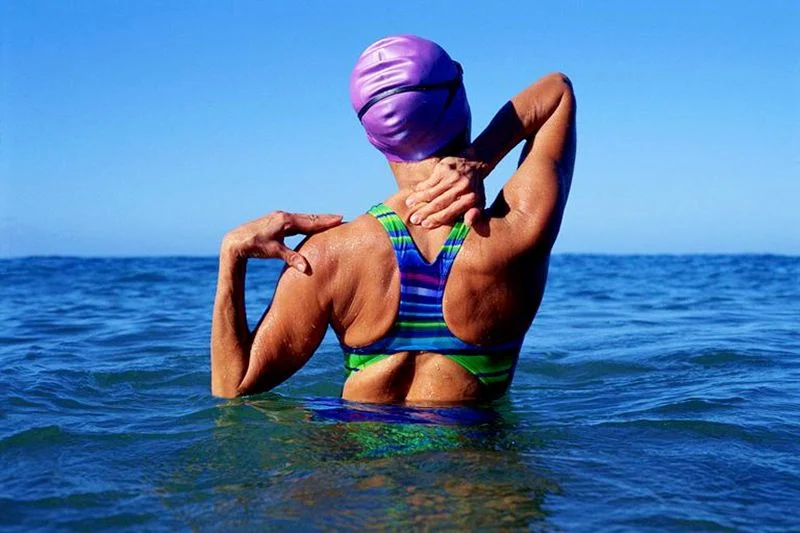
Swimming involves repetitive overhead arm movements combined with spinal rotation and breathing mechanics.
These motions place continuous stress on:
- the rotator cuff muscles
- scapular stabilizers
- cervical spine muscles
- thoracic spine
Over time, small biomechanical imbalances can lead to conditions such as:
- swimmer’s shoulder
- rotator cuff tendinopathy
- cervical muscle strain
- scapular dyskinesis
Recent clinical research demonstrates that targeted preventive exercise programs can improve shoulder rotator strength balance and reduce injury risk in competitive swimmers. (PubMed)
This highlights a critical fact: injuries are not inevitable in swimming, many are preventable with the right preparation.
Read more: 10 Swimming Technique Mistakes That Destroy Your Neck
The Science Behind an Effective Swimming Warm-Up
A high-quality warm-up prepares the body in three stages:
1. Mobility preparation
Improves range of motion in the neck, shoulders, and thoracic spine.
2. Muscle activation
Activates stabilizing muscles such as the rotator cuff and scapular stabilizers.
3. Neuromuscular coordination
Prepares the nervous system for swimming strokes.
Research on corrective exercise programs in collegiate swimmers showed that injury risk dropped by nearly 44% when structured exercise programs were implemented alongside swim training. (MDPI)
This demonstrates how critical pre-training conditioning is for injury prevention.
Read about: Neck Pain in Cyclists: Hidden Causes and Physiotherapy Fixes
The Best Warm-Up Routine for Swimmers
This routine takes 10-15 minutes and can be performed poolside.
Read about: Effective Neck Pain Exercises At Home: A Complete Guide to Relief and Improved Mobility
Phase 1: Neck and Thoracic Mobility
Neck Controlled Rotations

Purpose: reduce cervical stiffness and prepare the neck for breathing movements.
Steps:
- Sit or stand upright
- Slowly rotate your head to the right
- Hold for 2 seconds
- Return to center
- Repeat on the left side
Repetitions: 10 each side.
Physiotherapy insight:
Gentle mobility improves joint lubrication and prevents sudden cervical strain when swimmers rotate the head during breathing.
Thoracic Spine Rotations
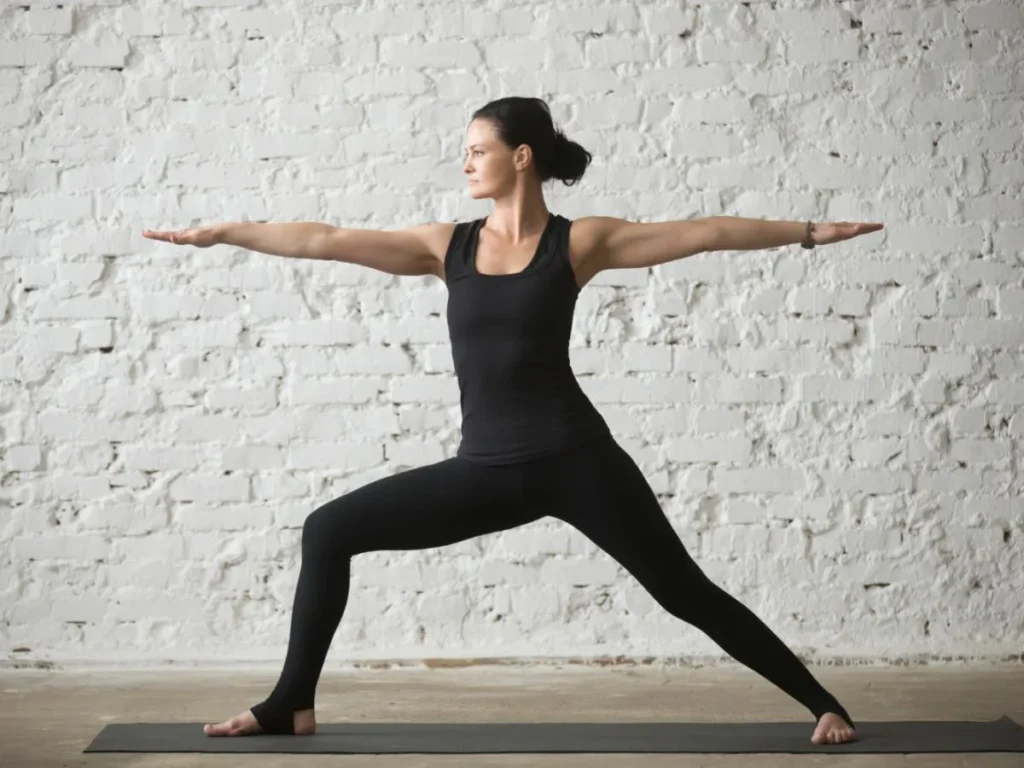
Purpose: improve upper-back mobility and reduce neck compensation.
Steps:
- Stand with feet shoulder-width apart
- Cross arms over chest
- Rotate torso left and right slowly
Repetitions: 12 rotations.
This exercise allows proper body rotation during freestyle and reduces neck overload.
Also read: How to Relieve Neck Tightness Without Equipment
Phase 2: Shoulder Joint Activation
Arm Circles (Dynamic Mobility)
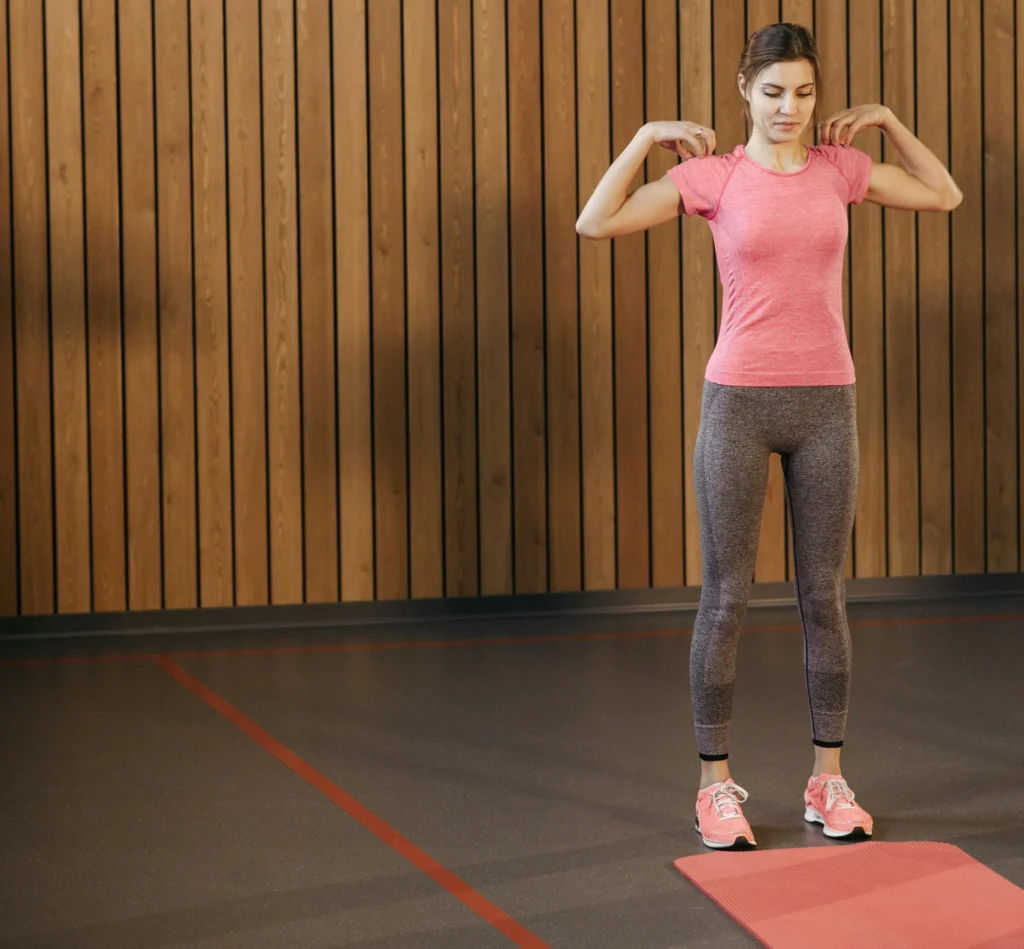
Purpose: increase blood flow and prepare the shoulder joint.
Steps:
- Extend arms sideways
- Perform small forward circles
- Gradually increase circle size
Duration: 30 seconds.
Then repeat backward.
Dynamic shoulder mobility improves synovial fluid circulation and reduces stiffness.
Scapular Retraction Drill

Purpose: activate shoulder stabilizers.
Steps:
- Stand upright
- Pull shoulder blades together
- Hold for 3 seconds
- Relax slowly
Repetitions: 12.
This strengthens the muscles that stabilize the shoulder during swimming strokes.
Resistance Band External Rotations
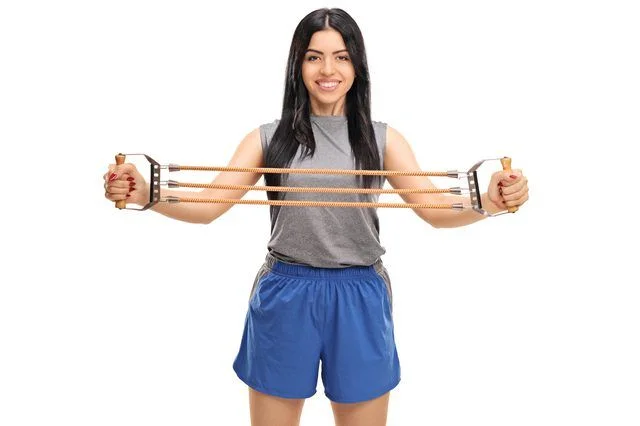
Purpose: activate rotator cuff muscles.
Steps:
- Hold resistance band with elbows at sides
- Rotate forearms outward
- Return slowly
Repetitions: 15.
Rotator cuff activation is essential because fatigue of these muscles contributes to swimmer’s shoulder injuries.
Learn About: The Ultimate Neck Stretch Routine for Desk Workers in 2026
Phase 3: Neuromuscular Control
Rhythmic Shoulder Stabilization

Recent research indicates that rhythmic stabilization exercises significantly improve shoulder joint stability and reduce pain in swimmers. (IJCRT)
Steps:
- Extend arms forward
- A partner applies gentle unpredictable pressure
- Maintain stable shoulder position
Duration: 30 seconds.
This exercise improves joint proprioception and stability.
Scapular Push-Ups

Purpose: activate serratus anterior.
Steps:
- Start in plank position
- Keep elbows straight
- Push shoulder blades apart
- Then bring them together
Repetitions: 12.
The serratus anterior plays a key role in shoulder blade control during swimming.
Read about: The Best Physiotherapy Exercises for Cervical Spondylosis Relief
Phase 4: Core Activation
A stable core reduces excessive neck and shoulder movement.
Dead Bug Exercise
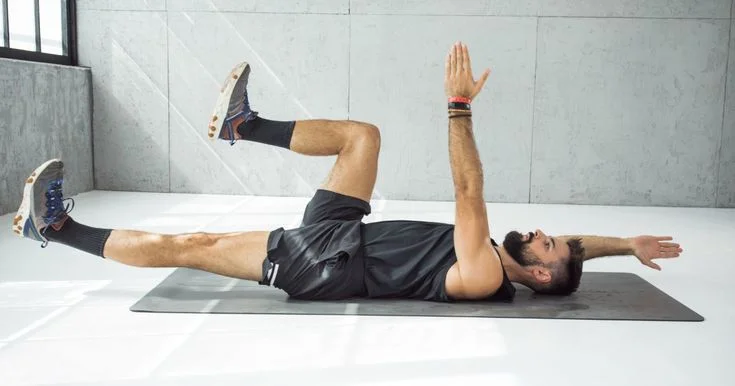
Steps:
- Lie on your back
- Raise arms and legs
- Extend opposite arm and leg slowly
- Return to start
Repetitions: 10 per side.
Core stability improves body alignment in water.
Read about: Simple Posture Correction Exercises for Forward Head Posture
Phase 5: Respiratory Muscle Warm-Up
One of the most overlooked components of swimmer warm-ups is breathing preparation.
A randomized crossover trial on elite swimmers showed that inspiratory muscle warm-up significantly improved 100-meter freestyle performance compared to swim-only warm-ups. (PubMed)
Breathing exercises also reduce tension in neck muscles.
Breathing Activation Drill

Steps:
- Inhale deeply through the nose
- Expand rib cage
- Exhale slowly
Repeat 10 breaths.
Read in detail: Physiotherapy for Cervical Disc Degeneration: What Actually Works
Phase 6: Swimming-Specific Warm-Up
After completing dry-land exercises, swimmers should transition to water-based warm-ups.
These drills prepare the body for swimming movement patterns.
Easy Freestyle Swim
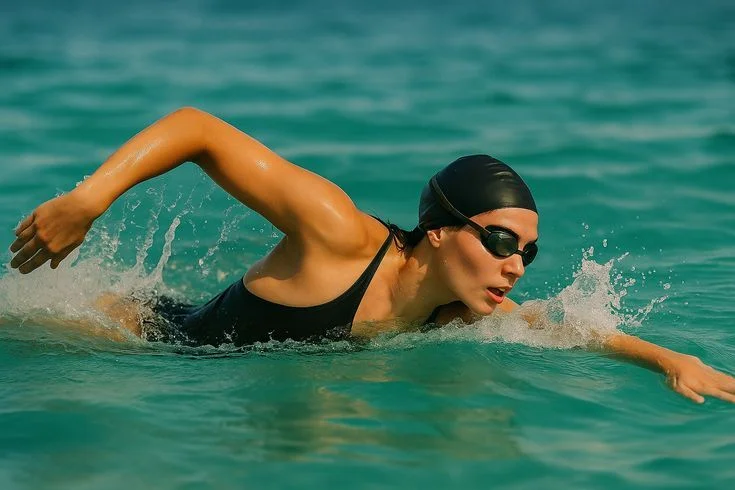
Swim slowly for 200–300 meters.
Focus on relaxed technique.
Purpose:
Gradually activates the muscles used in swimming.
Drill Set Warm-Up
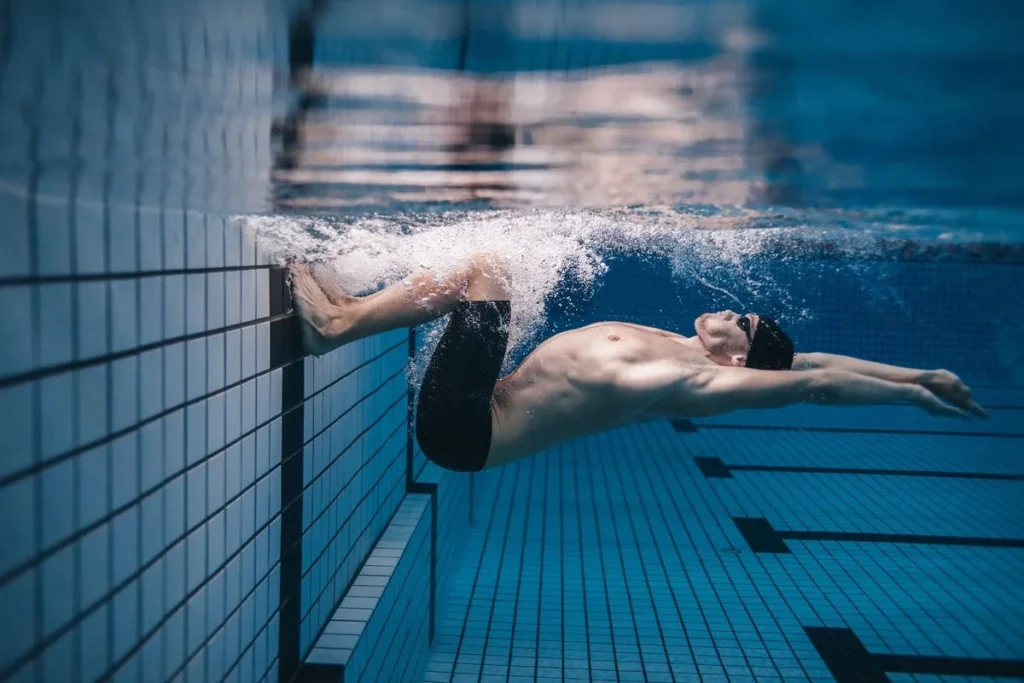
Perform:
- 50 meters kicking
- 50 meters pull drill
- 50 meters single-arm freestyle
Repeat twice.
Drills improve neuromuscular coordination.
Sculling Drill
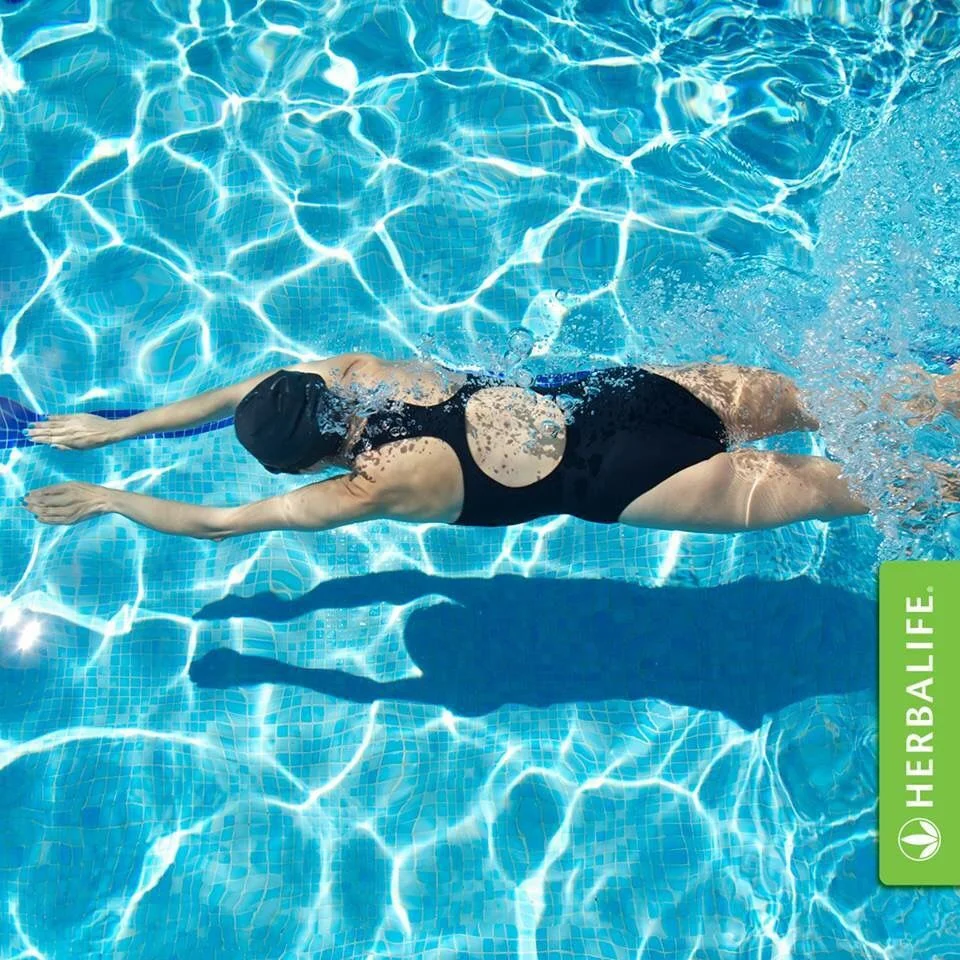
Sculling drill is a technique-focused swimming exercise in which swimmers move their hands back and forth underwater in small figure-eight motions while keeping the elbows relatively steady.
This drill helps swimmers learn how to apply pressure with their hands and forearms during the catch phase, improving stroke efficiency, control, and propulsion in the water. (USMS)
Sculling helps swimmers develop water feel.
Perform 50 meters.
Benefits:
Improves shoulder joint awareness and reduces excessive tension.
Recommended sequence:
- 100–200 meters slow freestyle
- 50 meters backstroke
- 50 meters kicking drills
- stroke drills before main set
Gradual progression prepares muscles for higher intensity training.
Read About: How to Choose the Right and Best Pillow for Neck Pain
Lesser-Known Warm-Up Facts Most Swimmers Ignore
Warm-ups should be dynamic, not static
Static stretching before training can temporarily reduce muscle power and reaction time.
Dynamic movement is more effective for performance preparation.
Shoulder stability matters more than flexibility
Many swimmers focus only on stretching.
However, injury prevention depends more on shoulder stability and muscular balance.
The upper back protects the neck
Poor thoracic mobility forces the neck to compensate during breathing.
Improving thoracic movement reduces cervical strain.
Warming up improves stroke efficiency
Warm muscles contract faster and produce smoother movement patterns.
This translates into better swimming technique.
Read About: Best Sleeping Position for Neck Pain: A Physiotherapist’s Complete Guide
Common Warm-Up Mistakes Swimmers Make
Many swimmers believe warm-ups are unnecessary.
Here are the biggest mistakes.
Skipping dry-land warm-ups
Jumping directly into the pool increases injury risk.
Static stretching before swimming
Static stretching may reduce muscle power.
Dynamic movements are preferred.
Starting with high-intensity strokes
Swimmers should begin with easy strokes before sprinting.
Ignoring neck preparation
The cervical spine stabilizes the head during breathing.
Skipping neck mobility increases injury risk.
Read about: Which Is The Best Sitting Posture To Avoid Neck Pain And How To Achieve It
Signs Your Warm-Up Is Inadequate
A proper warm-up should produce:
- light sweating
- improved joint mobility
- smoother swimming strokes
If you notice these symptoms during swimming, your warm-up may be insufficient:
- shoulder tightness in the first laps
- neck stiffness during breathing
- reduced range of motion
- fatigue early in training
These signs indicate poor neuromuscular preparation.
Read in detail about: How to Fix Upper Crossed Syndrome Naturally
Advanced Physiotherapy Insights for Injury Prevention
Modern physiotherapy no longer focuses only on injured tissues.
Instead, we analyze the entire movement chain.
Research on swimmer injuries shows that training errors, muscle imbalance, and poor neuromuscular control contribute to shoulder injuries. (PMC)
Therefore, injury prevention must include:
- shoulder strengthening
- thoracic mobility
- cervical stabilization
- breathing control
This integrated approach dramatically reduces injury risk.
Read about: Cervical Ligament Injury or Neck Ligament Tear
My Clinical Insight
In clinical practice, I often see swimmers who skip proper warm-ups because they want to “save energy” for the main workout.
Ironically, this increases the risk of injury.
A well-structured warm-up does not drain energy, it prepares the body to perform efficiently.
The most effective warm-ups focus on:
- thoracic mobility
- scapular stability
- rotator cuff activation
- breathing mechanics
When these elements are addressed, swimmers often experience less pain and better performance.
Read in detail about: What is Cervical Spondylosis? The Truth Behind Chronic Neck Pain
Physio Prescription
Before every swim session:
10-15 minute routine
- Neck rotations- 10 reps
- Thoracic rotations- 12 reps
- Arm circles- 30 seconds
- Scapular retractions- 12 reps
- Band external rotations- 15 reps
- Scapular push-ups- 12 reps
- Dead bug core activation- 10 reps each side
- Breathing activation- 10 deep breaths
Then begin a slow swimming warm-up. Consistency is key.
Read in detail: Whiplash Injury After An Accident? Here’s Treatment And Expert Rehab Guide
Red Flags
Seek medical advice if you experience:
- persistent shoulder pain
- arm weakness
- numbness in fingers
- severe neck stiffness
These symptoms may indicate nerve involvement or rotator cuff injury.
Read in detail about: Cervical Radiculopathy: Why Neck Nerve Pain Travels to the Arm
Myth About Swimming Warm-Ups
Myth: Swimming itself is enough warm-up.
Reality: Dry-land warm-ups activate stabilizing muscles that swimming alone cannot fully engage.
Skipping them increases injury risk.
Read about: What Is Cervical Myofascial Pain Syndrome And How To Relieve Trigger Points
Final Word
A warm-up routine may seem like a small part of swim training, but it plays a huge role in injury prevention.
Elite swimmers often spend 15-30 minutes warming up before intense sessions because they understand that preparation protects performance.
By combining mobility, stability, breathing exercises, and gradual swimming progression, you can significantly reduce the risk of neck and shoulder injuries.
In swimming, as in physiotherapy, the goal is not only to move more, but to move smarter.
Read more: Cervical Vertigo Explained: Why Neck Pain Make You Feel Dizzy
Frequently Asked Questions
Why is a warm-up important before swimming?
A warm-up increases blood flow to muscles, improves joint mobility, and activates stabilizing muscles that protect the neck and shoulders during swimming.
How long should a swimming warm-up be?
A proper swimming warm-up typically lasts 10–20 minutes and includes both dry-land exercises and easy swimming drills.
Can warming up prevent swimmer’s shoulder?
Yes. Strengthening and activating the rotator cuff and scapular stabilizers during warm-up can significantly reduce the risk of swimmer’s shoulder injuries.
Should swimmers stretch before swimming?
Dynamic stretching and mobility exercises are recommended before swimming. Static stretching is generally better performed after training.
What muscles should swimmers activate during warm-up?
The rotator cuff, scapular stabilizers, core muscles, and thoracic spine muscles should all be activated before swimming to reduce injury risk.
Stay tuned with us for more health related topics.
Follow us on LinkedIn and Instagram for more.
More Read


Medical Disclaimer!
This article has been reviewed and written under the guidance of our Head Physiotherapist, Dr. Kruti Raj (PT, MUHS,CPT,CMPT). The information shared is intended for educational purposes only and should not be considered a substitute for personalized medical advice, diagnosis, or treatment.
Please consult us or any other qualified healthcare professional before beginning any exercise program, especially if you are experiencing pain, recovering from injury, or managing a medical condition.


