Treatment for Sciatica during pregnancy often focuses on reducing nerve pressure, improving posture, and relieving muscle tension safely.
Pregnancy changes the body in extraordinary ways, but it can also create frustrating pain patterns that many women never expect.
One of the most uncomfortable is sciatica during pregnancy, a deep, radiating pain that often starts in the lower back or buttock and travels down the leg.
For some women it feels like :
burning electricity, while for others it is numbness, heaviness, tingling, or sharp stabbing pain that worsens when standing, turning in bed, or walking.
From a physiotherapy perspective, pregnancy-related sciatica is not just “back pain.”
It is usually a combination of hormonal changes, altered posture, pelvic instability, muscle tightness, nerve sensitivity, and pressure changes around the lumbar spine and pelvis.
The good news is that most cases improve significantly with targeted physiotherapy care, posture correction, safe movement strategies, and proper muscle activation.
Quick Answer
Sciatica during pregnancy is commonly caused by pelvic instability, muscle tightness, posture changes, and nerve irritation. Physiotherapy treatment includes pelvic tilts, gentle stretching, glute strengthening, posture correction, supportive sleep positioning, and nerve-friendly movement strategies. Most women improve with consistent exercises, proper body mechanics, and early physiotherapy care.
Recent research suggests that pregnancy-related lumbopelvic pain affects nearly half of pregnant women worldwide, with sciatic-type symptoms being especially common during the second and third trimesters.
Early intervention matters because unmanaged pain can affect sleep, mobility, stress levels, and even postpartum recovery. (PubMed)
Key Takeaways
- Pregnancy sciatica is often linked to pelvic instability and muscle imbalance.
- Physiotherapy can safely reduce nerve pain without medication.
- Pelvic tilts, glute strengthening, and posture correction are highly effective.
- Sleeping with a pillow between the knees reduces sciatic stress.
- Long sitting hours can worsen symptoms significantly.
- Supportive footwear plays a bigger role than most women realize.
- Avoid aggressive stretching during pregnancy.
- Short frequent walks are often better than prolonged rest.
- Early physiotherapy treatment improves recovery outcomes.
- Seek urgent care if symptoms include weakness or bladder changes.
What Is Sciatica During Pregnancy?
Sciatica refers to irritation or compression of the sciatic nerve, the largest nerve in the body.
During pregnancy, the nerve may become irritated because of:
- Growing uterine pressure
- Tight piriformis muscles
- Pelvic joint instability
- Lumbar disc stress
- Poor posture
- Fluid retention around nerves
- Weight shift toward the front of the body
The sciatic nerve runs from the lower spine through the buttocks and down each leg.
When irritated, symptoms may include:
- Sharp shooting pain in one leg
- Tingling or numbness
- Burning sensation
- Buttock pain
- Weakness in the leg
- Pain while standing or walking
- Difficulty turning in bed
- Pain after prolonged sitting
Interestingly, true disc-related sciatica is actually less common in pregnancy than muscular or pelvic causes.
Many pregnant women are told they have “sciatica” when the real issue is pelvic girdle dysfunction or piriformis syndrome. (Cloudninecare)
Why Pregnancy Increases Sciatic Pain
Hormonal Changes Loosen Joints
During pregnancy, hormones like relaxin loosen ligaments to prepare the pelvis for childbirth.
While this is natural, it also reduces joint stability around the pelvis and lower spine.
This instability forces surrounding muscles to overwork, especially the gluteal muscles, deep hip muscles, and lower back stabilizers. (PMC)
The Center of Gravity Shifts Forward
As the baby grows, the abdomen pulls the body forward.
Many women unconsciously arch the lower back more, increasing lumbar compression and nerve irritation.
This posture also weakens the deep core muscles and overloads the hip flexors.
Tight Piriformis Muscle Can Irritate the Sciatic Nerve
One lesser-known cause of pregnancy sciatica is piriformis syndrome.
The piriformis muscle sits deep in the buttock, and the sciatic nerve runs beneath or sometimes through it.
When the muscle becomes tight from prolonged sitting, altered walking patterns, or pelvic imbalance, it can irritate the nerve directly.
Symptoms That Need Immediate Medical Attention
Most pregnancy sciatica improves with conservative treatment, but some symptoms require urgent evaluation.
Seek medical help immediately if you experience:
- Loss of bladder or bowel control
- Severe leg weakness
- Sudden inability to walk
- Numbness around the groin
- Fever with back pain
- Severe swelling or redness in one leg
These symptoms may indicate conditions beyond routine sciatica.
Physiotherapy Assessment for Pregnancy Sciatica
A physiotherapist does far more than prescribe stretches. A proper assessment examines:
- Pelvic alignment
- Core muscle activation
- Hip mobility
- Walking mechanics
- Nerve tension
- Posture
- Sleep positions
- Sitting habits
- Muscle imbalances
Research shows individualized physiotherapy programs are more effective than generalized exercise advice for pregnancy-related pelvic and sciatic pain. (NCBI)
Best Physiotherapy Treatment for Sciatica During Pregnancy
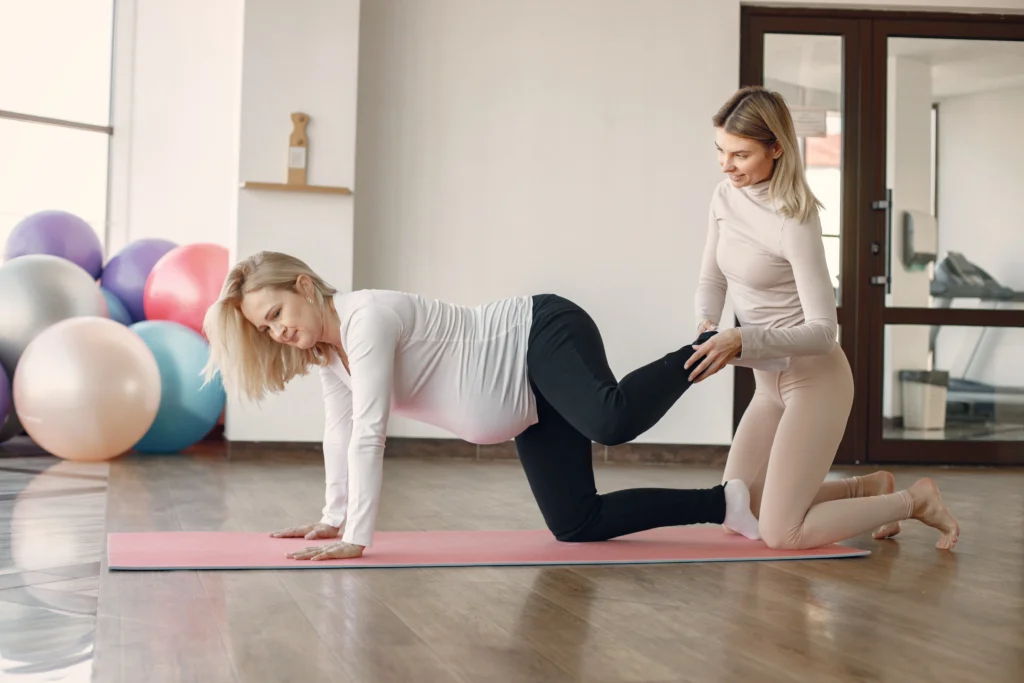
Pelvic Tilts
Pelvic tilts gently mobilize the spine while activating deep abdominal muscles.
How to do it:
- Stand against a wall or go on hands and knees
- Gently tuck the pelvis inward
- Flatten the lower back slightly
- Hold for 5 seconds
- Repeat 10-15 times
This reduces spinal compression and improves core stability.
Piriformis Stretch
This is one of the most effective stretches for sciatic-type pain caused by gluteal tightness.
How to do it safely:
- Sit on a chair
- Place one ankle over the opposite knee
- Lean forward gently
- Hold 20-30 seconds
Avoid aggressive stretching during pregnancy.
Cat-Camel Mobility Exercise
Cat-Camel movement relieves lumbar stiffness and improves spinal mobility.
How to do it:
- Position yourself on hands and knees
- Slowly arch the back upward
- Then gently lower into a comfortable curve
- Repeat slowly for 1-2 minutes
Glute Strengthening
Weak gluteal muscles increase pelvic instability.
Safe pregnancy exercises include:
- Side-lying clamshells
- Standing hip abduction
- Mini squats
- Supported bridges (if comfortable and approved)
Strong glutes reduce stress on the lower back and sciatic nerve.
Nerve Gliding Exercises
A lesser-known physiotherapy technique involves neural mobilization or “nerve flossing.”
These exercises gently improve nerve mobility without overstretching it.
Research suggests neural mobilization may help reduce sciatic pain intensity and improve mobility. (NLM)
These exercises should ideally be taught by a physiotherapist during pregnancy.
The Best Sleeping Positions for Pregnancy Sciatica
Night pain is one of the biggest complaints during pregnancy.
Sleep on the Left Side
This improves circulation and reduces pressure on major blood vessels.
Use a Pillow Between the Knees
This keeps the pelvis aligned and reduces strain on the sciatic nerve.
Place a Small Pillow Under the Abdomen
This supports the growing belly and reduces pelvic rotation.
Avoid Sleeping Flat on the Back
After mid-pregnancy, prolonged back sleeping may increase spinal compression and reduce circulation.
Lesser-Known Tips That Actually Help
Walk Short Distances Frequently
Many women either over-rest or over-walk.
Long periods of sitting worsen nerve irritation, but excessive walking can inflame already irritated tissues.
Short, gentle walks every 30-60 minutes work better than long walks once daily.
Cold Therapy Sometimes Works Better Than Heat
Most people immediately use heat for back pain.
However, inflamed sciatic nerves may respond better to cold packs for 10-15 minutes.
Heat is often more useful for muscle tightness, while cold can calm nerve irritation.
Avoid Crossing Your Legs
Crossed-leg sitting rotates the pelvis and may tighten the piriformis muscle further.
Supportive Footwear Matters More Than Most Women Realize
Flat unsupportive slippers increase pelvic instability and lower back strain.
Research shows foot mechanics influence lumbopelvic loading patterns. (Science Direct)
Rolling in Bed Correctly Reduces Pain
Instead of twisting suddenly:
- Bend knees first
- Tighten the core gently
- Roll the shoulders and hips together
This “log roll” technique protects the pelvis and lumbar spine.
Things to Avoid if You Have Pregnancy Sciatica
Avoid Prolonged Sitting
Sitting compresses the gluteal region and can worsen sciatic irritation.
If you work at a desk:
- Stand every 30 minutes
- Use lumbar support
- Keep knees slightly lower than hips
Avoid Heavy Lifting
Pregnancy already stresses the spine and pelvis. Incorrect lifting increases nerve irritation dramatically.
Avoid Deep Forward Bending
Aggressive hamstring stretching may worsen nerve sensitivity.
Avoid High-Impact Exercise
Running, jumping, and sudden twisting movements may aggravate pelvic instability in symptomatic women.
Can Prenatal Massage Help Sciatica?
Yes, when performed safely by trained prenatal professionals.
Massage may help:
- Reduce piriformis tightness
- Improve circulation
- Relax protective muscle spasm
- Reduce stress hormones
Research suggests prenatal massage may improve pain and sleep quality during pregnancy. (Americanpregnancy)
However, deep aggressive pressure around the pelvis should be avoided.
Is Sciatica During Pregnancy Harmful to the Baby?
In most cases, no.
Sciatica affects the mother’s nerves and musculoskeletal system rather than the baby directly.
However, severe untreated pain can impact:
- Sleep quality
- Stress levels
- Daily movement
- Emotional well-being
Maintaining mobility and managing pain safely are important for overall pregnancy health.
The Role of Core Muscles in Pregnancy Sciatica
One major misconception is that pregnant women should avoid all abdominal activation.
In reality, gentle deep core activation is essential for pelvic stability.
The key muscles include:
- Transverse abdominis
- Pelvic floor
- Multifidus
- Diaphragm
These muscles work together like a natural support corset.
Research supports targeted stabilization exercises for reducing pregnancy-related lumbopelvic pain. (Sagepub)
Safe Daily Routine for Pregnant Women With Sciatica
Below is the best treatment routine for sciatica during pregnancy.
Follow daily for best results.
Morning
- Gentle pelvic tilts
- Warm shower
- Short walk
- Supportive footwear immediately after waking
Afternoon
- Frequent posture changes
- Lumbar support during sitting
- Light hip stretches
- Avoid prolonged standing
Evening
- Side sleeping setup
- Ice or heat depending on symptoms
- Gentle breathing exercises
- Supported stretching
Consistency matters more than intensity.
Foods and Hydration May Influence Nerve Irritation
This area is often overlooked.
Dehydration can worsen muscle tightness and cramping. Meanwhile, highly inflammatory diets rich in processed sugar may contribute to systemic inflammation.
Some research suggests omega-3 fatty acids may help support nerve health and inflammation regulation. (Healthline)
Always discuss supplements with your obstetrician before use.
When Physiotherapy Works Best
Physiotherapy tends to work best when:
- Started early
- Combined with posture correction
- Individualized to the patient
- Practiced consistently
Women who wait until pain becomes severe often develop compensatory movement patterns that are harder to correct later.
Can Sciatica Continue After Delivery?
Yes, sometimes.
Postpartum sciatica may continue because:
- Core muscles remain weak
- Feeding posture strains the spine
- Carrying the baby overloads one side
- Pelvic instability persists
This is why postpartum rehabilitation matters just as much as prenatal care.
Dr. Kruti’s Clinical Insight
In clinical practice, many pregnant women assume complete rest will heal sciatic pain.
Ironically, excessive rest often worsens stiffness, muscle weakness, and nerve sensitivity.
The body usually responds better to controlled movement, proper alignment, and gradual strengthening.
Another important observation is that pelvic instability and glute weakness are frequently missed.
Many women repeatedly stretch tight muscles without strengthening the muscles that actually stabilize the pelvis.
This creates temporary relief but recurring pain.
Small daily habits:
how you sit, sleep, stand, roll in bed, wear footwear, and carry weight, often influence recovery more than one “perfect” exercise.
Physio Prescription
- Change posture every 30 minutes
- Sleep with knee support pillows
- Perform pelvic tilts daily
- Avoid aggressive stretching
- Strengthen glutes safely
- Use supportive footwear
- Practice deep breathing with core activation
- Walk short distances frequently
- Seek early physiotherapy assessment
Red Flags You Should Never Ignore
Contact your healthcare provider immediately if you develop:
- Severe weakness
- Loss of bladder or bowel control
- Sudden numbness in the groin
- Unexplained fever
- Progressive neurological symptoms
Myth vs Reality
Myth:
“All pregnancy sciatic pain is caused by the baby pressing on the nerve.”
Reality:
Many cases actually involve pelvic instability, muscle imbalance, or piriformis irritation rather than direct nerve compression.
Myth:
“Rest is the best treatment for sciatica during pregnancy.”
Reality:
Too much rest can worsen weakness and stiffness. Guided movement is usually more effective.
Myth:
“Stretching harder gives faster relief.”
Reality:
Aggressive stretching may irritate sensitive nerves further during pregnancy.
Final Word
Sciatica during pregnancy can feel exhausting physically and emotionally, especially when sleep, walking, and simple daily activities become painful.
But most women improve significantly with the right physiotherapy approach.
Early treatment and proper physiotherapy support can help reduce pregnancy sciatica pain and improve daily comfort safely.
The goal is not simply pain relief.
It is restoring pelvic stability, improving movement mechanics, calming nerve irritation, and helping the body adapt safely to pregnancy changes.
Gentle strengthening, posture correction, nerve-friendly movement, proper sleep support, and early physiotherapy intervention often make a dramatic difference.
Pregnancy may temporarily change how your body moves, but with the right care, it does not have to control your quality of life.
Frequently Asked Questions
Can pregnancy sciatica go away on its own?
Yes, mild cases may improve after delivery, but physiotherapy helps reduce pain faster and prevents worsening symptoms.
Which trimester is sciatica most common in?
Sciatica is most common during the second and third trimesters because of increased pelvic and spinal stress.
Is walking good for pregnancy sciatica?
Short gentle walks are usually beneficial, but excessive walking may worsen symptoms in some women.
Can I use a heating pad during pregnancy?
Mild heat is generally helpful for muscle tightness, but prolonged excessive heat should be avoided.
Does sitting make sciatica worse?
Yes, prolonged sitting may increase pressure around the sciatic nerve and gluteal muscles.
Can physiotherapy completely cure pregnancy sciatica?
Many women experience major relief with physiotherapy, though symptoms may fluctuate during pregnancy.
Should pregnant women stretch the hamstrings aggressively?
No, aggressive stretching may irritate sensitive nerves further during pregnancy.
What is the best sleeping position for pregnancy sciatica?
Side sleeping with pillows between the knees and under the abdomen is usually most comfortable.
Can sciatica continue after childbirth?
Yes, postpartum weakness and poor feeding posture may continue symptoms if not treated properly.
When should I see a doctor urgently?
Seek immediate medical care if you experience severe weakness, numbness around the groin, or bladder changes.
Stay tuned with us for more health related topics.
Follow us on LinkedIn and Instagram for more.
More Read


Medical Disclaimer!
This article has been reviewed and written under the guidance of our Head Physiotherapist, Dr. Kruti Raj (PT, MUHS,CPT,CMPT). The information shared is intended for educational purposes only and should not be considered a substitute for personalized medical advice, diagnosis, or treatment.
Please consult us or any other qualified healthcare professional before beginning any exercise program, especially if you are experiencing pain, recovering from injury, or managing a medical condition.