


Piriformis syndrome vs sciatica, both cause pain that travels from the buttock toward the leg, but the source of the nerve irritation can be very different.
Pain that starts in the buttock and travels down the leg is often called “sciatica.”
But what if the problem is not actually coming from your lower back?
This is where piriformis syndrome vs sciatica becomes an important distinction.
Both conditions can cause buttock pain, burning, tingling, electric-shock-like sensations and pain that travels into the back of the thigh.
Because the symptoms overlap so much, it is surprisingly easy to assume that every shooting leg pain is caused by a slipped disc.
Quick Answer
Sciatica describes pain caused by irritation of the sciatic nerve or its nerve roots, most commonly originating in the lower back.
Piriformis syndrome refers to sciatic-type symptoms associated with irritation or compression around the piriformis/deep gluteal region.
A useful clue: prominent buttock pain, difficulty sitting and symptoms reproduced by certain hip positions may raise suspicion of a deep gluteal source, while neurological weakness, sensory changes and symptoms linked strongly to the lumbar spine may point toward lumbar radiculopathy.
Important: symptoms overlap, so a proper clinical examination is more reliable than trying to diagnose the condition from one home test.
As a physiotherapist, one of the most useful questions I ask is not simply, “Where does it hurt?”
I want to know what movements provoke it, what positions relieve it, whether the lower back reproduces the symptoms, whether neurological changes are present, and how the sciatic nerve behaves during movement.
That broader assessment matters because the sciatic nerve can be irritated either near its spinal nerve roots or farther down in the buttock.
Recent literature increasingly describes non-spinal sciatic nerve irritation in the buttock under the broader term deep gluteal syndrome,
which includes piriformis-related compression as well as problems involving other muscles, tendons, fibrous bands and structures around the deep gluteal space. (BJGP)
So, how can you tell the difference?
Key Takeaways
- Sciatica is a symptom pattern, not one single disease.
- Piriformis syndrome is one possible cause of sciatic-type pain outside the spine.
- Deep gluteal syndrome is a broader diagnosis that includes several possible sites of sciatic nerve irritation.
- Buttock-dominant pain and sitting intolerance can provide useful clues toward a deep gluteal source.
- Weakness, sensory changes and altered reflexes can make lumbar nerve-root involvement more concerning.
- A positive straight-leg-raise or FAIR test alone cannot establish the diagnosis.
- Imaging should support the clinical assessment rather than replace it.
- Aggressive piriformis stretching is not automatically appropriate for nerve-sensitive pain.
- Progressive, individualized physiotherapy is generally more useful than repeatedly performing one “sciatica exercise.”
- New bladder/bowel problems, saddle numbness or rapidly worsening weakness require urgent medical assessment.
What Is Sciatica?
Sciatica is not one specific disease.
It is a symptom pattern involving pain associated with irritation or compression of the sciatic nerve or its contributing nerve roots, most commonly in the lower spine.
A disc herniation, degenerative changes, spinal stenosis or another lumbar disorder can irritate a nerve root before the sciatic nerve travels into the buttock and leg.
This distinction is important because the location of pain does not automatically identify its source.
Someone with lumbar radicular pain may experience:
- Lower back pain
- Buttock pain
- Pain down the back or side of the leg
- Pins and needles
- Numbness
- Burning or electric sensations
- Muscle weakness
- Changes in reflexes in some cases
A systematic review of clinical practice guidelines found that assessment of pain distribution, neurological function, gait and straight-leg-raise testing are among the consistently recommended elements when evaluating lumbosacral radicular pain. (MDPI)
Routine imaging is generally not recommended unless the result is likely to change management.
A useful clue: sciatica may behave like a nerve-root problem
Lumbar-related sciatica often becomes more suspicious when symptoms are associated with back movements, coughing or sneezing, neurological deficits, or a pattern that corresponds reasonably well with a particular nerve root.
For example, weakness in ankle dorsiflexion or difficulty lifting the foot can be much more clinically meaningful than simply saying, “My leg hurts.”
That is why a proper neurological examination can be more informative than trying to diagnose yourself from the location of your pain.
What Is Piriformis Syndrome?
The piriformis is a small muscle located deep in the buttock.
It originates from the sacrum and attaches near the greater trochanter of the femur.
Its relationship with the sciatic nerve is particularly important because the nerve normally passes beneath the piriformis, although anatomical variations exist.
When the sciatic nerve becomes irritated or compressed in the deep gluteal region, piriformis syndrome may be considered.
However, there is an important modern update here.
Not every case of deep buttock sciatic nerve pain is caused by the piriformis.
The deep gluteal space also contains the gemelli, obturator internus, quadratus femoris, proximal hamstring structures, blood vessels and nerves.
Compression can therefore occur from several structures.
This is why contemporary clinicians increasingly use the term deep gluteal syndrome rather than assuming that the piriformis is always responsible.
A 2024 review emphasized that DGS is an often-overlooked cause of posterior hip and buttock pain and discussed piriformis syndrome alongside gemelli-obturator internus syndrome, ischiofemoral impingement and proximal hamstring syndrome. (Turkish Journal of Physical Medicine and Rehab)
Piriformis Syndrome vs Sciatica: The Biggest Difference
The simplest way to understand the distinction is this:
Sciatica is a symptom pattern.
Piriformis syndrome is a potential cause of sciatic-type symptoms outside the spine.
In typical lumbar sciatica, the source is usually in or around the lower spine.
In piriformis syndrome, the sciatic nerve is irritated in the buttock region.
That sounds straightforward, but real patients do not always fit perfectly into one box.
You can even have both lumbar degenerative changes and deep gluteal pain at the same time.
That is why an MRI showing a disc bulge does not automatically prove that the disc is causing your leg symptoms.
7 Clues That Make Piriformis Syndrome More Likely
1. Your buttock hurts more than your lower back
One of the clues that makes a deep gluteal source more interesting is prominent buttock pain with relatively little or no lower-back pain.
This is not an absolute rule, but it should make a clinician examine the hip and deep gluteal region rather than stopping at the lumbar spine.
2. Sitting is surprisingly uncomfortable
This is one of the lesser-known clues.
Some people with deep gluteal syndrome report increased pain when sitting for prolonged periods.
Pressure and hip positioning can aggravate structures around the sciatic nerve.
A systematic review of DGS identified difficulty sitting for around 30 minutes among the clinical features used in diagnosis. (Wiley)
If your symptoms are dramatically worse after sitting but improve when you stand or walk, tell your physiotherapist.
That detail can be diagnostically valuable.
3. Certain hip movements reproduce your familiar pain
A physiotherapist may position your hip into combinations of flexion, adduction and internal rotation or use other piriformis-loading maneuvers.
These tests are not simply “piriformis tightness tests.”
The goal is to determine whether loading or positioning the deep gluteal structures reproduces the patient’s familiar symptoms.
One classic study involving 918 patients found that a specific FAIR-based operational test had reported sensitivity of 88.1% and specificity of 83.2% in that study population. (Elsevier)
However, the study’s diagnostic approach and population should not be interpreted as proof that every positive FAIR test means piriformis syndrome.
This is a crucial point: one positive test should never be used in isolation.
4. Pressing deeply into the buttock reproduces the pain
Localized tenderness around the deep gluteal region can support the diagnosis.
But again, tenderness is not proof.
Muscles, tendons, bursae, joints and nerves can all produce pain in the same general area.
5. Your symptoms change with hip position
If rotating or positioning the hip changes your familiar shooting or burning pain, your physiotherapist may investigate the deep gluteal structures more closely.
This is different from assuming that “my piriformis is tight.”
The nerve itself can respond to changes in mechanical loading and surrounding tissue pressure.
6. Your neurological examination is relatively normal
This can be an important clue.
Lumbar radiculopathy may produce objective neurological findings such as weakness, sensory changes or altered reflexes, depending on the nerve root involved.
Piriformis-related sciatic nerve irritation may produce pain and sensory symptoms without the same pattern of nerve-root deficits.
However, normal neurological findings do not automatically rule out deep gluteal nerve irritation.
7. Your back examination does not reproduce your leg symptoms
If lumbar movements and spinal examination do not meaningfully reproduce your familiar symptoms, but deep hip and buttock testing does, a peripheral source becomes more plausible.
This is why a physiotherapist should assess both regions instead of assuming that the painful area tells the whole story.
What Makes Lumbar Sciatica More Likely?
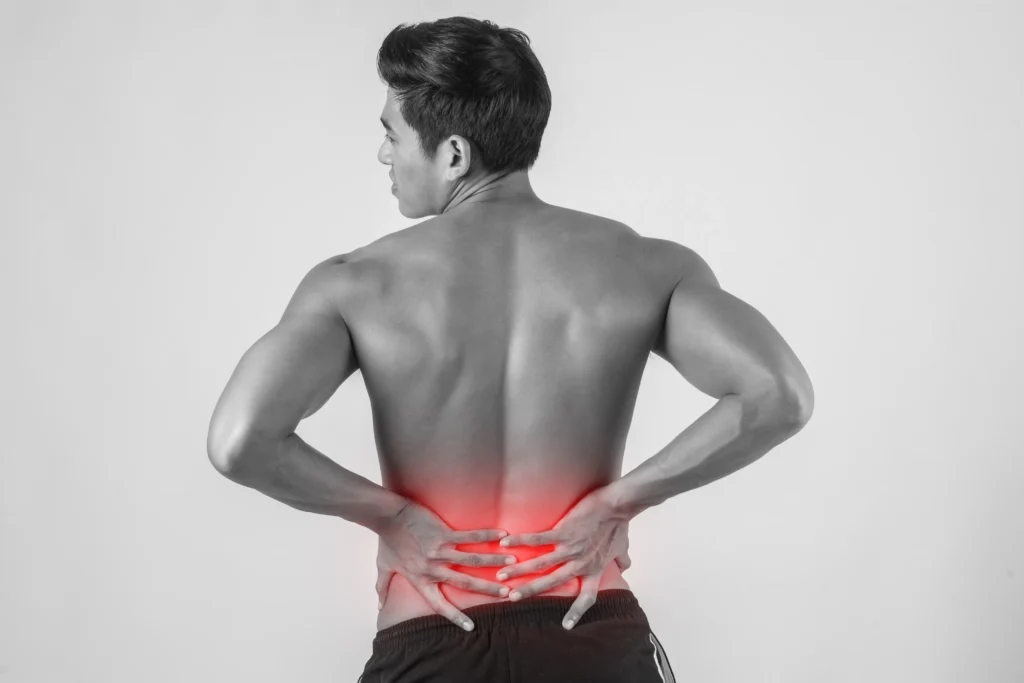
Now reverse the picture.
Sciatica originating from the lumbar spine becomes more suspicious when several of these features appear together:
- Significant lower-back pain accompanies leg pain
- Symptoms are aggravated by certain spinal movements
- Coughing or sneezing aggravates the symptoms
- There is dermatomal-type numbness
- There is measurable muscle weakness
- Reflexes are altered
- Straight leg raise reproduces familiar radiating symptoms
- Symptoms extend below the knee in a nerve-like distribution
- There is a history of lumbar disc problems or spinal stenosis
Clinical guidelines consistently emphasize matching the history, pain distribution and examination findings rather than relying on a single test.
The Straight Leg Raise Test: Useful, But Often Misunderstood
Many people perform a straight leg raise at home and conclude:
“I felt pain, so I have sciatica.”
That is not how the test should be interpreted.
The straight leg raise places mechanical stress on neural and musculoskeletal structures.
Hamstring tightness, posterior thigh pain and other conditions can also produce discomfort.
A systematic review specifically warned that non-specific pain, including pain associated with hamstring tightness, can produce false-positive straight-leg-raise findings. (NIH)
More recent evidence also suggests that the reliability of the test improves when clinicians use appropriate structural differentiation maneuvers rather than simply measuring how high the leg can be lifted. (Sage Journals)
So if your leg hurts during a straight leg raise, the next question is:
What exactly caused the pain, where was it felt, and did the symptom behave like neural tissue pain?
That is far more useful than the number of degrees your leg reached.
Can Piriformis Syndrome Cause Pain All the Way Down the Leg?
Yes.
This is one reason people confuse piriformis syndrome with sciatica.
Irritation of the sciatic nerve in the deep gluteal region can produce symptoms that travel into the posterior thigh and sometimes farther down the leg.
Therefore, “pain down my leg” does not automatically mean “disc problem.”
At the same time, pain traveling down the leg does not automatically mean “piriformis syndrome.”
The distribution, neurological findings, provoking factors and physical examination have to be considered together.
An Important New Concept: Piriformis Syndrome Is Only One Part of Deep Gluteal Syndrome
This is an angle I strongly recommend including if you want your article to stand out from hundreds of generic “piriformis stretch” articles.
The phrase deep gluteal syndrome recognizes that sciatic nerve entrapment can occur in several locations.
Possible contributors include:
- Piriformis muscle
- Fibrous bands
- Gemelli-obturator internus complex
- Proximal hamstring structures
- Ischiofemoral region
- Vascular abnormalities
- Space-occupying lesions
- Post-traumatic scar tissue
A major review of DGS highlighted this broader anatomical picture and noted that several different structures can be responsible for sciatic nerve entrapment.
A 2024 review similarly emphasized that posterior hip pain should not automatically be attributed to the piriformis. (Sports health)
This matters because repeatedly stretching the piriformis will not necessarily solve a problem caused by the proximal hamstring, ischiofemoral space or another structure.
Why Your MRI Can Be Misleading
Here is another fact patients often find surprising.
An MRI can show something abnormal without proving that it is causing your symptoms.
Disc bulges and degenerative changes are common, particularly as people age.
This is why NICE guidance recommends against routine imaging for low back pain with or without sciatica in non-specialist settings.
Imaging should be considered when it is likely to change management.
For suspected deep gluteal syndrome, pelvic MRI or magnetic resonance neurography may sometimes help identify structural abnormalities, but diagnosis remains primarily clinical and there is no universally accepted gold-standard test. (NCBI)
A recent systematic review of piriformis syndrome case reports found considerable variation in diagnostic confirmation.
About half of the reported cases relied on clinical diagnosis, while others used MRI, MR neurography, EMG, ultrasound or diagnostic injections.
This tells us something important:
A scan should support the clinical picture, not replace it.
How a Physiotherapist Actually Differentiates Them
A good assessment is more like detective work than checking one “piriformis test.”
I would typically want to understand:
Step 1: Where did the pain begin?
Did it begin in your lower back?
Did it start deep in the buttock?
Did it begin after prolonged sitting, running, lifting, trauma or a sudden movement?
Step 2: What makes it worse?
Sitting?
Walking?
Bending?
Coughing?
Running?
Climbing stairs?
Rotating the hip?
Sleeping on one side?
These patterns can provide useful clues.
Step 3: Is there neurological loss?
A physiotherapist may check:
- Muscle strength
- Sensation
- Reflexes
- Walking pattern
- Neural tension
- Foot and ankle function
Weakness matters particularly because it may suggest nerve-root or sciatic nerve involvement rather than simple muscle soreness.
Step 4: What happens when the spine is examined?
Lumbar movement, repeated movement testing and other clinical assessments may help determine whether the lower back contributes to the symptoms.
Step 5: What happens when the hip and deep gluteal area are tested?
The clinician may assess hip range of motion, strength, tenderness, provocative positions and neural sensitivity.
The goal is not to find one magical positive test.
The goal is to identify the most coherent explanation for the entire symptom pattern.
What Should You Do If You Think You Have Piriformis Syndrome?
The first mistake is usually doing too much too soon.
People often search for “best piriformis stretches for sciatica,” perform aggressive stretches several times a day and become frustrated when their symptoms worsen.
A better approach is to identify the aggravating activity first.
If prolonged sitting triggers symptoms, experiment with shorter sitting periods and regular movement breaks.
If running provokes symptoms, temporarily modify running volume rather than immediately abandoning all activity.
If a particular hip position repeatedly reproduces sharp nerve-like symptoms, do not force yourself deeper into that position simply because an online exercise video recommends it.
NICE guidance for low back pain and sciatica emphasizes self-management, staying active and selecting exercise according to individual needs and capabilities.
Physiotherapy Treatment for Piriformis Syndrome
Treatment should be individualized.
Depending on the assessment, physiotherapy may include:
Activity modification
The objective is not complete rest.
It is to temporarily reduce the loads that repeatedly provoke symptoms while maintaining tolerable activity.
Progressive strengthening
Weakness around the hip can influence movement and loading, but strengthening should be selected according to the individual’s impairments rather than prescribing the same “piriformis exercises” to everyone.
Depending on the assessment, treatment may include progressive strengthening of the gluteal and hip musculature.
Mobility work
Some patients may benefit from hip mobility exercises, but aggressive stretching is not automatically appropriate.
If nerve irritation is present, forcing an already sensitive structure into a provocative position may make symptoms worse.
Neural mobility
When appropriate, a physiotherapist may use carefully dosed neural mobilization techniques.
The aim is not to aggressively “stretch the sciatic nerve.”
That is an important misconception.
Neural mobility is usually about facilitating comfortable movement of the nervous system relative to surrounding tissues while avoiding excessive irritation.
Manual therapy
Hands-on treatment may sometimes be used as an adjunct for short-term symptom modification, but it should not become the entire rehabilitation strategy.
Long-term recovery generally requires addressing movement, capacity, activity tolerance and contributing factors.
WHO’s rehabilitation guidance recognizes exercise and other physical rehabilitation interventions as important components of musculoskeletal care. (WHO)
5 Things I Would Avoid
Avoid aggressively rolling directly over the sciatic nerve
A hard massage ball placed directly over a painful nerve can feel intense, but “more pain” does not equal better treatment.
Avoid stretching through electric or burning pain
A mild muscular stretch is different from reproducing sharp, burning or electrical symptoms.
Avoid complete bed rest
Unless a medical professional specifically advises otherwise, prolonged inactivity can contribute to deconditioning and fear of movement.
Guidelines generally encourage appropriate activity and self-management rather than unnecessary inactivity.
Avoid assuming every leg pain is sciatica
The differential diagnosis includes hip disorders, sacroiliac-related pain, hamstring pathology, peripheral nerve disorders and other causes.
Avoid diagnosing piriformis syndrome from one test
Even the FAIR test should be interpreted within the complete clinical picture.
The absence of standardized diagnostic criteria remains a major limitation in piriformis syndrome research.
A recent systematic review found that 96% of included prevalence studies did not use rigorous diagnostic criteria.
That is a fascinating but important reason not to overdiagnose the condition.
When Should You See a Doctor Quickly?
Most buttock and leg pain is not an emergency, but certain symptoms require prompt medical assessment.
Seek urgent medical attention if you develop:
- New loss of bladder or bowel control
- Numbness around the groin, genitals or inner thighs
- Rapidly worsening leg weakness
- Severe or progressive neurological symptoms
- Significant difficulty walking
- Severe symptoms following major trauma
- Unexplained fever with severe back pain
- A history of cancer combined with concerning spinal symptoms
Cauda equina syndrome and other serious conditions can mimic ordinary “sciatica,” which is why neurological red flags should never be ignored.
Can You Have Both Sciatica and Piriformis Problems?
Yes.
This is one of the most important points to remember.
A person may have lumbar degenerative changes while also developing deep gluteal pain.
One problem does not automatically exclude another.
For example, someone may have intermittent lumbar nerve-root irritation and then develop increased buttock symptoms after prolonged sitting or a change in exercise.
This is why treatment should be based on the current clinical presentation rather than an old scan or diagnosis.
The Bottom Line: Piriformis Syndrome vs Sciatica
If your pain shoots from the buttock into the leg, don’t immediately assume you have a slipped disc.
Sciatica describes a symptom pattern, while piriformis syndrome describes one possible peripheral source of sciatic-type symptoms.
Piriformis syndrome becomes more plausible when buttock pain is prominent,
sitting or specific hip positions aggravate symptoms, deep gluteal testing reproduces the familiar pain and there are no convincing signs pointing primarily toward a lumbar nerve-root disorder.
But modern medicine has moved beyond the simplistic idea that every deep buttock sciatic pain problem is caused by a “tight piriformis.”
The broader diagnosis of deep gluteal syndrome recognizes that multiple structures can irritate the sciatic nerve outside the spine.
The best treatment therefore starts with the correct question:
“Where is the nerve being irritated, and what is making it sensitive?”
Once that is understood, physiotherapy can be much more targeted.
And if you are currently dealing with buttock pain that travels down your leg, don’t judge the cause only by where the pain ends.
The pattern, neurological examination, spinal assessment, hip examination and response to movement together tell a much more useful story.
Final Word
The biggest mistake with buttock and leg pain is trying to force every patient into the same diagnosis.
A disc is not automatically responsible just because an MRI shows a disc bulge.
A tight piriformis is not automatically responsible just because the buttock hurts.
And a positive stretching test is not enough to establish a diagnosis.
The most useful diagnosis is the one that explains the whole pattern.
That is where a detailed physiotherapy assessment becomes valuable.
If your symptoms are persistent, recurrent, progressively worsening or interfering with walking, sleep or daily activities, get assessed rather than repeatedly treating yourself based on an internet exercise list.
This article is for education and does not replace an individual assessment by a qualified physiotherapist or medical professional.
Frequently Asked Questions
Is piriformis syndrome the same as sciatica?
No. Sciatica describes sciatic-type symptoms, while piriformis syndrome refers to irritation of the sciatic nerve associated with the piriformis or deep gluteal region.
How can I tell if my sciatica is caused by my piriformis?
There is no reliable home test that can definitively diagnose piriformis syndrome. A physiotherapist should assess the lumbar spine, neurological system, hip and deep gluteal region together.
Can piriformis syndrome cause pain down the leg?
Yes. Irritation of the sciatic nerve in the deep gluteal region can cause pain, burning, tingling or other symptoms that travel down the leg.
Does sitting make piriformis syndrome worse?
Prolonged sitting can aggravate symptoms in some people with deep gluteal syndrome, although sitting pain can have several other causes.
Should I stretch my piriformis if I have sciatica?
Not automatically. Aggressive stretching can aggravate nerve-sensitive symptoms. Exercises should be selected according to your examination findings and symptom response.
Do I need an MRI for piriformis syndrome?
Not necessarily. Piriformis syndrome is primarily a clinical diagnosis, while imaging may be considered when another structural problem needs to be investigated or when the result could change treatment.
Can piriformis syndrome go away without surgery?
Many cases can be managed conservatively with activity modification, education, progressive exercise and appropriate physiotherapy.
What is deep gluteal syndrome?
Deep gluteal syndrome is a broader term describing sciatic or other peripheral nerve irritation or entrapment within the deep gluteal region. Piriformis syndrome is one possible cause.
Is walking good for piriformis syndrome?
Walking can be beneficial when it is tolerated without substantially increasing symptoms. Activity should generally be progressed gradually rather than replaced with prolonged rest.
When should leg pain be treated as an emergency?
New bladder or bowel dysfunction, saddle-region numbness, rapidly progressing weakness or major difficulty walking requires urgent medical assessment.
Stay tuned with us for more health related topics.
Follow us on LinkedIn and Instagram for more.
More Read


Medical Disclaimer!
This article has been reviewed and written under the guidance of our Head Physiotherapist, Dr. Kruti Raj (PT, MUHS,CPT,CMPT). The information shared is intended for educational purposes only and should not be considered a substitute for personalized medical advice, diagnosis, or treatment.
Please consult us or any other qualified healthcare professional before beginning any exercise program, especially if you are experiencing pain, recovering from injury, or managing a medical condition.


