


Does your hip click, pop, or snap when you walk, climb stairs, or stand up after sitting?
The sound can be surprising, but it does not always indicate damage.
Quick Answer: Why Does Your Hip Click When You Walk?
Snapping hip syndrome occurs when a tendon or another structure moves across the hip during movement. It may involve the iliotibial band, iliopsoas tendon, or structures inside the hip joint.
Painless snapping is often harmless. If snapping causes pain or limits walking, physiotherapy may help through individualized strengthening, activity modification, and movement retraining.
Some people experience painless snapping, while others develop pain, stiffness, or restricted movement.
Snapping hip syndrome, also known as coxa saltans, occurs when a tendon or another structure moves across the hip during movement.
Physiotherapy can help manage painful snapping by addressing contributing movement patterns, strength, and activity levels.
The right approach depends on where the snapping originates.
Key Takeaways
- Snapping hip syndrome can involve tendons moving over bone or a problem inside the hip joint.
- External snapping is usually felt on the outside of the hip, while internal snapping often occurs near the groin.
- Painless snapping does not automatically indicate damage or require treatment.
- Painful snapping may benefit from activity modification and individualized physiotherapy.
- Strengthening and mobility exercises should match the underlying cause and symptom response.
- Persistent pain, locking, or restricted movement warrants clinical assessment.
- The goal is comfortable function, not necessarily eliminating every painless clicking sound.
What Is Snapping Hip Syndrome?
Snapping hip syndrome describes a noticeable snapping sensation or sound around the hip during movement.
It may affect one or both hips and can occur with or without pain.
The snapping commonly results from a tendon moving over a bony prominence.
In other cases, clicking or catching may originate inside the hip joint.
The location of the sound, the movement that triggers it, and whether it causes pain help guide the assessment. (Walker et al., 2021)
Why Does Your Hip Click When You Walk?
Walking repeatedly moves the hip through flexion and extension.
During this movement, a tendon may shift across nearby structures, creating a palpable or audible snap.
The snapping may become noticeable when you:
- Walk quickly or run.
- Climb stairs or walk uphill.
- Lift your knee or swing your leg forward.
- Stand up after sitting.
- Move your hip through a particular rotation.
Repetitive activity, changes in training intensity, and individual anatomical differences may contribute.
However, a click alone does not confirm a diagnosis or prove that a tendon is damaged.
What Are the Three Main Types of Snapping Hip?
1. External Snapping Hip
External snapping hip usually occurs on the outside of the hip.
It commonly involves the iliotibial band or part of the gluteus maximus moving across the greater trochanter, the bony prominence on the upper outer thigh.
You may feel or hear a snap around the side of the hip when walking, running, or bending and straightening the leg.
If the surrounding tissues become irritated, snapping may be accompanied by outer-hip tenderness, discomfort during exercise, or pain when lying on the affected side.
2. Internal Snapping Hip
Internal snapping hip usually occurs near the front of the hip or groin. It often involves the iliopsoas tendon, which helps lift the thigh and bend the hip.
The tendon may move across nearby structures as the hip changes position.
This can produce a deep click or pop when lifting the knee, extending the leg, or transitioning between certain positions.
Some people have painless snapping, while others experience groin discomfort or a catching sensation.
3. Clicking From Inside the Hip Joint
Not all hip clicking comes from a tendon moving over bone.
Symptoms may originate inside the joint due to a hip labral tear, loose fragments of cartilage or bone, or another joint problem.
Deep clicking, catching, or locking, especially after an injury, deserves closer assessment.
Internal snapping hip and intra-articular problems can feel similar, so the sound alone cannot distinguish them. (Yen et al., 2015)
How Can You Tell the Difference?
The following patterns provide clues, but they cannot confirm a diagnosis without clinical assessment.
| Feature | External snapping | Internal snapping | Intra-articular problem |
|---|---|---|---|
| Typical location | Outside of the hip | Front of hip or groin | Deep inside the joint |
| Possible source | Iliotibial band or gluteus maximus | Iliopsoas tendon | Labrum or other joint structures |
| Common trigger | Walking, running, hip bending | Lifting or rotating the leg | Hip movement, sometimes after injury |
| Other symptoms | Possible outer-hip tenderness | Possible groin discomfort | Possible catching, locking, or restricted movement |
More than one condition can occur together.
Persistent pain or mechanical symptoms should not automatically be attributed to a tendon snap.
Is Snapping Hip Syndrome Dangerous?
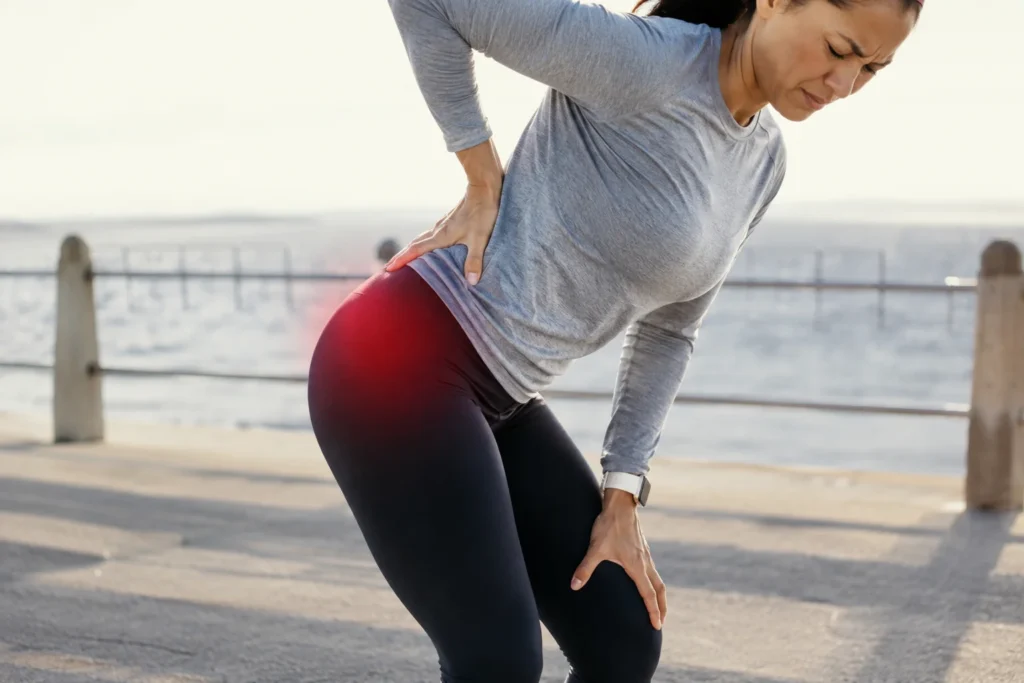
Painless snapping is often harmless and may not require treatment.
If your hip moves normally and the sound does not cause discomfort or limit activities, you may not need exercises or other treatment.
Painful snapping is different. It may indicate irritation of a tendon or another underlying problem.
Deep pain, locking, restricted movement, or symptoms that begin after an injury warrant assessment.
Avoid repeatedly forcing the hip through a movement just to reproduce the sound.
If the snapping is new, persistent, or worsening, a physiotherapist or doctor can help identify the likely cause.
How Is Snapping Hip Syndrome Diagnosed?
A physiotherapist or doctor will ask when the snapping started, where you feel it, which movements trigger it, and whether it is painful.
The assessment may include:
- Checking hip range of motion and muscle strength.
- Observing your walking pattern.
- Assessing tenderness and palpable snapping.
- Examining hip and lower-back movement.
- Reproducing the relevant movement when safe to do so.
Imaging is not necessary for every case.
Dynamic ultrasound can sometimes show a tendon moving during the snapping event.
X-rays or MRI may be considered when a bone-related or intra-articular problem is suspected. (Sugrañes et al., 2023)
Physiotherapy Treatment for Snapping Hip Syndrome
Treatment depends on the type of snapping, the presence of pain, and how much the symptoms affect daily activities.
1. Activity Modification
Temporarily reduce movements that repeatedly trigger painful snapping.
Depending on your symptoms, this may mean modifying hill running, repeated stair climbing, high-knee exercises, or movements involving deep hip flexion.
Complete inactivity is rarely necessary for uncomplicated cases.
Comfortable walking and other tolerated activities can usually continue if symptoms do not progressively worsen.
2. Targeted Strengthening
A physiotherapist may select exercises to improve hip strength, pelvic control, and movement coordination.
Depending on the assessment, these may include:
- Gluteal strengthening: To improve control around the hip.
- Hip abductor exercises: To support pelvic stability during walking.
- Core and pelvic control exercises: To improve coordination during movement.
- Functional strengthening: To rebuild tolerance for stairs, walking, and sport.
Strengthening does not necessarily eliminate every mechanical snap.
Its purpose is to improve function and reduce symptoms when weakness, loading, or movement control contributes to the problem.
3. Individualized Mobility Exercises
Some people benefit from carefully selected stretching or mobility exercises.
However, aggressive stretching is not appropriate for every type of snapping hip.
For example, repeatedly forcing the hip into a position that produces painful groin snapping may aggravate sensitive tissues.
Your physiotherapist can select comfortable movements according to the likely cause and your response to exercise.
4. Gradual Return to Walking and Sport
As symptoms improve, gradually increase walking distance, speed, hills, and sporting activity rather than increasing everything at once.
Monitor how your hip feels during activity and afterwards. If pain consistently increases, reduce the training load and review your program.
Conservative treatment, including physiotherapy and activity modification, is generally the initial approach for symptomatic snapping hip.
Evidence does not establish one exercise program as best for every type of snapping. (Musick & Varacallo, 2023)
How Long Does Snapping Hip Syndrome Take to Improve?
Recovery depends on the cause, symptom severity, and activity demands. Painless snapping may need no treatment at all.
When snapping is painful, improvement may take several weeks or longer with appropriate activity modification and rehabilitation.
Persistent symptoms may require further investigation or specialist review.
Look for practical improvements such as walking more comfortably, climbing stairs with less pain, and returning to exercise without a sustained flare-up.
The sound itself does not always need to disappear if it is painless and does not affect function.
When Should You Seek Medical Advice?
Arrange an assessment if snapping is painful, repeatedly interferes with walking, causes restricted movement, or fails to improve after modifying aggravating activities.
Seek urgent medical care if you experience:
- Sudden severe hip pain following an injury.
- Inability to bear weight after an injury.
- A hot, swollen hip accompanied by fever or feeling seriously unwell.
- New significant weakness or concerning numbness.
A hip that locks or develops significant pain after trauma also warrants prompt assessment.
Do not assume these symptoms are caused by harmless tendon snapping.
Snapping Hip Syndrome: Myth vs Fact
MYTH: Every hip click means something is damaged.
FACT: Painless snapping can occur without significant injury and may not require treatment.
MYTH: All snapping comes from the same tendon.
FACT: External snapping commonly involves the iliotibial band or gluteus maximus, while internal snapping often involves the iliopsoas tendon. Some clicking originates inside the joint.
MYTH: Stretching harder will always stop the snapping.
FACT: Aggressive or poorly selected stretching may aggravate symptoms. Exercise choice should depend on the likely cause.
MYTH: Physiotherapy must eliminate every click.
FACT: Treatment aims to improve pain, movement, and function. A painless snap may remain without causing a problem.
Lesser-Known Fact: A Click Does Not Always Need Treatment
A hip can produce a noticeable sound without causing tissue damage or requiring exercises.
Treatment decisions should be guided by pain, function, and the underlying cause rather than the sound alone.
Trying to eliminate every painless click may lead to unnecessary stretching or repeated testing.
If your hip is comfortable and functions normally, reassurance may be sufficient after appropriate assessment.
Final Thoughts: Understand the Click Before Treating It
A clicking hip does not automatically mean something is damaged. The important questions are where the snapping occurs, whether it causes pain, and whether it affects your movement or daily activities.
When snapping is painful, physiotherapy may help through targeted strengthening, activity modification, and gradual return to activity. The program should reflect the likely cause rather than rely on the same stretches and exercises for everyone.
Conclusion
Snapping hip syndrome can cause clicking or popping on the outside of the hip, near the groin, or deep inside the joint.
Painless snapping is often harmless, but pain, locking, restricted movement, or symptoms following an injury may require further assessment.
Physiotherapy can help through individualized strengthening, activity modification, movement retraining, and a gradual return to activity when appropriate.
The first step is identifying the likely source of the snap rather than treating every hip click in the same way.
Frequently Asked Questions
1. Why does my hip click every time I walk?
Repeated clicking may occur when a tendon moves across a bony prominence during hip movement. If the click is painful, persistent, or associated with locking, seek an assessment.
2. Can snapping hip syndrome go away on its own?
Painless snapping may need no treatment. Painful symptoms can improve with activity modification and appropriate rehabilitation, although recovery depends on the underlying cause.
3. Should I stretch a snapping hip?
Not automatically. Some people benefit from targeted mobility work, but aggressive stretching may aggravate certain tendon problems. Choose exercises according to your symptoms and assessment findings.
4. Can physiotherapy stop my hip from snapping?
Physiotherapy can help manage symptoms and improve movement when strength, tendon irritation, or movement control contributes to the problem. The snapping sound may persist even when it is painless and does not affect function.
5. Is snapping hip syndrome the same as a hip labral tear?
No. Snapping hip may result from tendons moving over bone, whereas a labral tear affects the cartilage rim around the hip socket. Both can cause clicking, so clinical assessment may be needed to distinguish them.
Stay tuned with us for more health related topics.
Follow us on LinkedIn and Instagram for more.
More Read


Medical Disclaimer
This article is for general educational purposes only and does not replace professional medical advice, diagnosis, or treatment. Hip clicking can have different causes, and appropriate treatment varies between individuals. Consult a qualified healthcare professional for persistent, painful, or worsening symptoms. Seek urgent medical attention for sudden severe hip pain, inability to bear weight after an injury, or a hot, swollen hip accompanied by fever.


